Loading the document
1 free read left. Create a free account for unlimited reading + AI research.
Create free accountWhitepaper DiGRA
1 free read left. Create a free account for unlimited reading + AI research.
Create free accountWhitepaperDiGRA
The paper begins from a common critique in game scholarship of how fantasy games depict magic.
This paper proposes a novel hermeneutic for analyzing magic systems in fantasy games by applying Antoine Faivre's criteriology of Western esotericism. The central argument is that Faivre's framework offers game scholars a new vocabulary to articulate mechanisms of "enchantment" in ludic magic, addressing common critiques that game magic often feels "disenchanted" or "wonderless." This approach draws a parallel between the "disenchantment of the world" theory by Max Weber and the perceived lack of depth in digital game magic.
The methodology involves explaining Faivre's four essential components of Western esotericism as a form of thought: Correspondences (symbolic connections between physical and spiritual worlds), Living Nature (a cosmos imbued with inner light), Imagination and Mediations (rituals and symbols revealing spiritual connections), and Experience of Transmutation (humanity and nature's capacity for divine states). The paper then demonstrates the application of this theory through close readings of ludic magic systems and their narrative designs. A purposively sampled cross-section of twelve titles, spanning diverse game genres, platforms, and eras, is used to illustrate the presence of Faivre's esoteric criteria. Examples include Dungeons & Dragons for Correspondences, Magic: The Gathering for Living Nature, Potion Craft: Alchemist Simulator for Imagination and Mediations, and Diablo III for Transmutation.
The paper is conceptual, aiming to bridge existing theories across disciplines and broaden the scope of thinking about magic in games. It seeks to provide a framework for understanding the spiritual and affective dimensions of magic in games, inviting future scholarship to scrutinize game designs that either produce or hinder enchantment, similar to how religion in games is studied.
Each row is a game or company this document names, each column a document, oldest first. A mark means that document names it. Select a row to see those documents.
DiGRA · 2026
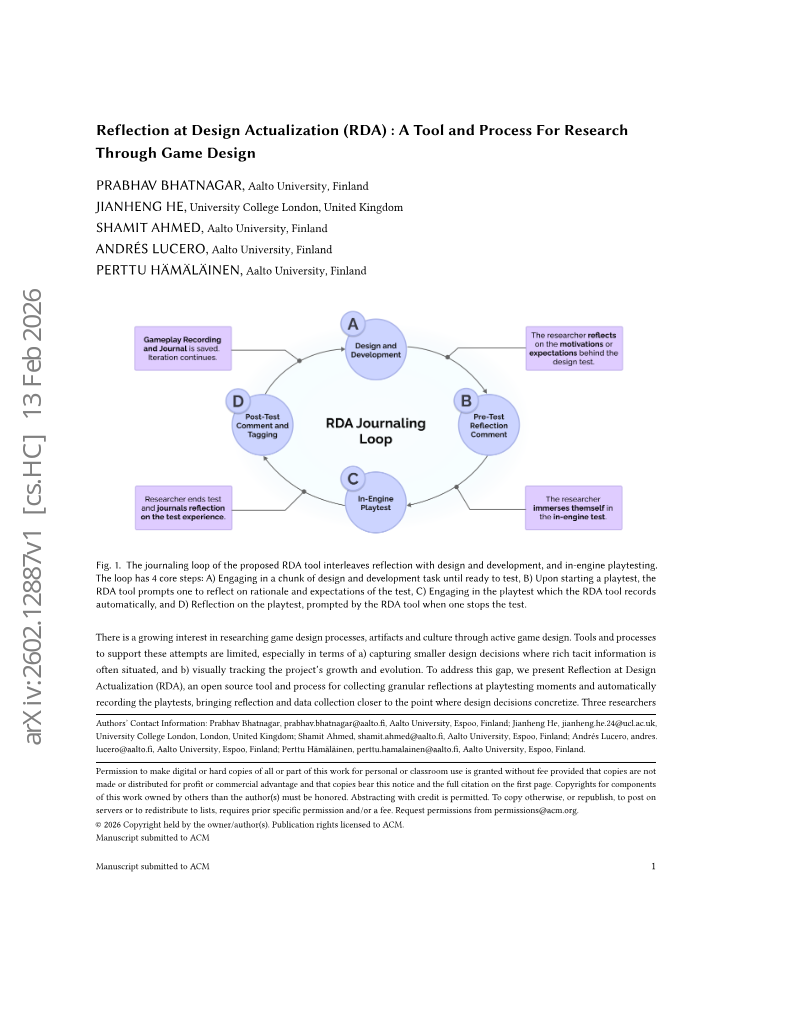
Aalto University · 2026
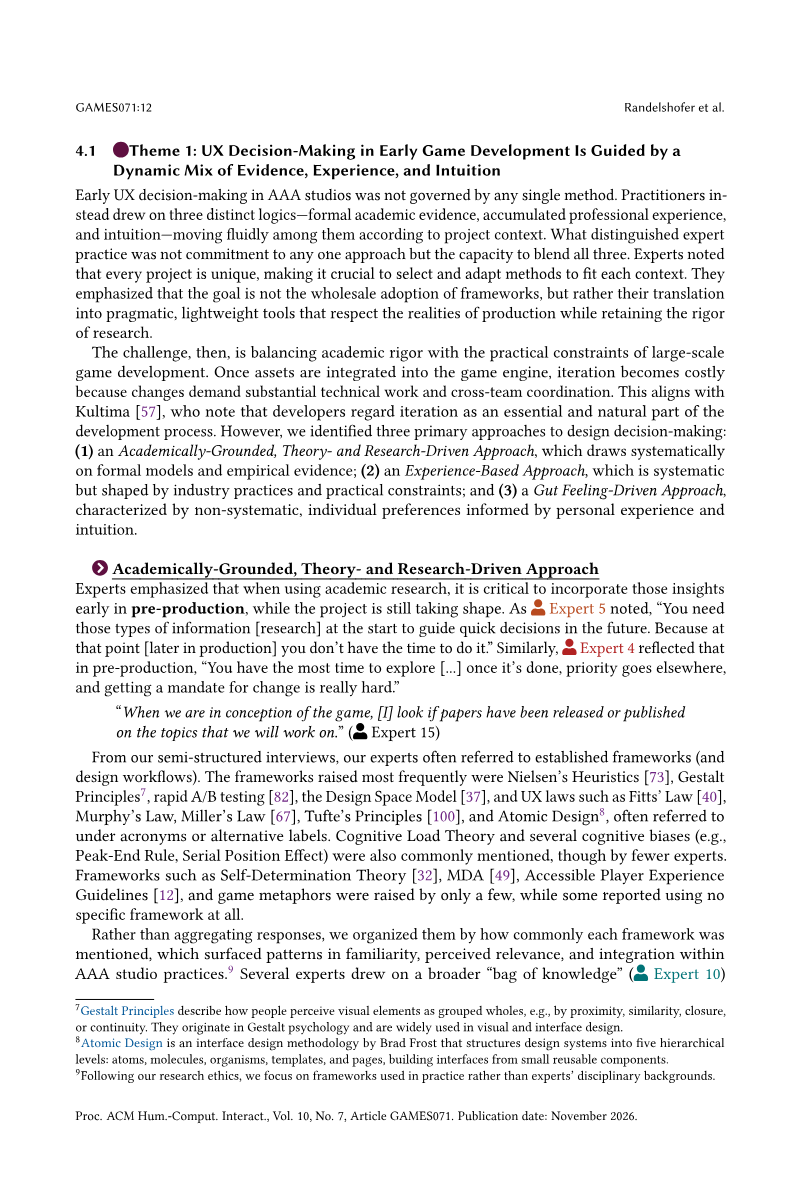
Proceedings of the ACM on Human-Computer Interaction · 2026

Two & a Half Gamers · 2026

Naavik · 2026

Jason Schreier · 2026

Game Developers Conference · 2026

Thomas Brush · 2026

PocketGamer.biz · 2026

Jason Schreier · 2026

The Game Business · 2026
European Conference on Games Based Learning (ECGBL) · 2026



European Conference on Games Based Learning (ECGBL) · 2026