Loading the document
Key insights
5 slides
Adapting research
AAA game development requires translating abstract academic research into pragmatic, internal languages.
It helps build design credibility and establish shared team vocabularies.
Like translating a complex legal document into everyday language for a specific business context.
1 / 5
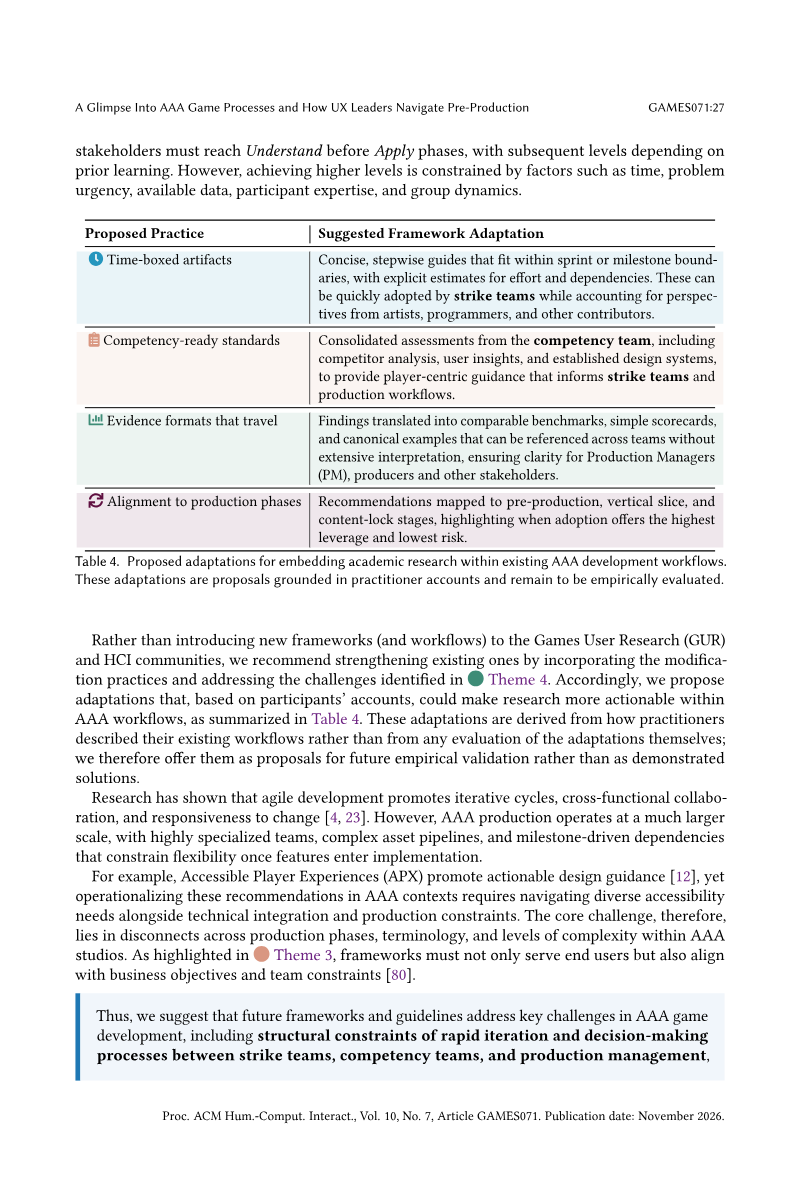
- 01AAA game development requires translating abstract academic research into pragmatic, internal languages to fit rigid, milestone-driven production cycles.See it on page 27
- 02The gap between academic theory and industry practice is primarily a structural and political challenge rather than a lack of conceptual clarity.See it on page 25
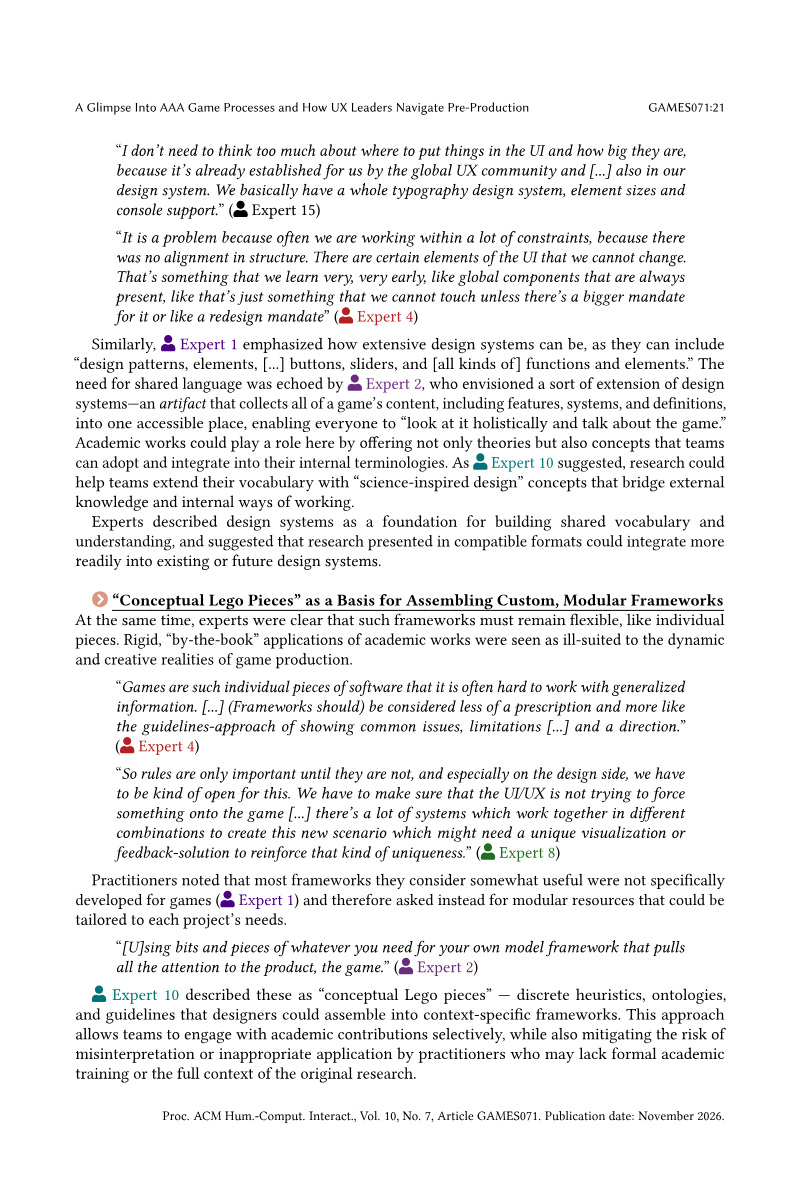
- 03Practitioners successfully integrate research by embedding insights into modular, context-sensitive tools—or 'conceptual Lego pieces'—that fit existing design systems.See it on page 21
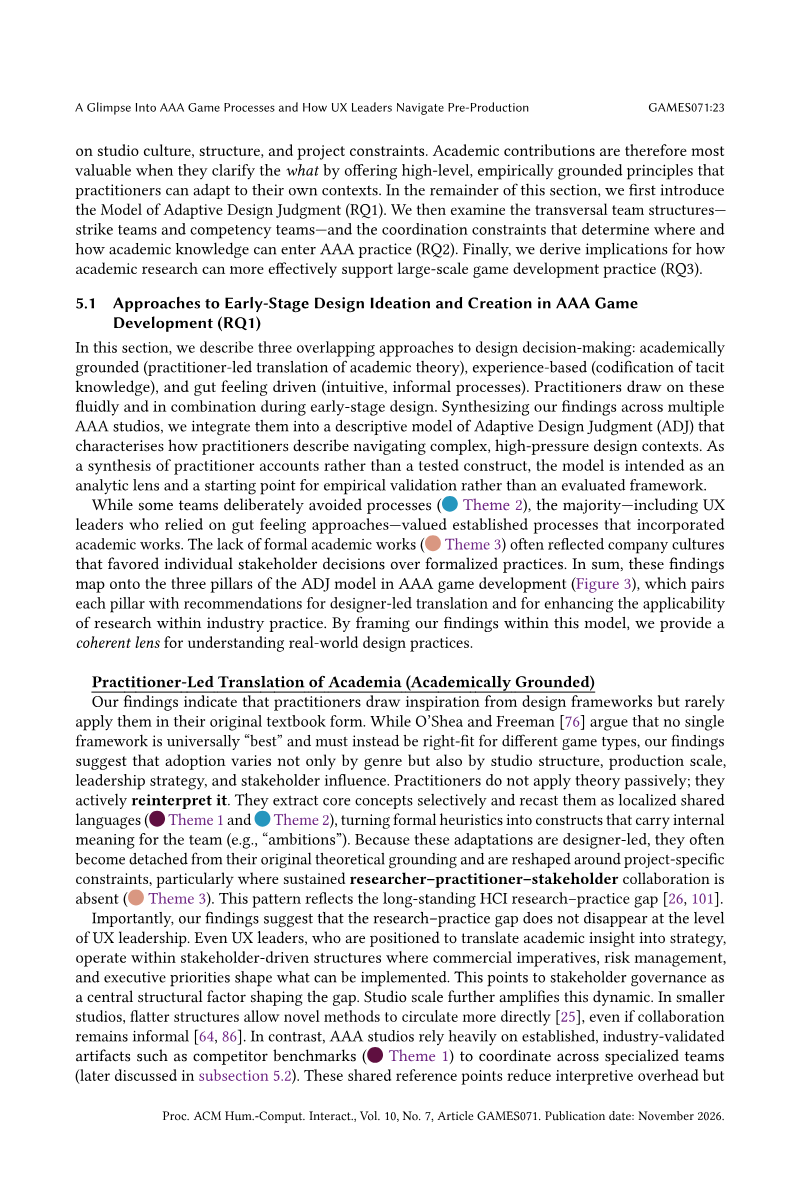
- 04The Model of Adaptive Design Judgment categorizes effective decision-making into three distinct logics: academically grounded, experience-based, and instinctual.See it on page 23
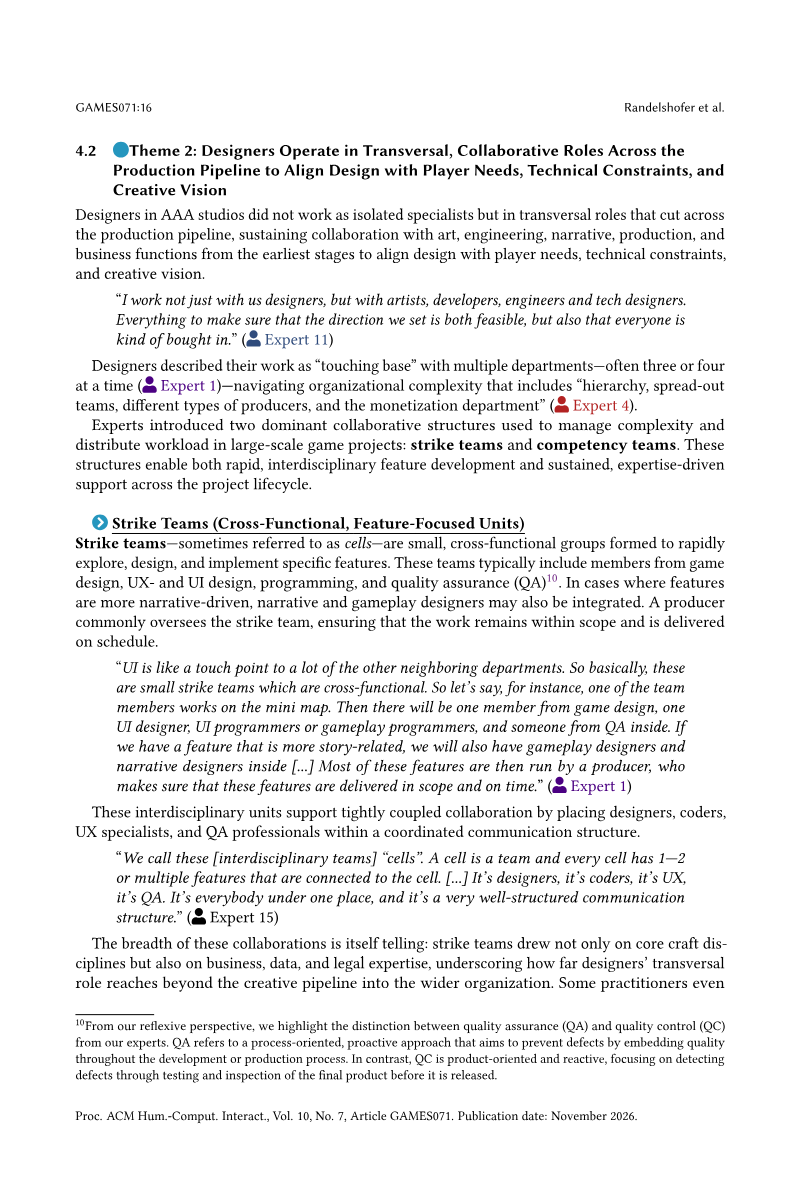
- 05Organizational success relies on a dual-layered structure of cross-functional strike teams and discipline-specific competency teams to maintain design rigor.See it on page 16
- 06To remain actionable, research must be transformed into concise, milestone-aligned artifacts that support rapid, iterative development.See it on page 27
Ask AI about this report
Summary
AAA game development relies on a complex synthesis of academic theory, professional experience, and intuition to navigate the high-pressure environment of pre-production. While formal research is valued for its ability to build design credibility and establish shared team vocabularies, it often fails to account for the industry’s rigid, milestone-driven production cycles. Consequently, senior UX leaders frequently adapt academic frameworks into pragmatic, internal languages that align with the unique creative and technical constraints of large-scale projects. This research highlights that the persistent gap between academic theory and industry practice is primarily a structural and political challenge rather than a lack of conceptual clarity.
To address this divide, the industry utilizes a dual-layered organizational structure consisting of cross-functional strike teams and discipline-specific competency teams. Within these environments, designers favor modular, context-sensitive tools—referred to as conceptual Lego pieces—that integrate seamlessly into existing design systems and internal guidelines. By embedding research-informed insights directly into these socio-technical infrastructures, practitioners can bypass the limitations of standalone academic models and ensure that evidence-based design remains actionable throughout the development lifecycle.
The proposed Model of Adaptive Design Judgment formalizes this process, categorizing decision-making into three distinct logics: academically grounded, experience-based, and instinctual. By validating these practitioner-led adaptation strategies, the industry can better reconcile the need for rigorous design with the realities of commercial production. Ultimately, the successful integration of research into AAA development depends on transforming abstract frameworks into concise, milestone-aligned artifacts that support collaborative decision-making without disrupting the rapid, iterative nature of modern game production.













