1 free read left. Create a free account for unlimited reading + AI research.
Create free account
6 legal areas no mobile game developer should ignore
Key insights
7 takeaways- 01Intellectual property risk management requires rigorous onboarding protocols to prevent the ingestion of third-party IP, which is a primary driver of litigation in the mobile gaming sector.
- 02Software patents remain a viable protection strategy, and developers should actively audit their game features to identify potential patentable inventions or trade secrets.
- 03Copyright infringement risks extend beyond direct copying to include 'inspired' assets like tattoos or existing media, necessitating professional clearance before implementation.
- 04Generic, internet-sourced contracts are a liability that can derail acquisition opportunities, as potential buyers conduct deep due diligence on the enforceability of a developer's legal documentation.
- 05Developers must implement explicit 'click-to-agree' mechanisms for terms of use and privacy policies, as burying agreements behind scroll bars or ambiguous buttons renders them legally unenforceable.
- 06Direct marketing and influencer campaigns must include transparent disclosures of paid promotions to comply with regulatory standards and avoid class-action lawsuits.
- 07Privacy compliance must be regionalized to account for varying global standards, with specific attention required for jurisdictions with stringent regulations such as Germany.
Ask AI about this video
Transcript
[Music] so we've talked a lot about risk today and how to take it and why it's a good reason to take it it's a good reason for your business I'm a lawyer I hate risk so we are going to be talking about issue spotting risk my goal here is for you to look at things that are happening within your business and be able to say is this a risk I'm willing to take if the answer is no or I need more advice pick up the phone call your lawyer so this is what we're going to talk about we're going to talk about these six things it doesn't have to be six it doesn't it could be five four but I think these are the areas where if you ignore the issues here you could be putting your business in a situation that you really just don't want to be so let's let's start with patents and trade secrets you know you have something you know what is it you know everybody's excited about that it's in your game can you do anything
with it can you create a valuable intellectual property portfolio the reason why you should be thinking about this is because it's one of many different exit strategies your business might have it might be to have a valuable IP portfolio that you sell some of you may have heard of the Alice case you know in in common nomenclature it is the death knell for software patents I'm here to tell you that it's not you can patent video game software so there's two recent examples of software patents in the video game space that have survived challenges in court that have been used in court and so the point being if you've heard you can't patent what you have the answer is you might be able to and so you really should be thinking about if I have something if you have something you're excited about can you patent it the other side of the patent coin is trade secrets right patents are public you make the information available to the population
trade secrets are exactly the opposite they're valuable because no one knows about them the koch formula is the example of a trade secret a trade secret doesn't exist just because something is secret a password on a computer and in agreement with your employees to keep everything confidential is not nearly good enough to create a trade secret so the list here you know it's not for you to remember the concept is there are a lot of different things that you need to think about about whether or not you are indeed creating a trade secret if that's something that you have if if your company is going through some sort of due diligence and you're able to show we have these three patents we have these five trade secrets here's how we protected it that IP portfolio has a lot of value so if you think you have something that's valuable think about your trade secrets and think about whether or not you should really dig into the various ways in which you're protecting the secrecy of that information you should also be thinking
about best practices in the trade secret space and there two issues there one is protecting your own trade secrets making sure that your trade secrets aren't leaving the building right the other is making sure that you aren't ingesting someone else's trade secrets because that's when you see litigation that's when you get sued because you hired someone and they brought with them documents that they weren't supposed to bring or they didn't bring them into your company at all they kept them on their computer at home but if you're not talking to onboarding employees about the agreements they have and making sure that they've deleted all of that data you may be setting yourself up for a lawsuit so in the in the IP portfolio space if you think you have valuable information think about your patents and think about your trade secrets and don't just someone else's trade secrets into your business copyrights really quick if if it ever any moment you think I've seen this before I've heard this before I get this I've played this game before stop hit pause pick up the phone call
the lawyer because copying in copyright infringement it doesn't have to be identical and omage to something can be enough to get you into the situation where you're dealing with copyright infringement issues the two games that are on the screen here come from a litigation in court in in San Francisco the game on the left - the game on the right over various elements about the game that were alleged to have been copied and were copyright infringement you can see it's not the same game you can also see that there are similar elements so if at any point in time there's anything that you think I've seen this pause is litigation over tattoos litigation over images so really just tread carefully if you ever think that you might have something in your game that someone else had in their own IP contracts I get it lawyers are expensive and one way that I
see businesses cut corners is they hire the CFO to write the contract or the president writes the contract we're not going to hire the lawyers to write the contracts perhaps the most ridiculous situation I saw was two guys with one laptop and the internet and they found contractual provisions they liked and they mush together a document and then someone doesn't pay someone and now we're into a lawsuit and who knows what this contract means because the contract wasn't drafted forth them you know it was terms that were drafted by somebody else they pulled off of the Internet don't do it it's incredibly expensive to deal with litigation so you know pay the couple thousand dollars to work with a lawyer to have a well drafted contract because that will not only protect your company if you are thinking about an acquisition strategy the lawyers for the company that's acquiring your business will be looking at the contract and will be making decisions about whether or not
your businesses want to do a deal with based upon the quality of those agreements if they think there's a problem you either might not get acquired or the price might not be right or you might have some provisions you have to give back so just just don't do it Terms of Use most games have Terms of Use embedded inside of them and a privacy policy they should they're also probably for the most part unenforceable why because most studios aren't thinking about creating an enforceable term of use from the perspective of contract law that's how the courts think about Terms of Use do you have a contract with your player over the language that's in the Terms of Use and let's really get down to it you probably have a class act and waiver in there you know that a thousand people can't see you you probably have an agreement to arbitrate in there courts don't enforce those if you don't create a mechanic where you can prove you had a deal with the player over the Terms of Use so
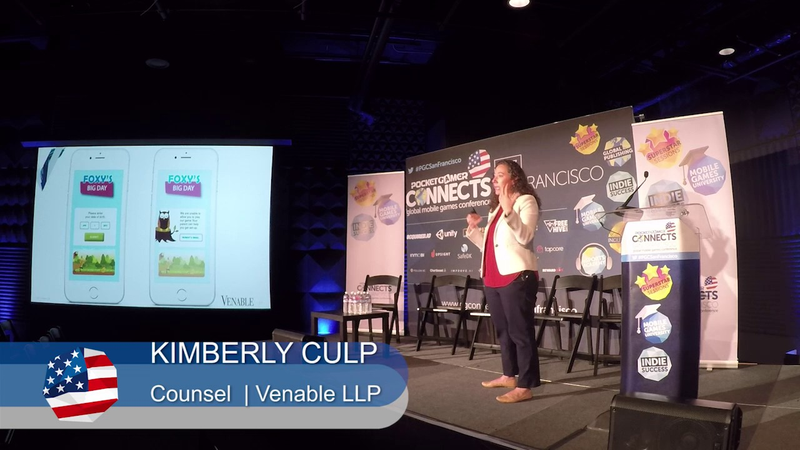
that I'm not picking on someone else's game we've created our own pretend game Foxy's big day so let's see how we would create an enforceable term of use in foxy the very first screen when the player loads the game should be the User Agreement and the privacy policy and before before any gameplay happens that's a best practice that's my preferred approach there are some problems with the screen the first is you need consent to the privacy policy to your privacy policy is also a contract with your player so use the contractual language by selecting agree you agree to the User Agreement and the privacy policy great now show your user a link to get to the User Agreement a link to get to the privacy policy you don't need the don't agree button here if they don't click agree they don't move forward the screen on the right this is my preferred approach I think
this is a gold standard if you will which is that you list upfront all of the agreements we've added a third and end user License Agreement certain games have four or five different agreements depending upon how you break it out whatever it is you think your user needs to know to play the game you need to get consent to it so list them out make sure that they can see it and then use language of consent I have read and accept the privacy and cookie policy Terms of Service and an user license and accept language of consent a court will enforce this here's one a court won't enforce I've seen this it's terrible don't do it so we have a scroll bar if you will maybe you're telling a story about Foxy's going to go find her friends and it'll be great you should play the game and you can hit play now you don't have to read the story okay but if you were you get all the way to the bottom and you see by clicking play you agree to Fox's User Agreement
privacy policy you never had to scroll down so the court will not enforce it if you can't prove that the player absolutely necessarily had to see the agreements that you wanted them to consent to that they understood that by moving forward they were consenting it will not be enforced so you could have a class action you could have arbitration issues you can have the FTC talking to you about how you're using data because you didn't get consent over the use of data so here's a not best practice but another approach to getting consent to use your agreements and privacy policies which is to host it up in the middle of the game at some point perhaps it's right before the player purchases a token or creates an account or at the end of the tutorial whenever it happens that should be a conversation you have with counsel so if you're going to go this rep route you should be talking to a lawyer about when is the best time to serve up the consent agreement agreement if you do it though
don't hide it don't be coy about it don't be cute don't try and like keep the player going and get the agree make it big make it bold make it clear and use again language of consent I've included a don't agree button here you don't need it if you had it the game would shut down right if someone doesn't agree you don't let them continue privacy we're going to talk a little bit more about privacy gains are our global mobile games in particular we're in the US and we're very US focused if most of your players are in the US there may be a reason to have a privacy focus that's very US focused if most of your players or most of your money or a fair percentage of it is coming from outside of the US you need to think globally about privacy because the United States does not have the most stringent laws as it comes to data privacy that would be Germany that you Canada Australia so do the most for the most people I'm not asking you
to have 190 different privacy policies that you know comply with all of the laws of all of the various different countries you might have - it might be the US and everywhere else it might be Korea and Germany and everywhere else that's a conversation to have looking at the numbers and looking at the data that you know about so if you're not a hundred percent US you should be talking with a lawyer about how to keep the most people happy so that you don't fall into problems outside of the US in the u.s. if your game is targeting children think about whether or not you can satisfy the most gamers on your platform the kids and the adults whether or not you can segregate some section of your game that perhaps is inappropriate for children I'm a parent I think of the chat functions and some games that really are appealing to my children she might under thirteen year old children and some of the language and the chat is not
appropriate for them you know it would be to age gate that game so that if the user is under thirteen they don't see that chat function they're not talking to someone from a different country if you're going to use an age gate for whatever reason yes/no is not a practice I like because I can tell you my five-year-old can figure out which button to push so he can keep playing the game I prefer the option on the left here and the reason why is I don't think he can figure out how to you know put in the right date to trick the system to get over 13 you know if for whatever reason you see behavior that suggests that you have a child trying to figure out the system you know you understand your data you should really be thinking about how do I demonstrate to the parties that matter and the parties that matter are plaintiffs who are suing you or the FTC who's really worried about how you're using data that you've really tried to segregate out children so think about an age gate if it's appropriate for your game and who your audience is
and you know that information best privacy policies we talked about those are contracts if you change them you need consent again the change is not enforceable will not be enforced if you don't get consent again so if you update the privacy policy so Foxy's updated her privacy policy the very first thing the player should see is a notification we've updated the privacy policy check it out the check it out would be a hyperlink to the privacy policy you could be a little bit more specific if you wanted to be you could say this is what we've done now we're tracking your location data but whatever you do remember it's a contract and so use language of consent I agree I accept okay continue not good enough the last topic that we're going to talk about is direct marketing and so I mean I mean two things I mean email marketing and I mean text
marketing you don't need to worry about the language that's on either one of those slides and I'll tell you why there are a lot of statutes that regulate text marketing email marketing how you can do it the best ways to do it it's complicated it's very heavily regulated there's a lot of lawsuits over it how might you do it you might be sending emails to your players that says gee it's been 10 days since you were here we're going to give you something we're going to give you a token we're going to give you you know whatever a widget in the game it might be hey you know send this email to five friends and we'll give you the token or the widget or whatever you know any of that kind of behavior to drive attention to your game is risky and you should absolutely 100% be talking to lawyers about how to make that system work so that you can satisfy all of the various things that you need to do in order to satisfy the statute and then a bonus since we have a little
bit of time on the clock which would be we've we've heard about it earlier influencers if you're going to use influencers right FTC's paying a lot of attention to that these days you should be thinking about what your disclosures look like you know the the notes there is you need to disclose that you're paying people to promote your game so six takeaways if there's something cool about your game something really exciting about it you might have an invention that's patentable you might have a valuable trade secret you can create a lot of value for your business if you think about it up front early on and whether or not you want to take the steps to protect it also by creating that IP you can create a buffer between your business and others if there was ever to be any sort of litigation if you're taking inspiration from anything you know be it songs movies art tattoos other games hit pause you know because
you don't want to find yourself in a copyright infringement lawsuit you could certainly take steps to insulate yourself by getting clearance by going to the artist in the local gallery and saying Hale pay you a hundred bucks if I can have the right to use that art in my game early on they'll probably say yes if your game has you know five million users and is making a ton of money it's not going to go for a hundred bucks don't find your contract terms online just don't do it your Terms of Use and privacy policies their contracts think about them like contracts make steps within the game to make sure that you're getting consent to both of those things and have a global approach to privacy you know we're in the u.s. and we think about our laws but the global the global approach is really important to make sure that you don't find yourself dealing with a regulatory action in Germany and then if you're going to drive traffic to your game with emails and texts it's risky and so just stop right there you can do it but you need to talk to a lawyer first
questions thank you very much yet I mean I've got a quick question one of the things that I think was interesting there is that as you rightly say we have to be really upfront when we want to have terms like Polar's profits quality in terms of youth but I think I wonder if there's a current tension between the onboarding process and that sign up practice you know that if you have registration really early on kills your adoption yes how do you help people in going to undersell how to balance that judgment cool so my my general rule of thumb is if you're not collecting any data you're not collecting any money you're not collecting any email addresses you're just giving the user a tutorial that's a reasonable risk so go ahead teach them how to play the game get them interested get them excited and then use a very clear big bold process where they have to consent to continue if at any point
in time in the tutorial though they can give you an email address any sort of personally identifying information by creating an account or they can start buying tokens at that point you need to have consent because the question is did they understand what you were going to do with the data did they understand what you're going to do with the money did you did they understand that if they don't and they come back and sue you right I think that's really the key Camry is about consent the consent is being built rather than trying you know we don't want people to feel that we tricked them into the process we want to be transparent and what I found really interesting in my career and I've worked on all sorts of places like PlayStation Home and mobile operating this brace things like that is the more transparent you are the more people trust you yep and then more people will spend money and that's why you shouldn't hide it big be clear let them know what you're doing and they'll click through and keep going does anyone else have a quick question before we get one in person over here we've got microphones coming too excellent talk I was wondering when you
localized it for other countries should you translate the Terms of Service and Privacy Policy into the native tongue it depends upon your jurisdiction so in Germany you must write so you don't have a choice in Germany I'm not a German lawyer so I can't speak to all the German laws but having done it I can tell you you must translate into German if you're going to go into Korea or Japan you would do that there as well they have different laws for the most part you see the approach the general approach is us and everywhere else and then in Germany you would serve it up in German in Korea you might serve it up in Korean and Japan etc but you're not necessarily going to translate it into all languages that are out there and you're really thinking about what's your data because that's where your risk is right if it's 90 percent of your users are in Germany you should be paying a lot of attention to German privacy laws if you have two users in Germany maybe you don't pay for it you know technically you're supposed to but maybe
you don't pay for because you've only got two people there so you really do need to be paying attention to you know players or revenue I think more in terms of players but revenue would be another way to sort of slice and dice that you [Music]
Summary
Mobile game developers face significant legal exposure that requires proactive risk management to ensure business viability and successful exit strategies. Legal counsel emphasizes six critical areas: intellectual property, copyright, contracts, terms of use, privacy, and direct marketing. Developers should actively evaluate whether game features are patentable or qualify as trade secrets, noting that software patents remain viable despite common misconceptions. Protecting trade secrets requires more than basic internal confidentiality; it necessitates rigorous onboarding protocols to prevent the ingestion of third-party intellectual property, which is a frequent source of litigation.
Copyright infringement remains a major risk, particularly when developers draw inspiration from existing media, tattoos, or other games. Even non-identical similarities can trigger legal action, making early clearance and professional consultation essential. Furthermore, developers must avoid the common pitfall of using generic, internet-sourced contracts. Poorly drafted agreements can jeopardize acquisition opportunities, as potential buyers scrutinize the quality and enforceability of existing legal documentation.
Terms of use and privacy policies must be treated as binding contracts. To be enforceable, these agreements must be presented clearly, requiring explicit user consent—such as a "click-to-agree" mechanism—before gameplay or data collection begins. Hiding terms behind scroll bars or ambiguous "play" buttons is legally insufficient. Given the global nature of mobile gaming, developers must adopt a regionalized approach to privacy, particularly in jurisdictions with stringent regulations like Germany. Finally, direct marketing via email or text is heavily regulated, and the use of influencers requires transparent disclosure of paid promotions to comply with regulatory standards. Balancing user acquisition with these legal requirements is best achieved through transparency, which fosters player trust while mitigating the risk of regulatory action or class-action lawsuits.




















Comments