Europe
National and regional reports on the European games industry.
328 documents
Dutch Game Garden · 2020
ReportGames Monitor: The Netherlands 2020 Update – COVID Impact
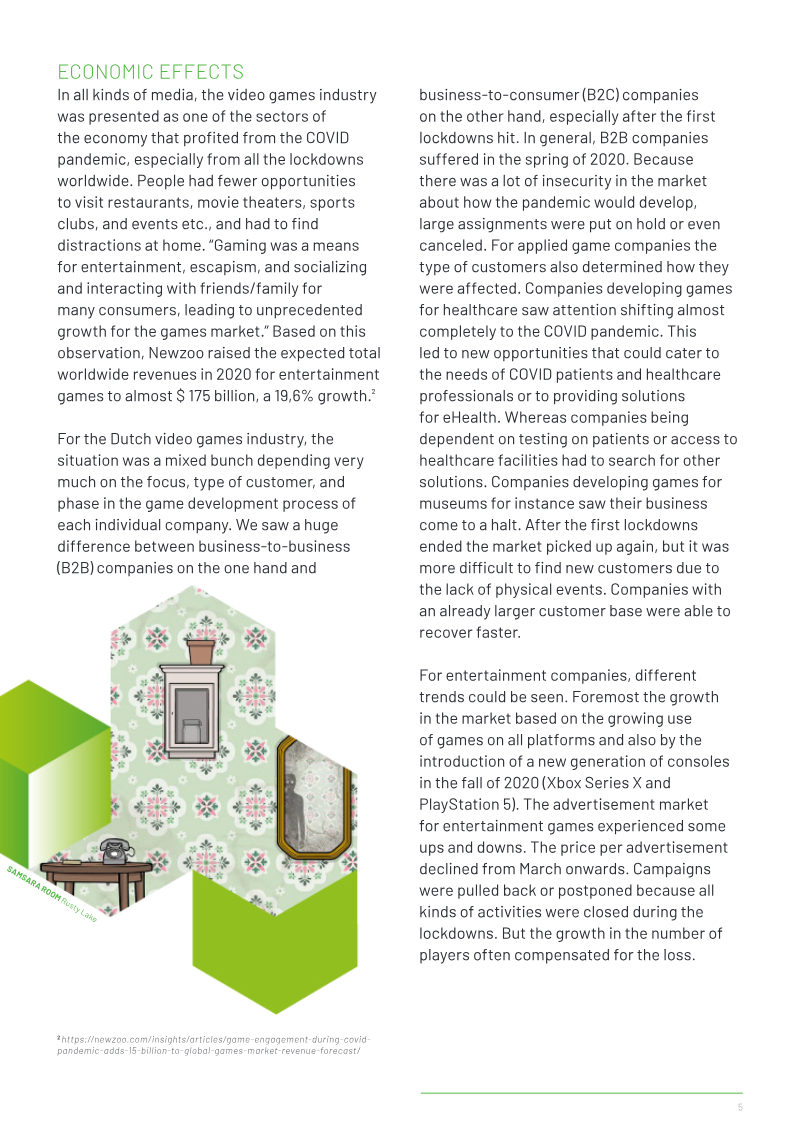
This update provides an analysis of the Dutch video game industry’s performance during 2020, specifically examining the operational and economic impacts of the COVID-19 pandemic. The findings are based on a survey of over 100 industry professionals conducted in late 2020, supplemented by desk research and database updates. The report tracks industry growth, employment trends, and the shift in business dynamics necessitated by global lockdowns. The Dutch games sector demonstrated resilience, growing from 575 companies in 2018 to 615 by the end of 2020, with total employment reaching approximately 4,000 jobs. While the industry largely transitioned to remote work with minimal impact on output quality, the pandemic created a divide between business-to-consumer (B2C) and business-to-business (B2B) entities. B2C entertainment companies generally benefited from increased consumer demand for home-based entertainment. Conversely, B2B and applied game developers faced significant challenges in the spring of 2020 as client projects were paused or canceled, though some firms in the healthcare sector identified new opportunities. Operational challenges were primarily centered on human resources and networking. While productivity remained stable for most, employee engagement declined due to the loss of informal office culture, and nearly half of respondents reported increased stress levels. The absence of physical industry events hindered the establishment of new business relationships, with one-third of respondents unable to pursue new business opportunities effectively. Despite these hurdles, the industry maintained its growth trajectory, supported by government labor cost subsidies that assisted approximately 85 companies during the initial lockdown phases. Overall, the sector proved adaptable, leveraging digital infrastructure to sustain operations while navigating a volatile market environment.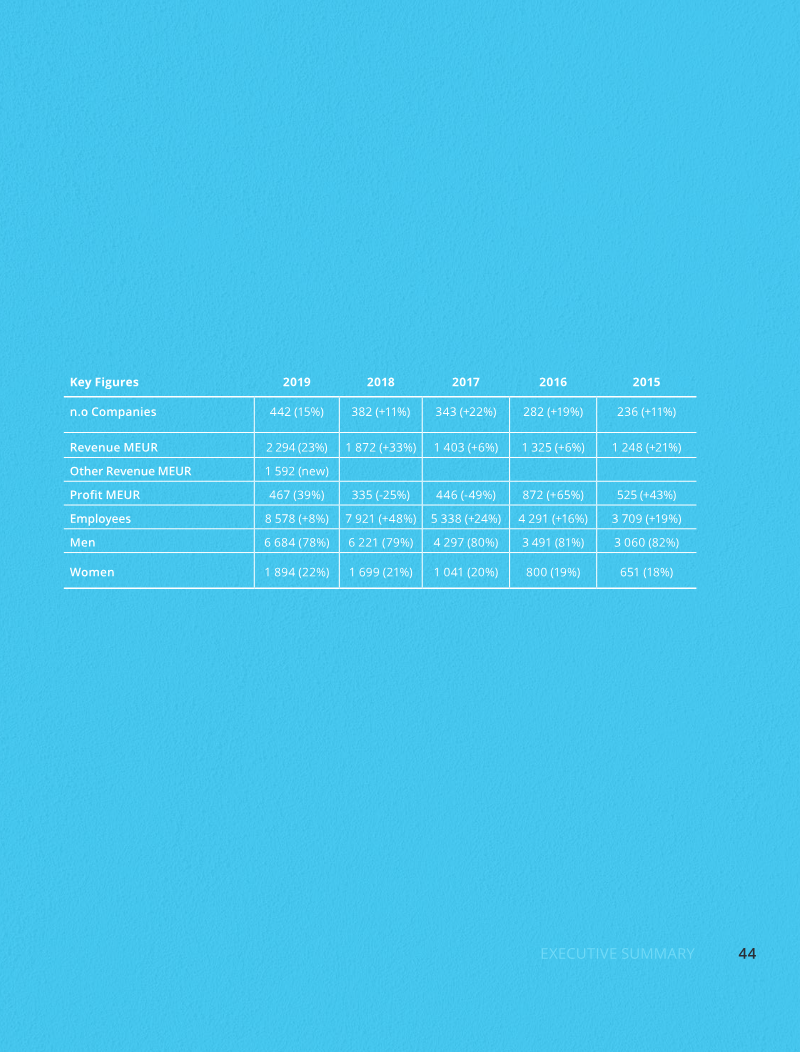
Dataspelsbranschen · 2020
ReportGame Developer Index: Sweden 2020
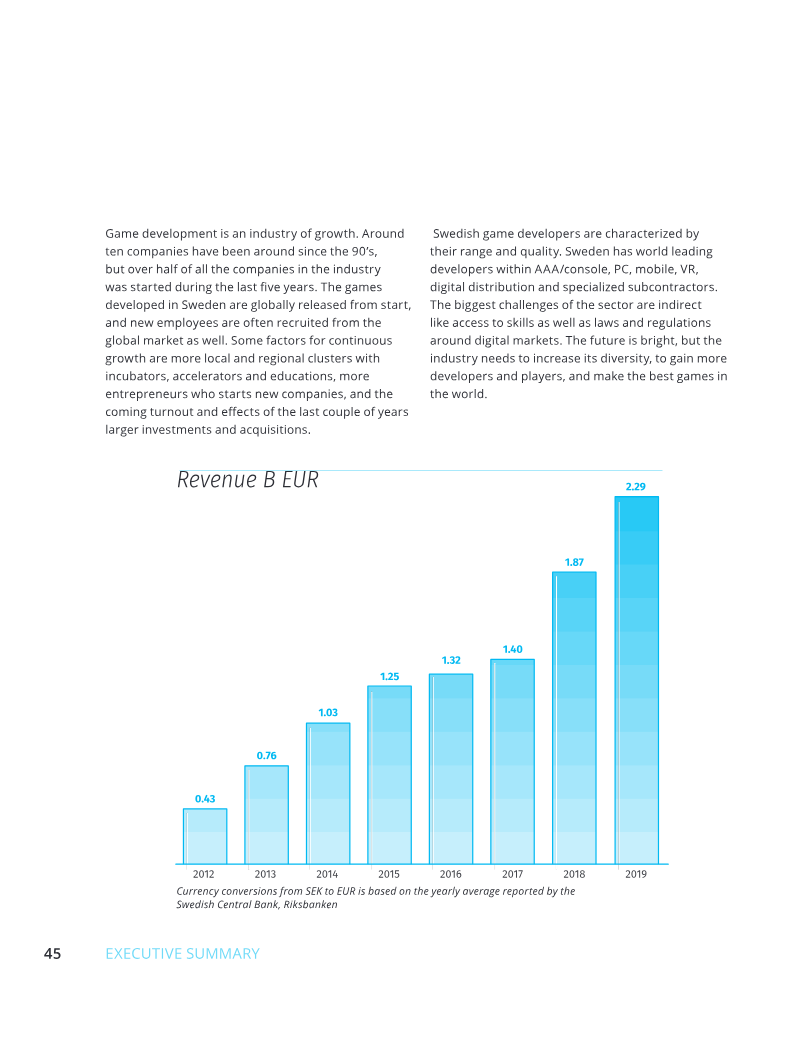
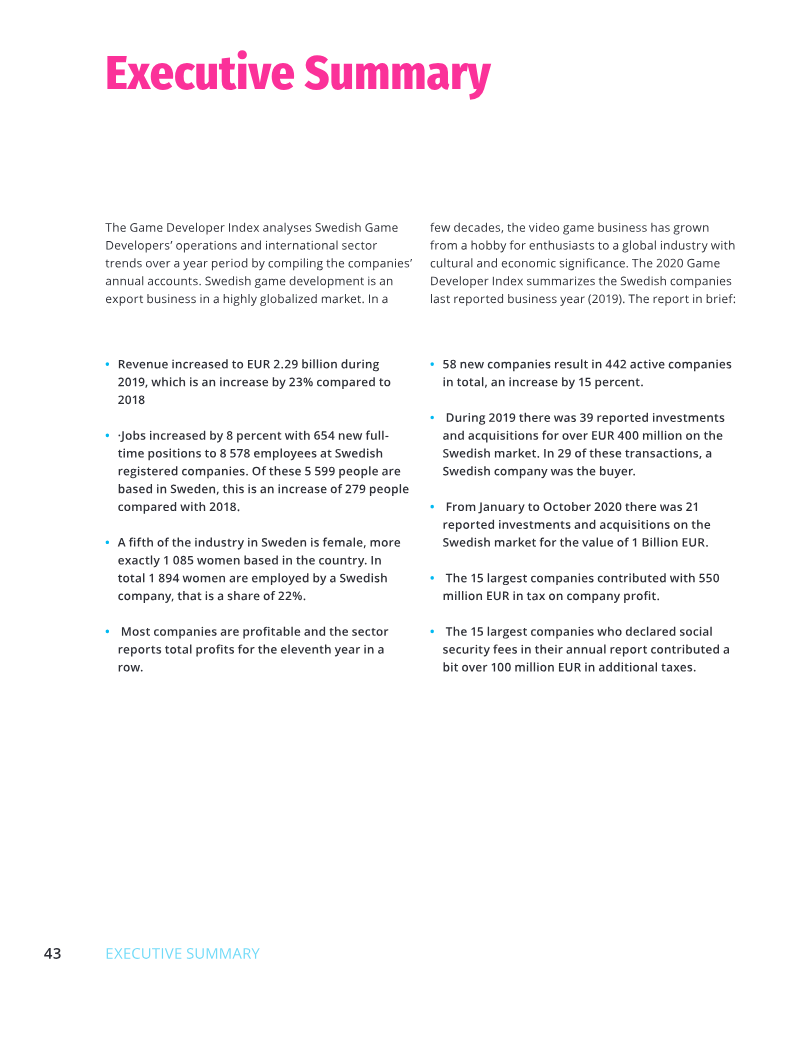
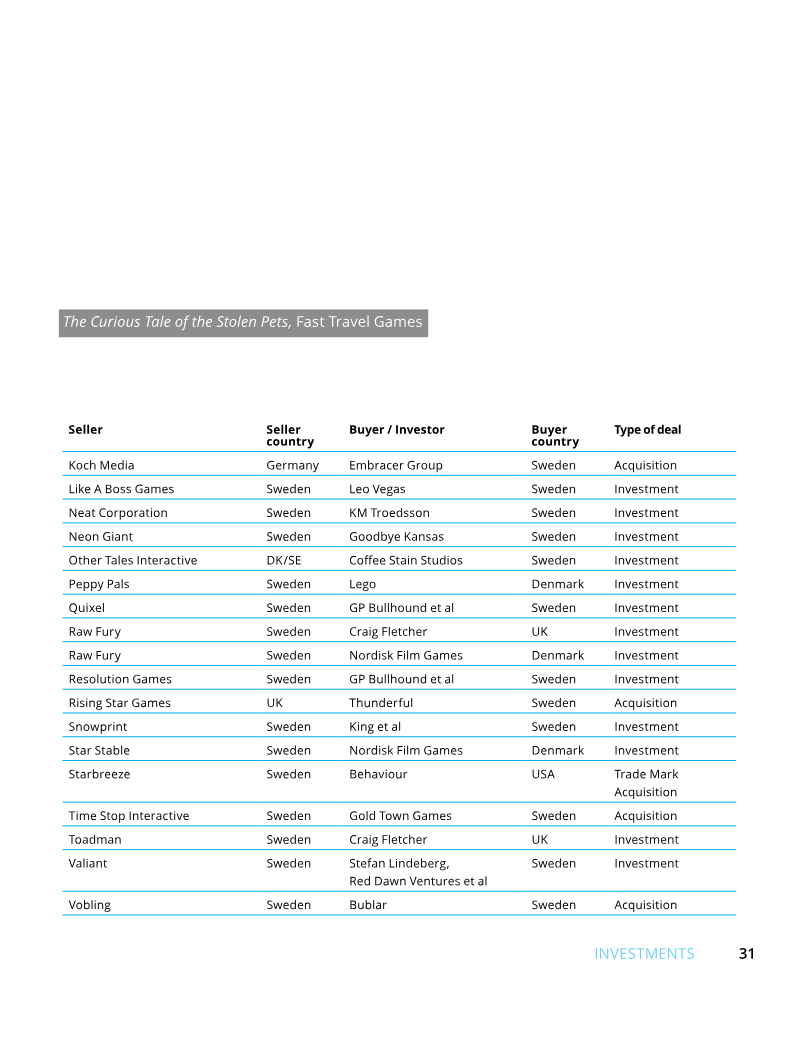
The Swedish game development industry demonstrates robust economic expansion and sustained profitability, functioning as a highly globalized export sector. By analyzing annual accounts from Swedish-registered companies, the industry reports a significant revenue increase to EUR 2.29 billion in 2019, representing a 23 percent growth over the previous year. This marks the eleventh consecutive year of total sector profitability, supported by a 15 percent increase in the number of active companies, which reached 442 by the end of 2019. Employment trends reflect this upward trajectory, with the workforce growing by 8 percent to a total of 8,578 full-time positions. Of these, 5,599 employees are based within Sweden. While the industry continues to scale, gender diversity remains a focal point, with women comprising 22 percent of the total workforce. The sector’s economic impact extends to significant tax contributions, as the 15 largest companies alone provided EUR 550 million in corporate profit taxes and over EUR 100 million in additional social security fees. Investment activity highlights the industry's maturity and attractiveness to capital. During 2019, the market saw 39 transactions involving investments and acquisitions totaling over EUR 400 million, with Swedish firms acting as the primary buyer in the majority of cases. This momentum accelerated into 2020, with 21 transactions recorded between January and October valued at EUR 1 billion. Despite these successes, the industry identifies ongoing challenges, particularly regarding the access to specialized talent and the navigation of complex digital market regulations. Future growth is expected to rely on regional clusters, incubators, and a continued commitment to increasing workforce diversity to maintain global competitiveness.
SGA · 2020
ReportGaming Industry Report: Serbia 2020
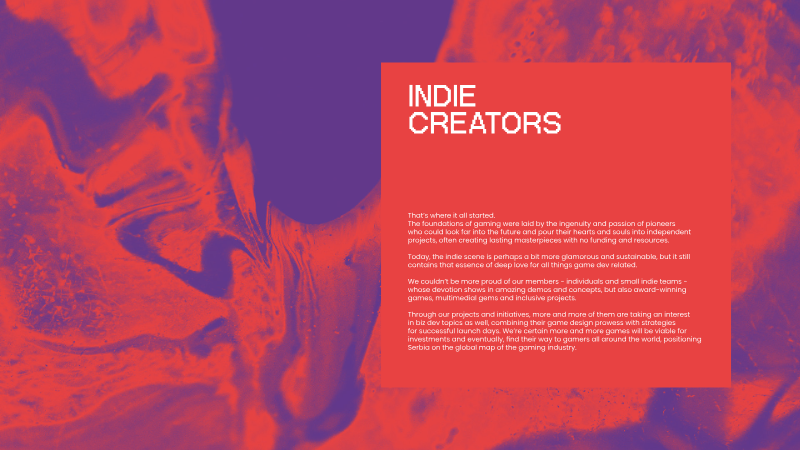
The 2020 assessment of Serbia’s video-game sector presents a rapidly expanding ecosystem that has moved beyond a modest, paper-based association to become a central hub for nearly one hundred companies. In a single year the industry surpassed €100 million in revenue, a 20 percent increase over the previous period, while supporting 120 development teams and roughly 2 100 employees, about one-third of whom are women. The market delivered 41 new mobile titles, with most studios concentrated in Belgrade and financing split between angel investors and state-funded programmes, which together account for 45 percent of capital. A clear majority of firms intend to grow their staff in 2021, despite citing regulatory red-tape, limited legal incentives and insufficient console support as persistent obstacles. The sector is dominated by small-to-mid-size studios, typically employing five to twenty-five people, that provide full-cycle development, consulting and backend-as-a-service solutions. Companies such as Elbet and Tummy Games have already achieved notable market traction, with Elbet’s products operating on more than 130 operators across 30 countries. The pandemic forced a swift transition to remote work, exposing resource constraints and talent-recruitment challenges, yet overall productivity remained stable and the community’s outlook stayed positive. Industry networking was sustained through a dedicated Discord community of over a thousand members and forty channels, while the Serbian Games Association launched talent-development initiatives including a “Shift 2 Games” job-role series and a mentorship pilot for fifteen participants. Parallel to these efforts, game-related education expanded dramatically: the Master 4.0 Hub in Gaming at the University of Kragujevac and a new master’s programme at the University of Arts in Belgrade will together serve more than 1 500 students, supported by over thirty professors and a dozen new degree and certificate programmes across ten institutions. Backed by partners such as Epic Games, Crater Training Center and Nordeus, this coordinated educational push is poised to supply a robust pipeline of world-class talent for Serbia’s indie and mid-size studios.
AEVI · 2020
ReportLas Mujeres Juegan, Consumen, Participan: Contribución a la Industria de Videojuegos en 2020
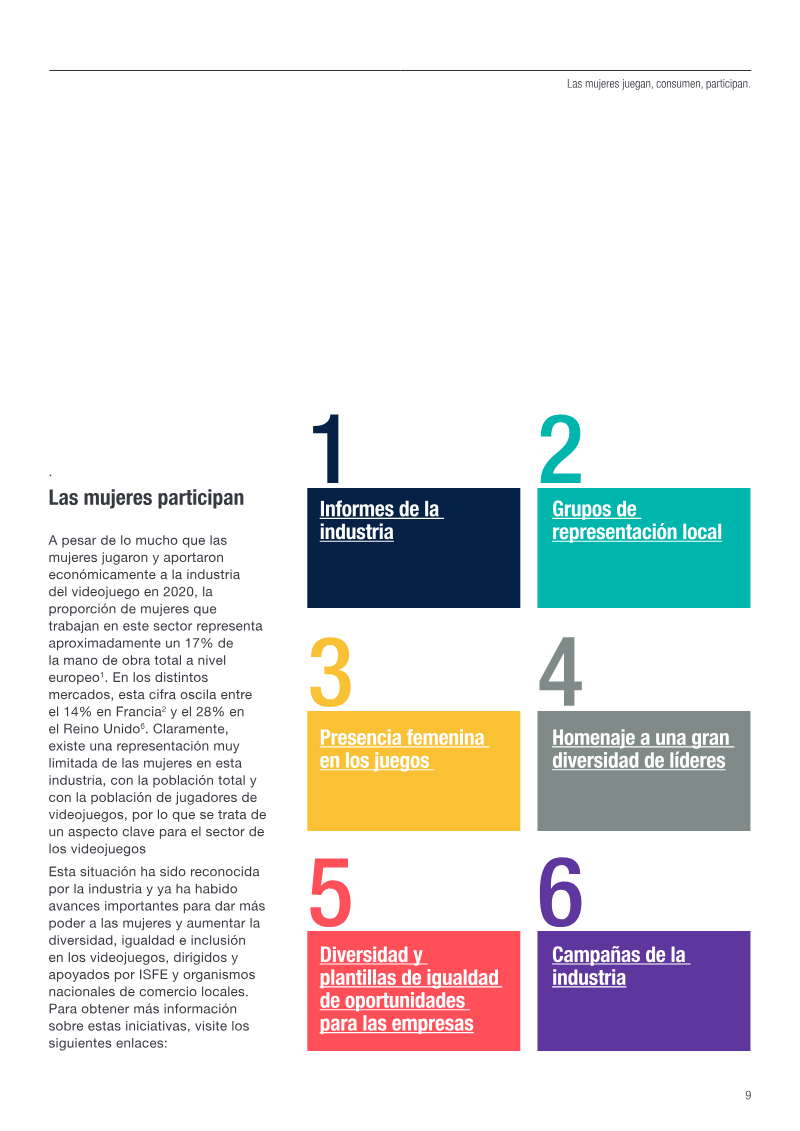
The analysis highlights how women have become a decisive force in the European video-game market in 2020, both as players and as consumers. By the end of the year 118 million people aged 6-64 were active gamers across Spain, France, Germany, Italy and the United Kingdom, with women accounting for 47% of that base—up from 45% in 2019. During the second-quarter lockdown a record 60 million women played, and their average weekly playtime rose to 8.8 hours, with console sessions increasing by roughly one hour compared with the previous year. Mobile gaming proved especially important, as smartphone and tablet usage among women grew 3% between Q1 2019 and Q4 2020. Financially, women generated 38% of total video-game spending in the five markets, translating into approximately €6.8 billion of the €17.8 billion industry revenue—a 31% year-on-year increase. Their purchases were split evenly between console titles and mobile apps, each contributing about €3 billion. The sector’s overall revenue rose by €3.2 billion in 2020, underscoring the economic impact of the expanding female audience. Work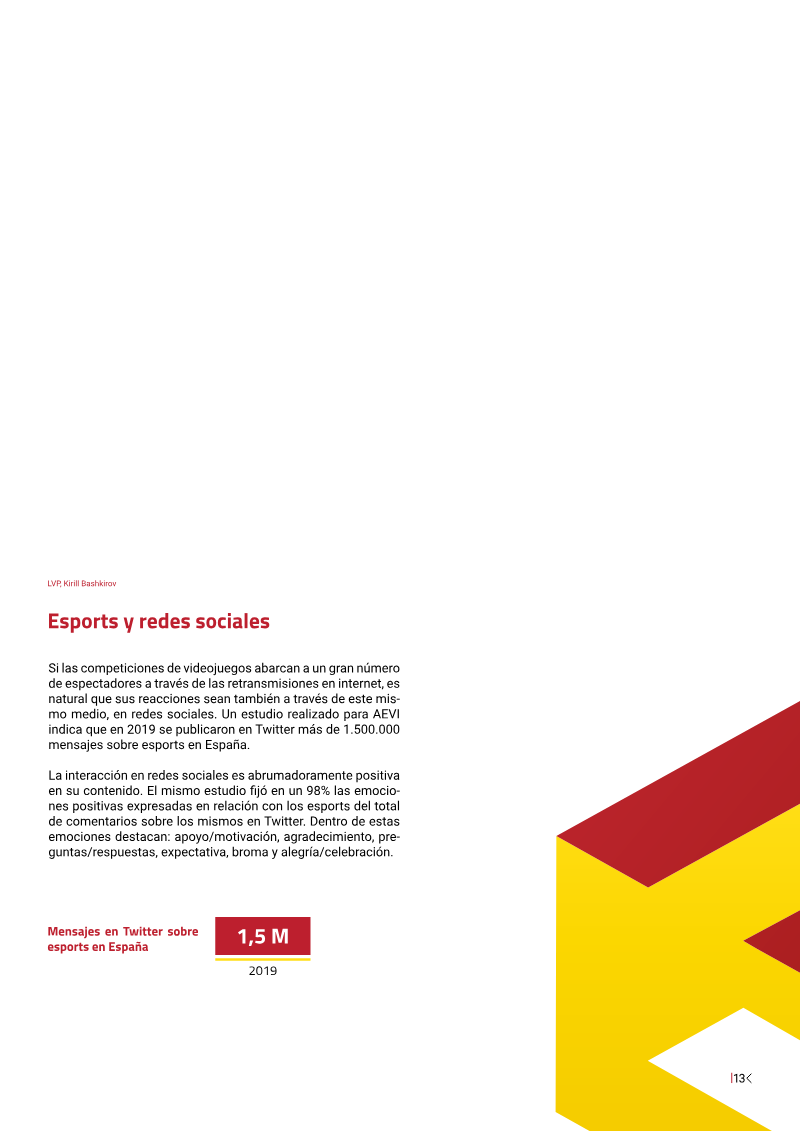

AEVI · 2020
ReportLos Esports en España: Situación Actual y Posición de la Industria
The analysis presents a comprehensive overview of Spain’s esports ecosystem, emphasizing its rapid expansion, market significance, and emerging challenges. Between 2016 and 2019 the sector more than doubled, rising from €14.5 million to €35 million in revenue, which now represents roughly four percent of global esports income. Employment grew to about 600 individuals, including 250 professional players, while advertising expenditure reached €22.5 million in 2019. Viewership figures place Spain twelfth worldwide, with 2.9 million regular spectators—over half of whom are older than 25—and a female audience share of 36 percent, the highest in Europe. Social engagement is strong, generating over 1.5 million positive mentions on Twitter. Spain has consolidated its position as a European esports hub, attracting high-level domestic talent, significant foreign participation, and flagship tournaments such as the League of Legends Championship, CS:GO, and Rocket League World Championships. Sponsorship is dominated by the three major telecom operators—Movistar, Orange and Vodafone—providing financial stability and visibility. The sector benefits from the involvement of leading publishers, platforms, and organizers like LVP, ESL and DreamHack. Despite these advances, the industry faces structural obstacles, notably the need for improved broadband and 5G infrastructure and the absence of dedicated esports legislation, which contrasts with neighboring France. Regulatory uncertainty and the commercial nature of esports, coupled with complex intellectual-property arrangements of game publishers, are identified as key factors that could influence future growth and investment.

AEVI · 2020
ReportCatálogo de Servicios – Desarrolladores: España
The catalogue presents AEVI’s strategy to strengthen Spain’s video-game development sector through a suite of collaborative services and targeted initiatives. Central to the effort is the celebration of the second anniversary of the association’s development area, which underscores a commitment to expand support for local studios, from established references to emerging independents. Since the start of 2020, six new development studios have joined AEVI, bringing the total roster to more than thirty members, including Artax Games, Binary Box Studios, Blackmouth Games and others. Financial assistance is offered through a €10,000 grant programme, while an affordable annual membership fee of €150 eases entry for smaller firms. AEVI also operates a mentor network, a job-matching platform, and a €10,000 aid scheme, and has conducted outreach across 15,000 km, meeting over 300 developers in cities such as Madrid, Barcelona, Bilbao and Seville. Key partnerships extend legal, technological and commercial expertise to members. Bird & Bird provides free initial legal consultations on intellectual-property, labour and tax matters; Tutelio supplies blockchain-based IP protection services; B2Boost grants access to weekly market-intelligence reports covering PSN, Xbox Live, Steam and Nintendo e-shop sales; Sorastream enables cost-free integration of games into its cloud-gaming platform with revenue-share terms for AEVI affiliates. Additional collaborations with Enumbers, Screenglitch, Make Good Art Agency and Gamingates deliver accounting tools, marketing support, digital-strategy advice and visibility in professional networks. Collectively, these measures aim to create a sustainable ecosystem for Spanish developers, fostering talent, facilitating market entry and enhancing the international profile of locally produced games.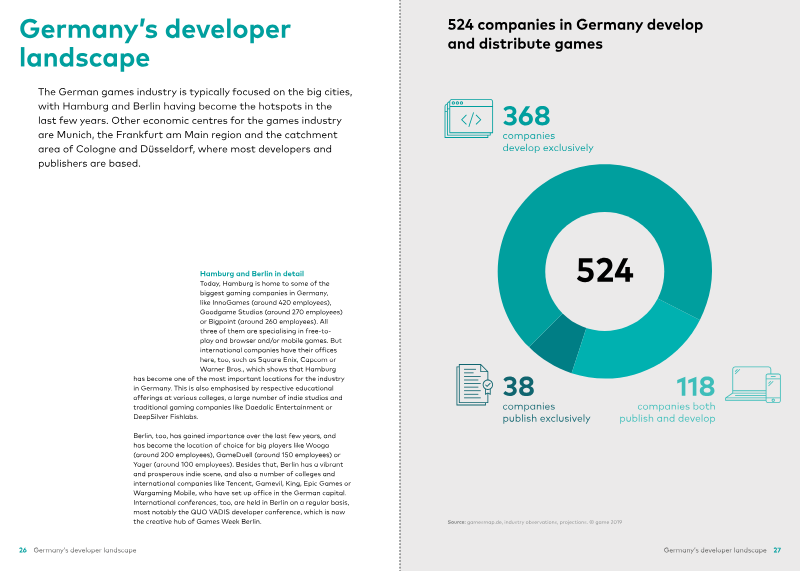
game – Verband der deutschen Games-Branche e. V. · 2020
ReportGames Industry 2019/20
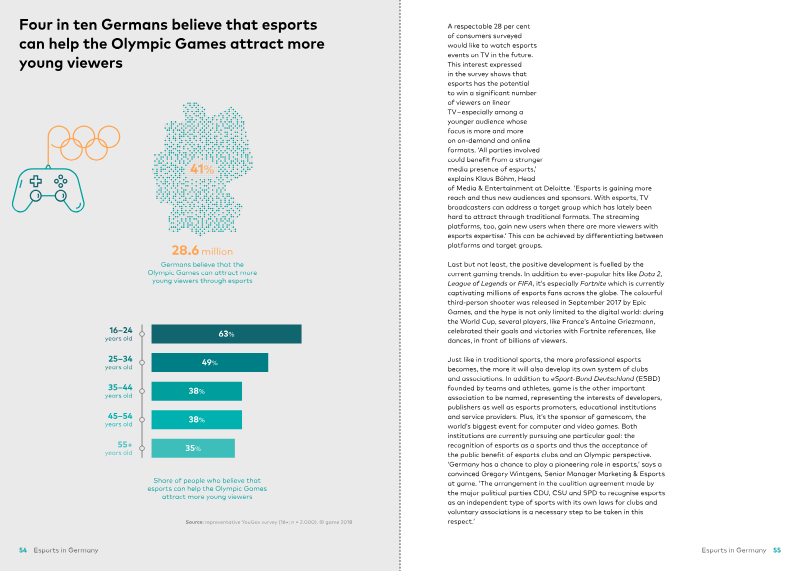
Germany stands as Europe’s largest video-game market and the world’s fifth-largest, a position reinforced by a robust developer community, flagship events and a policy framework that actively subsidises production. Federal funding of €50 million per year, allocated as non-repayable grants covering a quarter to half of project costs, is complemented by regional programmes and a business climate that benefits from a sizable domestic audience and a highly skilled workforce. The market generated a record €4.4 billion in 2018, expanding 9 percent year-on-year, while the sector’s organisational base grew to roughly 524 game-related firms that year. These include 368 development studios, 38 pure publishers and a further 118 hybrid entities, employing about 11 000 staff directly in development and nearly 28 000 when ancillary roles are counted. More than 50 higher-education institutions now deliver dedicated curricula in game design, computer science, art and virtual reality, concentrating talent pipelines in Berlin and Hamburg. Mid-size studios such as Deep Silver, Kolibri Games and Mimimi have produced internationally recognised titles, and the annual gamescom exhibition in Cologne underscores the industry’s global reach. In 2023 the event attracted 31 300 trade professionals, delivered over 500 000 concurrent viewers for its Opening Night Live broadcast and amassed more than 100 million video hits, prompting the launch of a gamescom Asia edition in Singapore to capture growth in the Asia-Pacific region. A dense network of over 200 development and publishing firms and more than 150 specialist service providers—spanning localisation, cloud infrastructure, legal counsel, marketing and middleware—covers virtually every German city. This comprehensive, SME-driven ecosystem, supported by mature ancillary services, positions Germany for sustained expansion and reinforces its role as a central hub for both domestic creation and international distribution of video-games.
GDACZ – Czech Game Developers Association · 2020
ReportCzech Video Game PC, Console and Mobile Game Developers in Czech Republic 2020
The study maps the structure and dynamics of the Czech video-game industry as of 2020, highlighting its rapid export-driven expansion and the strategic challenges it faces in talent development and public support. The sector comprises roughly 110 domestic development studios, of which only a small fraction are foreign branches, employing about 1,750 specialists. Turnover rose from CZK 2.26 billion in 2017 to over CZK 5 billion in 2020, equivalent to more than €190 million, reflecting an average annual growth rate of 29% over the previous five years and an export share near 95% to markets such as the United States, Germany and the United Kingdom. Revenue in 2019 already surpassed €169 million, outpacing the national film industry by a factor of three, and the market is projected to exceed €190 million in 2020. The analysis of the publishing and distribution landscape shows a shift away from traditional full-development financing toward a model where publishers act mainly as marketing and launch partners, while online platforms now dominate the transaction chain, reducing costs and marginalising physical distributors, of which only ten remain active in the country. Consumer data reveal an average gamer age of 33, a gender split of one-third women, and annual spending of roughly CZK 4 billion, with a strong preference for story-driven titles. Human-capital constraints emerge as a critical bottleneck: the industry confronts intense competition for skilled staff, a fragmented education pipeline, and limited visibility of creative industries within public policy. Unlike neighboring Poland and Germany, which allocate substantial public funds to game-industry support, the Czech Republic offers virtually no dedicated subsidies for research, development or innovation, despite the sector’s outsized contribution to national exports. The findings suggest that sustained growth will depend on coordinated investment in education, clearer industry-government linkages, and targeted public financing to bolster the sector’s competitive edge.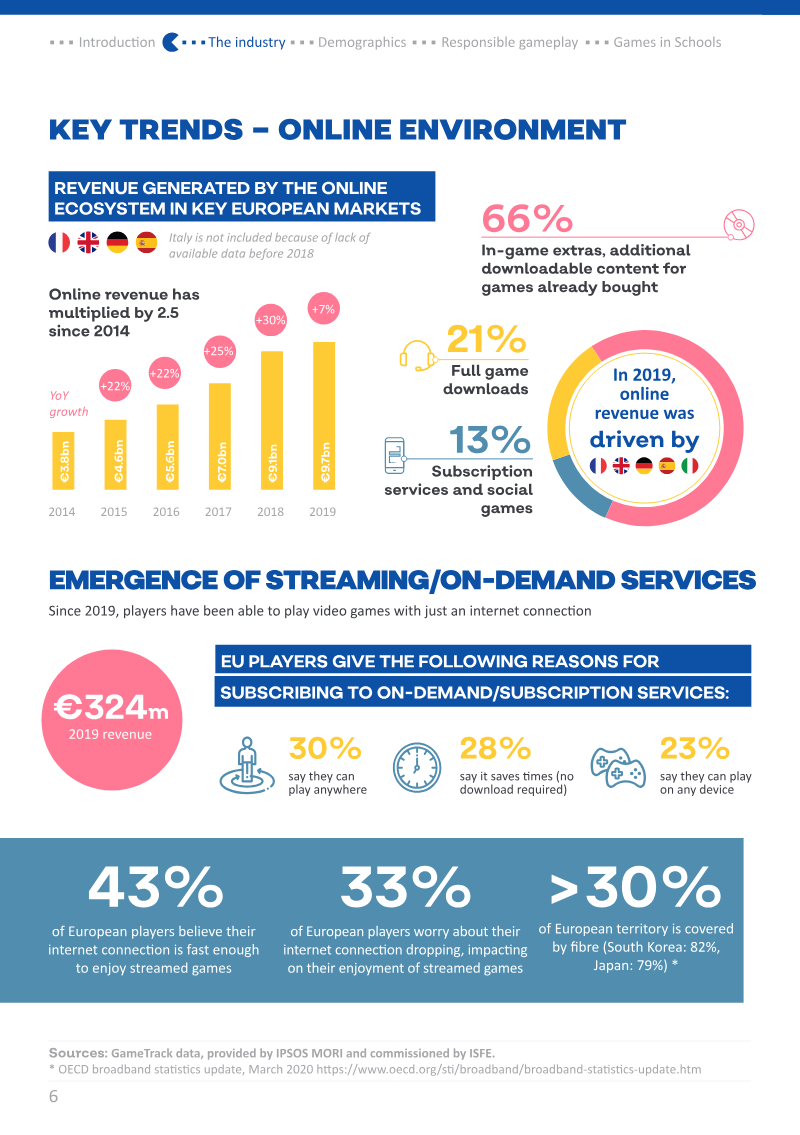
Interactive Software Federation of Europe · 2020
ReportEurope's Video Game Industry: Key Facts 2020
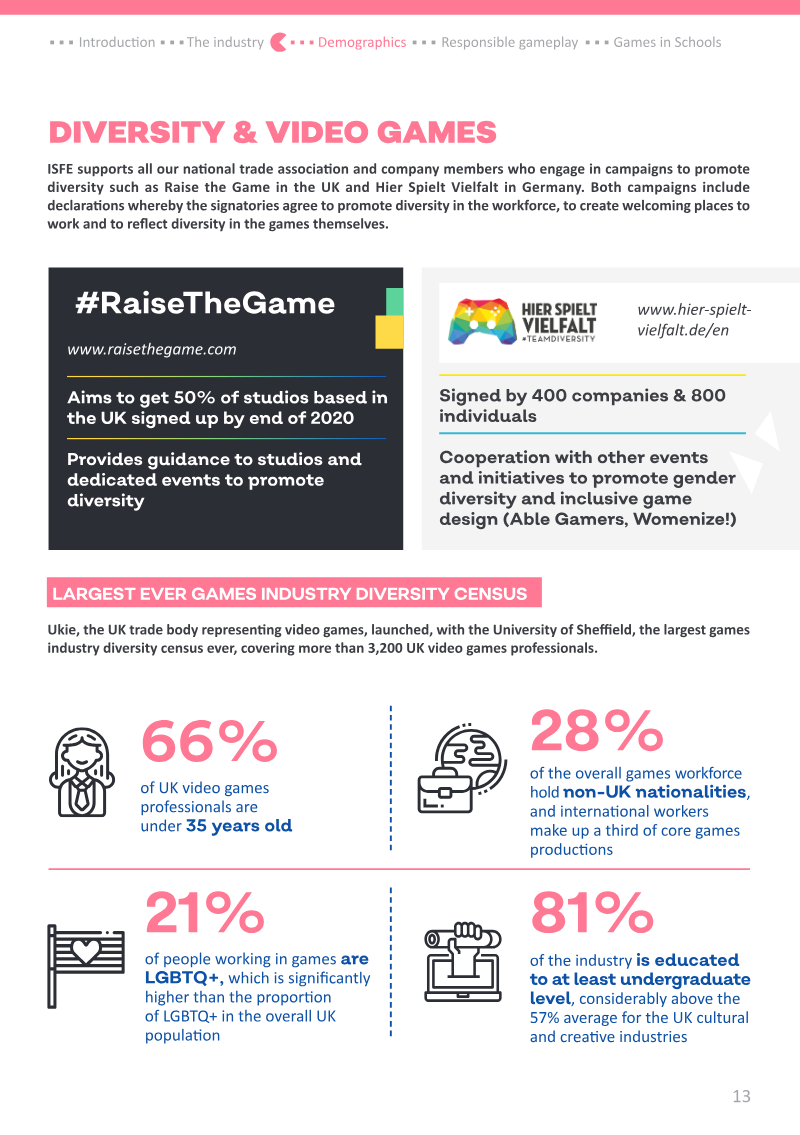
The European video games industry experienced steady growth in 2019, reaching a total market turnover of €21.6 billion. This represents a 3% year-on-year increase and a 55% rise since 2014 across key markets. Revenue is increasingly driven by digital ecosystems, with online and app-based income accounting for 76% of the market, while physical sales represent 24%. Within the online segment, 66% of revenue is generated through in-game extras and downloadable content. Console gaming remains the leading hardware category by revenue at 43%, closely followed by mobile and tablets at 40%. Demographic data indicates that 51% of the European population aged 6 to 64 plays video games, with an average player age of 31. While engagement is highest among younger cohorts, 31% of those aged 45 to 64 are active players. Gender representation is nearly balanced, as women make up 45% of the player base and over half of all mobile gamers. On average, European players spend 8.6 hours per week gaming, significantly less than the time spent on social media or television. The industry maintains a strong focus on responsible gameplay through the PEGI age rating system, which is active in over 35 countries. Approximately 67% of parents are aware of these labels, and 85% have established agreements with their children regarding in-game spending. Beyond consumer protection, the sector is expanding its educational footprint. Initiatives like the Games in Schools project, conducted with European Schoolnet, have trained over 4,000 teachers across 73 countries to integrate commercial games into pedagogical frameworks. Data for these findings was primarily extrapolated from the 2019 GameTrack and Newzoo reports, utilizing surveys and sales tracking across major European territories including France, Germany, Italy, Spain, and the United Kingdom. The scope covers the 2019 calendar year while acknowledging the emerging impact of the COVID-19 pandemic on 2020 industry trends.
Danish Games Industry · 2019
WhitepaperGood Conduct Guidelines for the Danish Games Industry
The Good Conduct Guidelines for the Danish Games Industry, published in November 2019, establish a standardized framework for fostering a safe, inclusive, and professional work environment across the Danish game development sector. The primary objective is to protect the personal integrity of industry professionals by promoting a culture of mutual respect, diversity, and accountability. These guidelines serve as a foundational reference for businesses to integrate into employee handbooks or internal policy discussions, ensuring that workplace practices align with both ethical standards and Danish labor legislation. The guidelines mandate that all industry participants uphold principles of dignity and fairness, with a specific emphasis on eliminating systemic crunch, excessive overtime, and all forms of harassment or discrimination. The policy adopts a zero-tolerance stance toward abusive behavior, noting that harassment is defined by its impact rather than the intent of the perpetrator. Furthermore, the framework places a heightened responsibility on management to act as ethical role models, proactively prevent unsafe conditions, and ensure that employees can report grievances without fear of retaliation. To support enforcement, the guidelines outline clear procedures for addressing workplace misconduct. Employees are encouraged to engage with internal representatives, such as HR or management, while also being reminded of their rights to seek external support through labor unions, occupational health providers, or the Danish Working Environment Authority. By formalizing these expectations, the industry aims to standardize professional conduct and ensure that all developers and staff operate within a healthy, sustainable, and welcoming environment.

AEVI · 2019
ReportImpact of Cloud Gaming and Other Trends in the Indie Ecosystem: Spain
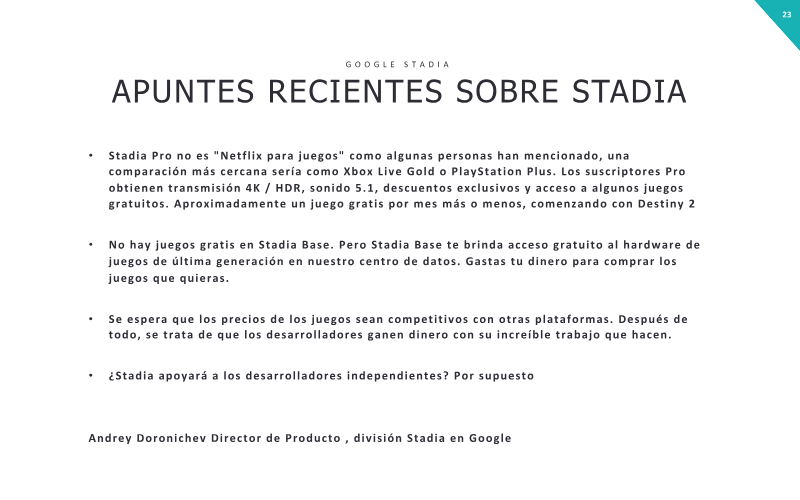
The analysis evaluates how cloud-gaming and emerging distribution models are reshaping the Spanish indie game ecosystem, arguing that while the broader gaming audience is expanding across new platforms and financing structures, cloud-gaming remains experimental and will not achieve mass-market penetration for several years due to bandwidth constraints and uneven consumer readiness. Console users, especially those who are price-sensitive and less tied to a single PC ecosystem, are identified as the most promising segment for indie titles delivered via cloud, with subscription-or-free-to-play (GaaS) approaches offering the strongest revenue potential. Current platform data show PlayStation Now operating in 19 high-speed-Internet markets and reaching more than 79 million PS4 owners—approximately 0.6% of the console base—yet its relatively high subscription fee and overlap with PS Plus dilute its attractiveness. Google Stadia leverages extensive data-center and AI resources, providing a free tier alongside a €9.99-per-month option, illustrating divergent pricing strategies within the nascent market. Strategic recommendations for indie studios emphasize hybrid monetisation that combines subscriptions with direct sales, targeting latency-tolerant mid-core audiences, including a growing female demographic. Development pipelines should prioritise engines with broad cross-platform support, notably Unreal for versatility and Unity for seamless Stadia integration, while adopting low-cost, high-quality marketing to compensate for the reduced role of traditional publishers. Cloud-gaming’s principal advantage lies in creating a more level playing field, granting indie developers visibility and access to users lacking high-end hardware, thereby expanding market reach in Spain and comparable European territories over the coming three to five years.

Swedish Games Industry · 2019
Report