Europe
National and regional reports on the European games industry.
328 documents
HM Revenue · 2020
ReportCreative Industries Statistics: United Kingdom (August 2020)
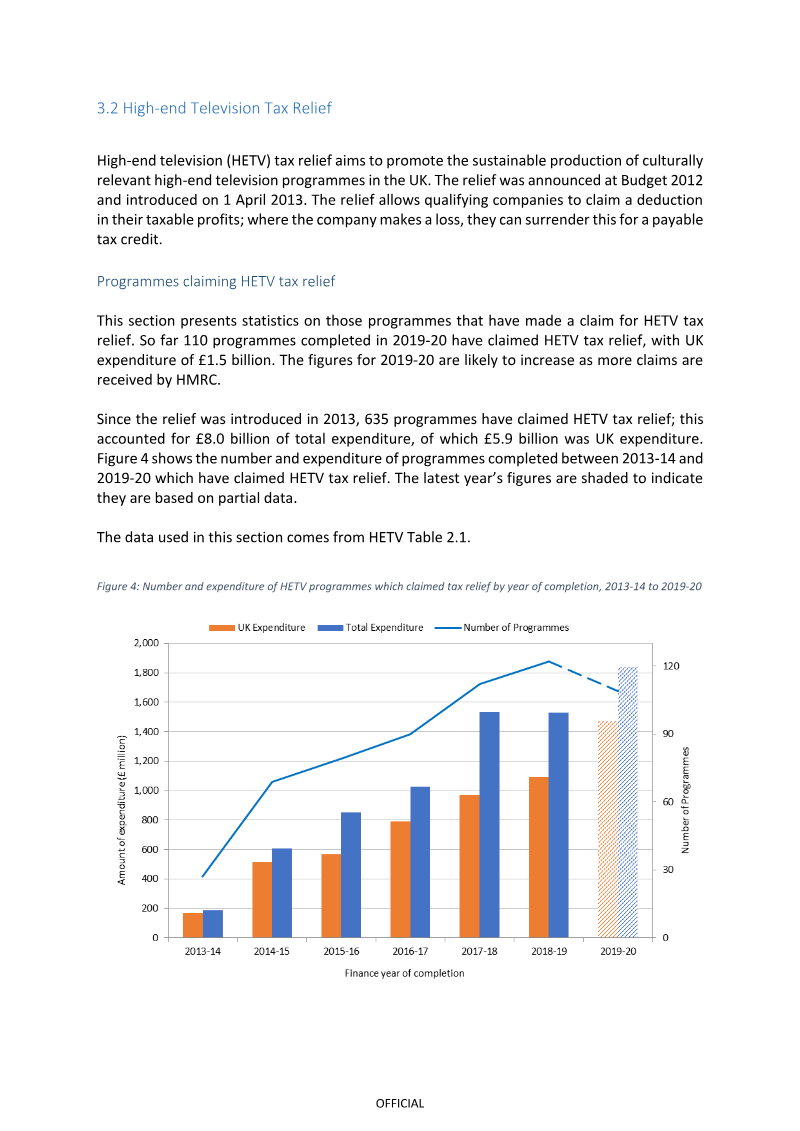
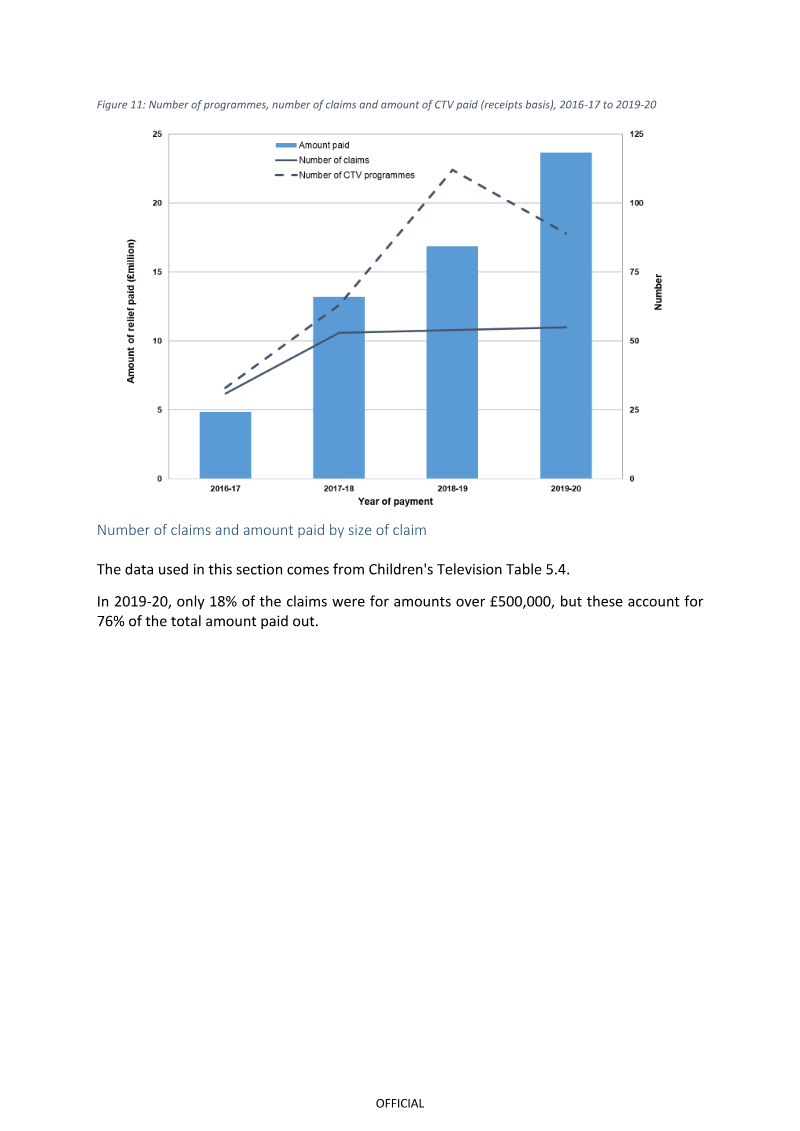
The United Kingdom’s creative industries tax relief framework serves as a critical fiscal mechanism designed to incentivize sustainable, culturally significant production across film, television, gaming, and the arts. By providing targeted financial credits, the government aims to bolster domestic production expenditure and maintain the global competitiveness of the British creative sector. These incentives are structured to support a diverse range of activities, including high-end television, animation, video games, children’s programming, theatre, orchestral performances, and museum exhibitions. Financial data from the 2019-20 period reveals a total government expenditure of £1.11 billion in tax reliefs, reflecting a steady increase from the previous year’s £1.08 billion. Film and high-end television production remain the primary beneficiaries of this support, collectively accounting for approximately 80 percent of total payouts. Across all covered sectors, a consistent trend emerges regarding the distribution of these funds: while the volume of individual claims is high, the vast majority of total financial relief is concentrated within a small percentage of high-value claims. The administration of these reliefs relies on rigorous eligibility criteria, such as the requirement that a minimum of 25 percent of core expenditure for museum and gallery exhibitions occurs within the European Economic Area. Data integrity is maintained through reconciled reporting between HM Revenue and Customs and the British Film Institute, though figures remain subject to periodic revision due to late submissions and ongoing certification updates. Ultimately, these tax reliefs have successfully facilitated billions of pounds in production activity, reinforcing the creative industries as a cornerstone of the national economy.


PayPal · 2020
ReportEurope and Esports: High Engagement and Even Higher Potential
The study demonstrates that European esports audiences are expanding rapidly, with a projected 92 million viewers by the end of 2020 and a year-over-year growth of 7.4%. Enthusiasts—those watching professional content more than once a month—total 33 million, while occasional viewers comprise the remaining 59 million. Revenue forecasts show a global market of nearly €974 million in 2020, rising to €1.6 billion by 2023, with Europe mirroring this trajectory. Survey data from 10,175 respondents aged 18-45 across ten Western and Northern European countries reveal that esports engagement is not confined to the youngest cohort; only 33% of 18-20 year olds are regular enthusiasts, whereas the 21-25 age group leads in engagement. Geographic variation is pronounced: Finland shows a 52% enthusiast rate among 18-20 year olds, compared to 21% in the UK. COVID-19 lockdowns increased viewership in markets with stricter restrictions, and 62% of respondents in Spain and the UK expect continued higher viewership post-lockdown. Gender analysis indicates that 32% of the audience are women, primarily occasional viewers. Nonetheless, female participation in competitive play is rising, with 60% of respondents acknowledging growth in women’s involvement. Women spend money on esports products at a comparable rate to men (46% vs 38%) and favor physical merchandise, whereas men lean toward digital items such as skins and premium passes. The research underscores strong cross-sport interest, with 64% of viewers also supporting a favorite sports team, and highlights the strategic opportunity for brands to engage this growing, diverse, and monetarily active audience.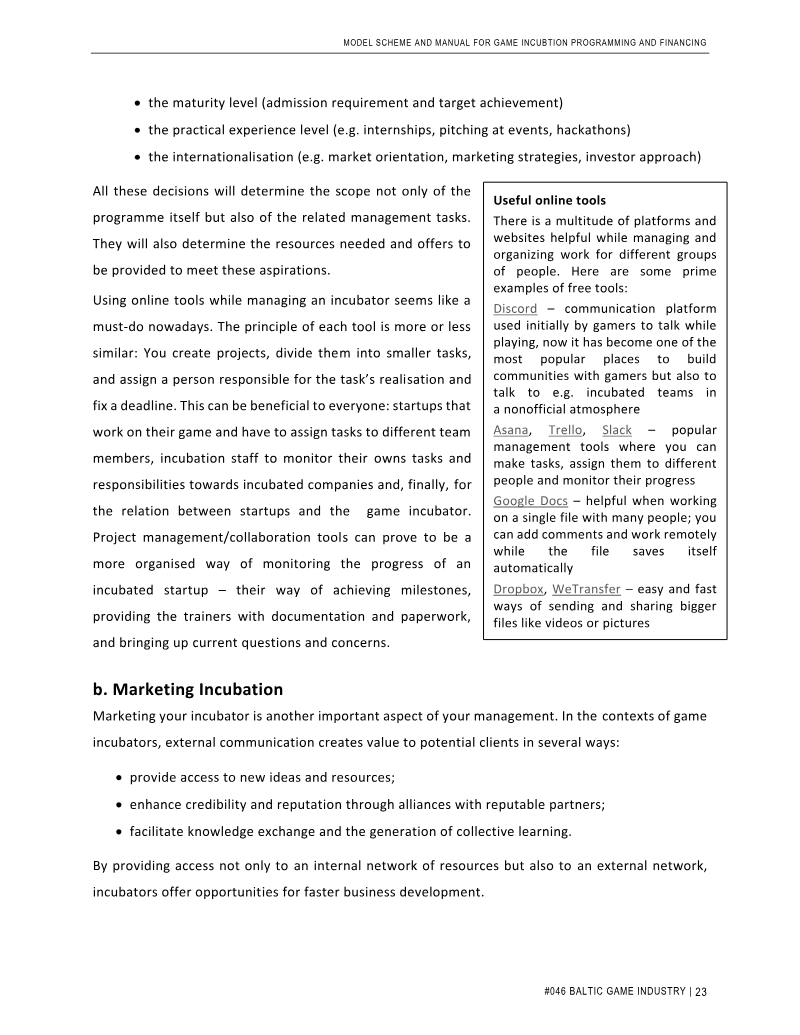
Ventspils High Technology Park · 2020
WhitepaperModel Scheme and Manual for Game Incubation Programming and Financing: Baltic Games Industry
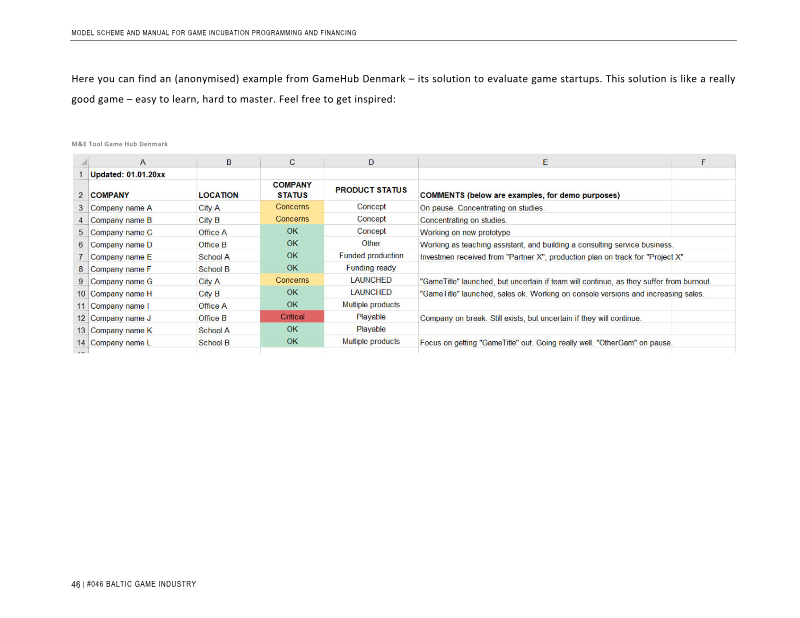
The Baltic Sea region is currently undergoing a strategic transformation aimed at establishing itself as a globally competitive hub for game development. By fostering durable incubation programs and specialized business support services, the region seeks to integrate policy and industry development to attract international investment and talent. The primary objective is to create a sustainable ecosystem where startups can navigate the complexities of business development, monetization, and professional growth through structured mentorship and cross-sector innovation, such as virtual reality applications. Successful incubation requires a blend of adaptive management and strategic partnerships, with programs often embedded within university ecosystems or technology parks to leverage existing infrastructure. Because no universal model exists, incubators must operate as professional, startup-like entities that utilize tools such as the Business Model Canvas to validate their operations. Financial sustainability is achieved through diversified revenue streams, including public grants, equity stakes, royalties, and service fees. These financial frameworks are bolstered by intensive networking with industry associations, government units, and established studios to provide the necessary mentorship and recruitment support for emerging developers. Long-term success depends on rigorous monitoring and evaluation systems that track both organizational and incubatee performance using quantitative and qualitative data. By setting SMART goals across ex-ante, mid-term, and ex-post horizons, incubators can pivot their strategies based on local demand or scale through internationalization and brand building. Ultimately, the evolution of these programs into comprehensive industry hubs—as evidenced by benchmarks like Digital Dragons and Game Hub Denmark—is essential for fostering a resilient regional game industry. Through continuous evaluation and community-building events like game jams, these incubators ensure that the Baltic region remains a unified, innovative, and attractive destination for the global gaming market.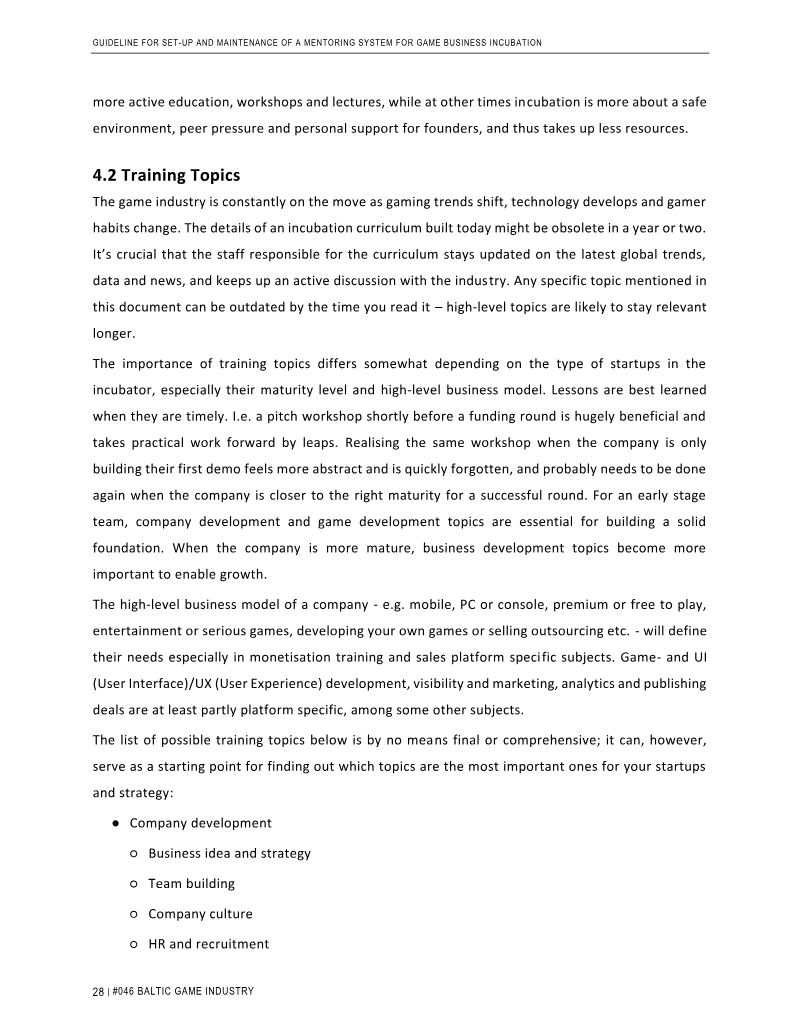
BGI Project · 2020
WhitepaperGuideline for Set-Up and Maintenance of a Mentoring System for Game Business Incubation
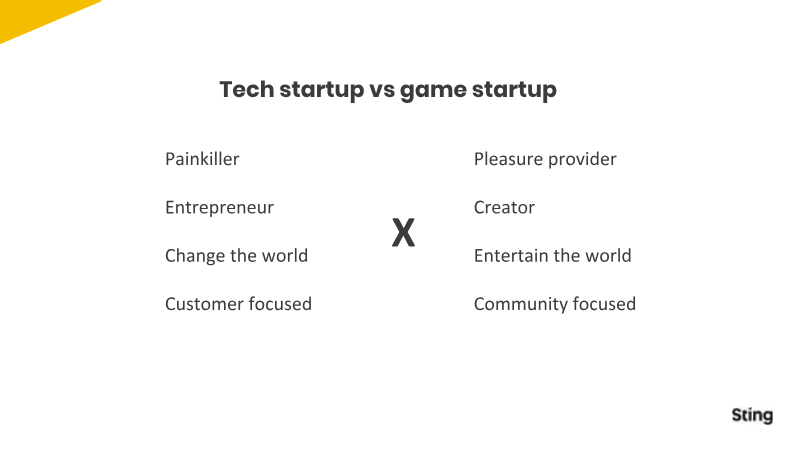
Establishing and maintaining a successful game business incubator requires a specialized framework that addresses the unique, multidisciplinary challenges of the gaming sector, such as rapid market volatility and complex monetization strategies. Unlike general technology incubators, effective game-focused programs must prioritize team dynamics, coachability, and long-term adaptability over the specific merits of a single game project. By analyzing local ecosystem gaps—such as shortages in senior talent or business acumen—incubators can tailor their support structures to foster sustainable growth and innovation. The operational core of these programs relies on a hybrid model that integrates dedicated in-house staff with external industry mentors. This approach utilizes a pull-based coaching philosophy, where mentors guide founders toward self-identified needs while leveraging local networks to facilitate knowledge sharing. As these ecosystems mature, transitioning successful alumni into mentor roles creates a self-sustaining cycle of expertise. Programs like Sting Game demonstrate the efficacy of this model by applying lean methodologies, such as Minimum Viable Product testing and the Hook Model, to validate business hypotheses and accelerate market entry for high-potential startups. Measuring the impact of these initiatives requires a dual-track approach that balances objective hard metrics—including profitability, funding acquisition, and company longevity—with subjective indicators like founder satisfaction and overall ecosystem health. While incubators provide the essential framework, advisory support, and access to capital, the ultimate responsibility for strategic development remains with the founders. Through the Baltic Game Industry project and similar regional efforts, these frameworks aim to professionalize the sector, ensuring that game development expertise is effectively integrated into the broader economy to drive long-term, scalable success across Northern and Baltic Europe.
BGZ Berliner Gesellschaft für internationale Zusammenarbeit mbH · 2020
WhitepaperManual on International Cooperation for BSR-Wide Game Business Development
The Baltic Sea Region (BSR) game development sector requires a unified, transnational approach to overcome the resource constraints and fragmentation inherent in local incubation environments. By fostering formal cooperation among incubators across eight countries, the region aims to transform from a collection of isolated hotspots into a cohesive global player. The core thesis posits that internationalization is not merely an advantage but a necessity for startup survival, requiring incubators to provide specialized support in culturalization, regulatory navigation, and global networking to ensure long-term industry growth. To achieve this, the initiative established the Baltic Sea Games umbrella brand, which serves as a strategic identity to increase visibility among international investors and policymakers. Pilot projects, including curated awards and joint exhibition appearances, have successfully reached over 600,000 people, demonstrating the efficacy of shared branding. However, sustaining this momentum requires moving beyond opportunistic partnerships toward formal governance structures. Collaborative efforts, such as transnational mentor training, shared knowledge repositories, and intensive 10–14 day bootcamps, are essential for bridging the gap between local incubation and the demands of the global market. Ultimately, the strategy focuses on creating a durable support ecosystem that encourages talent retention and attracts investment within the BSR. While regional diversity and competition from established industry brands present ongoing challenges, the integration of resources and the professionalization of management structures remain the primary drivers for success. By leveraging funding from the European Regional Development Fund, the project provides a comprehensive framework for incubators to standardize support services, thereby positioning the Baltic Sea region as a premier hub for game innovation and cross-industry VR applications.
Slovak Game Developers Association · 2020
PresentationSlovak Game Industry Infographic
The Slovak game industry demonstrates consistent growth and professional maturation, characterized by a robust increase in both turnover and workforce capacity. As of the end of 2019, the sector comprised 55 active companies, with a significant geographic concentration in Bratislava, which hosts 52 percent of all firms, followed by Košice at 24 percent. The industry’s economic footprint is substantial, with the top ten companies generating over 48 million euros in annual turnover. Workforce development has kept pace with this expansion, as the total number of employees rose from 436 in 2016 to 762 by 2019, supported by the creation of 238 new positions in the final year of the reporting period. Development activity remains diverse, with a strong emphasis on PC and mobile platforms. PC development leads the market at 73 percent, followed closely by Android and iOS at 60 percent and 44 percent, respectively. While self-publishing remains the dominant business model—utilized by 77 percent of companies for PC and 74 percent for mobile—the industry also leverages a mix of public funding, which supports 29 percent of projects, and commissioned work. Despite this growth, the sector faces talent acquisition challenges, particularly in filling roles for programmers, game designers, and marketing specialists. The industry maintains a global outlook, with 40 international employees and a significant portion of the workforce engaged in outsourcing and international collaboration. Women represent a notable segment of the industry, occupying 129 positions, primarily within graphic arts, marketing, and production roles. With 221 active projects reported in 2020 and ongoing support from the Slovak Arts Council, the industry is positioned for continued development, balancing in-house creative output with strategic international partnerships and a diversified platform strategy.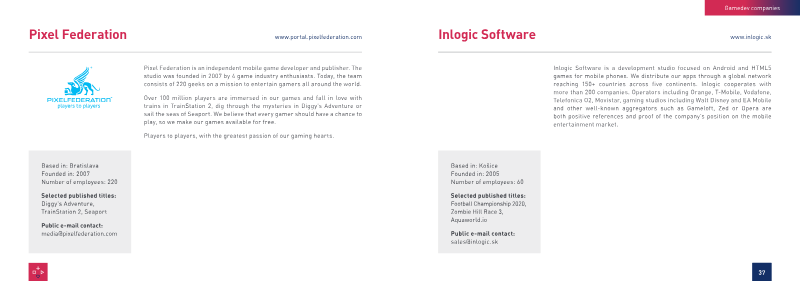
Slovak Arts Council · 2020
ReportSlovak Game Industry Annual Report 2020/2021
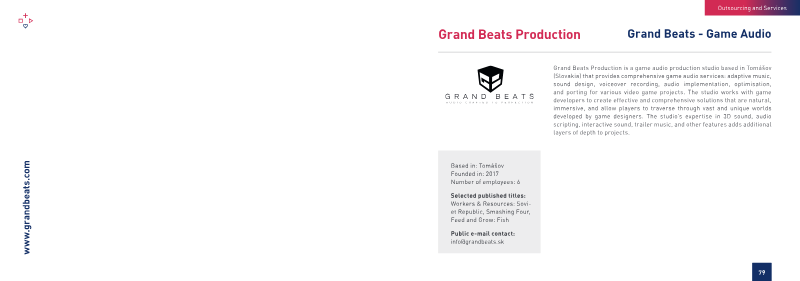
The Slovak game industry represents a resilient and rapidly maturing sector, characterized by a robust ecosystem of independent studios that generated approximately €51 million in turnover during the 2019 fiscal period. With a dedicated workforce of 762 professionals, the industry has successfully navigated global economic challenges by prioritizing self-funded, cross-platform development. The sector’s primary thesis centers on leveraging high-level technical expertise—specifically in 3D modeling, photogrammetry, and motion capture—to produce globally competitive titles across mobile, PC, console, and virtual reality platforms. The industry landscape is defined by a diverse range of entities, from established mid-sized firms like Pixel Federation to specialized outsourcing studios and deep-tech innovators such as SuperScale and EastWorks. These organizations frequently utilize unique artistic styles and narrative-driven gameplay to secure international recognition. This creative output is bolstered by a strategic focus on both independent intellectual property development and high-tech service provision, allowing Slovak studios to integrate effectively into the global gaming value chain. Long-term sustainability is supported by a growing institutional commitment to the sector. Educational initiatives, ranging from specialized academic programs in game theory to industry-focused labs like Butterfly Effect, ensure a steady pipeline of local talent. Furthermore, the industry benefits from a structured support framework that includes R&D tax deductions facilitated by SARIO and non-repayable grants from the Slovak Arts Council. By fostering community engagement through game jams and festivals, the region has established a cohesive environment that balances artistic innovation with technical scalability, positioning Slovakia as an increasingly significant player in the European digital entertainment market.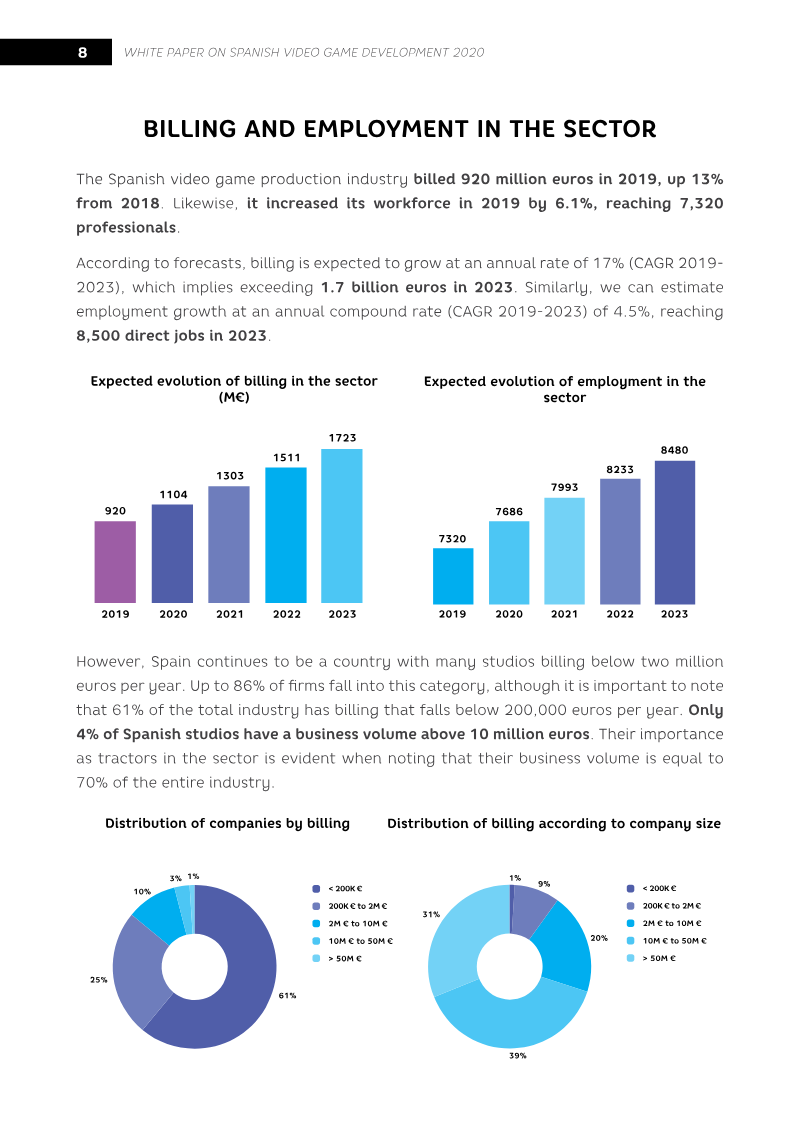
DEV - Spanish Association of Video Games and Entertainment Software Producers and Development Companies · 2020
WhitepaperWhite Paper on Spanish Video Game Development 2020
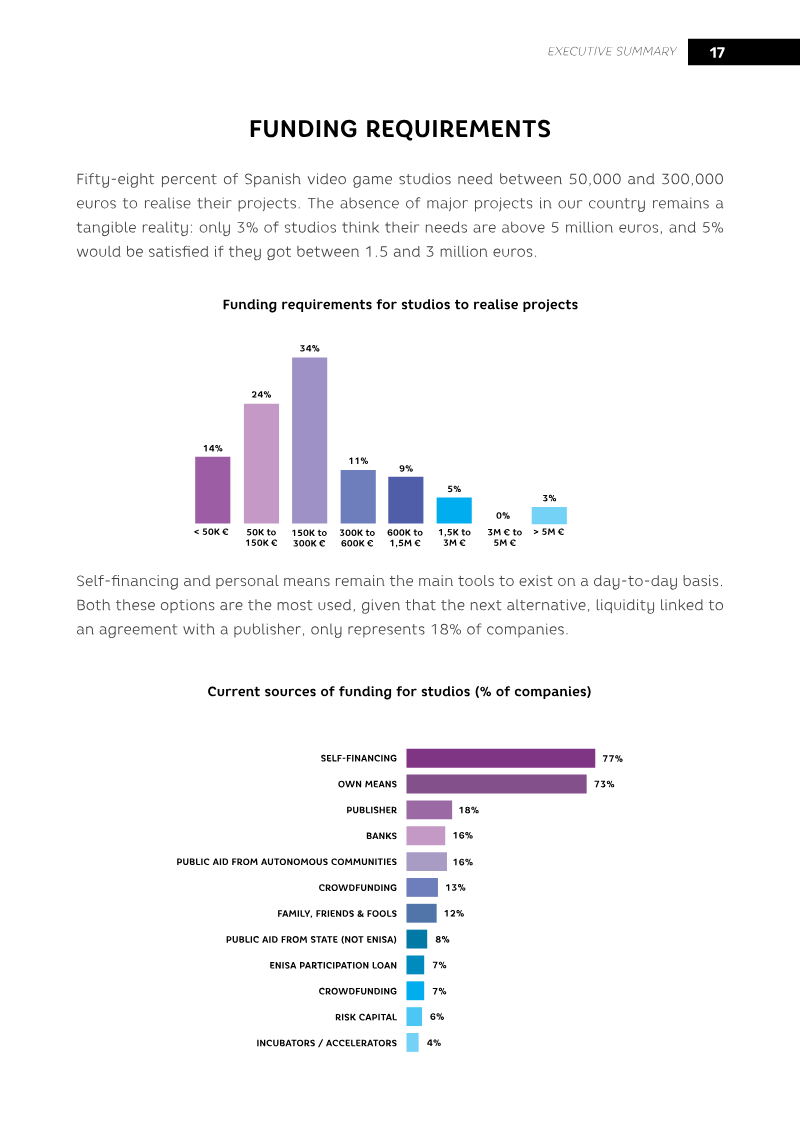
The Spanish video game industry represents a robust and expanding economic sector, generating 920 million euros in revenue and employing 7,320 professionals as of 2019. Centered primarily in the hubs of Catalonia and Madrid, the industry maintains a strong international orientation, with 66 percent of its total revenue derived from exports. This growth is underpinned by a focus on digital distribution and the development of proprietary intellectual property, positioning Spain as a top-ten global market for video game consumption and production. Despite this commercial success, the industry faces structural limitations that hinder long-term scalability. The landscape is dominated by a high volume of small studios, which frequently struggle with a reliance on self-financing and a lack of access to the capital necessary to transition into medium-to-large enterprises. Furthermore, while the workforce is characterized by a young, highly educated demographic primarily utilizing the Unity engine for PC and mobile development, companies report persistent difficulties in recruiting specialized talent. These challenges are compounded by a need for more robust fiscal incentives and strategic government investment to support sustainable expansion. To address these systemic hurdles, industry stakeholders emphasize the necessity of targeted policy interventions. Recommendations include the implementation of improved tax frameworks and initiatives specifically designed to increase youth and female participation in the workforce. By fostering a more supportive ecosystem for studio growth and talent development, the sector aims to transition from a collection of fragmented small-scale operations into a more mature, globally competitive industry. These efforts are supported by a collaborative network of academic institutions and industry associations, such as the Spanish Association of Video Games and Entertainment Software Producers, which continue to drive the strategic agenda for the sector.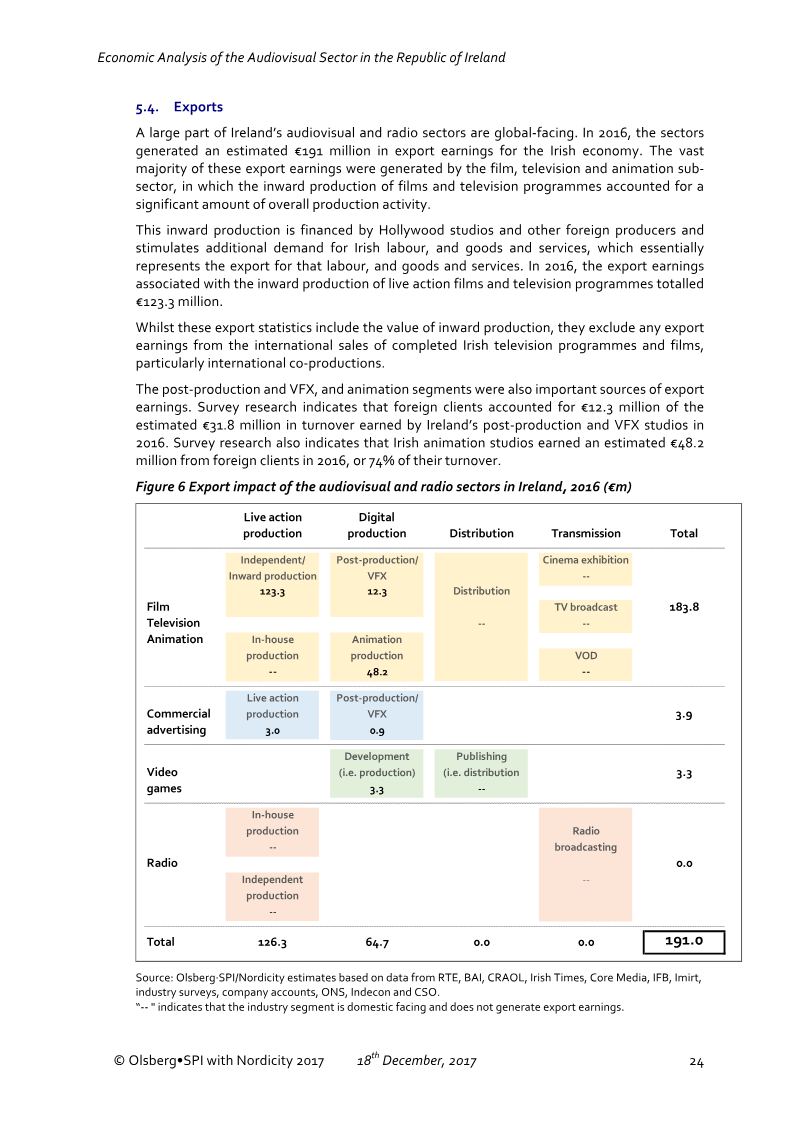
Olsberg SPI · 2020
ReportEconomic Analysis of the Audiovisual Sector in the Republic of Ireland
The Irish audiovisual and radio sectors represent a vital component of the national economy, generating over €1 billion in gross value added and supporting 16,930 full-time equivalent jobs as of 2016. The industry, which encompasses film, television, animation, advertising, video games, and radio, serves as a significant engine for employment and export earnings. Central to this performance is the Section 481 film tax relief, which functions as a highly efficient economic driver, yielding €2.82 in economic benefit for every euro of government investment. Despite this success, the sector remains concentrated in the Dublin-Wicklow region and faces structural challenges, including limited access to capital, difficulties in intellectual property retention, and a misalignment between educational outputs and technical industry requirements. To capitalize on global demand for high-end content and secure a competitive international standing, Ireland must transition from a production-service hub to a center of excellence for indigenous content creation. Current growth is constrained by studio capacity shortages, administrative burdens, and a lack of large-scale domestic gaming companies. Comparative analysis against international peers like Denmark and New Zealand reveals that Ireland’s current public investment levels and support for independent production companies are insufficient to maximize the sector's potential. The primary strategic objective is to double the sector’s employment and turnover within five years. Achieving this requires a multifaceted policy approach: expanding tax incentives to include the games industry, increasing project development funding, and fostering regional infrastructure development. Furthermore, the industry must address the volatility introduced by external factors such as Brexit by strengthening business skills, modernizing regulatory frameworks, and implementing targeted support for intellectual property exploitation. By aligning educational curricula with industry needs and enhancing access to working capital, Ireland can transform its audiovisual landscape into a sustainable, globally integrated, and high-growth creative economy.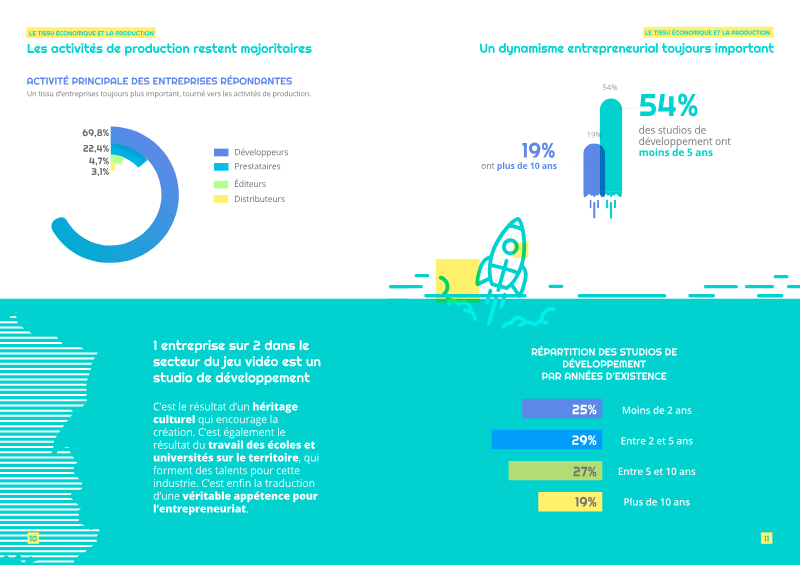
Syndicat National du Jeu Vidéo · 2020
ReportBaromètre Annuel du Jeu Vidéo en France: 2020
The 2020 Annual Barometer of the Video Game Industry in France provides a comprehensive analysis of the sector’s economic health, production landscape, and educational ecosystem. Based on a survey of 1,131 industry structures conducted between June and September 2019, the report highlights a robust industry characterized by steady growth, strong entrepreneurial spirit, and significant international reach. The findings underscore France's position as a highly attractive hub for video game development, ranking second globally behind the United States. Key findings reveal that the industry is heavily focused on production, with half of all sector entities operating as development studios. These studios demonstrate a strong commitment to independence, with 93% identifying as independent and 74% actively creating original intellectual properties. Production remains largely centered on PC platforms, though mobile and console markets remain vital. Financially, the sector relies heavily on self-financing, supplemented by public support mechanisms such as the Video Game Tax Credit (CIJV) and regional aids. Despite this, access to traditional bank credit remains a challenge for many studios. The report also details a positive outlook for employment, noting a trend toward stable, qualified, and permanent positions, with significant hiring intentions for the coming year. The educational sector is identified as a critical pillar of this growth, with 40 surveyed institutions training a growing pipeline of talent across design, technology, and management roles. While the industry shows resilience and optimism, it faces ongoing industrial transitions, including the rise of cloud gaming, immersive technologies, and new distribution models. Overall, the sector maintains a strong export orientation, with 44% of studio revenue generated internationally, reinforcing the strategic importance of the French video game industry within the global market.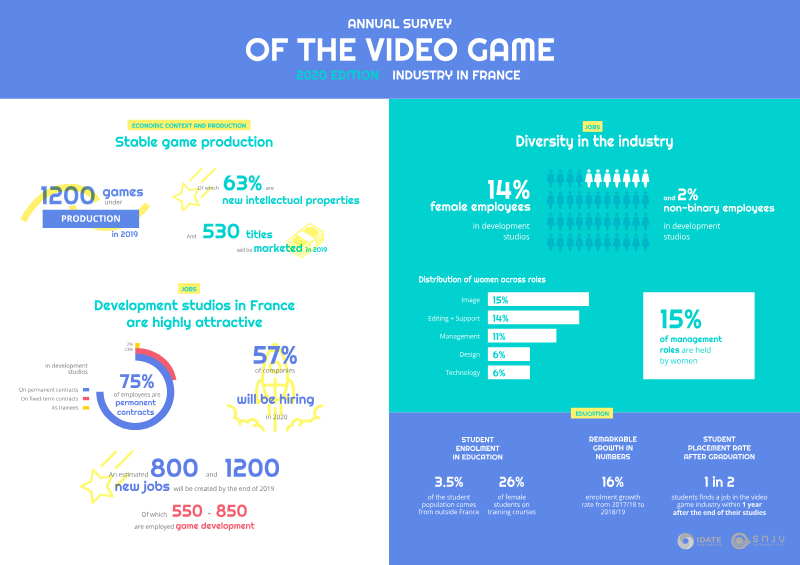
Syndicat National du Jeu Vidéo · 2020
ReportThe Video Game Industry in France: 2020 Edition Economic Context and Production
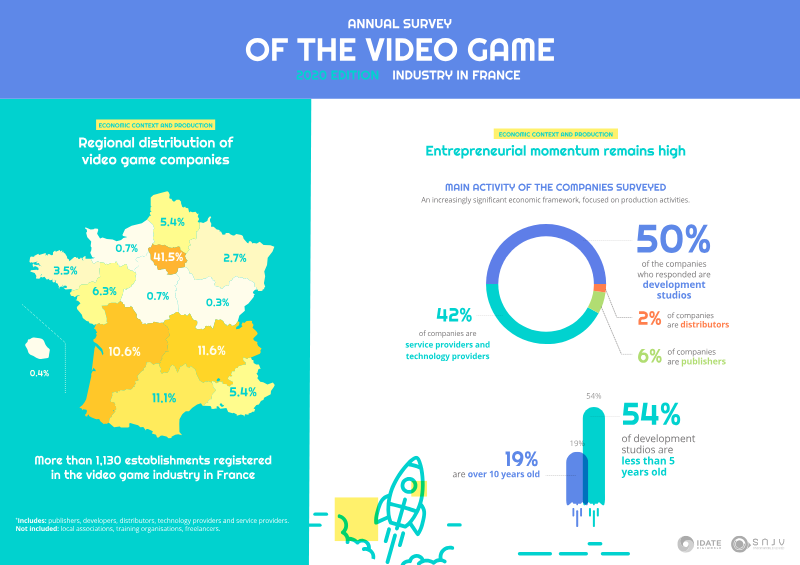
The French video game industry demonstrates robust entrepreneurial momentum and a strong focus on production, characterized by a diverse ecosystem of over 1,130 establishments. The sector is primarily composed of development studios, which account for 50% of industry entities, followed by service and technology providers at 42%, publishers at 6%, and distributors at 2%. This landscape is marked by a youthful demographic, with 19% of development studios having been established within the last five years, while another 19% have operated for over a decade. Production output remains stable, with 530 titles marketed in 2019 and a significant pipeline of projects in development. Notably, 63% of these titles are based on new intellectual properties, reflecting a strong commitment to original content. Employment trends are equally positive, with 75% of employees working under permanent contracts. The industry is actively expanding, with projections indicating the creation of 800 to 1,200 new jobs by the end of 2019. Despite this growth, gender diversity remains a challenge, as women and non-binary individuals comprise only 16% of the workforce, with women holding just 11% of management roles. The findings are based on a comprehensive survey conducted between June and September 2019, targeting 1,131 industry entities, including both members and non-members of the French Video Game Trade Association. The data highlights a strong educational pipeline, with a 26% growth in student enrollment and a high placement rate, as one in two graduates secures employment within the video game sector within a year. These metrics underscore the industry's role as a vital economic engine, supported by a specialized talent pool and a clear focus on sustainable, long-term production.
Polish Agency for Enterprise Development · 2020
Report