WhitepaperDanish Games Industry
Good Conduct Guidelines for the Danish Games Industry
1 Nov 20192 pages~3 min full read
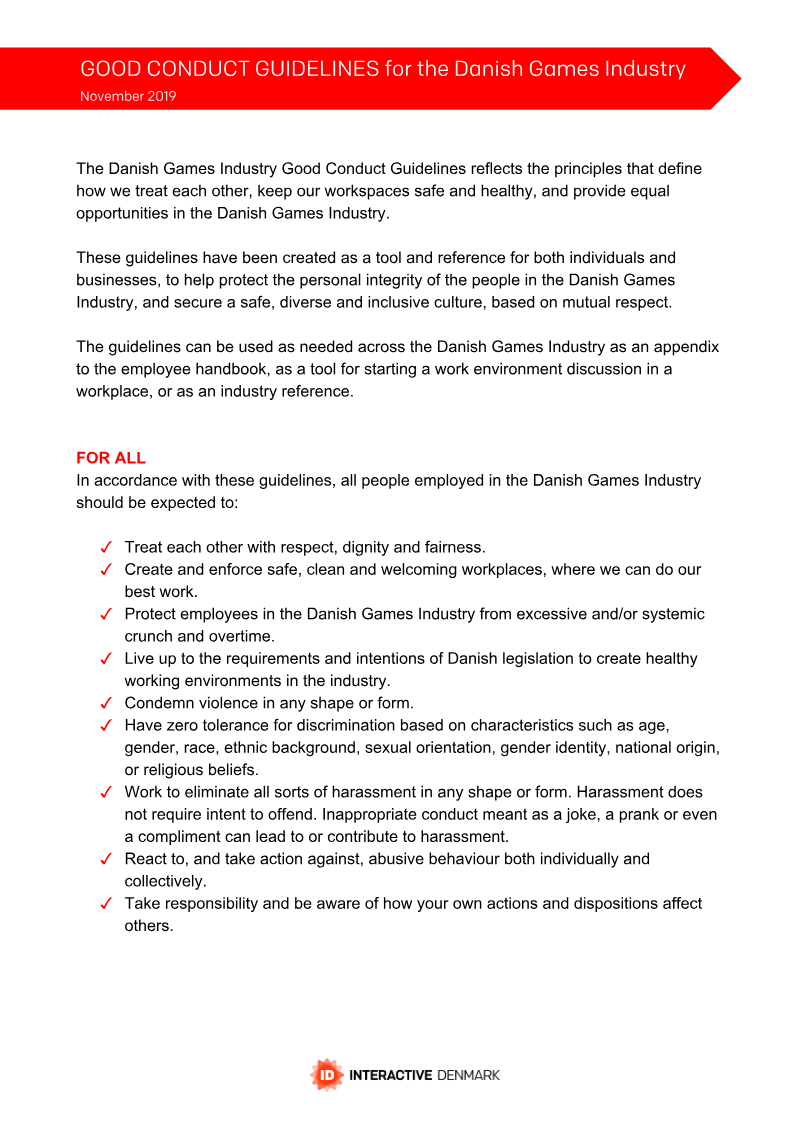
The Good Conduct Guidelines for the Danish Games Industry, published in November 2019, establish a standardized framework for fostering a safe, inclusive, and professional work environment across the Danish game development sector. The primary objective is to protect the personal integrity of industry professionals by promoting a culture of mutual respect, diversity, and accountability. These guidelines serve as a foundational reference for businesses to integrate into employee handbooks or internal policy discussions, ensuring that workplace practices align with both ethical standards and Danish labor legislation.
The guidelines mandate that all industry participants uphold principles of dignity and fairness, with a specific emphasis on eliminating systemic crunch, excessive overtime, and all forms of harassment or discrimination. The policy adopts a zero-tolerance stance toward abusive behavior, noting that harassment is defined by its impact rather than the intent of the perpetrator. Furthermore, the framework places a heightened responsibility on management to act as ethical role models, proactively prevent unsafe conditions, and ensure that employees can report grievances without fear of retaliation.
To support enforcement, the guidelines outline clear procedures for addressing workplace misconduct. Employees are encouraged to engage with internal representatives, such as HR or management, while also being reminded of their rights to seek external support through labor unions, occupational health providers, or the Danish Working Environment Authority. By formalizing these expectations, the industry aims to standardize professional conduct and ensure that all developers and staff operate within a healthy, sustainable, and welcoming environment.
InGameJob · 2024
80 Level · 2023
8Bit · 2026
Values Value · 2026
Nippon Ichi Software · 2026
Square Enix · 2026
Interactive Games & Entertainment Association · 2026
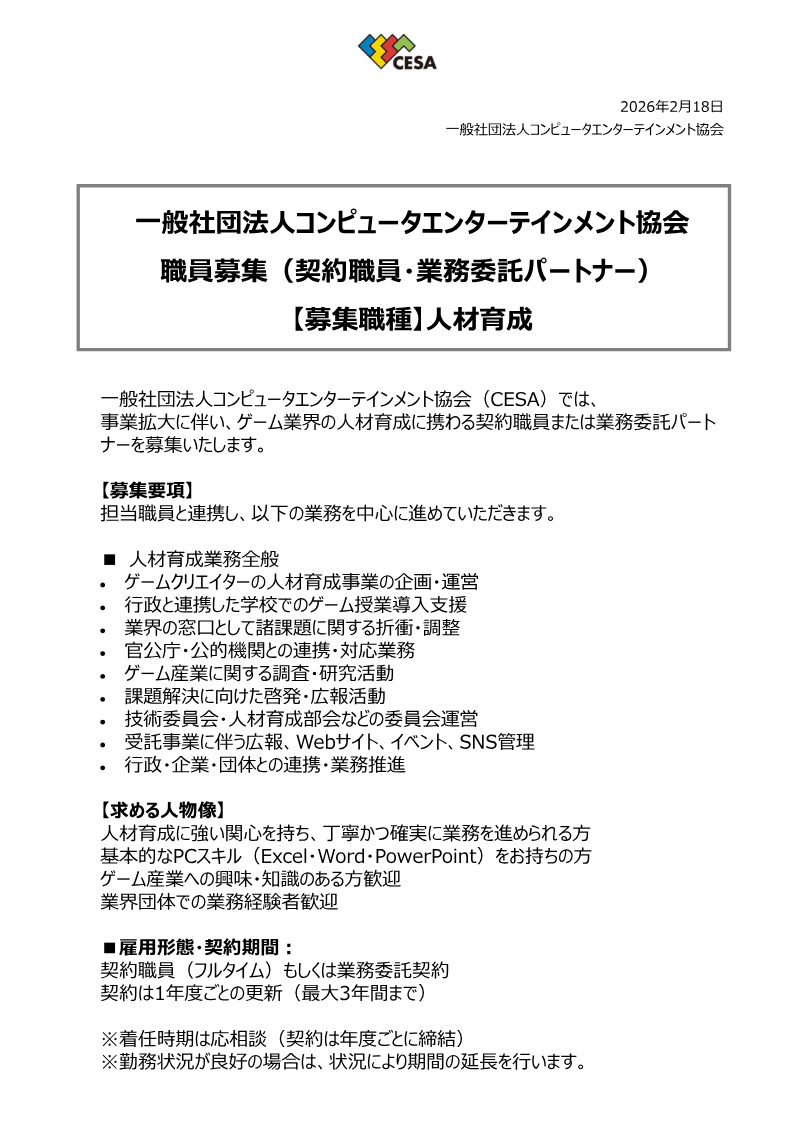
CESA – Computer Entertainment Supplier's Association · 2026
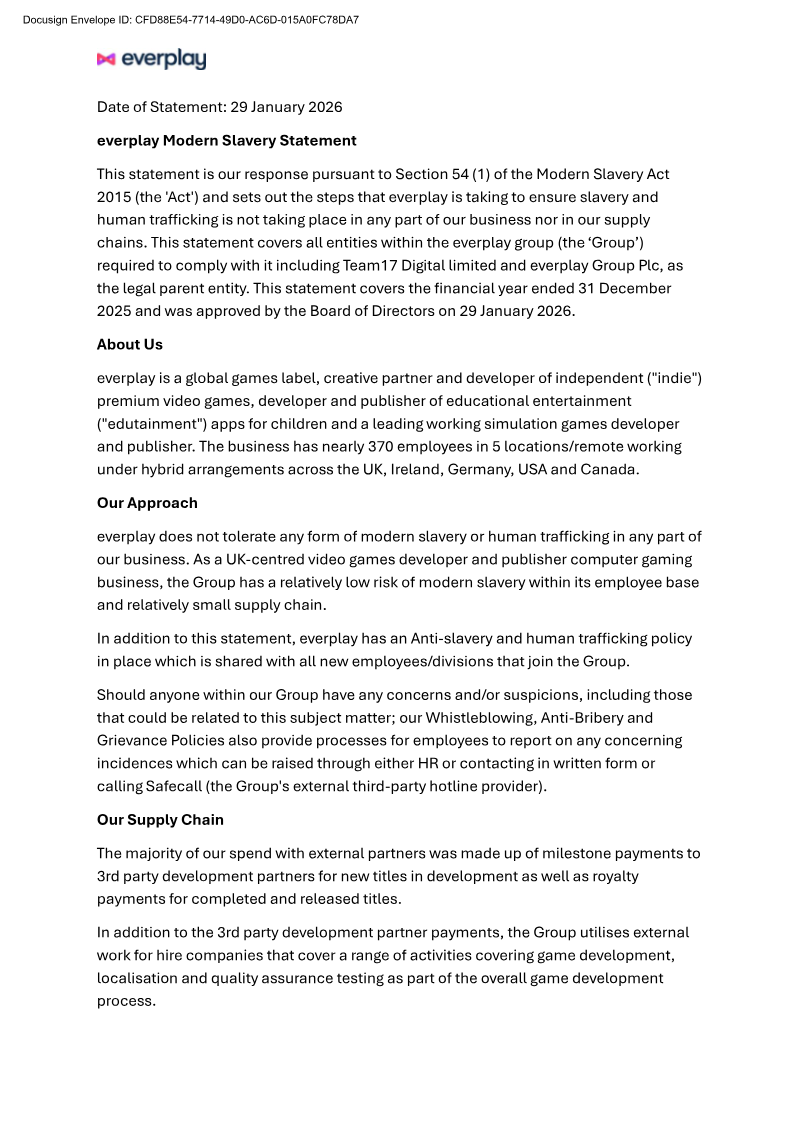
Everplay · 2026
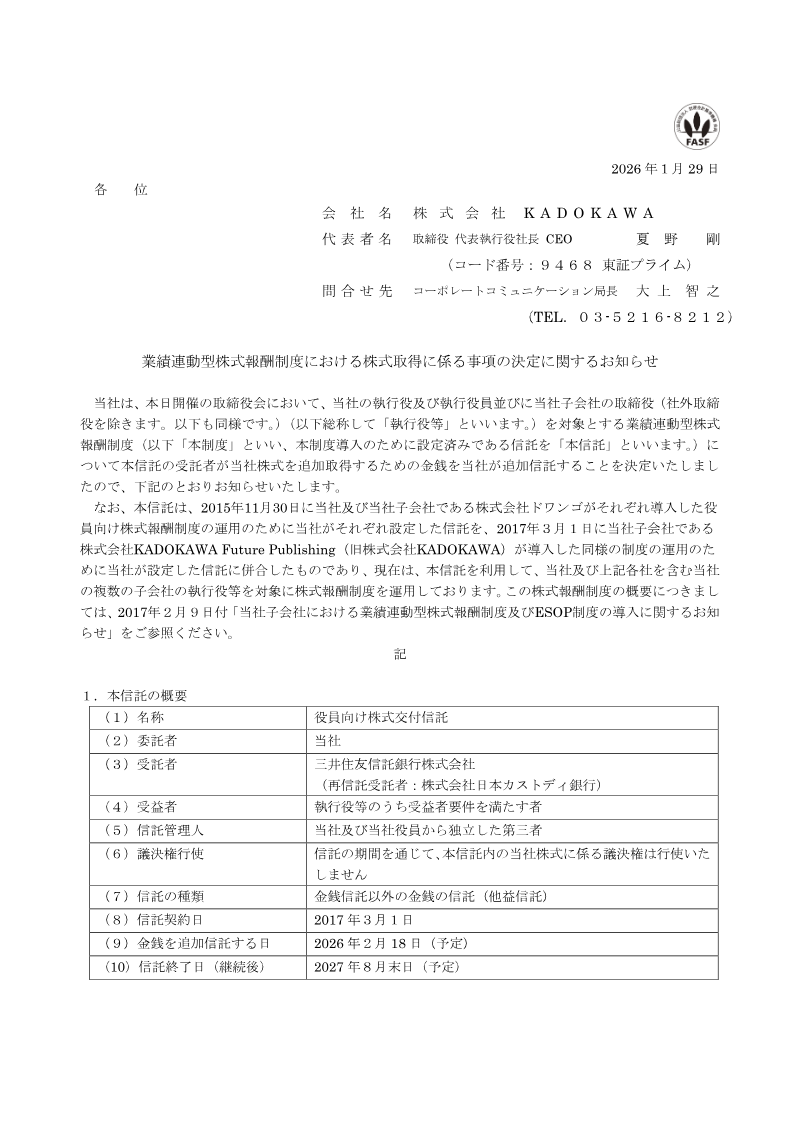
Kadokawa Corporation · 2026
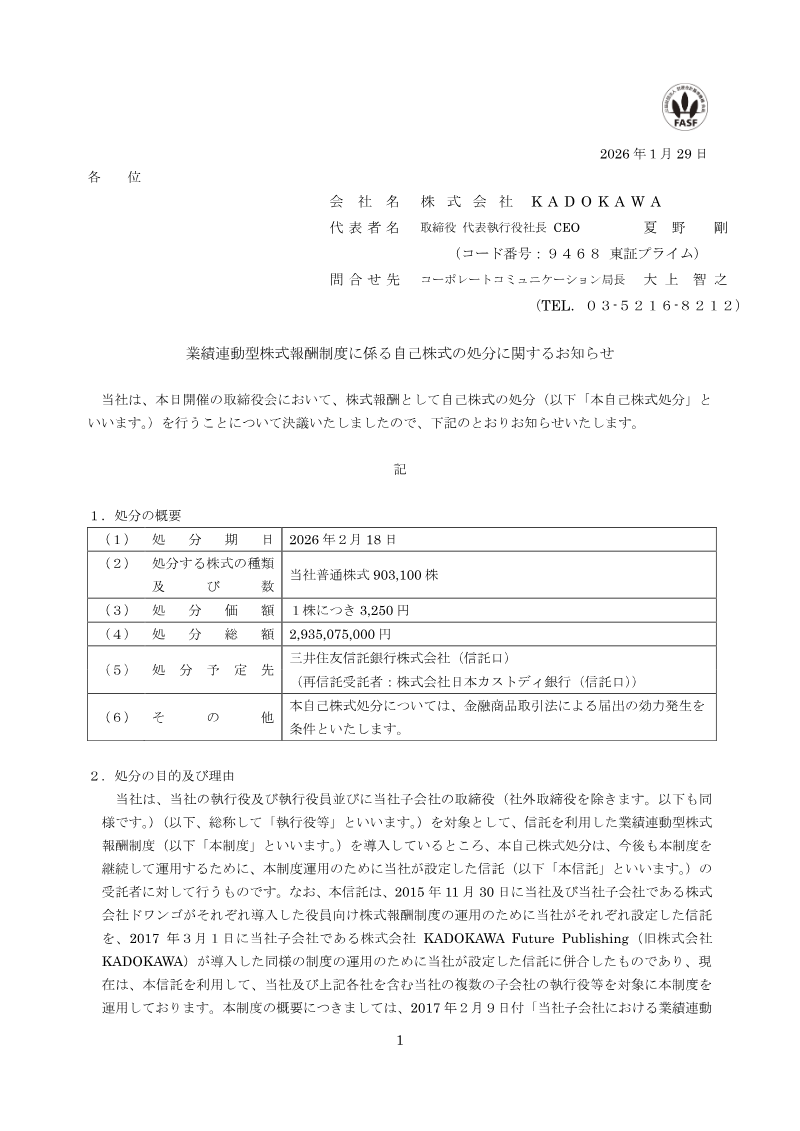
Kadokawa Corporation · 2026

Take-Two Interactive · 2025