Europe
National and regional reports on the European games industry.
328 documents
Neogames Finland · 2019
WhitepaperGame Industry Policy Recommendations for 2019‑2024: Finland
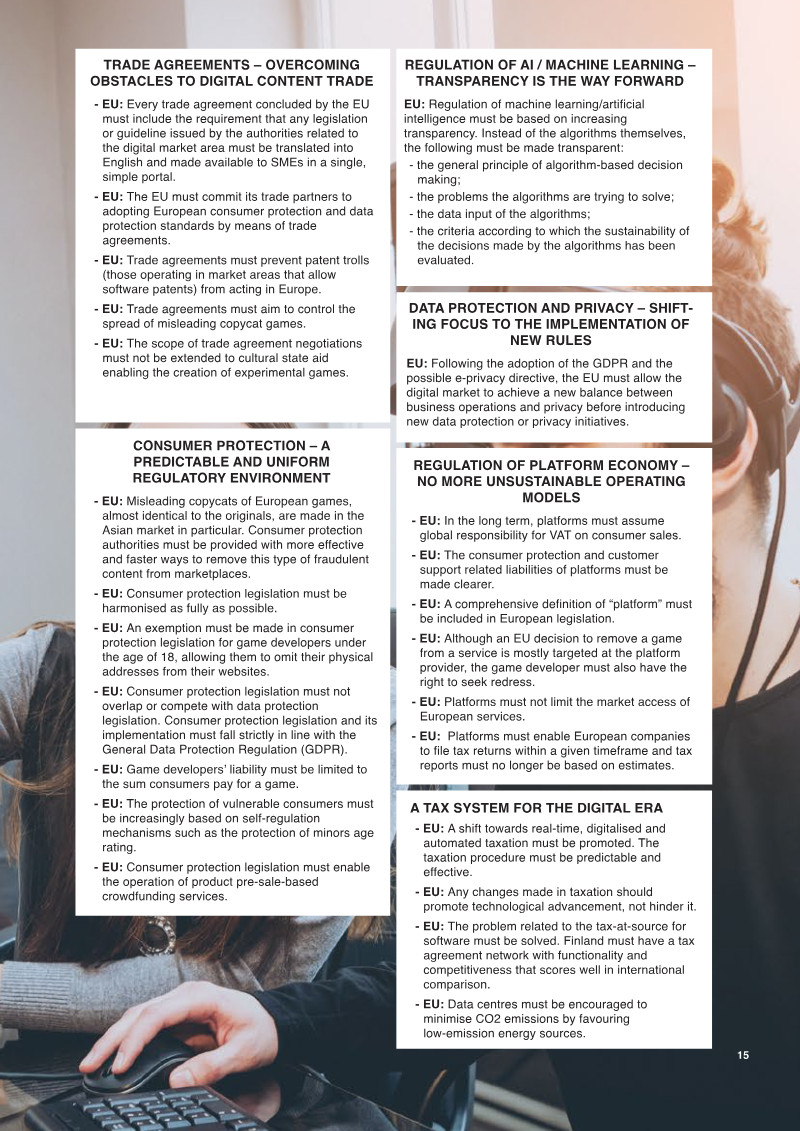
The Finnish game industry stands as a cornerstone of the national economy, generating over 2 billion euros in annual turnover with a remarkable 98 percent export rate. To sustain this trajectory between 2019 and 2024, the primary objective is to solidify Finland’s status as a global leader in digital development. This requires a strategic shift toward solving critical talent shortages through streamlined immigration, tax-free relocation incentives, and a transition from traditional academic degrees to agile, skill-based training models. By fostering public-private cooperation and enhancing digital infrastructure, Finland aims to create an ecosystem that attracts and retains international expertise while supporting both startups and established developers. Beyond domestic growth, the strategy advocates for a modernized European digital market characterized by harmonized regulations and a more flexible state aid system. Key policy priorities include increasing research and development funding, refining definitions for small and medium-sized enterprises, and establishing uniform standards for copyright and consumer protection across the European Union. These efforts are intended to ensure that technology-neutral legislation promotes innovation rather than hindering it, while simultaneously addressing the industry’s commitment to digital responsibility, accessibility, and sustainable business practices. A significant component of this vision involves the expansion of serious games into public sectors such as education, healthcare, and military training. By positioning the state as a pilot customer and implementing a robust certification system, Finland seeks to validate these tools for international markets, thereby improving public sector efficiency and reducing costs. Ultimately, the framework balances the need for fair corporate taxation and privacy protection with the necessity of maintaining a competitive, innovation-friendly environment. This comprehensive approach ensures that the Finnish game industry remains a primary driver of national economic prosperity while influencing broader European digital policy.
Neogames Finland ry · 2019
ReportFinnish Game Industry Report 2018
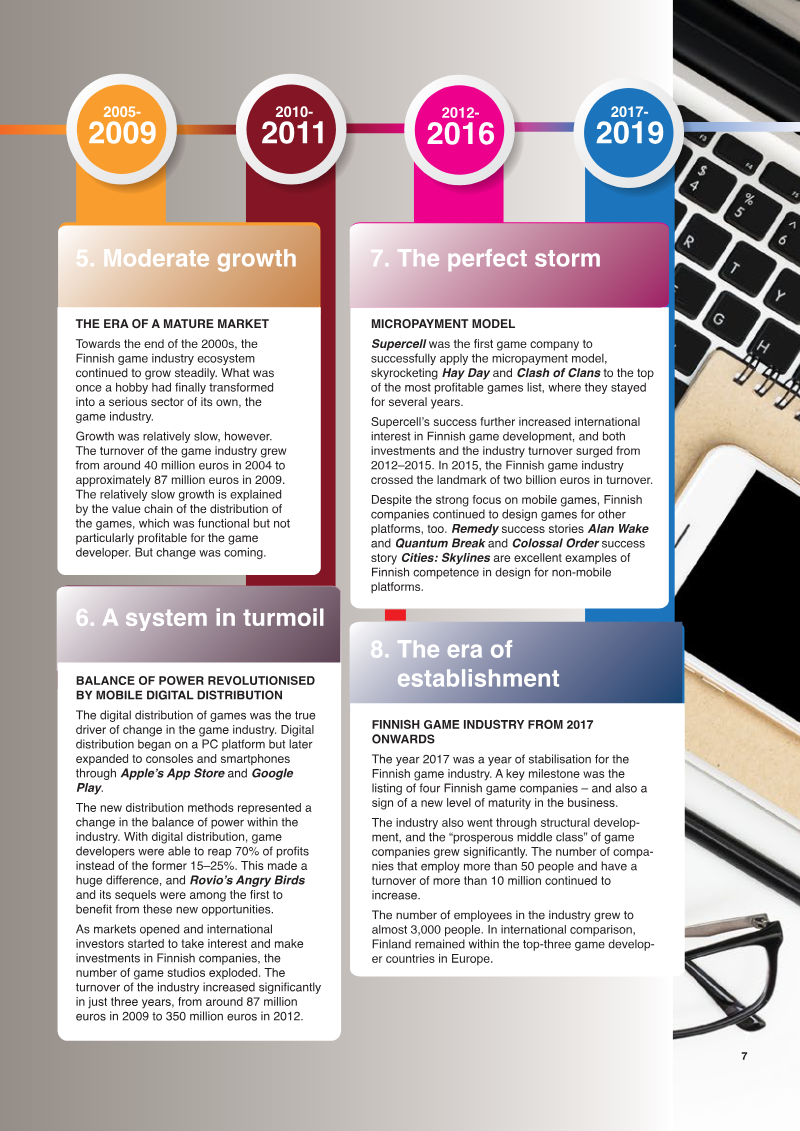
The Finnish game industry has matured into a stable, two-billion-euro sector characterized by professionalization and a strategic shift toward long-term sustainability. While the total number of active studios has consolidated to 220, the industry maintains a robust workforce of 3,200 professionals. This ecosystem is increasingly international, with foreign talent now comprising over 27 percent of the labor force. Despite a slight decline in total turnover since 2016, the sector has successfully diversified its revenue streams, moving away from an over-reliance on a few dominant players toward a more resilient, multi-faceted market presence. The prevailing business model has transitioned toward games-as-a-service, prioritizing live operations, data-driven design, and sustained player engagement over the rapid release of new titles. This evolution reflects a broader industry focus on mobile and cross-platform development, where Finnish studios demonstrate global competitiveness through massive download volumes and the creation of high-profile intellectual property. While the industry benefits from a decentralized network of regional hubs—with Helsinki serving as the primary center supported by specialized clusters in Tampere, Oulu, and Kajaani—it faces ongoing challenges, including rising user acquisition costs, regulatory pressures, and a persistent shortage of senior-level talent. Looking forward, the industry maintains a cautious but strategic approach to emerging technologies like XR and blockchain, preferring to anchor growth in proven mobile-first and free-to-play models. The sector is bolstered by a collaborative infrastructure of academic institutions, public funding bodies, and support organizations that foster innovation and corporate responsibility. By balancing the agility of specialized startups with the global reach of established leaders, the Finnish game industry continues to leverage its unique ecosystem to navigate international trade barriers and maintain its position as a significant force in the global digital entertainment market.
Slovak Game Developers Association · 2019
ReportSlovak Game Industry 2019
The Slovak game industry experienced a period of robust expansion in 2019, characterized by a growing professional workforce of 682 individuals and total annual revenues reaching €56.6 million. The sector is defined by an agile, community-driven ecosystem composed primarily of small, independent studios founded between 2005 and 2019. These entities focus heavily on PC and mobile development, balancing the creation of original intellectual property with the provision of high-end technical services, such as audio and VFX, for the global market. A defining feature of this landscape is its reliance on self-funding, with 81 percent of studios operating without external capital. While the industry remains largely independent, it benefits from a structured support system, including university programs, specialized art schools, and frequent professional events like game jams and festivals. This educational and community infrastructure fosters a diverse creative output, ranging from niche platformers and RPGs to educational software, often produced by teams of fewer than ten people. Public sector involvement plays a critical role in sustaining this growth, particularly through the Slovak Arts Council. In 2019, the council allocated €420,000 to support artistic and innovative projects, contributing to a three-year total of over €1 million distributed across 165 applications. Although this funding is vital for smaller developers and solo creators, the existing cap of €100,000 per entity creates a structural limitation for larger studios seeking to scale. Despite these constraints, the industry maintains a strong trajectory, leveraging international partnerships and local talent to solidify its position within the broader European gaming market.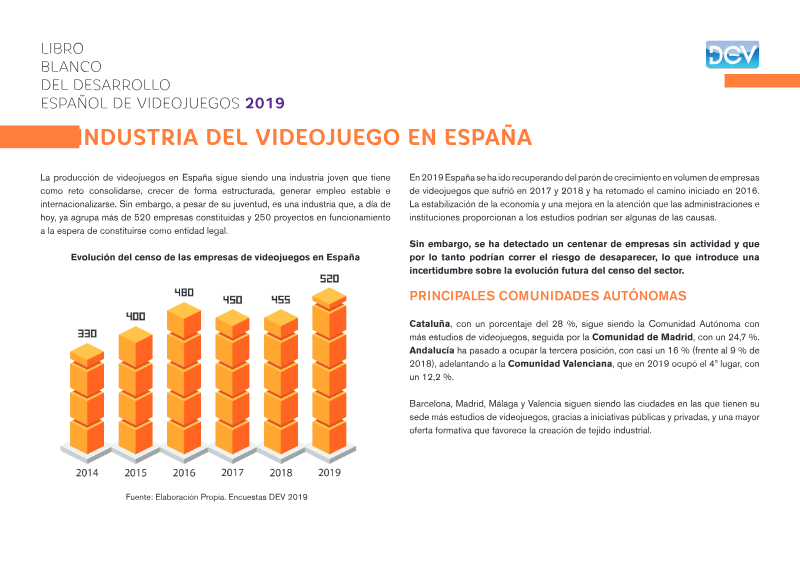

DEV - Desarrollo Español de Videojuegos · 2019
WhitepaperLibro Blanco del Desarrollo Español de Videojuegos 2019
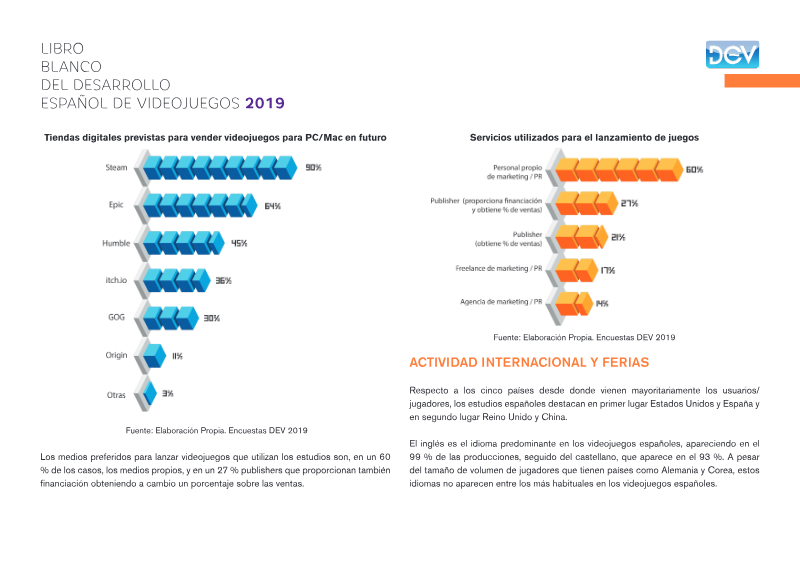
The Spanish video game industry stands at a critical juncture, characterized by high creative potential and a robust talent pool that remains hampered by structural limitations and a lack of institutional consolidation. As of 2019, the sector comprises over 520 active companies, primarily concentrated in Catalonia and Madrid, which together account for 86% of national revenue. Despite the industry’s strong international orientation—with 65% of revenue generated abroad—it faces significant hurdles, including a heavy reliance on self-financing, which accounts for up to 92% of capital in some segments, and a scarcity of medium-to-large-sized studios. The global landscape in 2019, valued at $148.8 billion, is dominated by mobile gaming, which captures 45% of total revenue, followed by console and PC segments. While the industry is evolving toward service-based models and eSports, the Spanish market struggles to scale effectively. A persistent talent gap, particularly in programming and design, complicates growth, as over half of domestic studios report difficulties in recruiting experienced professionals. Furthermore, the absence of a specific industrial classification code hinders the accurate tracking of the sector’s economic impact, complicating efforts to secure tailored public support. To bridge the gap between current performance and international competitiveness, the industry advocates for a strategic shift toward professionalization and increased public-private collaboration. Key recommendations include the implementation of targeted tax incentives for research and development, the creation of mechanisms to attract international investment, and the fostering of gender equality and employment stability. By leveraging the advocacy efforts of representative bodies like DEV, the sector aims to transition from an ecosystem of small, independent studios toward a more mature, consolidated industrial landscape capable of sustaining long-term growth and maximizing its global market positioning.
Institute for Digital Economy · 2019
ReportCzech Video Game Industry: PC, Console and Mobile Game Developers in Czech Republic 2019
The Czech video game industry has established itself as a high-growth, export-oriented pillar of the national digital economy. By 2018, the sector reached annual revenues exceeding CZK 3 billion, consistently outperforming the domestic film industry despite operating without formal state subsidies. Comprising approximately 76 primarily domestic companies, the industry maintains an export rate between 90 and 99 percent. These studios are characterized by a focus on PC and console development, with a strong emphasis on innovation in simulation, virtual reality, and artificial intelligence. The transition to digital distribution platforms like Steam and mobile marketplaces has lowered entry barriers, allowing independent studios to bypass traditional publishing models in favor of community-driven development and crowdfunding. Despite this commercial success, the industry faces structural impediments that threaten its long-term global competitiveness. The sector is dominated by micro and small enterprises that struggle with limited access to private capital and a lack of specialized domestic investment vehicles. Furthermore, the industry is hindered by a severe shortage of skilled labor, exacerbated by the absence of dedicated academic programs and restrictive visa regulations for non-EU talent. These challenges are compounded by administrative hurdles and a lack of legislative frameworks to support student internships or industry-specific research and development. To sustain its trajectory, the industry requires a shift toward systematic government support comparable to that provided to other creative sectors. Strategic recommendations include the establishment of a dedicated game industry fund, the implementation of targeted R&D incentives, and the modernization of educational curricula to align with technical and artistic market demands. By addressing these systemic gaps in financing, labor policy, and export promotion, the Czech video game sector can better compete with neighboring markets and solidify its role as a leader in high-value digital innovation.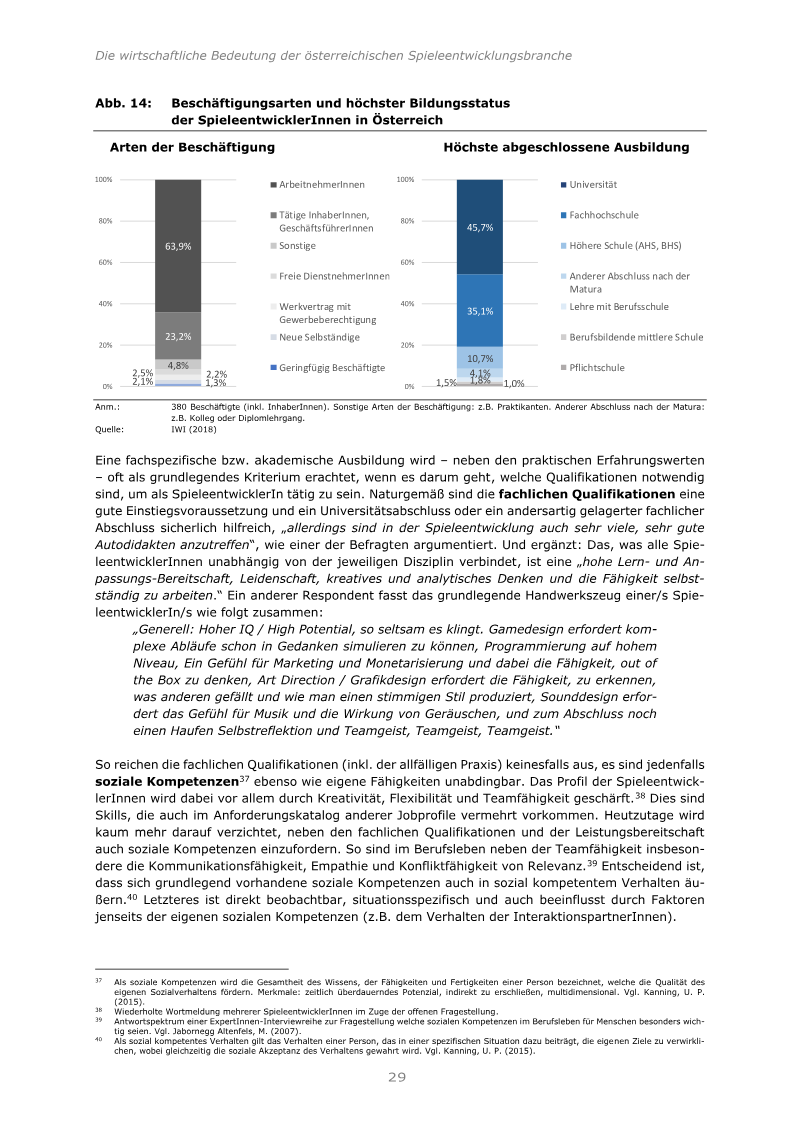
Wirtschaftskammer Österreich · 2019
ReportDie Wirtschaftliche Bedeutung Der Österreichischen Spieleentwicklungsbranche 2019
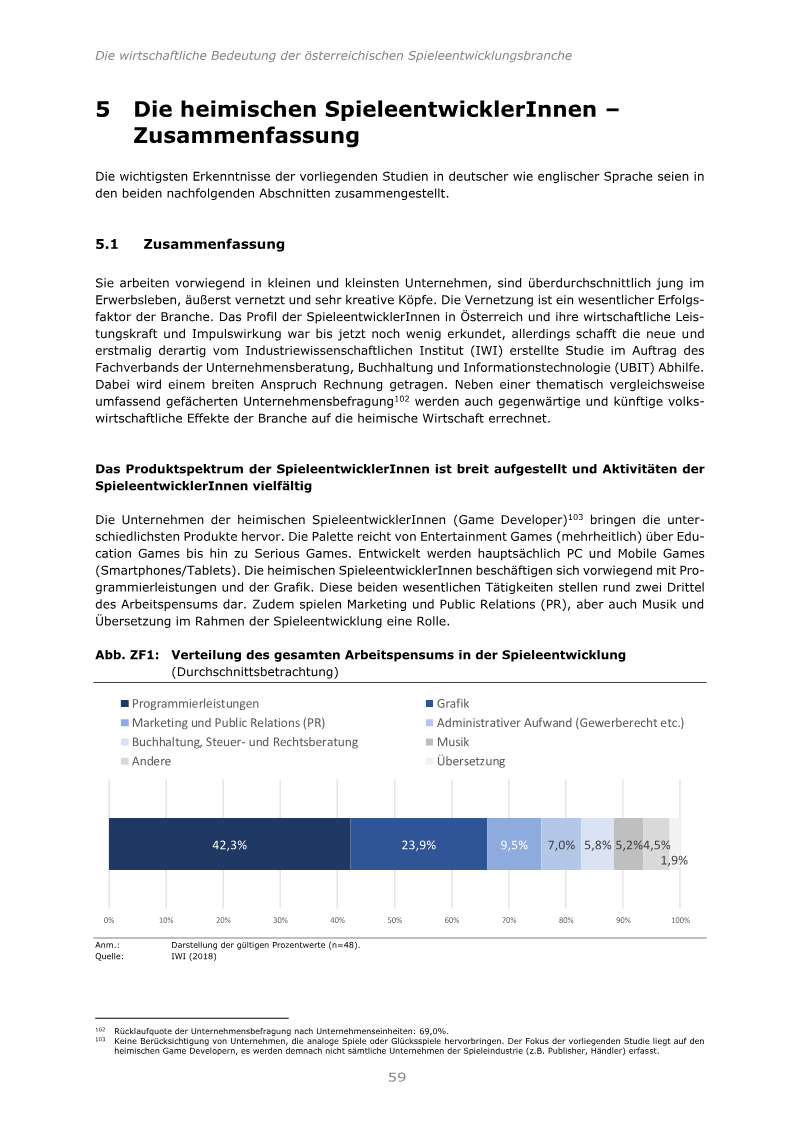
The Austrian game development industry serves as a high-growth, export-oriented sector characterized by a young, highly educated workforce and a concentration of small, agile enterprises primarily based in Vienna. As of 2017, the industry comprised 87 companies employing over 470 professionals, with a strong emphasis on PC and mobile entertainment software. The sector demonstrates significant economic vitality, generating 51.1 million EUR in total turnover and acting as a powerful economic multiplier. Through an input-output analysis, it is evident that for every euro of direct revenue, the industry stimulates an additional 1.11 euros in the national economy, effectively doubling its total economic impact to support nearly 1,000 jobs across various sectors, including IT services and real estate. Despite this robust performance, the industry faces structural challenges that hinder its full potential. Most developers rely heavily on self-financing and public grants, as traditional banking institutions often lack the industry-specific knowledge required to support these businesses. Furthermore, the operational landscape is marked by a critical view of the domestic business environment. Developers frequently cite high non-wage labor costs, unfavorable tax policies, and a lack of targeted political support as significant barriers to competitiveness. While the majority of firms maintain a 100% equity ratio to mitigate risk, there is a clear demand for improved financing guarantees and tax incentives to foster further expansion. Looking toward 2021, the sector maintains a positive outlook, with over 70% of companies projecting revenue growth and more than half planning to increase their headcount. The industry’s strategic focus remains on international markets, particularly the EU and the United States, where over 80% of firms currently export their products. To sustain this trajectory, the sector advocates for enhanced networking, specialized educational initiatives, and more effective utilization of existing business support services. Ultimately, the industry represents a high-value-added segment of the Austrian economy that, if supported by a more favorable fiscal and political framework, is poised for continued international success.
game – Verband der deutschen Games-Branche e. V. · 2019
ReportJahresbericht der deutschen Games-Branche 2019
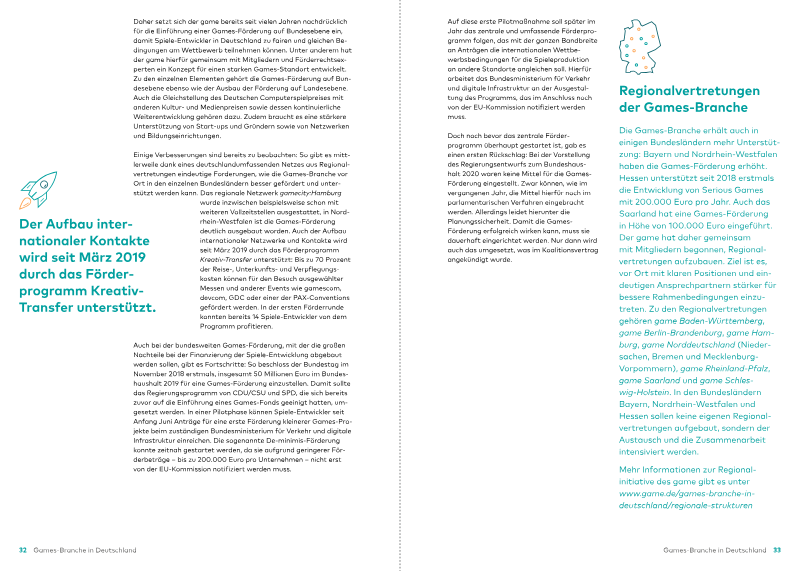
The German games industry reached a significant milestone in 2018, generating a record 4.4 billion euros in revenue and solidifying its status as the largest market in Europe. This growth was primarily fueled by a robust shift toward digital distribution, with in-game purchases—largely driven by the mobile gaming sector—becoming the dominant revenue stream. While consumer spending remains high, the industry landscape is marked by a paradox: despite an increase in the total number of domestic companies, the market share for German-developed titles remains critically low, at 13 percent for online games and just 1.1 percent for PC and console titles. Structural challenges continue to hinder the domestic sector, including a declining workforce and intense international competitive pressure. Domestic developers face high production costs and a lack of consistent state support compared to their global counterparts. To address these disparities, the industry is advocating for a permanent, federally funded support program to provide the long-term planning security necessary to improve international competitiveness. While regional funding and pilot federal programs have emerged, stakeholders emphasize that comprehensive political backing is essential to fully realize the sector's economic and cultural potential. Beyond core development, the industry is maturing through professionalized institutions and major events. The gamescom trade fair continues to serve as the world’s leading industry gathering, while organizations like the USK and the Stiftung Digitale Spielekultur have successfully advanced youth media protection and cultural outreach. Furthermore, the 2018 merger of the BIU and GAME associations into a single representative body has unified the industry’s political voice. Although the eSports sector faces ongoing regulatory hurdles and a lack of formal sports recognition, the overall trajectory of the German games market remains one of significant growth, provided that the current framework conditions are modernized to support local innovation.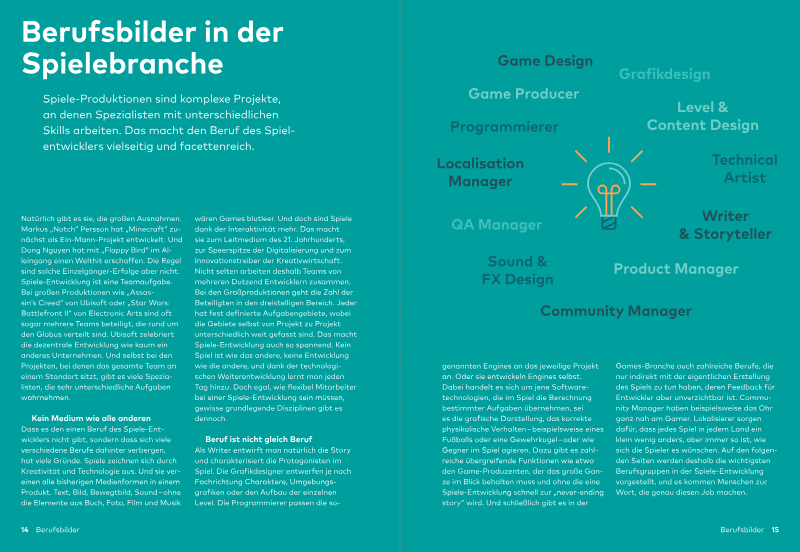
game.de · 2019
ReportArbeiten in der Games-Branche: Kreativität trifft Technologie
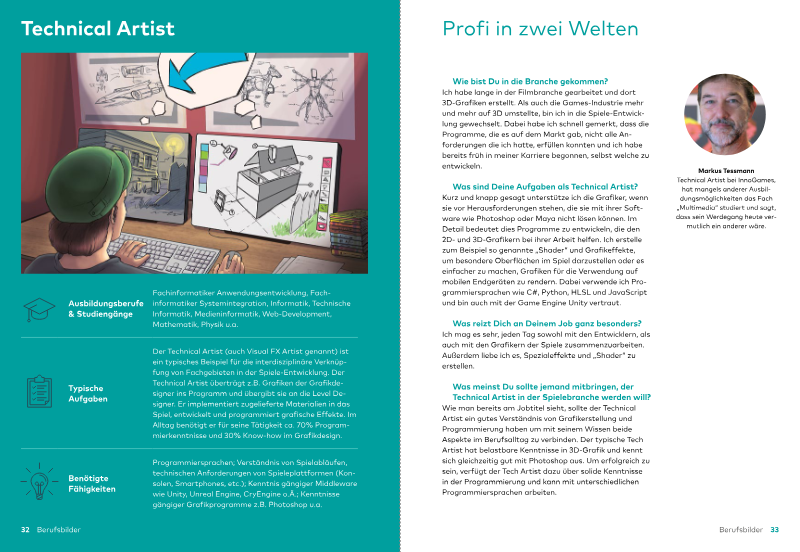
The German games industry has evolved into a significant economic pillar and a primary driver of technological innovation, transcending its traditional role as a mere entertainment sector. With approximately 11,705 direct employees, the industry serves as a critical intersection of culture and high-end technology, focusing heavily on digital distribution, eSports, and virtual reality. Despite this robust growth, the sector faces a persistent shortage of skilled professionals, necessitating a strategic focus on talent development to maintain international competitiveness. Game development functions as a highly complex, interdisciplinary process that demands a synthesis of design, programming, graphic arts, storytelling, and production. Success in this field requires more than technical proficiency; it necessitates a blend of creative vision, strong communication skills, and the ability to thrive in decentralized, collaborative environments. Beyond core development roles, the industry encompasses a wide array of essential functions, including community management, localization, marketing, and administration. This professional landscape increasingly values problem-solving capabilities and a commitment to continuous learning over static skill sets. While the industry has transitioned from a field defined by self-taught pioneers to a structured professional sector, challenges regarding workforce diversity remain. Specifically, there is a recognized need to increase the representation of women, particularly in technical roles, through better mentorship and targeted support. To bridge the gap between education and employment, resources such as the gamecampus platform provide structured pathways for aspiring professionals. Ultimately, securing a career in this dynamic field requires a combination of proactive networking, a robust personal portfolio, and a deep understanding of the evolving educational and vocational landscape across Germany.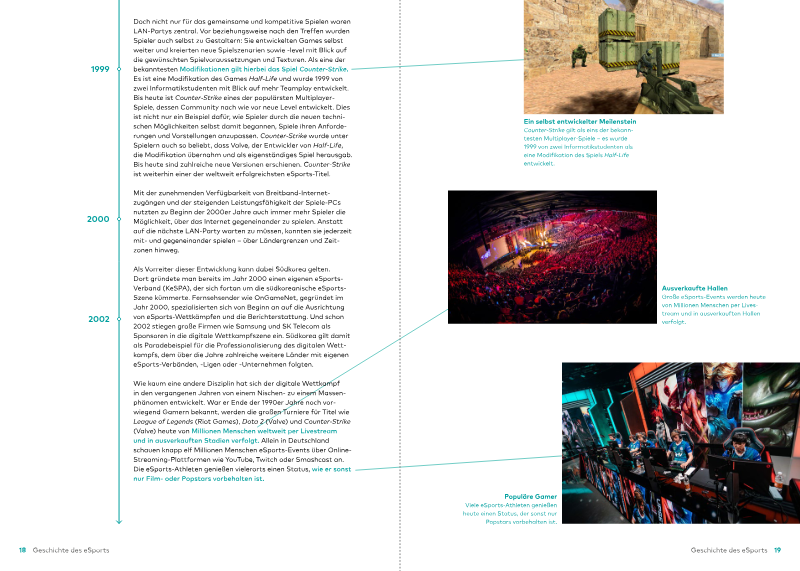

Sport1 · 2019
ReportGame Fokus: Esports 2019
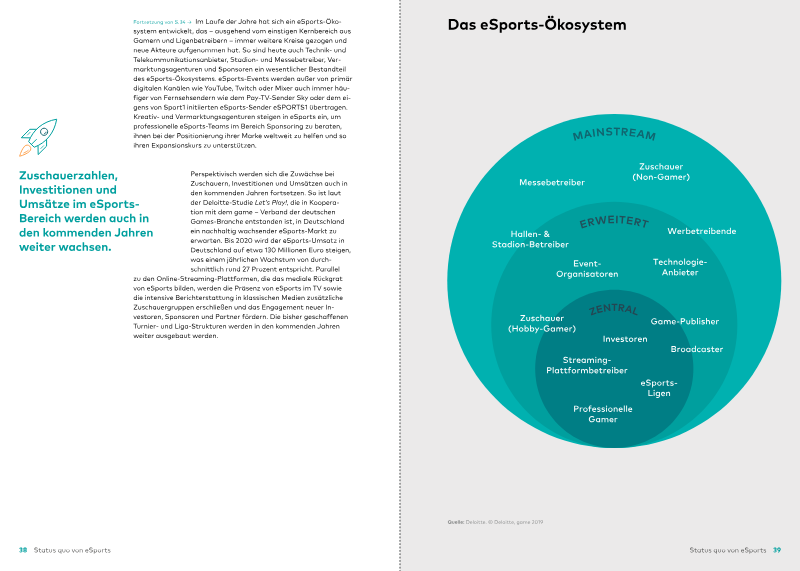
Esports has evolved from its origins in 1980s arcade competitions and LAN parties into a global mass-market phenomenon, characterized by high levels of professionalization and integration into mainstream entertainment culture. By 2019, the industry reached a global valuation of approximately 897 million USD, driven by significant corporate sponsorships, media investment, and the participation of traditional sports organizations. This growth reflects a broader shift toward digital sports as a primary engagement vehicle for younger demographics, supported by sophisticated tournament structures and standardized regulatory frameworks. In Germany, the sector represents a rapidly expanding economic force, with revenues projected to reach 130 million euros by 2020 at an annual growth rate of 27 percent. Despite reaching 13 million viewers domestically, the German esports ecosystem faces critical structural challenges. The primary obstacle is the lack of official recognition as a sport by the German Olympic Sports Confederation. This regulatory status prevents organizations from obtaining non-profit tax benefits and limits access to state-sponsored athletic funding, which in turn hinders the development of grassroots clubs and formal youth training programs. To ensure long-term sustainability, industry stakeholders and advocacy groups are actively lobbying for legal parity with traditional sports. The current focus remains on professionalizing club structures, establishing clear youth protection measures, and securing a stable framework for regional development. By addressing these legislative and administrative barriers, the industry aims to transition from a high-growth commercial sector into a fully integrated component of the national sports and cultural landscape, fostering a more robust ecosystem for both amateur and professional participants.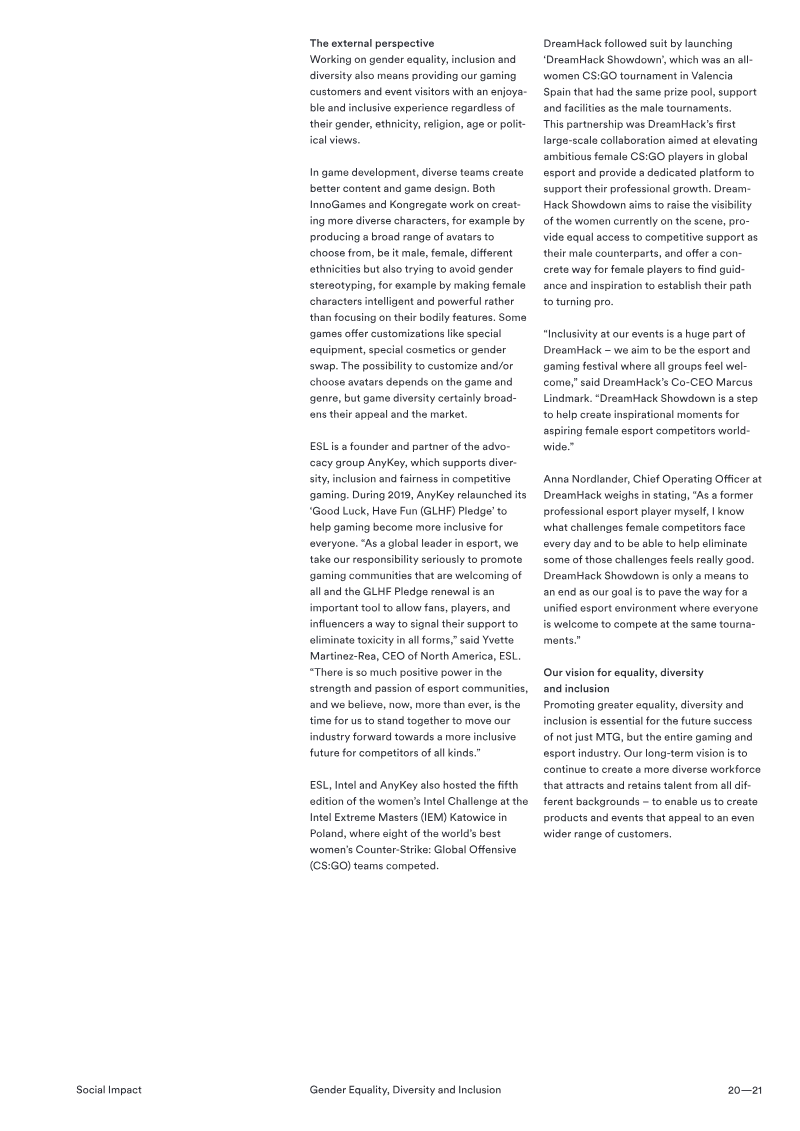
Modern Times Group · 2019
ReportCorporate Responsibility Report 2019
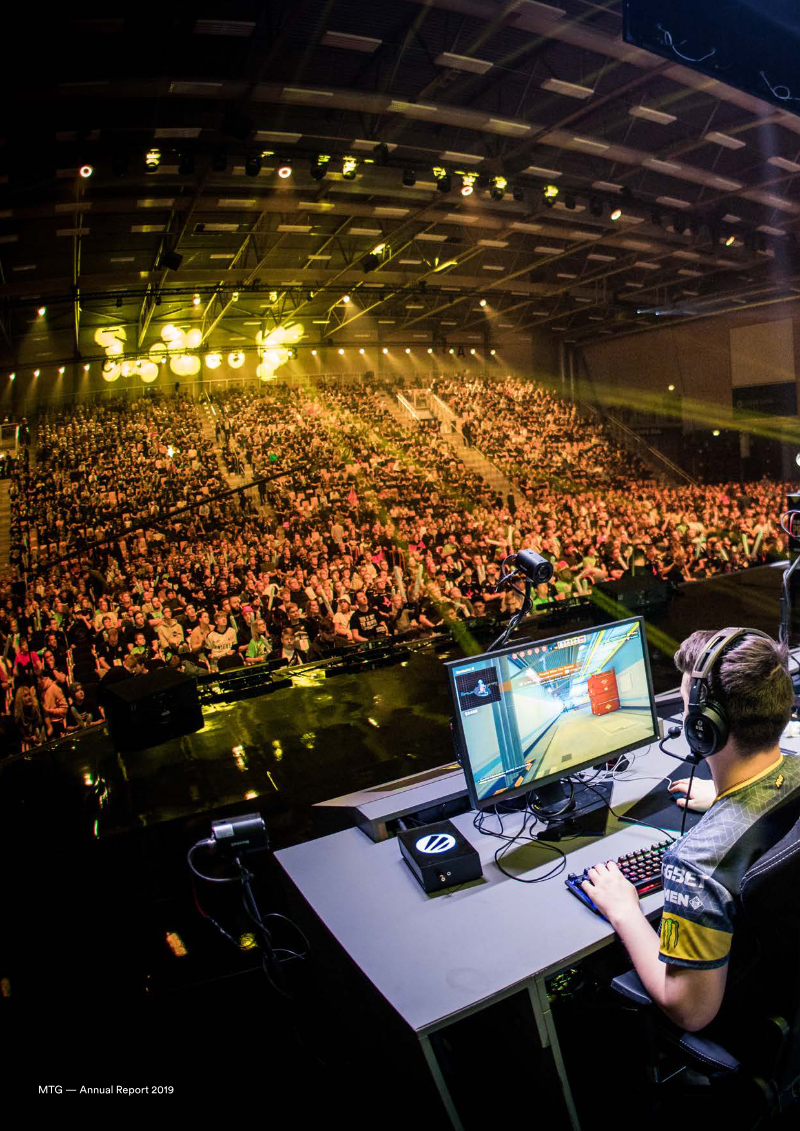
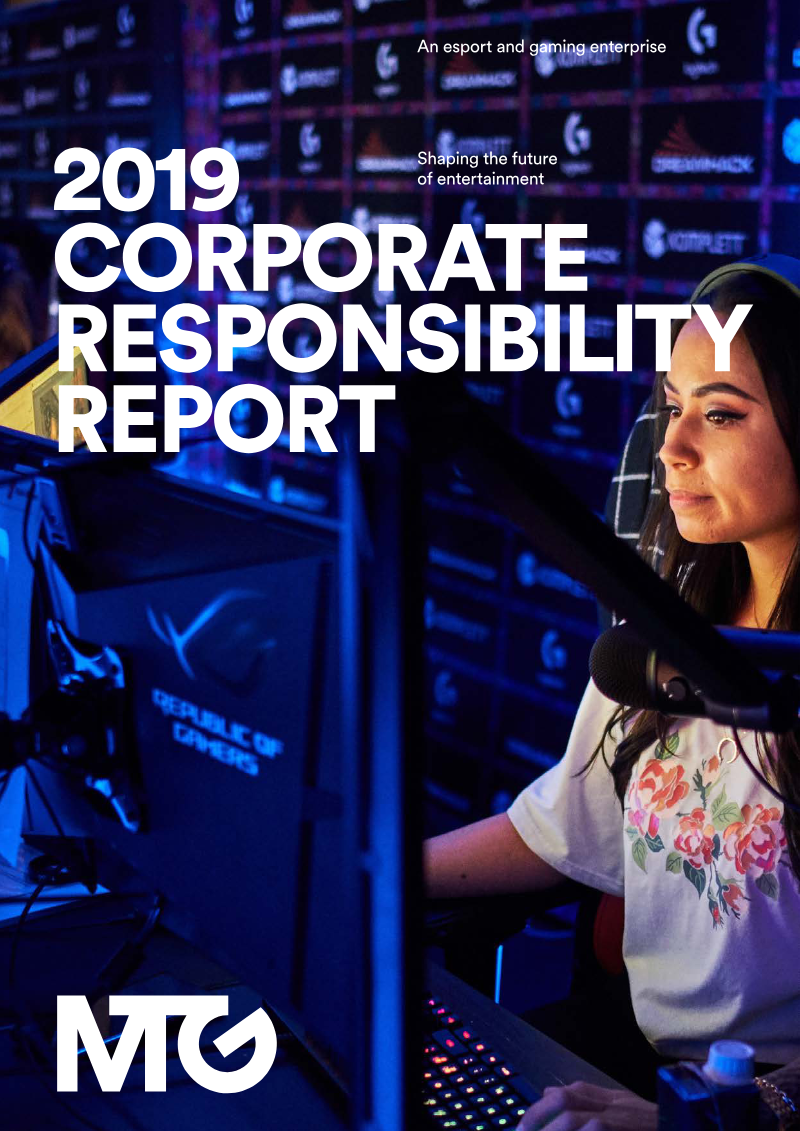
The 2019 corporate-responsibility effort positions Modern Times Group (MTG) as a dedicated gaming and esports holding that integrates environmental, social and governance (ESG) considerations into its core strategy. By framing responsible practice as a source of competitive advantage for millennial and Gen Z audiences, the company seeks to mitigate material risks—discrimination, event security, exploitation of minors, corruption, occupational and mental-health concerns, irresponsible marketing and gaming addiction—while driving profitability. A comprehensive materiality analysis informed a three-tier priority pyramid that places health-and-well-being and gender equality at its apex. Nine new group policies, including a Code of Conduct, whistle-blower, anti-bribery and data-protection frameworks, achieved a 94% employee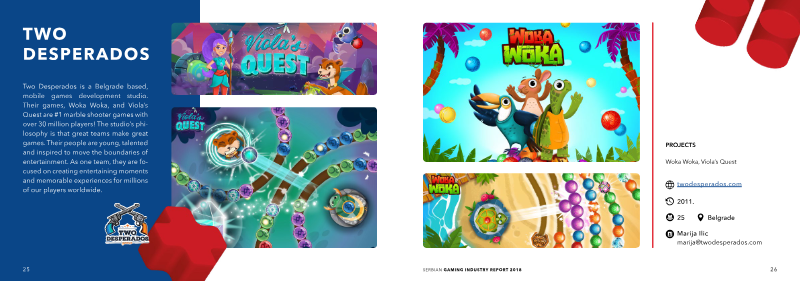
SGA · 2019
ReportSerbian Gaming Industry Report 2018
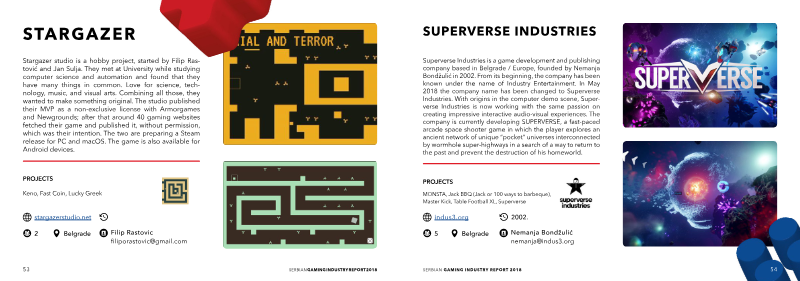
The inaugural Serbian Games Association report maps a rapidly expanding national gaming ecosystem that now comprises more than 60 members across indie development, esports, visual-effects houses and internationally linked studios, employing over 1,500 skilled professionals. Funding is diversified, with roughly 40% of capital sourced from angel investors, 30% from crowdfunding and 20% from venture capital, and the largest single infusion recorded at €650 k. Flagship entities such as 3Lateral (recently integrated into Epic Games), Nordeus with its 200 million-user “Top Eleven” platform, and Ubisoft Belgrade’s 107-person team working on major AAA titles illustrate the sector’s growing global relevance. A vibrant indie segment is driven by small, highly creative teams—often one to three developers—producing titles ranging from cyber-punk point-and-click adventures to hyper-casual mobile games. Studios like Munzesky Games, Oraharo Entertainment, PWN.RS, Stargazer, Superverse Industries, Tummy Games and Zero Gravity showcase cross-border collaborations and distinctive artistic approaches, while highlighting the need for stronger B2B networking, regular industry events and formalized game-art education to sustain momentum. Technical education underpins this growth, with approximately 30 000 university students enrolled in IT-related programs and programming introduced at the primary-school level. Government incentives, EU grants and private investment have bolstered studio formation, yet most companies still rely on organic installs and limited ad-network usage for user acquisition. Community initiatives—including frequent association meet-ups, two industry-backed GameJams, the annual GameUp expo attracting over 2 500 participants, and the Nordeus Hub co-working space offering a six-month mentorship—are actively closing knowledge gaps and fostering collaboration. Media outlets such as Svet kompjutera, JVC Gamer and the online PLAY! Zine maintain visibility for Serbian developers both domestically and abroad. Surveyed stakeholders anticipate a rise in paid user-acquisition capabilities and an increase in successful Serbian titles, positioning the country to become a more prominent player in the regional and global gaming market.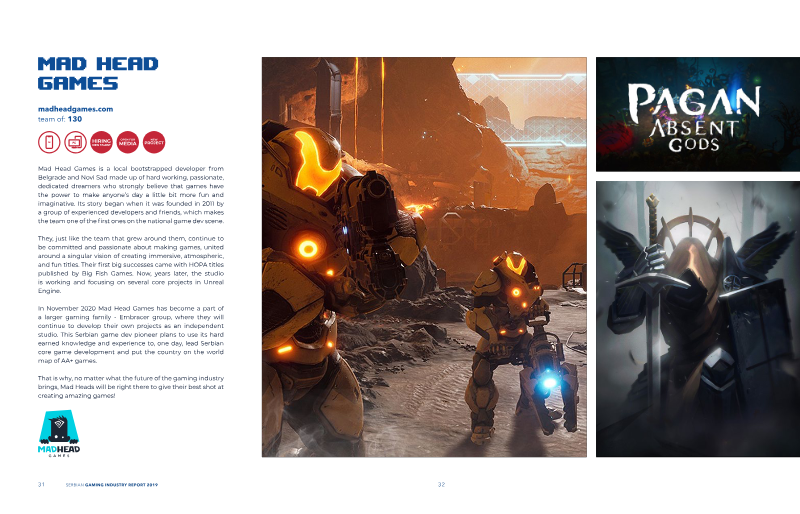

SGA · 2019
Report