Video Games Industry Memo
Game Co.199 documents
Documents

Article
You're Invited to VGIM's 2nd Birthday Party
The Video Games Industry Memo (VGIM) is marking its second anniversary by hosting a networking event for industry professionals. The primary purpose of this communication is to invite readers to a celebratory gathering, facilitating community engagement and professional connection within the gaming sector.
The event is scheduled for November 26, 2025, at The Craft Beer Pub in Farringdon, London. It is designed as an evening of networking, featuring a brief address from the founder and complimentary refreshments for attendees. The event is supported by corporate sponsors, specifically Fifty, The Games Rating Authority, and Renaissance PR, which underscores the publication's ongoing integration with industry stakeholders.
While the event is free to attend, participation is subject to capacity constraints, requiring interested parties to secure tickets in advance. This initiative reflects the publication's broader strategy of fostering a tangible community presence beyond its digital newsletter format. The organizer has also indicated an interest in expanding these networking opportunities to other geographic locations in the future, signaling a potential shift toward a more globalized event strategy for the brand.
- The Video Games Industry Memo (VGIM) will host its second-anniversary networking event on November 26, 2025, at The Craft Beer Pub in Farringdon, London.
- The event is sponsored by Fifty, The Games Rating Authority, and Renaissance PR, highlighting the publication's established ties with key industry stakeholders.
- Attendance is free, but participants must secure tickets in advance due to venue capacity constraints.
- The gathering marks a strategic shift for the publication to move beyond its digital newsletter format by fostering a tangible, in-person community presence.
- VGIM intends to expand its networking event strategy to additional geographic locations in the future.
Video Games Industry MemoOct 2025
Article
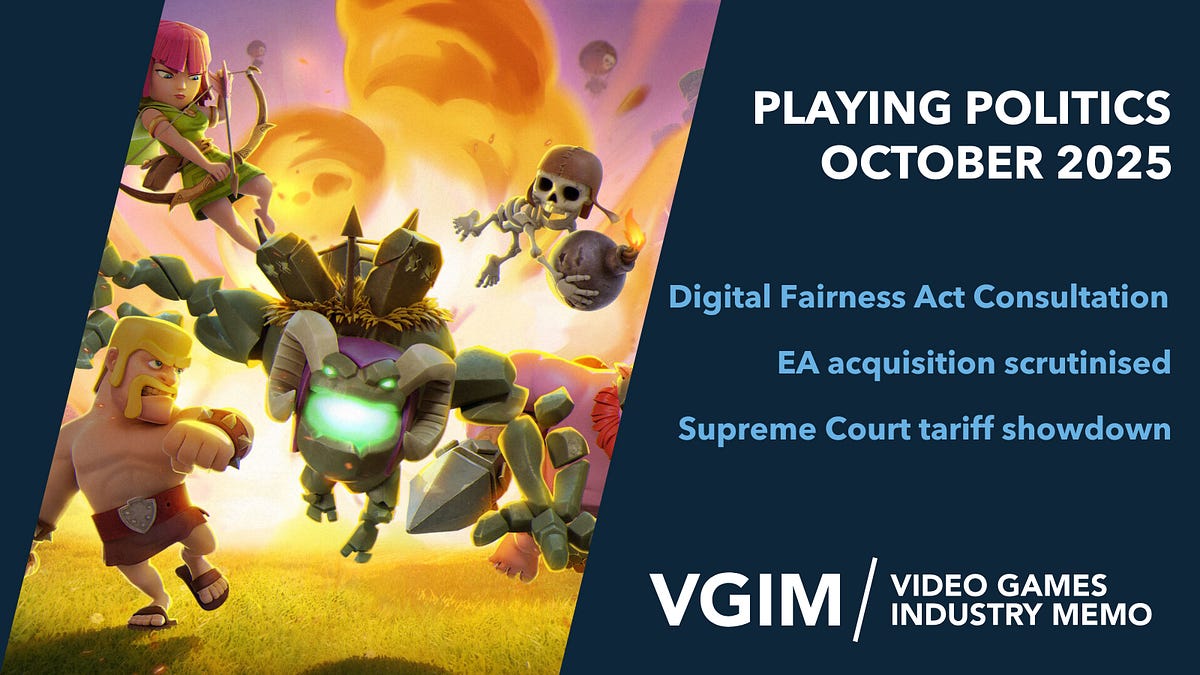
Digitally Unfair Action: Playing Politics, Oct 2025
The October 2025 analysis of the European Union’s proposed Digital Fairness Act (DFA) highlights a significant regulatory friction point between European policymakers and the video game industry. The primary thesis posits that the EU’s consultation process for the DFA—a law intended to curb unethical digital practices and dark patterns—is itself utilizing manipulative design techniques to favor proponents of the legislation while marginalizing industry critics.
The analysis identifies the DFA as a major legislative threat to the games sector, specifically targeting addictive design, influencer marketing, and online profiling. Industry leaders, such as Supercell CEO Ilkka Paananen, have expressed concern that the proposed regulations could impose prohibitive barriers on the sale of in-game currencies and items, potentially threatening the economic viability of European game developers. The report notes that the industry’s late engagement with this regulatory process has created a reactive environment, with lobbyists now scrambling to address the potential impact on regional GDP.
Beyond the specific policy concerns, the analysis highlights a perceived irony in the regulatory process. By employing consultation design patterns that critics argue are inherently biased, the European Commission faces accusations of hypocrisy for utilizing the very "dark patterns" it seeks to outlaw. In addition to these European regulatory developments, the broader industry landscape remains shaped by ongoing geopolitical and legal pressures, including US Senate scrutiny regarding Electronic Arts’ acquisition activities and a pending Supreme Court case concerning trade tariffs scheduled for November 2025. The scope of this assessment covers the intersection of global gaming business operations and international policy frameworks during the latter half of 2025.
- The European Union’s proposed Digital Fairness Act (DFA) poses a significant threat to the regional games sector by targeting core revenue drivers, including addictive design, influencer marketing, and the sale of in-game currencies.
- Industry leaders, including Supercell CEO Ilkka Paananen, warn that the DFA’s regulatory constraints could create prohibitive barriers that undermine the economic viability of European game developers.
- The European Commission faces accusations of hypocrisy for utilizing biased consultation design patterns that critics claim mirror the very 'dark patterns' the DFA seeks to outlaw.
- Late engagement by the gaming industry has forced lobbyists into a reactive position as they scramble to mitigate the potential negative impact of the DFA on European GDP.
- Electronic Arts is currently facing heightened scrutiny from the US Senate regarding its recent acquisition activities.
+1
Video Games Industry MemoOct 2025