The gaming industry is currently facing a significant crisis regarding creative autonomy as payment processors, under pressure from conservative advocacy groups, have initiated a widespread campaign to remove adult-themed content from major digital storefronts like Steam and itch.io. This movement, which intensified throughout July and August 2025, has resulted in the mass deindexing of thousands of titles. Because these platforms lack transparent criteria for enforcement, the purge has extended beyond prohibited material to include legal, non-violating games, effectively demonetizing independent developers and threatening the artistic legitimacy of the medium.
This wave of censorship is increasingly viewed as a byproduct of broader political agendas, specifically those aligning with U.S.-based initiatives that utilize anti-pornography rhetoric to restrict digital expression and erode civil liberties. The impact is disproportionately felt by small-scale, independent creators who lack the resources to challenge platform de-listing or navigate the sudden loss of revenue. By silencing works that explore sensitive adult themes, these actions threaten to homogenize the gaming landscape and stifle the cultural diversity that defines the independent sector.
Industry trade associations have begun to mobilize in defense of artistic freedom, warning that these discriminatory practices pose a long-term risk to the industry’s creative health. As platforms prioritize the demands of financial intermediaries over the rights of developers, the tension between corporate compliance and creative expression continues to escalate. This trend suggests a precarious future for digital distribution, where the threat of arbitrary censorship could permanently alter the scope of content available to global audiences and undermine the viability of independent game development.
The August 2025 update for the Video Games Industry Memo serves as a status report on the publication’s operational trajectory and the author’s professional projects. The primary focus is the completion of the manuscript for Power Play: Video Games, Politics, and the Battle for Global Influence, a work exploring the intersection of gaming and geopolitical power. With the writing phase concluded, the author has opened pre-orders for the book, which is scheduled for a June 2026 release.
Regarding the publication’s operations, the author is extending a planned hiatus until October 2025 to accommodate the final editing and proofreading stages of the manuscript. To maintain content continuity, contributors George Young and Tom Regan will continue to manage the newsletter throughout September. The publication reports steady growth, noting that free subscriptions have surpassed 5,000 and paid memberships have increased by 10% since the beginning of the summer.
The update also outlines strategies for sustaining the newsletter through the end of 2025. These include promoting paid Insider memberships, soliciting corporate sponsorships for the newsletter, and seeking partners for an upcoming end-of-year industry event. The author intends to resume regular operations on October 2, 2025, following a period of leave, and plans to initiate discussions regarding future projects for 2026 during the month of November.
Gamescom has solidified its position as the world’s premier video game event by successfully navigating the transition from a traditional trade show to a hybrid, community-focused global brand. The conference’s enduring success is attributed to its ability to evolve alongside its audience, maintaining a consistent presence even during the pandemic through digital formats. By balancing large-scale physical attendance with high-profile digital broadcasts like Opening Night Live, the event has effectively filled the void left by the decline of legacy industry gatherings such as E3.
The event’s operational strategy relies on three core pillars: rigorous content curation, shared community values, and strong local partnerships. This approach has allowed for the successful international expansion of the brand into dynamic markets, including Latin America and Asia, while preserving the unique festival atmosphere that defines the flagship Cologne edition. Furthermore, the conference has become a significant hub for political engagement, attracting hundreds of government officials annually to discuss the industry's economic and cultural relevance.
As of August 2025, the event hosts over 1,500 exhibitors from more than 70 countries and attracts upwards of 300,000 visitors to its Cologne venue. Recent data from satellite events underscores this growth, with Gamescom LATAM reporting 130,000 visitors and Gamescom Asia drawing over 41,000 attendees. These figures demonstrate a robust demand for the Gamescom model, which continues to prioritize accessibility, networking, and the celebration of gaming culture. Looking forward, the organizers remain committed to scaling these international extensions as meaningful, locally-integrated additions to the global gaming ecosystem.
The Summer 2025 financial analysis provides a comprehensive overview of the video game industry’s performance, focusing on the quarterly results of major market leaders and broader sector trends. The primary thesis highlights a period of significant growth for hardware and digital services, tempered by ongoing concerns regarding trade tariffs, shifting consumer habits, and the industry’s internal labor challenges. The analysis draws from official corporate financial disclosures and investor reports to synthesize complex data into actionable insights for industry observers.
Key findings reveal a robust performance from Nintendo, which saw net sales climb 132% year-on-year to $3.8 billion following the successful launch of the Switch 2, despite thin profit margins on the hardware. PlayStation reported a 127% increase in operating income, driven by a strong shift toward digital sales and the strategic integration of third-party content. Conversely, Microsoft’s Xbox division experienced a 10% increase in overall gaming revenue, yet faced criticism for pursuing mass layoffs despite record-level player engagement and strong performance from first-party titles.
The broader industry landscape shows varied results: Tencent and Roblox posted substantial gains in international and domestic markets, while companies like Square Enix struggled due to a lack of major releases. Capcom faced mixed outcomes, with high operating profits offset by disappointing sales for recent titles. Across these segments, the analysis identifies a clear industry-wide pivot toward digital distribution and live-service models. Furthermore, the report notes that geopolitical factors, specifically U.S. trade policies and tariffs, remain a critical variable for future financial forecasting across all major hardware manufacturers.
The August 2025 state of play analysis examines the evolving relevance of dedicated gaming consoles in an industry increasingly dominated by PC gaming and cross-platform accessibility. The central thesis posits that while the traditional "console wars" era has effectively ended, the future of the hardware category depends on developers prioritizing creative clarity, budget discipline, and platform-agnostic distribution to maintain engagement with younger demographics.
Key industry figures, including John Romero, Henk Rogers, Josef Fares, Pierre Tarno, and Andy Serkis, provide qualitative insights into these shifts. A recurring theme is the tension between the high costs of blockbuster development and the need for creative risk-taking. Experts argue that the industry’s pivot toward live-service models has often diluted creative purity, suggesting that long-term success relies on delivering high-quality, distinct experiences that resonate with discerning players. Furthermore, the analysis highlights the growing integration of game engine technology into broader entertainment sectors, such as virtual film production and potential future applications in mixed reality.
The scope of this assessment covers the global video game industry, with specific focus on the transition of console revenue models and the changing habits of Gen Alpha. The methodology relies on a synthesis of expert interviews, market data from Newzoo, and observations from recent industry events. The analysis concludes that while the traditional console market faces existential pressure, the medium remains a vital vehicle for interactive storytelling, provided that developers can adapt to a landscape where hardware borders are increasingly blurred and quality remains the primary driver of commercial success.
The video game industry has experienced a significant proliferation of digital showcases, shifting from the centralized model of E3 to a fragmented landscape of numerous independent events. This trend is characterized by a massive increase in volume; in 2025, over 7,070 games were revealed across 35 different summer showcases. This represents a 35-fold increase in announcements compared to the final year of E3 in 2021, far outpacing the 11% growth in the global gaming audience over the same period.
The primary drivers behind this surge are financial and strategic. Publishers are increasingly opting to host their own events to maintain direct control over messaging and avoid the high costs associated with traditional trade shows. Furthermore, the shift toward digital-first presentations, accelerated by the COVID-19 pandemic, has proven effective at driving viewership and wishlist additions. Industry experts suggest that this expansion also reflects the natural growth of the gaming ecosystem, as a larger number of developers from diverse backgrounds require dedicated platforms to reach consumers in an increasingly crowded market.
However, this saturation has created a "showcase-pocalypse" that challenges consumer attention and diminishes the impact of individual announcements. While these events provide necessary marketing beats, the sheer volume of content makes it difficult for titles to stand out. Consequently, industry analysts suggest that the future of game discovery may shift toward more interactive formats, such as Steam Next Fest, which allow for direct consumer engagement through playable demos. To remain viable, future showcases will likely need to focus on better curation, improved pacing, and strategic scheduling in quieter periods of the calendar to avoid being lost in the noise.
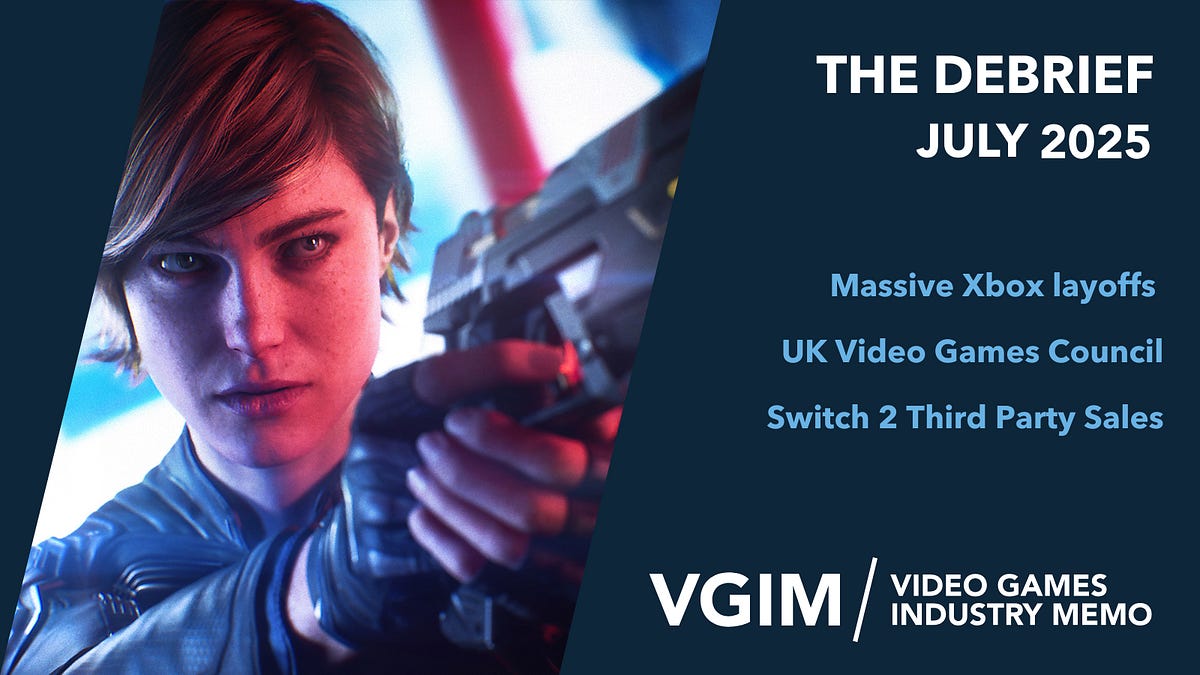
The July 2025 edition of The Debrief serves as a comprehensive monthly summary of significant developments within the global video game industry. The publication focuses on three primary areas: corporate restructuring, government policy, and market performance data. By synthesizing news from throughout the month, the report provides an analytical overview of the sector’s current challenges and emerging trends.
Key findings for July 2025 include a significant reduction in headcount across Microsoft’s gaming division, marking a period of instability for the major publisher. In the policy sphere, the United Kingdom officially launched the UK Video Games Council, though the organization faced immediate scrutiny following controversy involving one of its co-chairs. Additionally, the report highlights market data from Newzoo, which indicates that third-party software sales for the Nintendo Switch 2 are currently driving significant momentum in the hardware ecosystem.
The scope of this analysis is international, with a specific emphasis on the intersection of corporate business strategy and regional regulatory developments in the United Kingdom. The information is curated by industry analysts and draws upon market research data and public policy announcements. By consolidating these disparate events, the publication offers a snapshot of a volatile month characterized by both organizational downsizing and the establishment of new industry governance structures.
The July 2025 industry analysis examines the evolving landscape of indie game publishing, specifically focusing on the scouting strategies employed by publishers to identify and sign successful titles. The central thesis posits that in a saturated market—where approximately 10,500 games have launched on Steam within the first eight months of 2025—a publisher’s ability to define a clear brand niche and provide structural support is essential for developer success. By maintaining a specialized focus, publishers can effectively position titles for their target audiences, a process that extends well beyond the initial launch phase.
Key findings emphasize that effective scouting relies on a combination of proactive outreach, industry networking, and the evaluation of early-stage projects before they reach public demo phases. Publishers like Fellow Traveller prioritize narrative-driven, diverse storytelling, allowing them to build brand equity and foster long-term relationships with developers. This model emphasizes creative autonomy, with publishers providing critical support in marketing, localization, and community management rather than interfering with the core creative process.
The analysis also highlights broader industry trends, including the impact of the UK’s Online Safety Act on digital service providers and the ongoing financial pressures influencing platform moderation policies. Data from the UK Games Fund suggests that public investment remains a vital catalyst for the sector, with 74% of recipients indicating their projects would not have been realized without such support. Ultimately, the industry is shifting toward a model where specialized, niche-focused publishing provides the necessary stability for creative studios to navigate an increasingly crowded and competitive global marketplace.
The video game industry is experiencing a significant shift toward digital distribution, leading to a decline in physical media sales. In the United Kingdom, physical games accounted for only 27.7% of new console game sales last year, a figure that drops to 10.4% when including PC titles. Major publishers are increasingly prioritizing digital-only releases, while traditional brick-and-mortar retailers have reduced their gaming inventory to focus on merchandise. This transition has prompted concerns regarding digital ownership, as consumers increasingly view digital purchases as temporary rentals rather than permanent assets.
Despite these trends, a niche market for physical games persists, driven by collectors and players who value tangible media. Publishers like Lost in Cult are targeting this segment by focusing on premium, high-quality physical editions that include supplementary materials such as artwork and developer interviews. This strategy relies on the premise that older demographics, who grew up with physical media, possess both the disposable income and the desire to maintain physical collections. By prioritizing "out-of-the-box" playability and rejecting artificial scarcity tactics like fear-of-missing-out (FOMO) marketing, these publishers aim to provide a prestige experience that differentiates their products from standard digital offerings.
The industry’s move toward digital-first models remains the dominant trend, yet the demand for physical products continues to offer a viable, albeit smaller, business opportunity. While the broader market faces challenges from changing consumer habits and the rising costs of physical production, the focus on high-end, curated physical releases suggests that there is a sustainable, if limited, future for physical media as a form of art and collectible, rather than a primary method of mass-market distribution.
The July 2025 edition of the Video Games Industry Memo provides a status update regarding the publication of the book Power Play. The primary purpose of the communication is to announce that Prometheus has acquired the North American publishing rights for the work, which will feature a new subtitle, while simultaneously offering a behind-the-scenes look at the author’s manuscript development process.
The update highlights the evolution of the writing experience over the preceding 12-month period as the author enters a period of dedicated book leave to finalize the manuscript. By sharing these insights, the text serves as both a professional milestone announcement for the project and a promotional effort to engage the publication's subscriber base. The content is positioned within the broader context of the author’s ongoing industry analysis and recent appearances at the Develop conference, where the author engaged with industry stakeholders through business events and private networking sessions.
The scope of the information is limited to the author’s personal publishing journey and recent industry networking activities in the United Kingdom. As the core content is gated behind a subscription paywall, the document functions primarily as a teaser for paid members, emphasizing the value of the publication’s insider access and professional community benefits.
The UK Video Games Council, unveiled in July 2025, serves as a new 14-person advisory body designed to facilitate direct communication between the UK government and the domestic games industry. Operating under the Creative Industries Sector Plan, the council aims to provide strategic input to drive economic growth over the next decade. By establishing a formal channel for industry leaders to consult with government officials before policy decisions are finalized, the body seeks to rectify a long-standing disconnect between state policy and the needs of the games sector.
The council comprises a diverse group of frontline industry experts, including representatives from triple-A studios, indie developers, mobile game creators, and service providers. Notable members include leadership from Larian, Miniclip, ustwo games, and 4J Studios, alongside the chief executives of the two primary trade associations, Ukie and TIGA. This collaboration marks a significant détente between the two trade bodies, which have historically maintained a competitive relationship. The council is structured to ensure fresh perspectives through three-year term limits, with a maximum of two terms per member.
While the council is viewed as a positive step toward formalizing the industry's political influence, its current scope is limited to twice-yearly meetings focused primarily on economic growth. Observers note that the body is not intended to address broader cultural or social issues at this stage. Furthermore, the appointment process faced some criticism regarding transparency and the inclusion of non-developer representatives from major corporations like Microsoft. Despite these limitations, the council represents a foundational effort to integrate the video games sector more effectively into the UK’s broader industrial strategy.
The video game industry faces a persistent challenge regarding mainstream cultural acceptance, largely stemming from a lack of recognizable, human-centric "auteur" figures. While film and music industries rely on the emotional connection between audiences and specific creators to drive engagement, the gaming sector frequently prioritizes corporate branding over individual talent. Hideo Kojima serves as a primary case study for this phenomenon; his ability to cultivate a personal brand and leverage Hollywood-style marketing—exemplified by the high-profile, art-led launch events for Death Stranding 2—demonstrates the potential for games to be celebrated as unique, personal artistic expressions rather than mere commercial products.
Despite the success of this model, the industry remains hesitant to embrace such visibility. Many publishers view games primarily as products, often obscuring the contributions of individual developers and failing to provide the behind-the-scenes narratives that foster deeper audience investment. Furthermore, the current landscape shows a trend toward anonymity, particularly among indie developers who may avoid the spotlight to mitigate potential backlash or maintain personal privacy. This lack of transparency is compounded by inconsistent crediting practices, which often leave the hundreds of skilled professionals behind major titles unrecognized.
The broader industry context as of July 2025 is marked by significant volatility and contraction. Microsoft’s Xbox division recently underwent a major restructuring, resulting in 9,000 layoffs and the closure of several studios, including The Initiative. Additionally, financial data indicates a 25% year-over-year decline in video game spending among 18-24-year-old Americans, attributed to broader economic pressures. While the Nintendo Switch 2 achieved a strong global launch with 5 million units sold in its first month, the industry continues to grapple with the tension between its commercial scale and its struggle to establish a consistent, human-led cultural identity.