Two & a Half Gamers
Two & a Half Gamers is a YouTube channel covering the mobile games business. It publishes videos on ad monetization, user acquisition, game launches, studio strategies and industry news.
Documents

🤬 Meta is NOT back on iOS. We have been FOOLED!
Meta’s recent, transient surge in iOS advertising revenue does not represent a technological breakthrough or a successful circumvention of Apple’s App Tracking Transparency (ATT) framework.
- Meta’s recent spike in iOS advertising revenue was a temporary anomaly driven by aggressive ad formats rather than a circumvention of Apple’s App Tracking Transparency (ATT) framework.
- The performance surge lasted only 48 hours, as the use of intrusive end-cards and double-ad templates led to a sharp decline in user retention that neutralized initial gains.
- Meta has failed to regain its pre-2021 market dominance on iOS, as the underlying signal loss issues caused by privacy-centric restrictions remain unresolved.

🚨📢 BREAKING NEWS: Mobile Stagnates, Monopoly GO Hits $6B, Liftoff Files for IPO
The mobile gaming industry experienced a period of divergence in 2025, characterized by a slight rise in global revenue to $81.8 billion while traditional app store metrics suggested stagnation.
- Scopely’s Monopoly Go became the fastest mobile game in history to reach $6 billion in lifetime revenue, achieving the milestone in 1,275 days and currently generating approximately $200 million per month.
- Global mobile gaming revenue reached $81.8 billion in 2025, though traditional app store metrics show stagnation due to a massive shift toward web stores that bypass platform fees.
- Industry observers estimate that 40% to 50% of revenue from large-scale developers is now excluded from standard iOS and Google Play tracking, meaning official reports likely underrepresent actual market performance.

🎯 Hunting Sniper Review: Old game, new UA = SERIOUS Money!
The mobile game Hunting Sniper has emerged as a significant financial success within the realistic sports genre, generating approximately $200,000 in daily revenue.
- Hunting Sniper generates approximately $200,000 in daily revenue, outperforming established genre competitors like Hunting Clash by nearly tenfold.
- The game’s rapid scaling since its August 2024 launch is driven primarily by an aggressive user acquisition strategy rather than innovative game design.
- Developers maintain a high-volume creative output, releasing hundreds of new marketing assets monthly across Facebook, Google, and TikTok.

🎯 Mobile Ad Monetization Checklist: From Soft Launch to Scale by Felix Braberg
This guide provides a strategic framework for mobile game developers to implement and scale ad monetization, covering the transition from soft launch to full-scale operations.
- Prioritize user retention by enforcing strict ad creative standards, as networks often default to intrusive, long-form end cards that degrade the user experience.
- During soft launch, target a 45% viewer rate for rewarded video ads and a 70% viewer rate for interstitials to balance monetization with retention.
- Maintain an updated app-ads.txt file to ensure full access to reseller demand and maximize potential ad revenue.
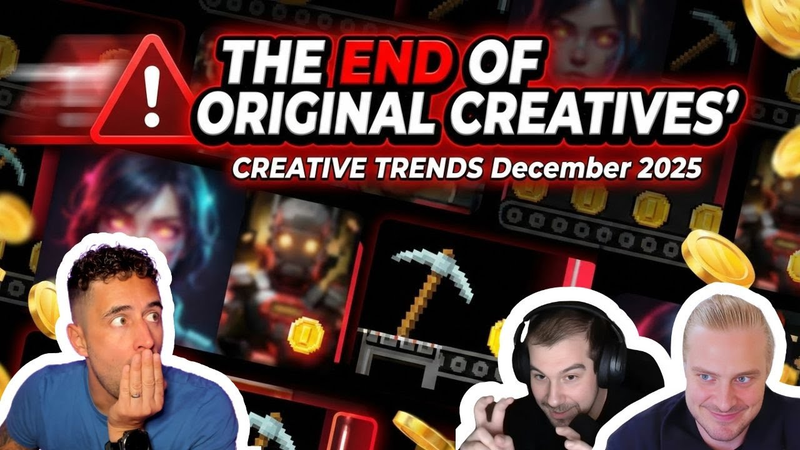
☠️ The end of original creatives: Creative Trends just got darker
The mobile gaming industry is currently undergoing a fundamental shift toward a copy-first development strategy, prioritizing high-volume, replicable creative assets over original intellectual property.
- The mobile gaming industry is shifting toward a copy-first strategy that prioritizes high-volume, replicable creative assets over original intellectual property to maximize conversion metrics.
- Artificial intelligence is being leveraged to mass-produce deceptive creative content, significantly lowering production costs while enabling the rapid deployment of fabricated, high-drama scenarios.
- Publishers are increasingly utilizing 'fake ads' that feature unauthorized use of major global brands and misleading gameplay representations to drive user acquisition.

🚨📢 BREAKING NEWS: Ubisoft Restructures, IAP Hits $167B, Turkey Keeps Raising, Pokémon Goes IRL
The gaming industry is currently undergoing a structural shift characterized by a transition toward a monetization-first era.
- Global mobile in-app purchase revenue reached $167 billion in 2025, confirming a strategic industry shift toward maximizing lifetime value over user acquisition scale despite declining download volumes.
- Ubisoft is reorganizing into five specialized creative houses to achieve $200 million in cost savings, a process that includes canceling projects like the Prince of Persia Sands of Time remake and mandating a full-time return to the office.
- Major publishers are prioritizing stability by leveraging legacy intellectual property and diversifying platforms, such as Outfit7 expanding into PC development and Rovio relaunching the Angry Birds franchise in China.

Sandloop review: It looks simple. That’s the point.
Sandloop, a physics-based sorting game published by Voodoo, exemplifies the effectiveness of a minimalist design philosophy in the hyper-casual mobile market.
- Sandloop generates $60,000 to $120,000 in daily ad revenue from approximately 50,000 daily downloads.
- The game utilizes a high-spend acquisition model with $200,000 in daily marketing costs, targeting a three-month payback period.
- To minimize initial user churn, the game delays all monetization and menu access until level 20.

New genre leader in cozy games by Jakub Remiar
Heartopia has emerged as a significant leader in the cozy, avatar-life simulation genre, demonstrating strong market performance shortly after its January launch.
- Heartopia, a mobile avatar-life simulation game launched in January, currently generates over $200,000 in daily revenue with hundreds of thousands of daily downloads.
- The game’s monetization is driven entirely by cosmetic-only gacha systems for clothing and furniture, avoiding gameplay-affecting mechanics or competitive stats.
- Market success is heavily concentrated in Asia, led by Japan, followed by the United States, Taiwan, South Korea, and Thailand.
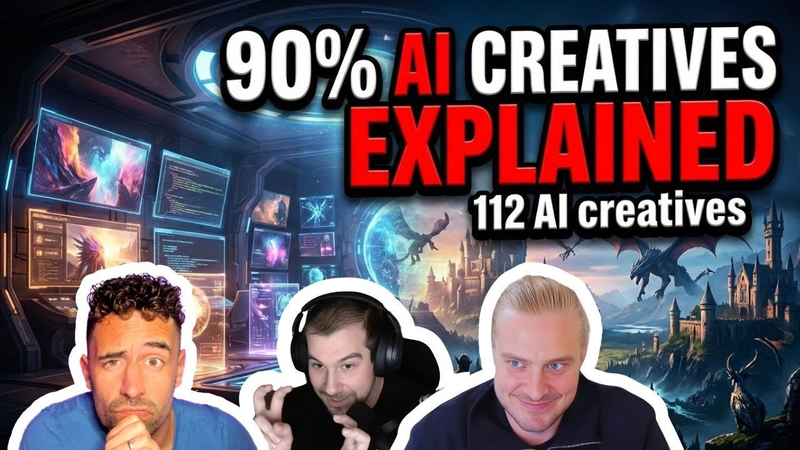
🤯 AI ads evolved from fake gameplay into full world simulations
The mobile gaming industry is undergoing a fundamental shift in user acquisition strategy as developers transition from traditional, manually animated advertisements to sophisticated, AI-generated creative assets.
- Mobile game developers are shifting from deceptive 'fake gameplay' ads to AI-generated, high-fidelity world simulations that offer superior engagement and conversion rates.
- Leading titles such as Dark War and Top Heroes now rely on AI for 80% to 90% of their total marketing output.
- Generative tools like Genie 3 allow developers to create interactive, visually consistent environments from single source images, significantly outpacing traditional animation pipelines.

🚨📢 BREAKING NEWS: 2026 State of Gaming Marketing, Turkish studio raises big, Meta shuts studios
The 2026 gaming landscape is defined by rapid consolidation, a surge in creative output, and a strategic shift toward monetization efficiency.
- Global user acquisition spending reached $25 billion in 2026, with Turkey and India now capturing one-third of all UA expenditure outside of China.
- Top advertisers increased creative volume by 30% year-over-year, producing 2,400 to 2,600 variations per quarter to combat a market where ad impressions grew twice as fast as paid installs.
- Meta has shuttered three VR studios—Saru Games, Twisted Pixel Games, and Armatur Studio—as the company pivots its strategic focus from the metaverse toward wearable technology.
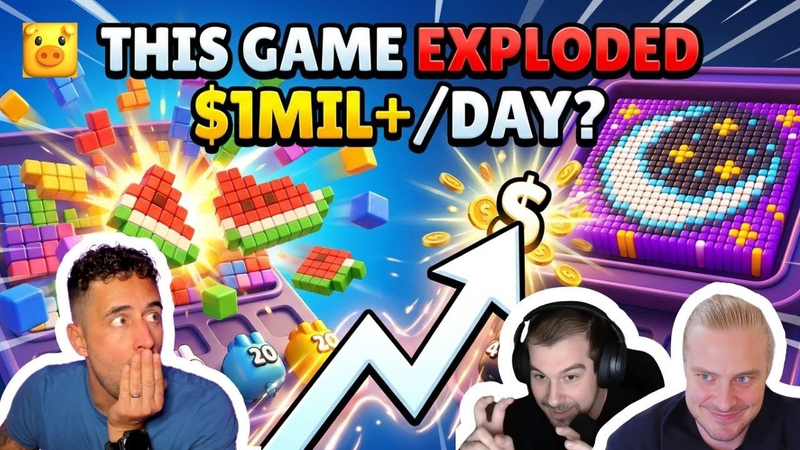
🚀 Pixel Flow! Review: from 0 to $1mil+/day in 90 days
Pixel Flow has emerged as a significant success within the Turkish mobile gaming sector, achieving a rapid ascent to seven-figure daily revenue within three months of its September launch.
- Pixel Flow achieved a $300 million annual run rate and $1 million in daily revenue within 90 days of its September launch.
- The game scales to approximately 200,000 daily downloads by utilizing aggressive user acquisition strategies on platforms like AppLovin and Mintegral.
- Developers reduced cost-per-install metrics by bypassing traditional soft launches in favor of high-velocity creative testing using AI-generated and pop-culture-adjacent assets.
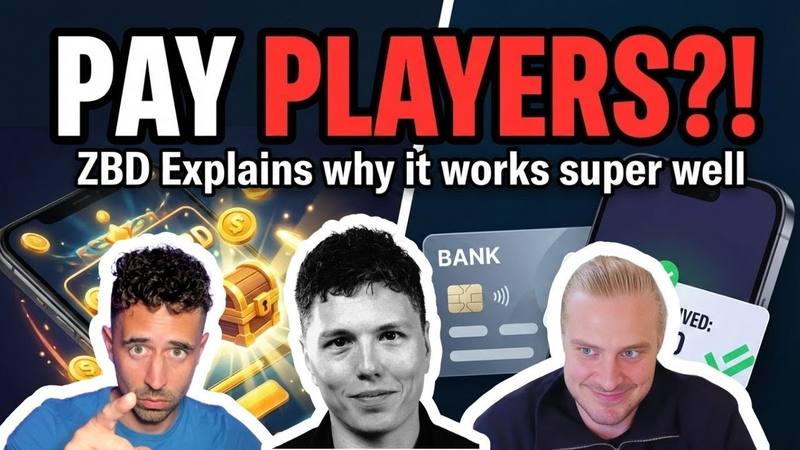
🤔 What if games paid players back?
The gaming industry is undergoing a fundamental shift toward embedded financial infrastructure, moving away from traditional monetization models that rely exclusively on heavy in-app purchases.
- Integrating embedded financial infrastructure allows developers to transition from traditional in-app purchase models to systems that facilitate real-world payouts.
- Ad revenue sharing models that distribute Bitcoin rewards to players can increase user retention rates by up to 180 percent.
- The shift toward loyalty-based models replaces 'churn-and-burn' acquisition strategies, significantly increasing the long-term lifetime value of users.