
Journal of the Philosophy of Games
Open-access peer-reviewed journal on the philosophy of games and play, published by the University of Oslo.
Documents
Fictionally Flipping Tetrominoes: Defining the Fictionality of a Videogame Player's Actions
The conceptual framework surrounding videogame interaction requires a rigorous distinction between mundane mechanical manipulation and genuine fictional engagement.
- Fictional engagement in videogames requires the player’s imaginative projection into a proxy character or entity within the narrative space.
- Mechanical tasks, such as block manipulation in puzzle games like Tetris, do not constitute fictional events and should be categorized as mundane interface interactions.
- The controller functions as a prop that facilitates imaginative immersion, bridging the gap between physical inputs and the game's internal reality.
The Role of the Player in Video-Game Fictions
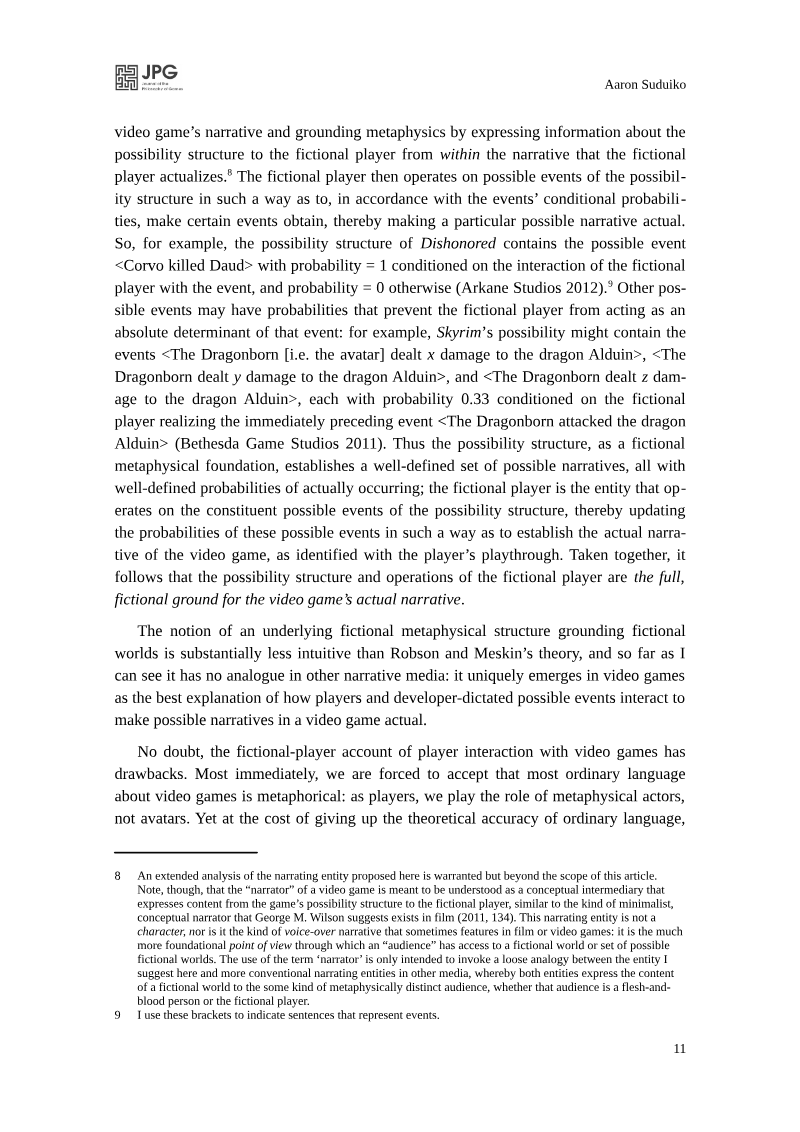
Video game narratives operate through a complex metaphysical structure that transcends simple identification between the user and their avatar.
- Traditional theories that equate the player directly with their avatar fail to account for the unique mechanics of interactive storytelling, such as the epistemic gap between player knowledge and avatar mental states.
- A new analytical framework defines the player as a distinct metaphysical agent rather than a simple extension of the avatar.
- This model positions the player as a fictional entity operating within a possibility structure, responsible for actualizing specific events from a range of probabilistic outcomes.
Playability as Realism
The tension between mechanical simplicity and world-building depth represents a fundamental challenge in tabletop role-playing game design.
- Playability and realism should be treated as complementary design components rather than competing interests, as a game's success relies on functioning as a coherent, workable system.
- True realism in tabletop design is defined by the overall internal consistency of the fictional world rather than the granular simulation of physical experiences.
- Overly complex or arbitrary rules undermine the cooperative environment necessary for long-term player engagement and should be avoided.
Clarifying Incoherence in Games
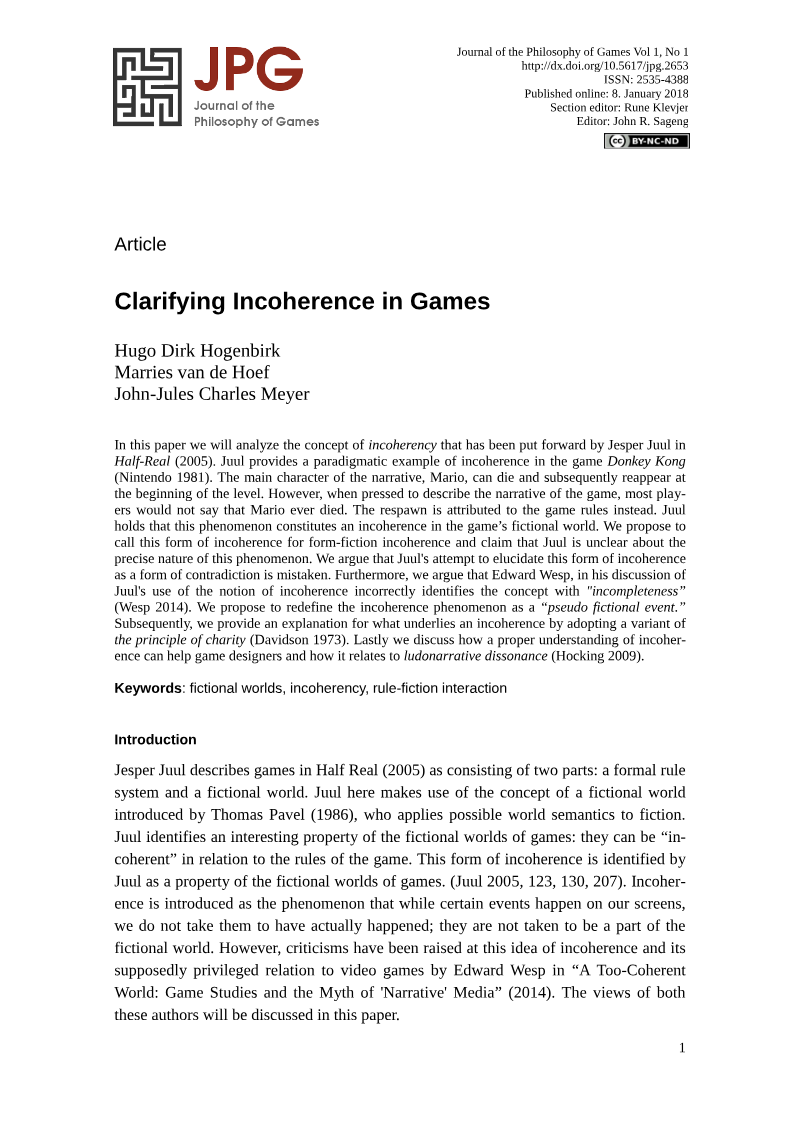
The interaction between game rules and fictional narratives is often mischaracterized as an inherent contradiction or a failure of design.
- Ludonarrative dissonance is not an objective design failure, but a subjective outcome determined by how a player interprets the interaction between game mechanics and narrative.
- Players resolve perceived contradictions between rules and fiction by applying a 'principle of charity,' intentionally separating mechanical necessities from the integrity of the fictional world.
- The tension between formal game constraints and narrative coherence should be viewed as a 'pseudo-fictional' event rather than a logical error.
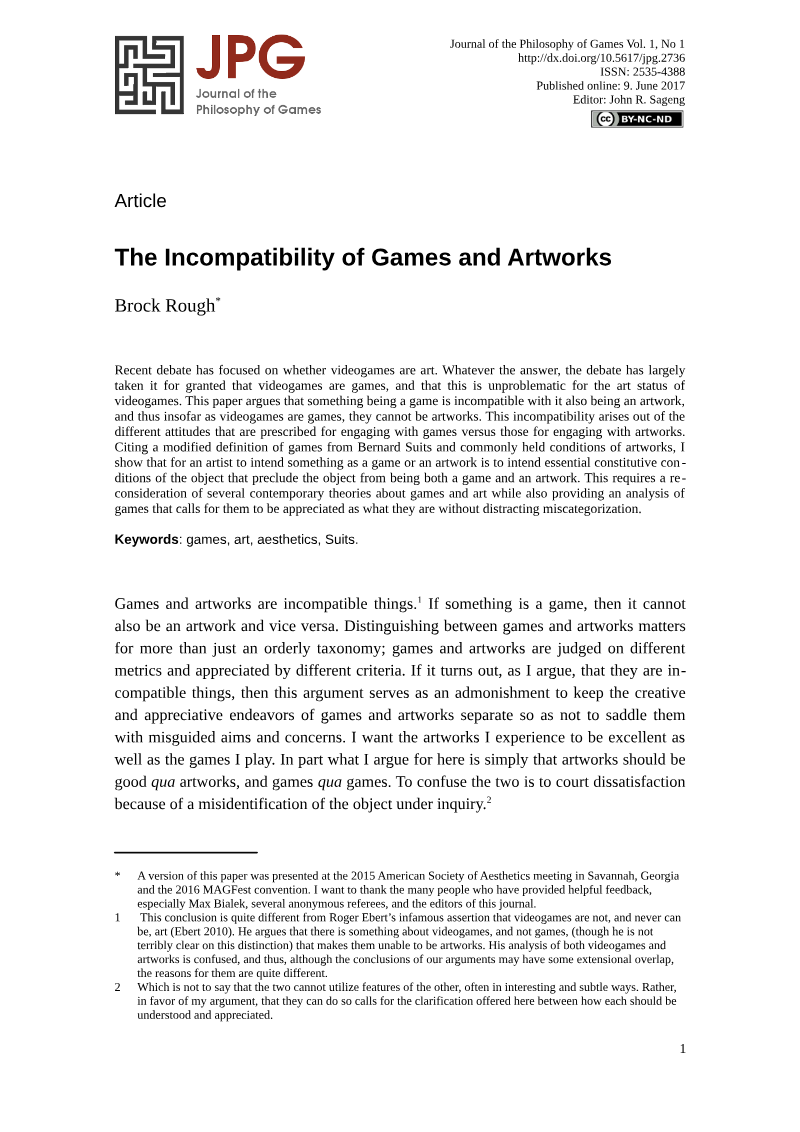
The Incompatibility of Games and Artworks
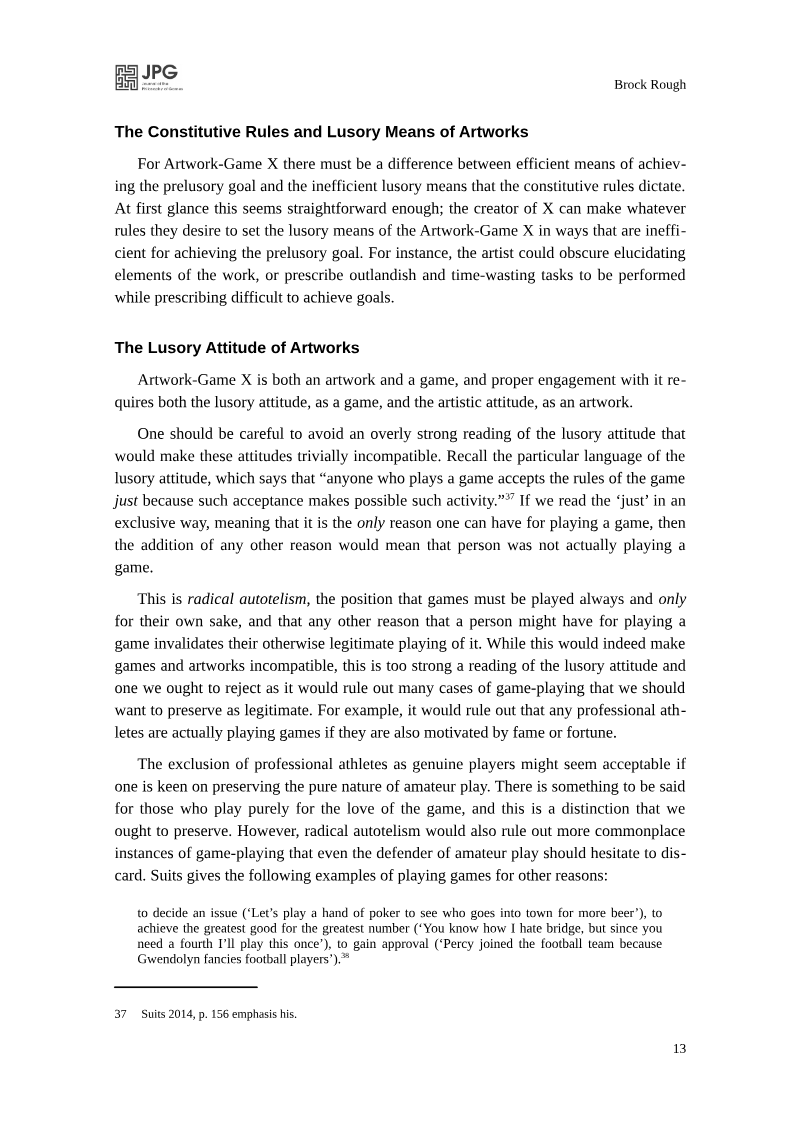
Games and artworks represent ontologically distinct categories that cannot be conflated without causing critical miscategorization.
- Games and artworks are ontologically distinct categories because games require a 'lusory attitude' toward unnecessary obstacles, while art demands a holistic focus where means and meaning are inseparable.
- The attempt to conflate games and art creates a logical dilemma that forces a sacrifice of either ludic integrity or aesthetic depth, often resulting in media that fails to satisfy the criteria of either.
- Interactive media that prioritize artistic intent while mimicking game mechanics should be classified as 'game-works' to resolve the tension between ludic and aesthetic functions.
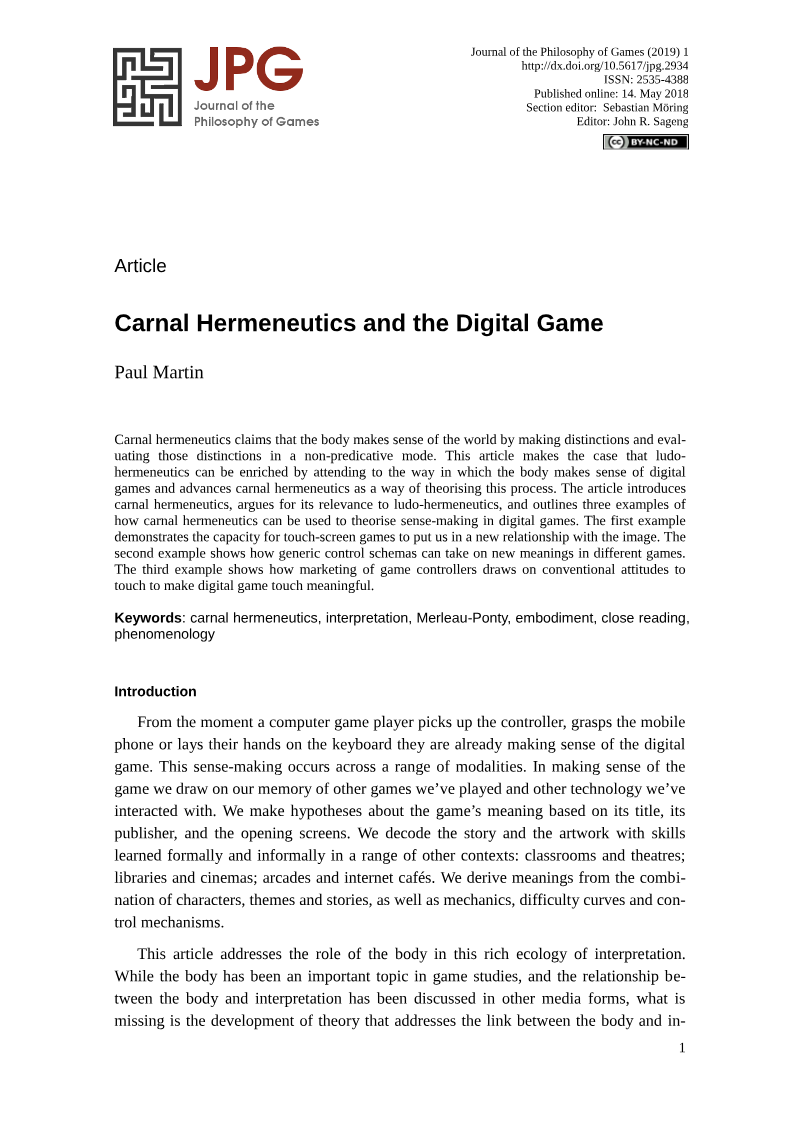
Carnal Hermeneutics and the Digital Game
Carnal hermeneutics serves as a vital theoretical framework for understanding how digital gameplay is fundamentally rooted in embodied sensation rather than purely intellectual or symbolic interpretation.
- Digital gameplay meaning is primarily derived from embodied sensory experience and pre-linguistic bodily evaluation rather than intellectual interpretation.
- Procedural habits and body memory dictate how players navigate virtual spaces, making physical interaction the foundational site of meaning-making.
- Game designers can generate thematic depth by deliberately subverting established movement habits, forcing players to shift from unconscious action to conscious reflection.
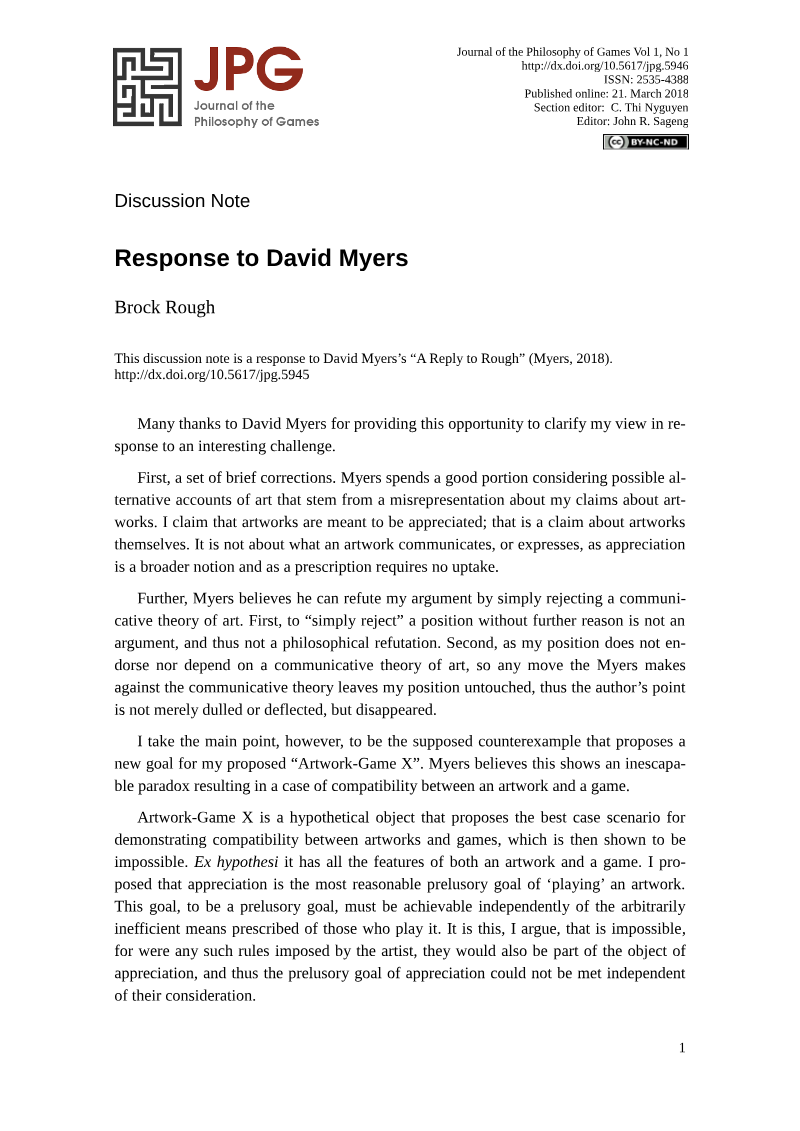
Response to David Myers
This philosophical discourse addresses the fundamental incompatibility between the definitions of games and artworks, specifically challenging the notion that a single object can simultaneously function as both.
- Games and artworks are fundamentally incompatible categories because the prelusory goals required for gameplay cannot coexist with the nature of artistic appreciation.
- The constitutive rules of a game require players to follow prescribed means to achieve a goal, which prevents artistic appreciation from functioning as a valid prelusory goal.
- Defining 'experiencing gameplay' as a prelusory goal is logically circular because the experience cannot simultaneously be the subject and the object of the player's actions.
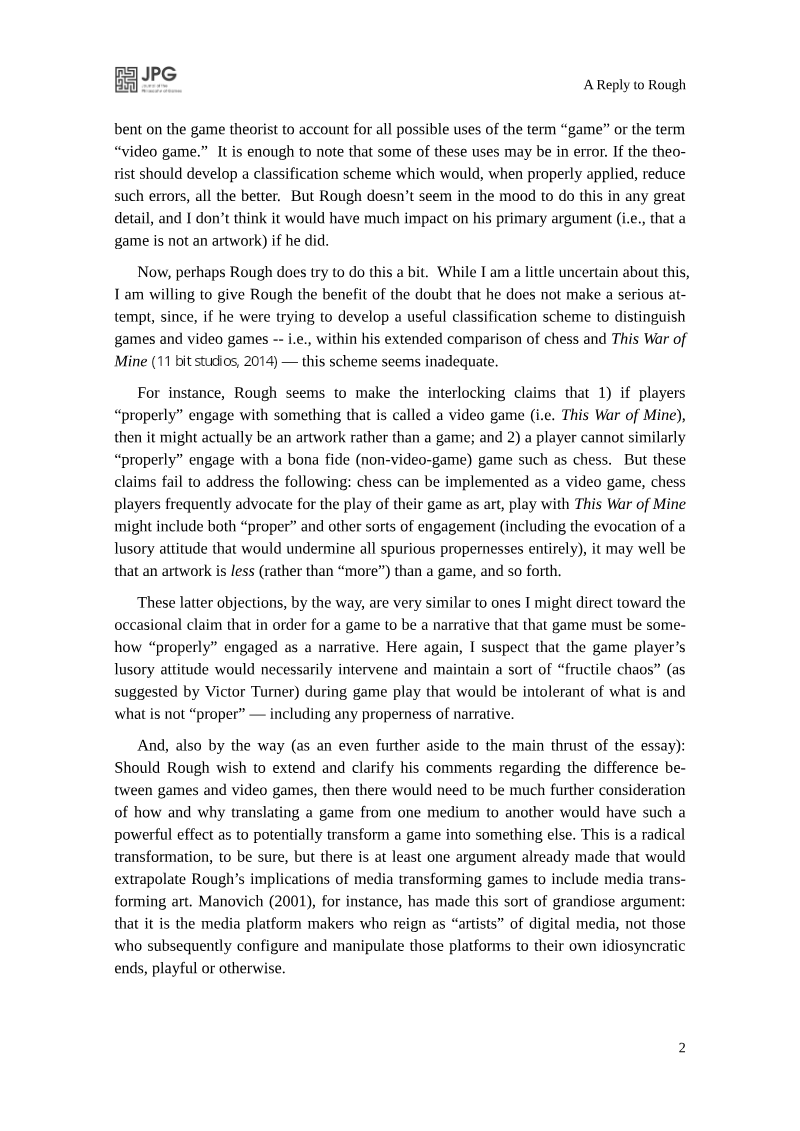
A Reply to Rough
This discussion note serves as a critical rebuttal to the thesis that games and artworks are fundamentally incompatible.
- The thesis that games and art are fundamentally incompatible is based on flawed, conventional assumptions rather than an inherent ontological divide.
- Traditional aesthetic theories fail by prioritizing a communicative model of art, which focuses on audience reception over the artist's original expression.
- The incompatibility argument incorrectly conflates the distinct roles of the game designer and the game player, ignoring the player's active contribution to the creative process.
Response to Michael Ridge
The philosophical discourse surrounding the ontological status of games and artworks centers on whether these two categories can coexist within a single object.
- Games and artworks are ontologically incompatible because they rely on fundamentally conflicting sets of constitutive rules and prescriptions.
- The 'lusory attitude' required for gameplay is inherently undermined when an object is subjected to the functional requirements of an artwork.
- Drawing on Bernard Suits’ framework, the analysis argues that games are defined by their specific rules; altering these rules to accommodate artistic requirements fundamentally changes the object's identity.
Do you work at Journal of the Philosophy of Games? Get a free report of how these documents are read and cited here.