Loading the document
1 free read left. Create a free account for unlimited reading + AI research.
Create free accountArticle Journal of the Philosophy of Games
1 free read left. Create a free account for unlimited reading + AI research.
Create free accountArticleJournal of the Philosophy of Games
The tension between mechanical simplicity and world-building depth represents a fundamental challenge in tabletop role-playing game design. Rather than treating playability and realism as competing interests, these elements should be viewed as complementary components of a unified design philosophy. By applying John Rawls’s concept of a realistic utopia to game systems, designers can reframe playability as a necessary form of realism that accounts for the player’s psychological experience. This approach posits that a game’s success depends on its ability to function as a coherent, workable system that respects both the internal logic of the fictional setting and the social requirements of the participants.
Historically, many tabletop systems have struggled by prioritizing excessive historical or setting-specific detail at the expense of functional gameplay. True realism in this context is not defined by the granular simulation of physical experiences, but by the overall coherence of the conceived world. When rules become overly complex or arbitrary, they risk alienating players and undermining the cooperative environment essential for long-term engagement. Therefore, effective design requires a deliberate balance where mechanics serve to reinforce the world’s internal consistency while simultaneously ensuring that the game remains accessible and fulfilling for those at the table.
Ultimately, the pursuit of a realistic utopia in game design necessitates a shift in perspective. By recognizing that playability is an intrinsic aspect of a realistic experience, designers can move beyond the false dichotomy of simulation versus simplicity. This framework encourages the creation of systems that are both logically sound and socially sustainable, fostering a creative space where the depth of the narrative and the clarity of the rules work in tandem to support a meaningful and immersive experience for all players.
Journal of the Philosophy of Games · 2025
Journal of the Philosophy of Games · 2025
Journal of the Philosophy of Games · 2024
Journal of the Philosophy of Games · 2022
Journal of the Philosophy of Games · 2022
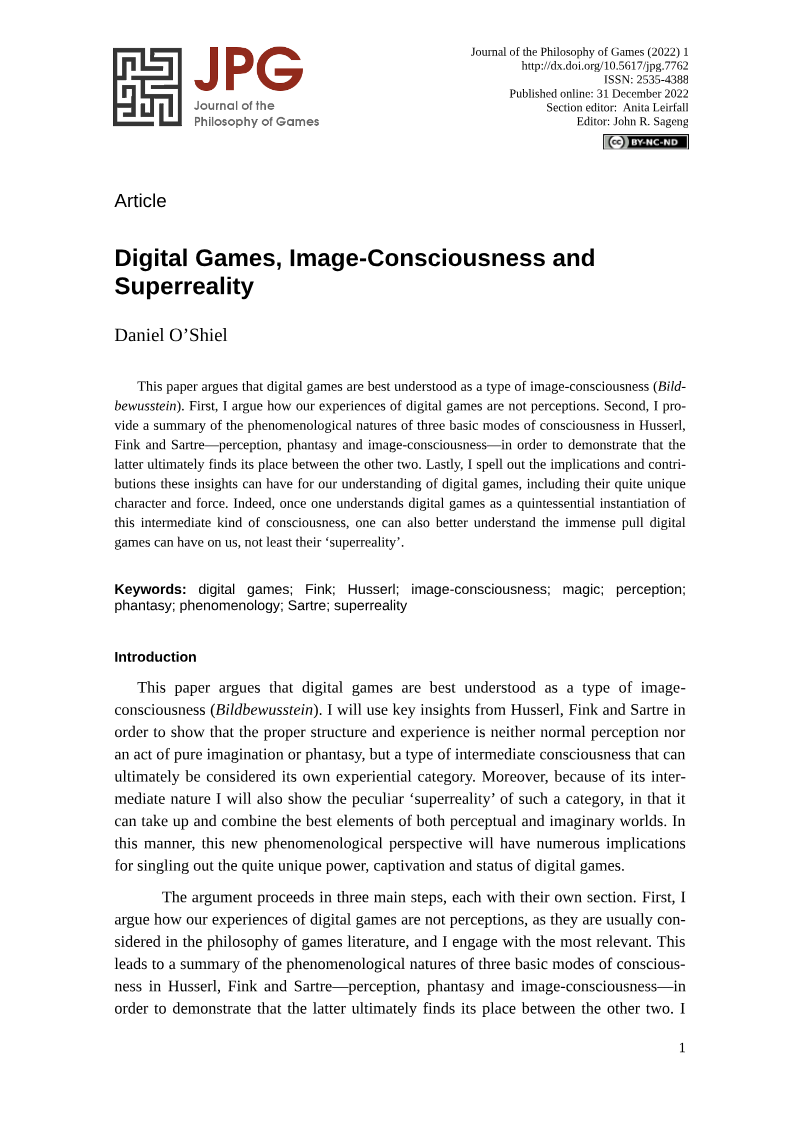
Journal of the Philosophy of Games · 2022
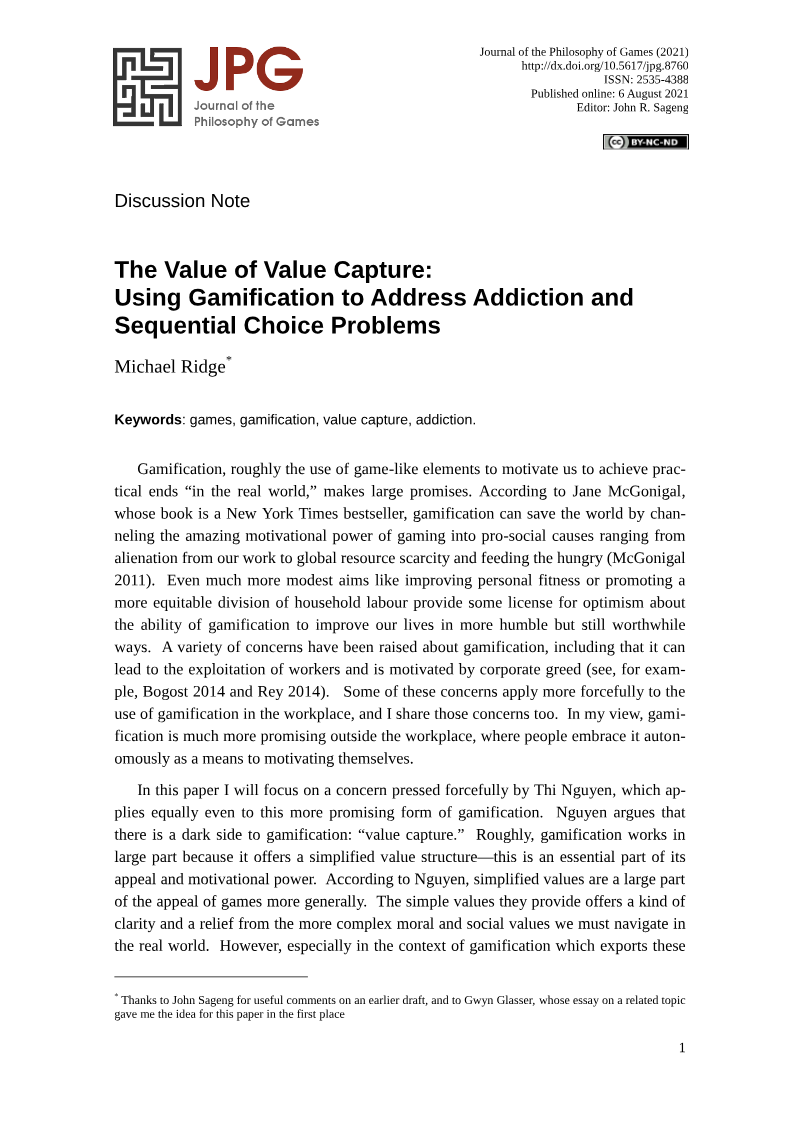
Journal of the Philosophy of Games · 2021
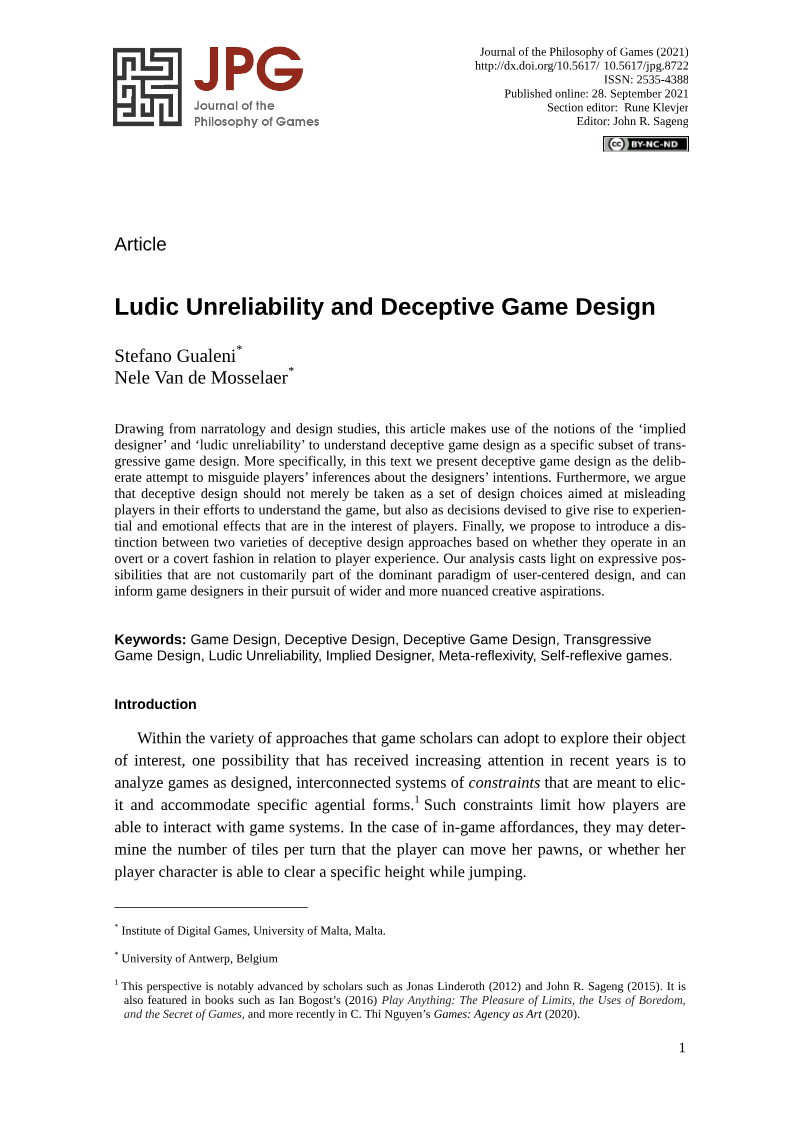
Journal of the Philosophy of Games · 2021
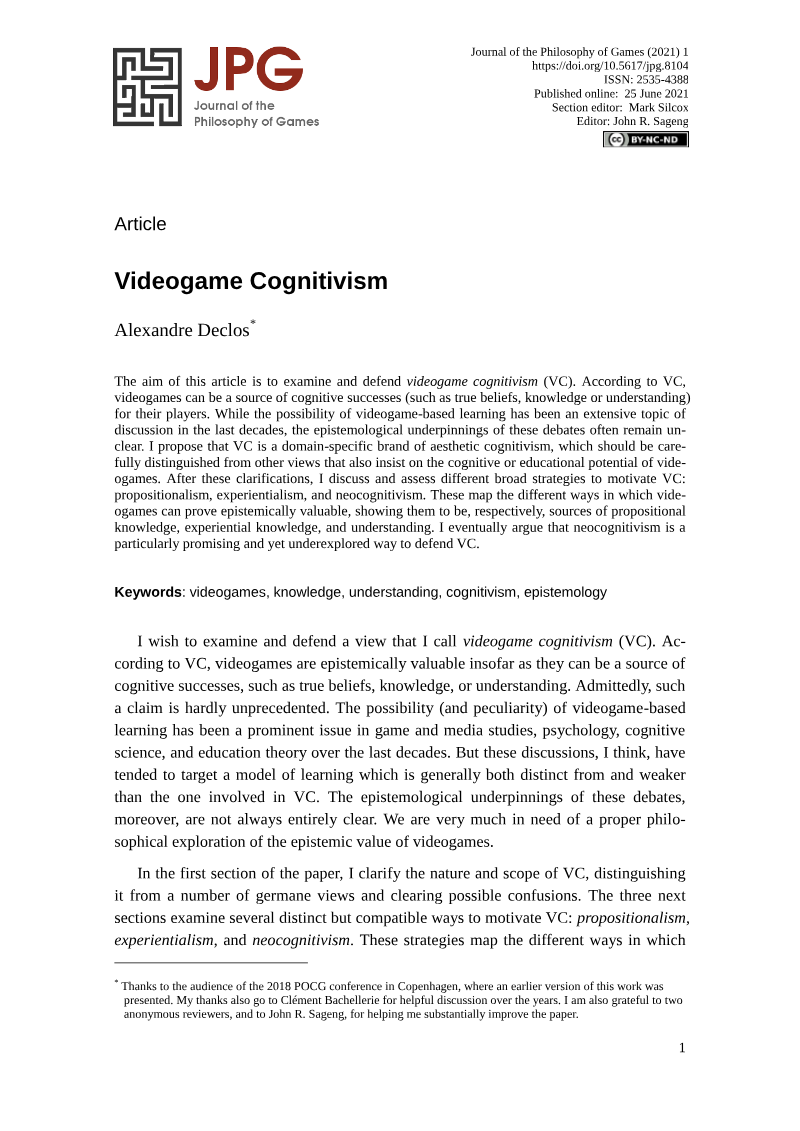
Journal of the Philosophy of Games · 2021
Journal of the Philosophy of Games · 2021
Journal of the Philosophy of Games · 2019
Journal of the Philosophy of Games · 2019
Ludic Language Pedagogy · 2026