Loading the document
1 free read left. Create a free account for unlimited reading + AI research.
Create free accountWhitepaper Journal of the Philosophy of Games
1 free read left. Create a free account for unlimited reading + AI research.
Create free accountWhitepaperJournal of the Philosophy of Games
Games require a 'lusory attitude' towards unnecessary obstacles. Art, in contrast, demands a holistic focus where the means of expression are inseparable from the object's meaning.
Games and artworks represent ontologically distinct categories that cannot be conflated without causing critical miscategorization. The fundamental incompatibility between these two forms stems from the conflicting modes of engagement they demand from participants. Games are defined by the voluntary acceptance of unnecessary obstacles and the adoption of a lusory attitude, where players utilize inefficient means to achieve a separable, prelusory goal. In contrast, artistic appreciation requires a holistic focus on the work’s relevant features, where the means of expression are inseparable from the object’s meaning. Because these structures impose mutually exclusive requirements on the user, an object cannot simultaneously function as a game and an artwork.
This analysis posits that the attempt to bridge these categories creates a logical dilemma, forcing a sacrifice of either the game’s ludic integrity or the artwork’s aesthetic depth. When interactive media attempt to occupy both spaces, they often fail to satisfy the criteria of either. To resolve this tension, the term game-works is proposed to categorize interactive media that mimic the mechanics of games while prioritizing artistic intent. This distinction allows for a more precise classification of modern videogames, which frequently blur these lines but are better understood when evaluated through their specific, intended functions.
Ultimately, the drive to label games as art is unnecessary and potentially reductive. By rejecting the pressure to force games into the traditional canon of art, creators and critics can foster a more authentic understanding of both domains. Evaluating games on their own merits, rather than through the lens of artistic criteria, provides a clearer framework for analyzing the unique value of interactive media. This approach preserves the distinct ontological status of both games and artworks, ensuring that each is appreciated for its own inherent goals and modes of engagement.
Journal of the Philosophy of Games · 2025
Journal of the Philosophy of Games · 2025
Journal of the Philosophy of Games · 2024
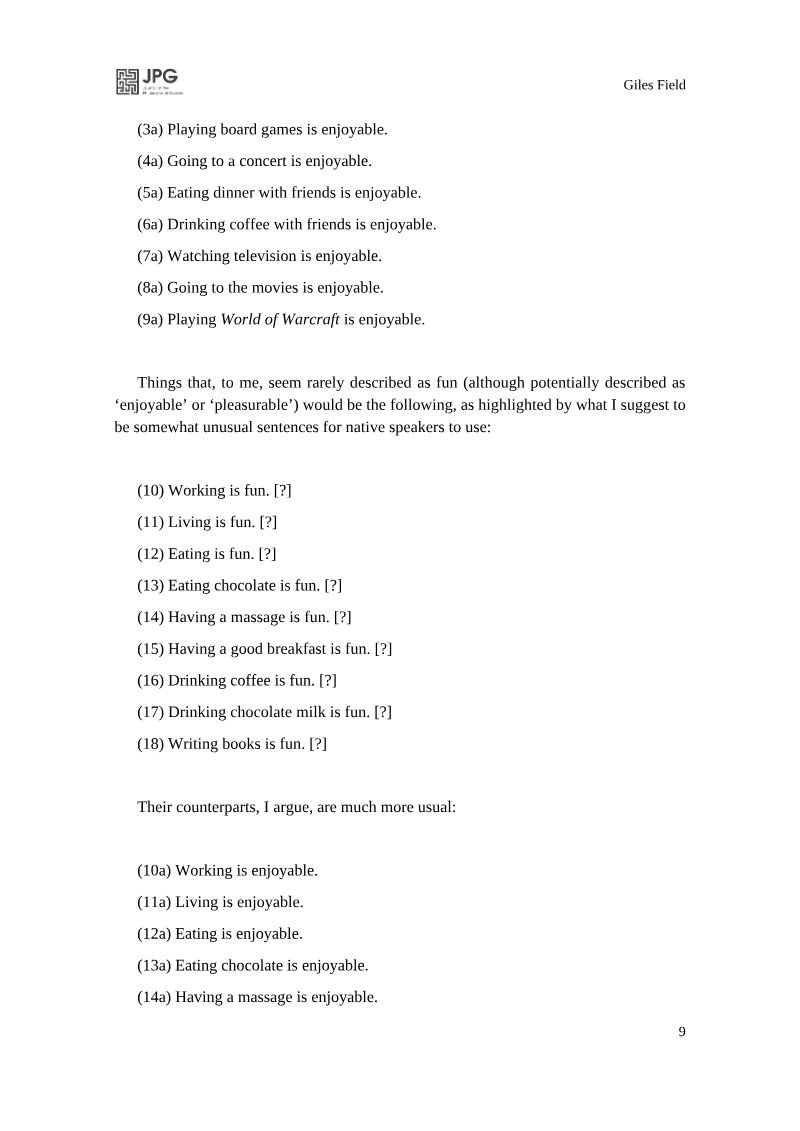
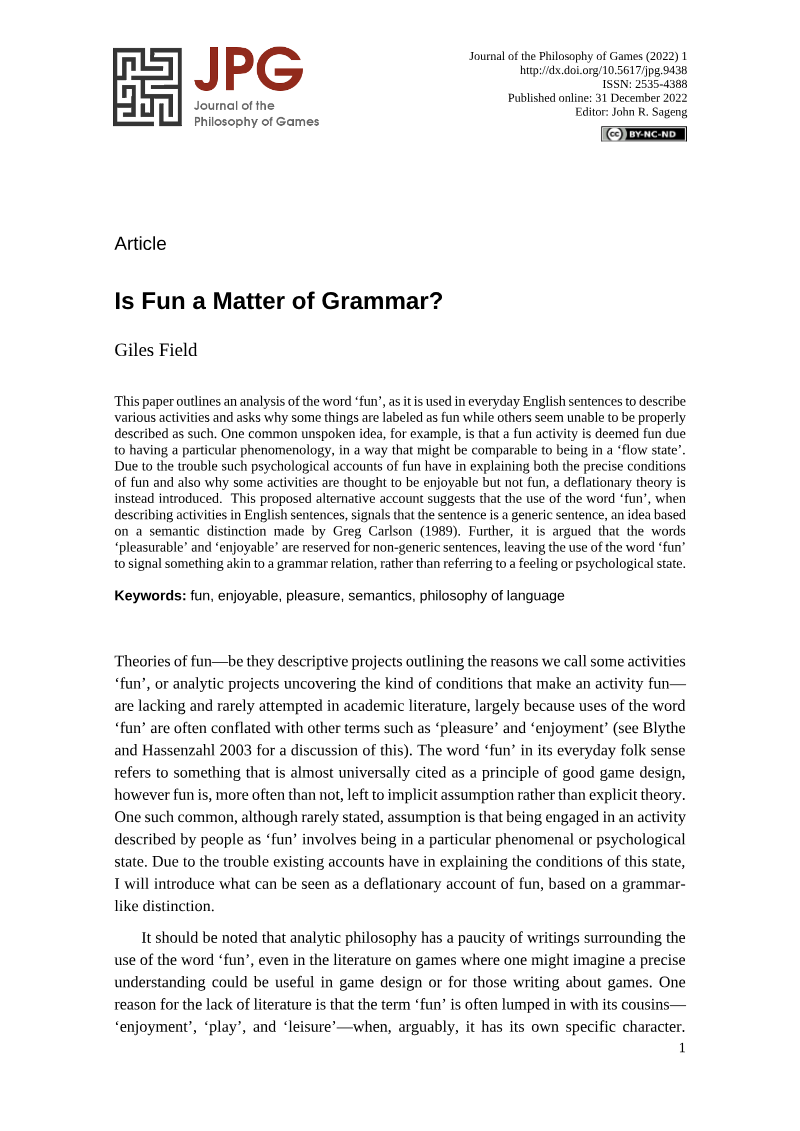
Journal of the Philosophy of Games · 2022
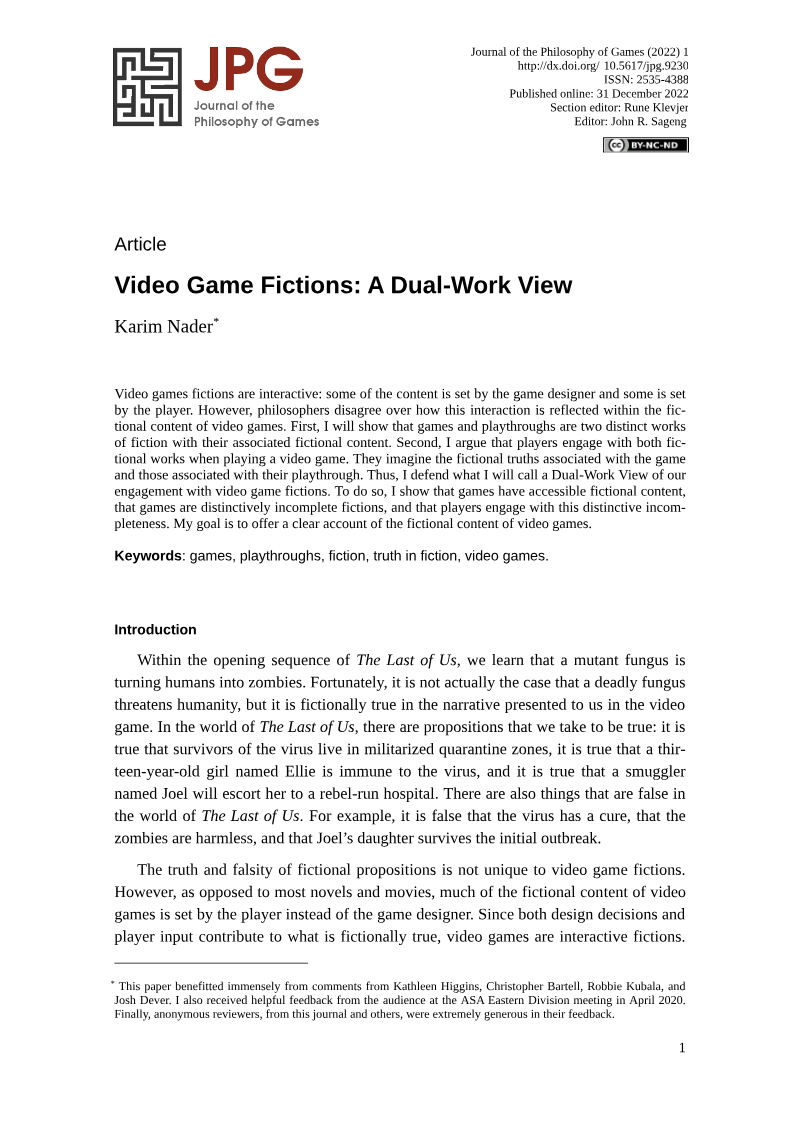
Journal of the Philosophy of Games · 2022
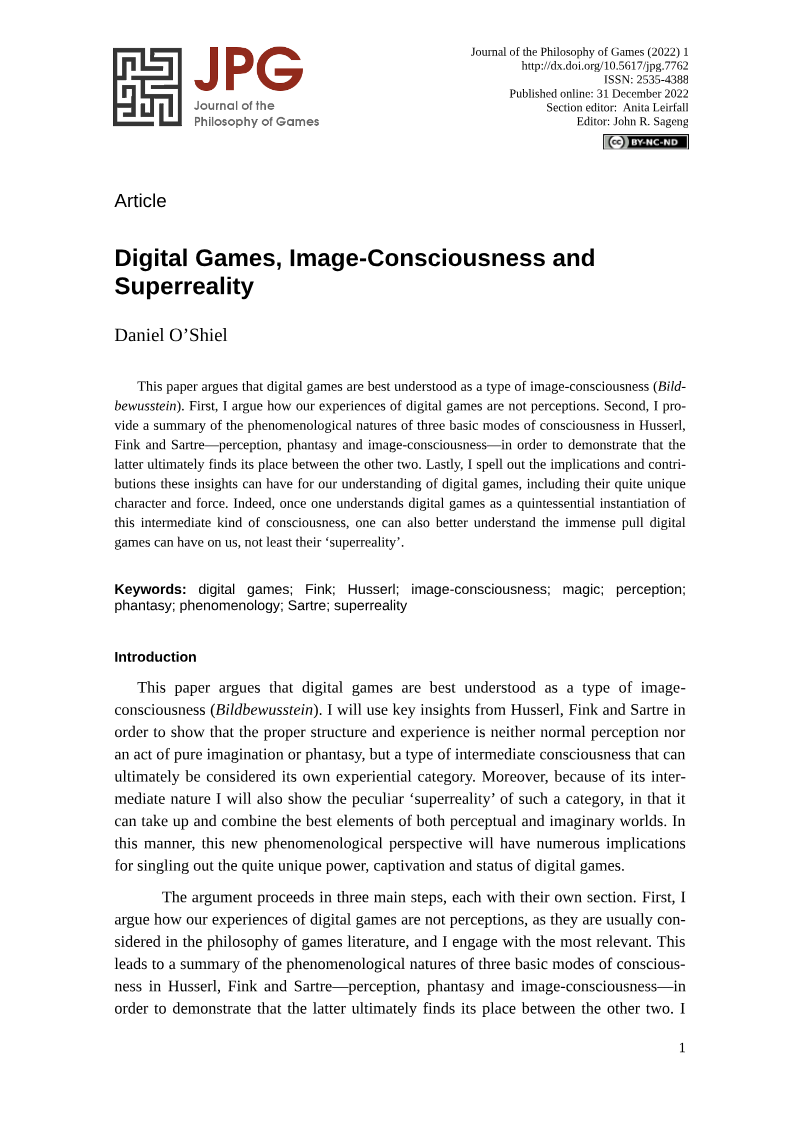
Journal of the Philosophy of Games · 2022
Journal of the Philosophy of Games · 2021
Journal of the Philosophy of Games · 2021
Journal of the Philosophy of Games · 2021
Journal of the Philosophy of Games · 2021
Journal of the Philosophy of Games · 2019
Journal of the Philosophy of Games · 2019
Replay. The Polish Journal of Game Studies · 2026