
International Journal of Serious Games
Open-access peer-reviewed journal of the Serious Games Society on the design, use and assessment of serious games.
Documents
Procedural Generation of Problems for Elementary Math Education
Procedural generation of problems Yi Xu1, Roger Smeets2, and Rafael Bidarra1 1Delft University of Technology, The Netherlands 2Futurewhiz, Amsterdam, The Netherlands Mathematics education plays an essential role in children's development, and there are many online applications aimed at supporting this process.
Exploring Tactical Choices and Game Design Outcomes in a Simple Wargame 'Take That Hill'
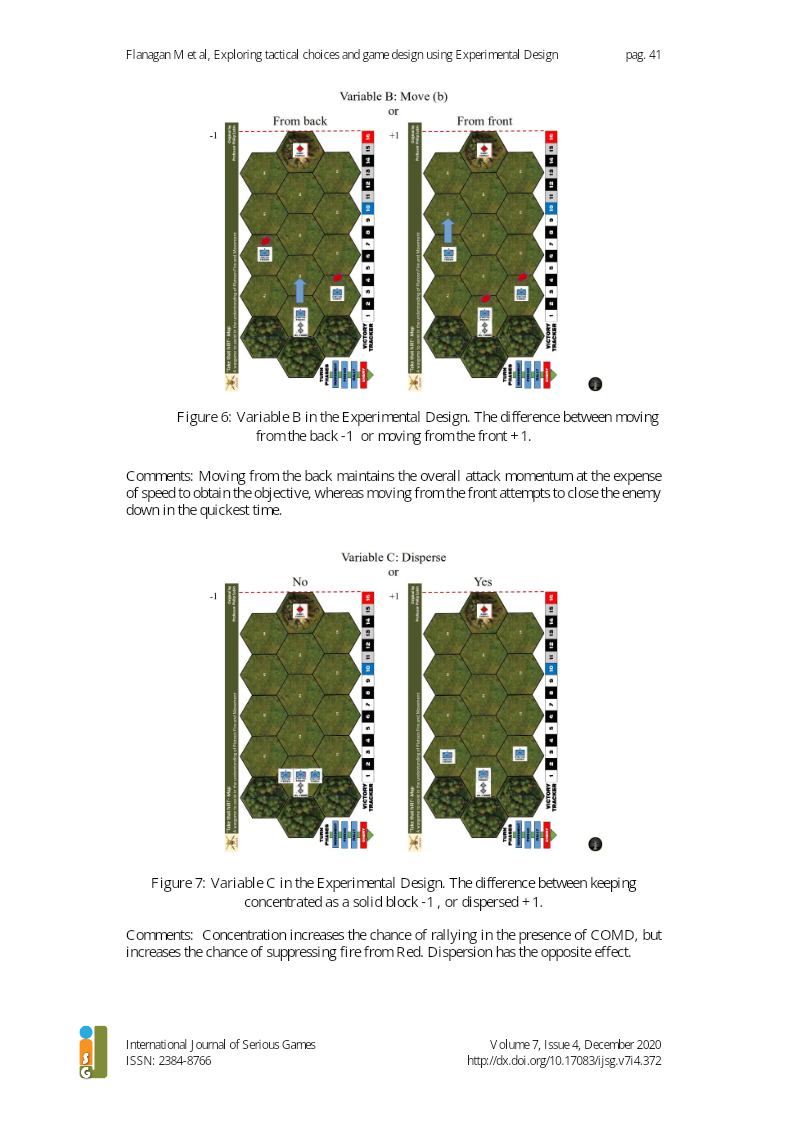
Exploring tactical choices and game design outcomes in a simple wargame 'Take that Hill' by a systematic approach using Mark Flanagan1, Adrian Northey2, Ian M Robinson2 1NHS Business Service Authority, Newcastle upon Tyne, UK.
CySecEscape 2.0: A Virtual Escape Room to Raise Cybersecurity Awareness
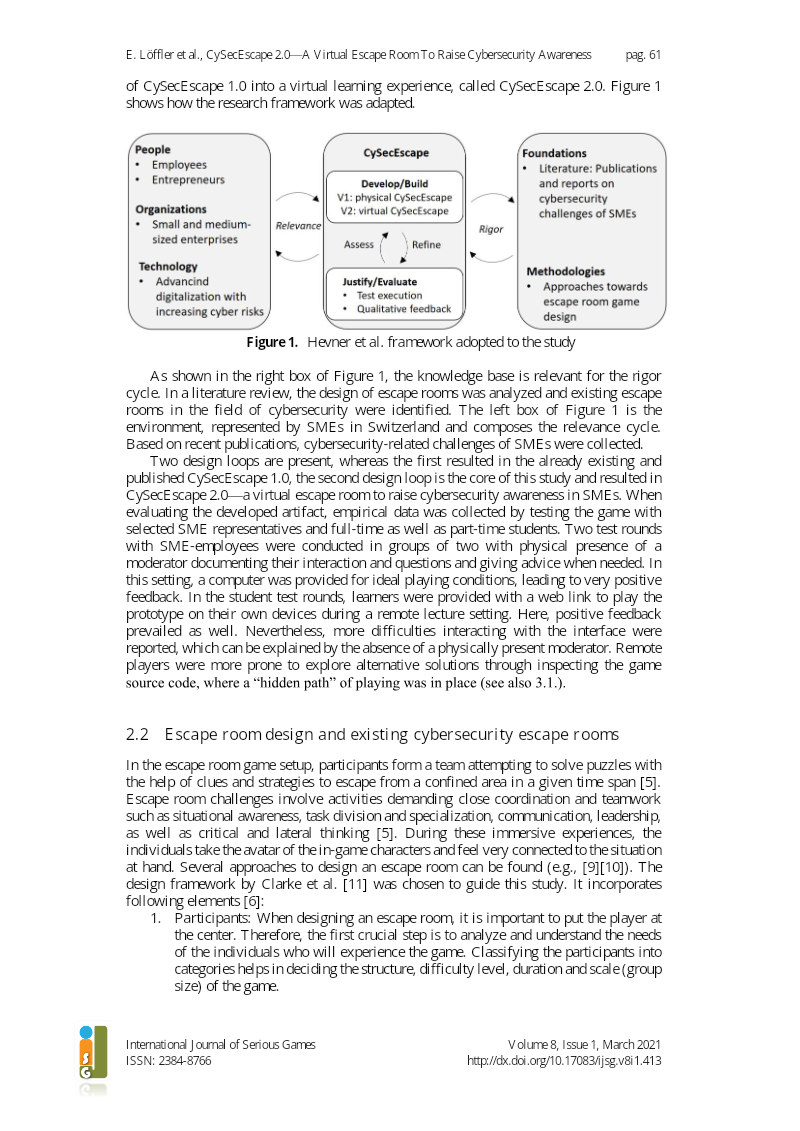
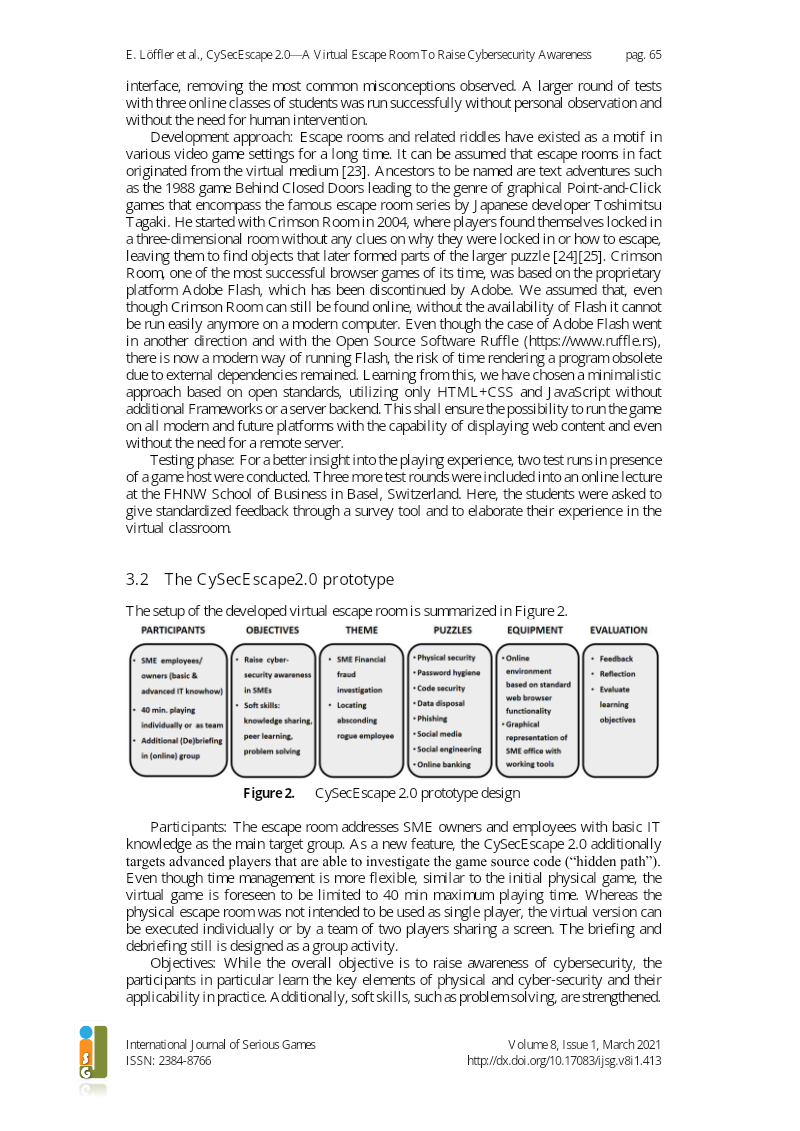
CySecEscape 2.0-A Virtual Escape Room To Raise Emanuel Löffler1, Bettina Schneider2, Petra Maria Asprion3, Trupti Zanwar4 1-4 University of Applied Sciences and Arts Northwestern Switzerland FHNW [email protected], [email protected], [email protected], [email protected] An increasing number of…
A Game-Based Online Tool to Measure Cognitive Functions in Students
A Game-Based Online Tool to Measure Cognitive Functions in Valeska Berg1, Mark McMahon1, Shane L. Rogers1, Michael Garrett1,2, Dominic Manley2 , 1Edith Cowan University, Perth, Australia, v.berg, m.mcmahon, shane.rogers}@ecu.edu.au 2Cinglevue International, Perth, Australia, michael.garrett, dominic.manley}@cinglevue.com…
Comparing Bayesian Statistics and Frequentist Statistics in Serious Games Research
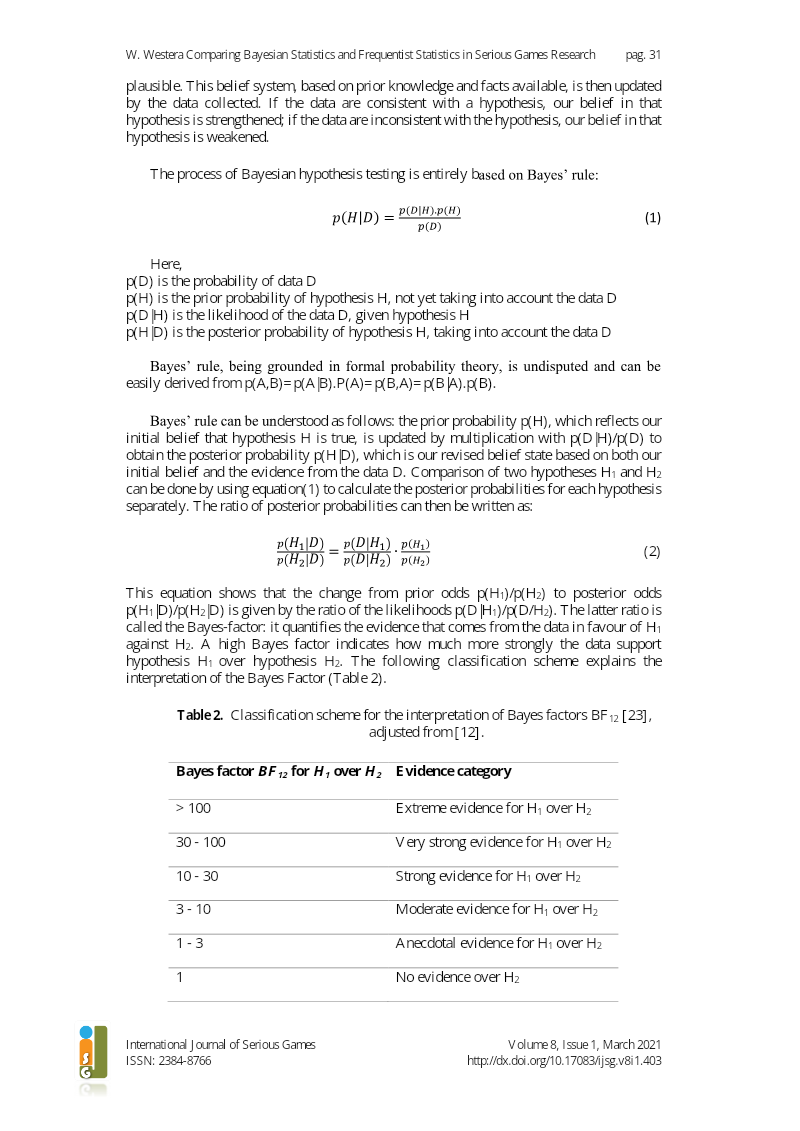
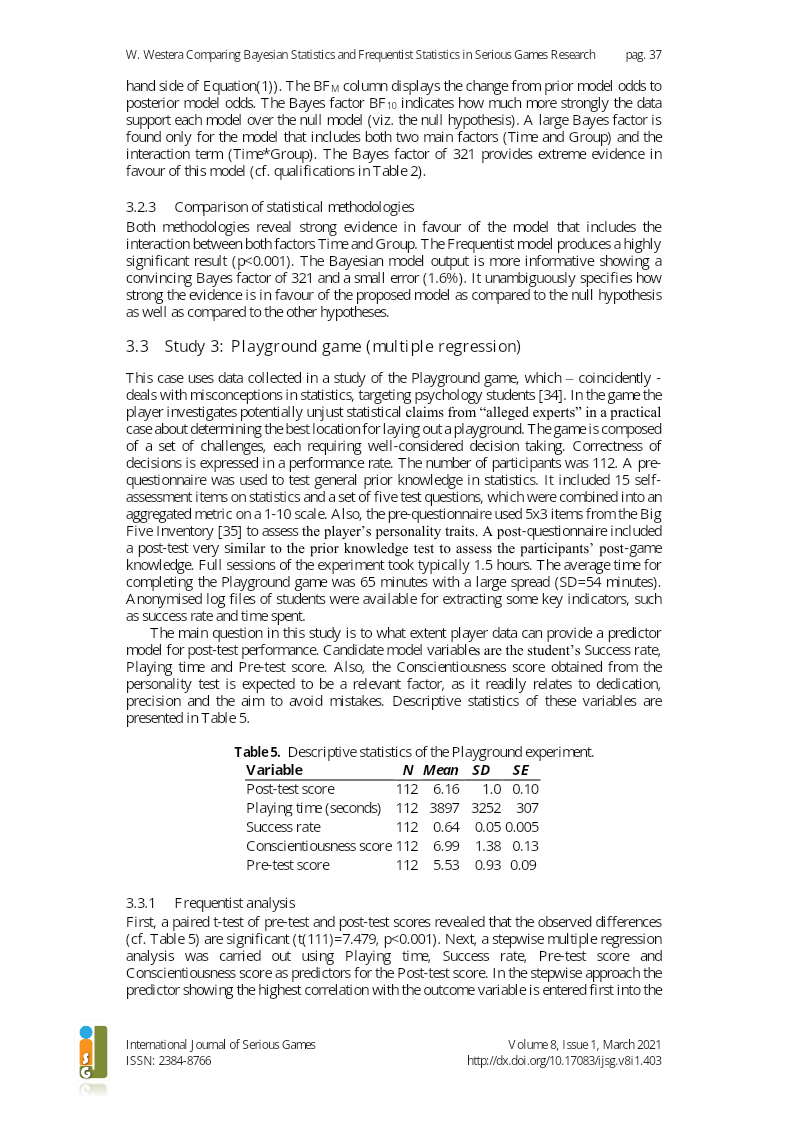
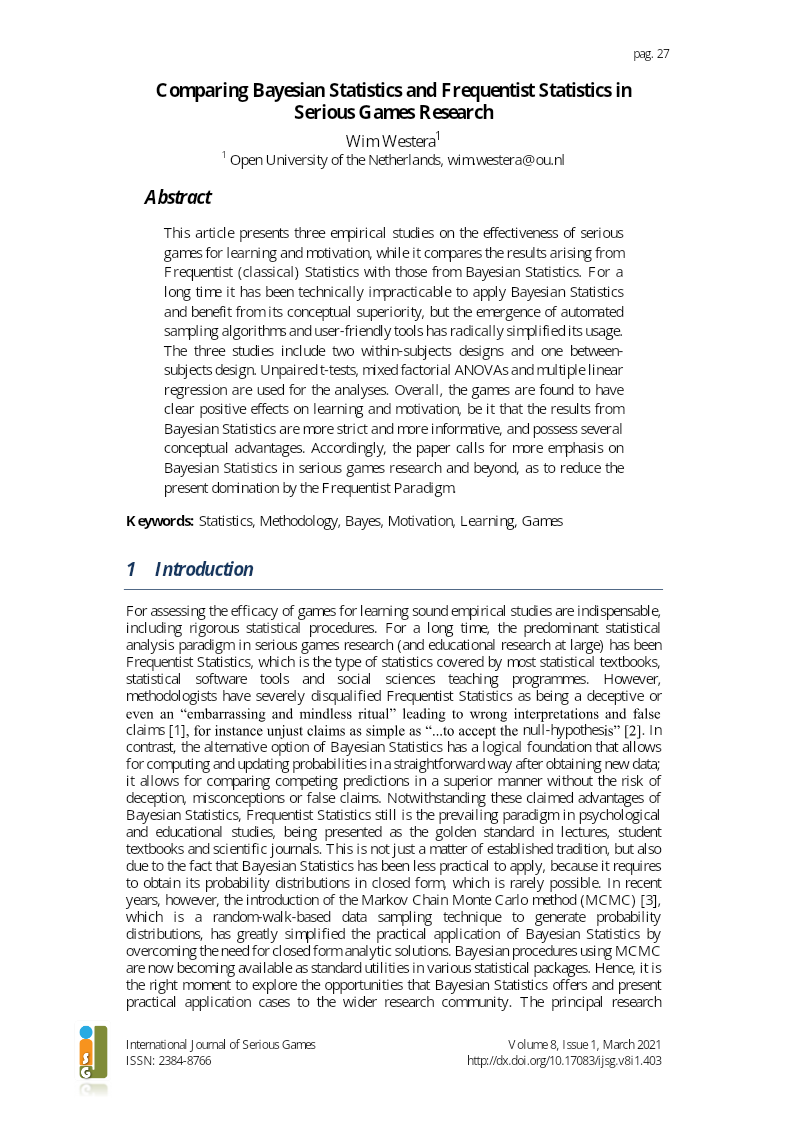
Comparing Bayesian Statistics and Frequentist Statistics in 1 Open University of the Netherlands, [email protected] This article presents three empirical studies on the effectiveness of serious games for learning and motivation, while it compares the results arising from Frequentist (classical) Statistics with those from…
Assessment Measures in Game-based Learning Research: A Systematic Review
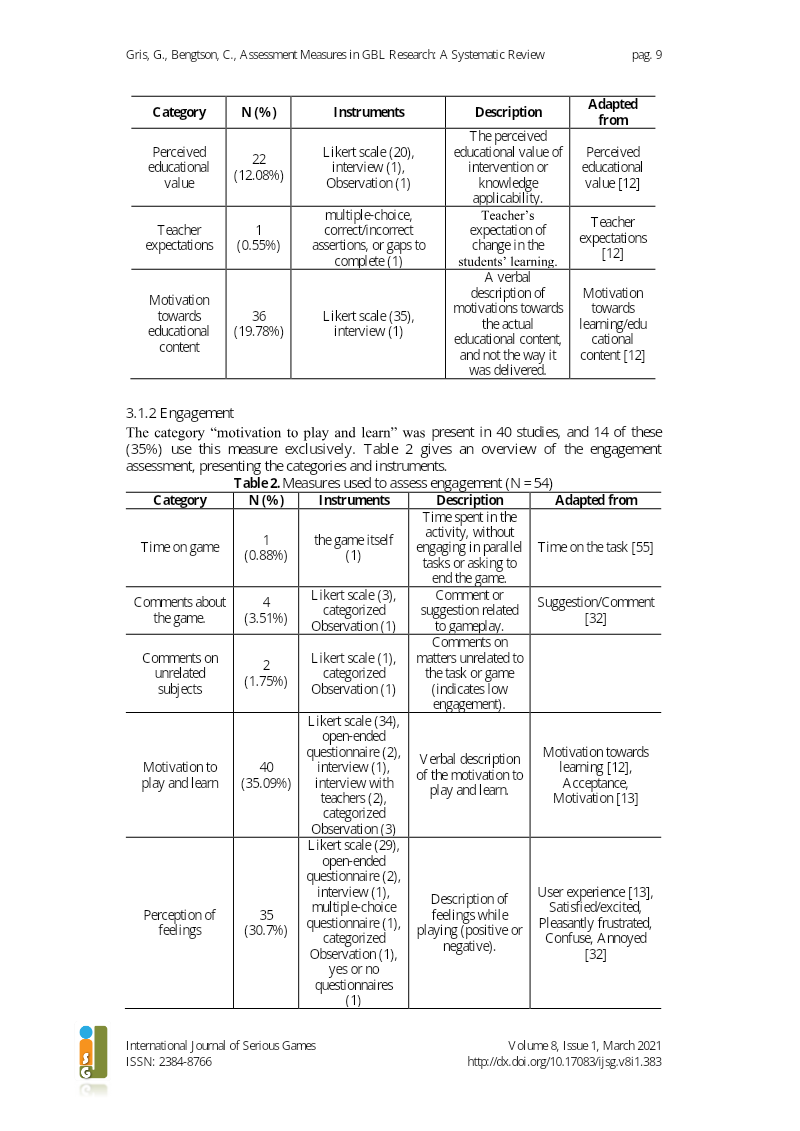
Assessment Measures in Game-based Learning Research: A Gabriele Gris1, Clarissa Bengtson2 1 Graduate Program in Psychology, Federal University of São Carlos, 2 Graduate Program in Education, Federal University of São Carlos The use of games in educational contexts is well documented in GBL research.
Educational Board Game and Flashcard: Which One is Better for Learners at Beginner Level of Chinese Language?
Educational Board Game and Flashcard: Which one is better for learners at beginner level of Chinese language?
Scenario Smells: Signalling Potential Problems in Dialogue Scenarios in a Serious Game
Scenario smells: signalling potential problems in dialogue scenarios in a serious game Timo Overbeek1, Raja Lala1, and Johan Jeuring1,2 1Utrecht University, The Netherlands 2Computer Science, Open University Netherlands Many serious games employ a scripted dialogue for player interaction with a virtual character.
Constructive Alignment of Learning Mechanics and Game Mechanics in Serious Game Design
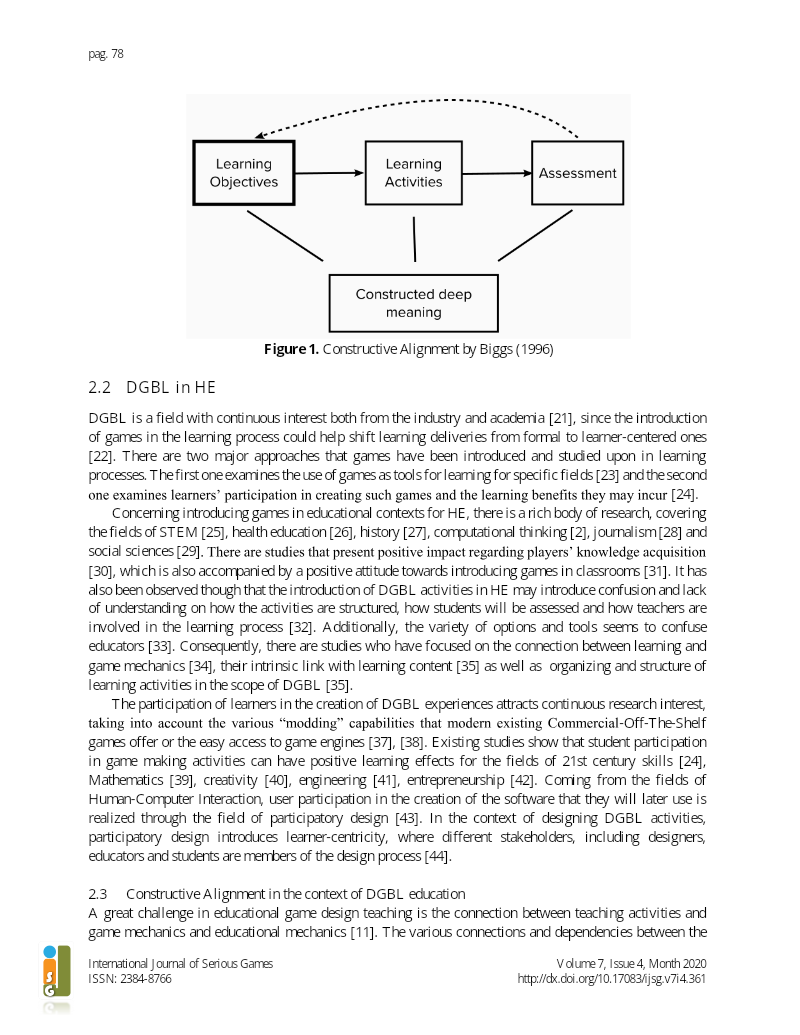
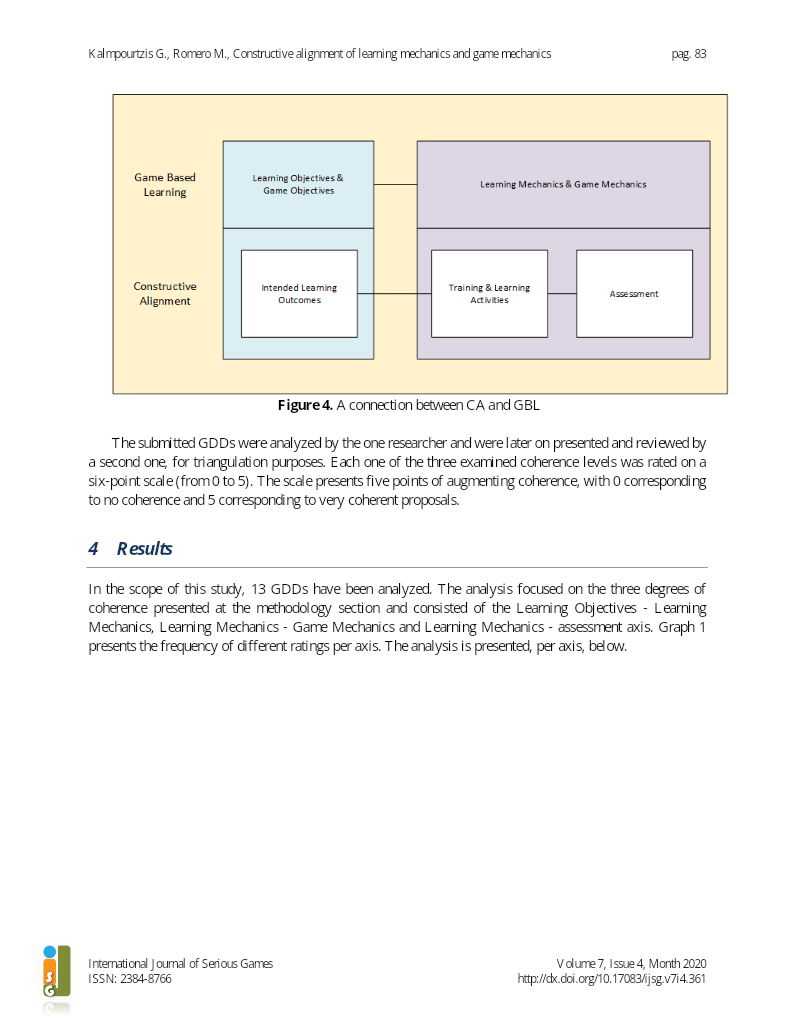
Constructive alignment of learning mechanics and game mechanics in Serious Game design in Higher Education George Kalmpourtzis1 , Margarida Romero2 1Innovation and Digital Laboratory for Education (LINE), Université Côte d'Azur, 06000 Nice, France, 2Innovation and Digital Laboratory for Education (LINE), Université Côte d'Azur…
A Fundamental Study for Gamification Design: Exploring Learning Tendencies' Effects
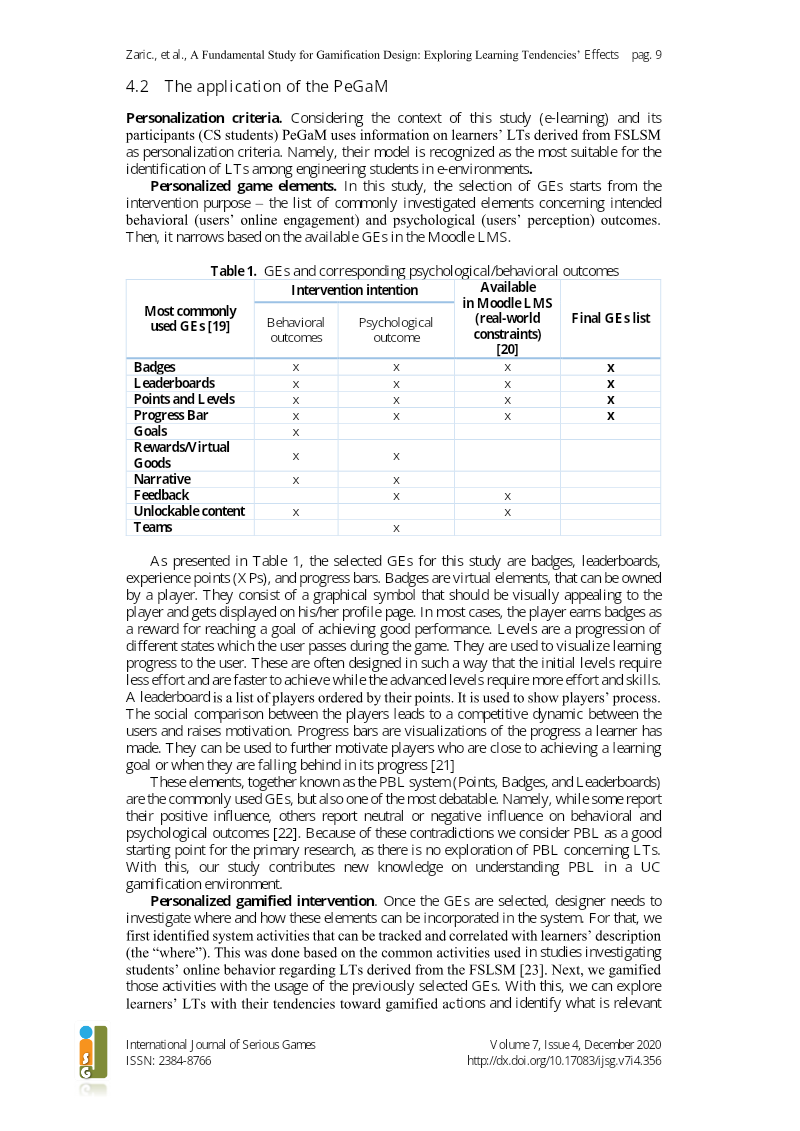
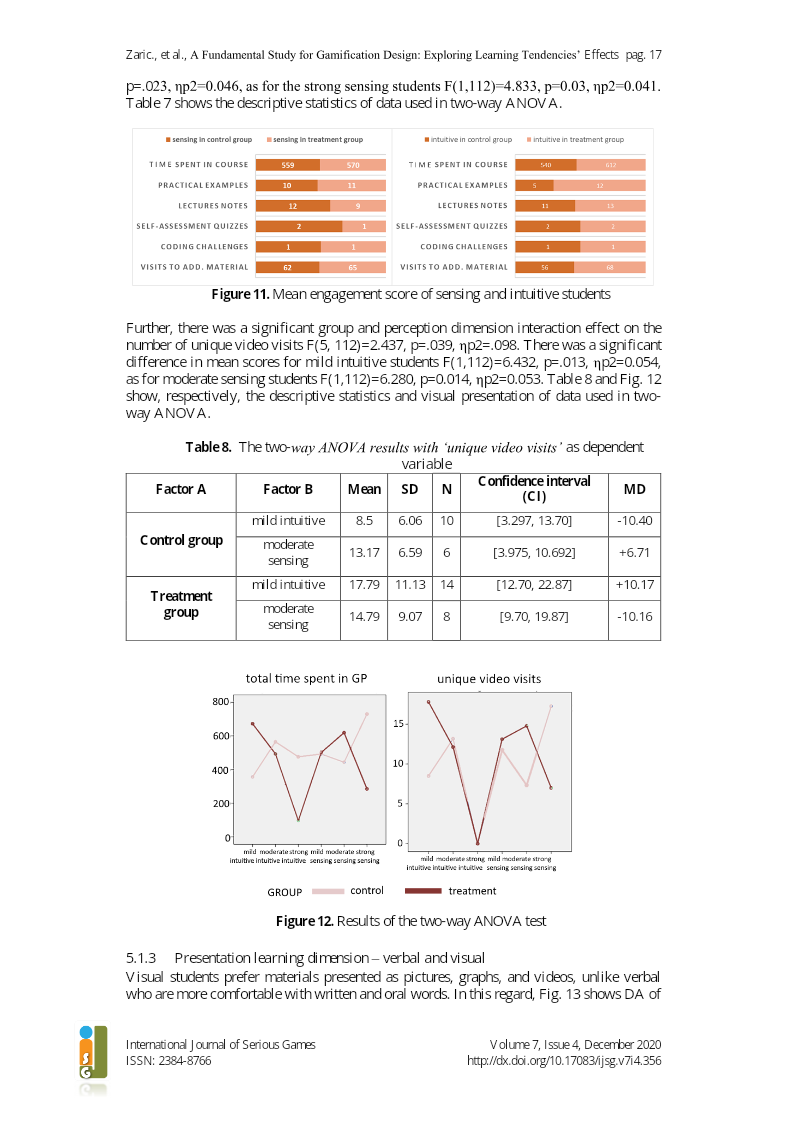
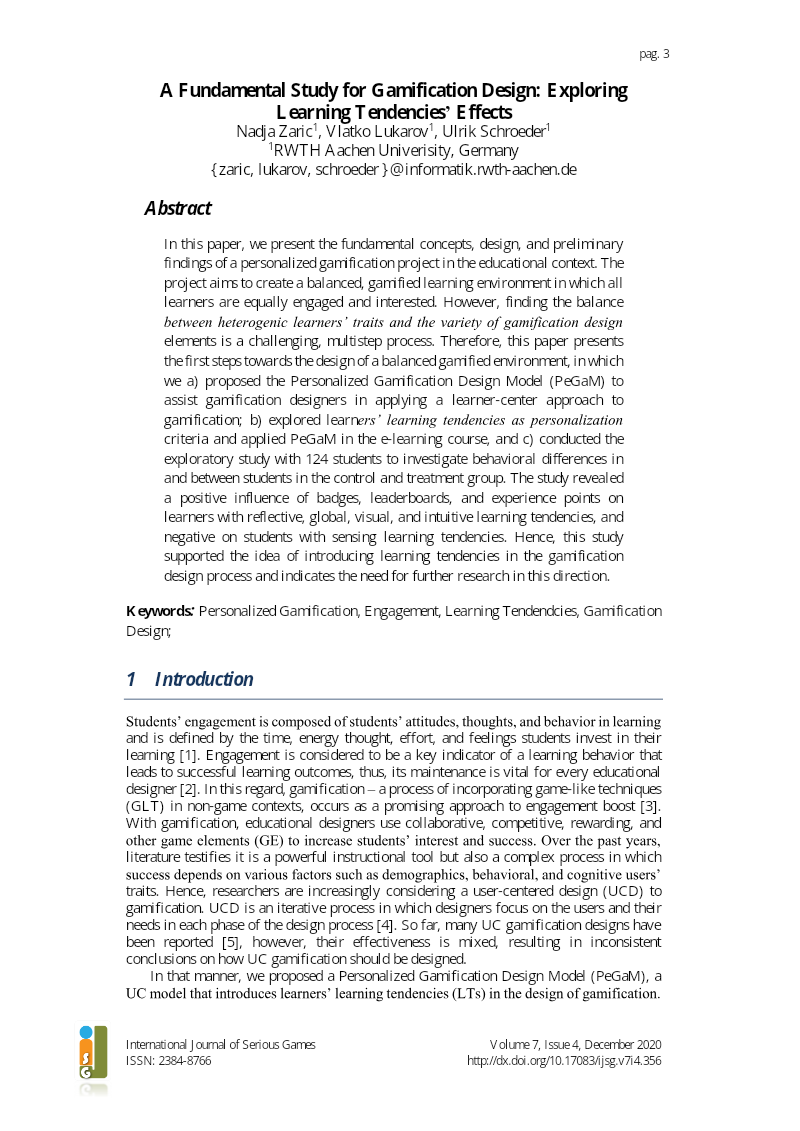
A Fundamental Study for Gamification Design: Exploring Nadja Zaric1, Vlatko Lukarov1, Ulrik Schroeder1 1RWTH Aachen Univerisity, Germany {zaric, lukarov, schroeder }@informatik.rwth-aachen.de In this paper, we present the fundamental concepts, design, and preliminary findings of a personalized gamification project in the…
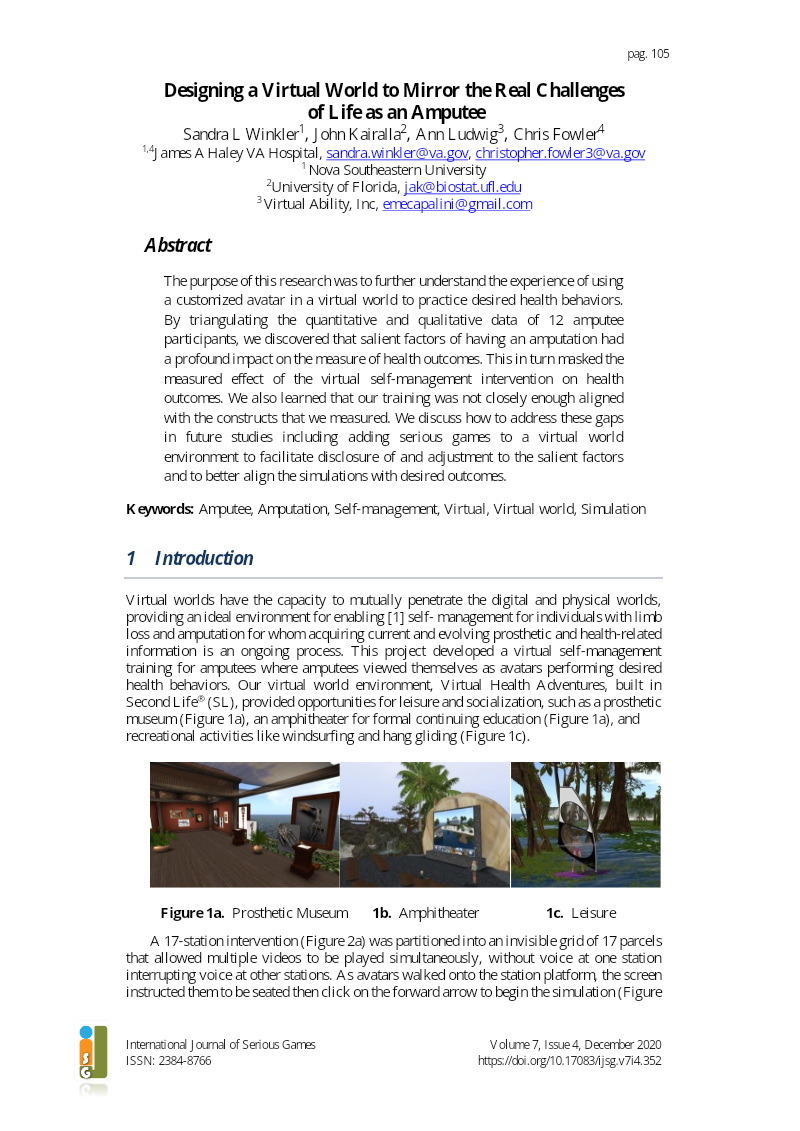
Designing a Virtual World to Mirror the Real Challenges of Life as an Amputee
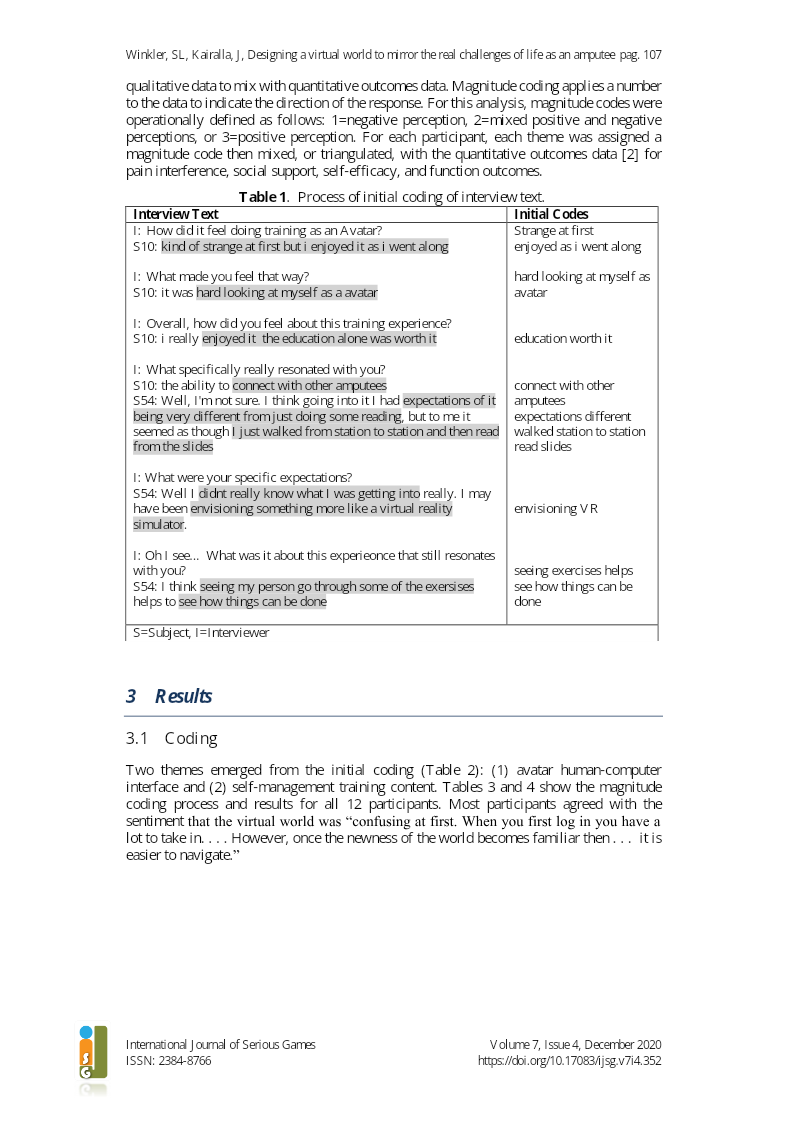
This research investigates the efficacy of a virtual world self-management training program for individuals with limb loss.
- A study of 12 amputee participants using the Second Life platform found no significant correlation between positive user perception of virtual environments and measurable improvements in clinical health outcomes.
- Qualitative feedback from participants was unanimously positive, yet quantitative data on pain interference, social support, and limb function remained inconclusive.
- External real-world stressors, including financial instability, homelessness, and surgical complications, frequently overshadowed the virtual training, indicating a misalignment between the simulation and participants' actual life challenges.
Designing Educational Escape Rooms: Validating the Star Model
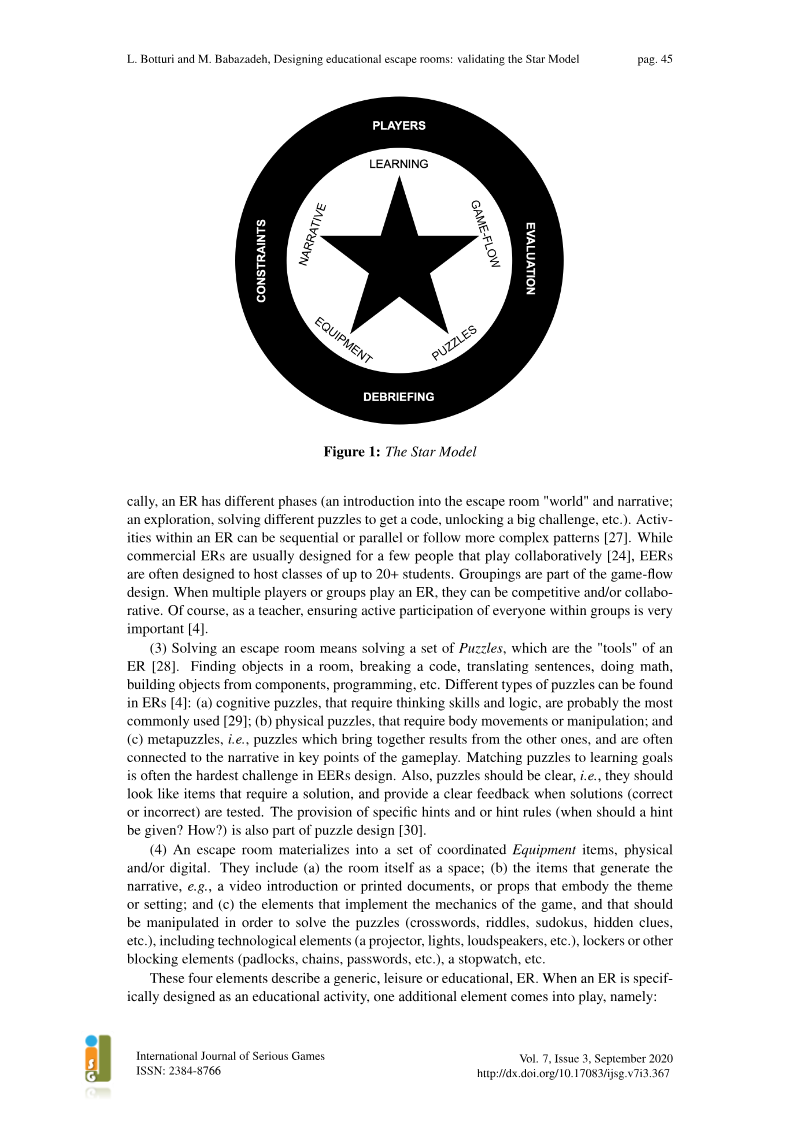
The Star Model provides a structured, flexible framework designed to assist educators in the creation and integration of educational escape rooms within formal curricula.
- The Star Model provides a structured framework for designing educational escape rooms by addressing non-linear progression, debriefing protocols, and classroom logistical constraints.
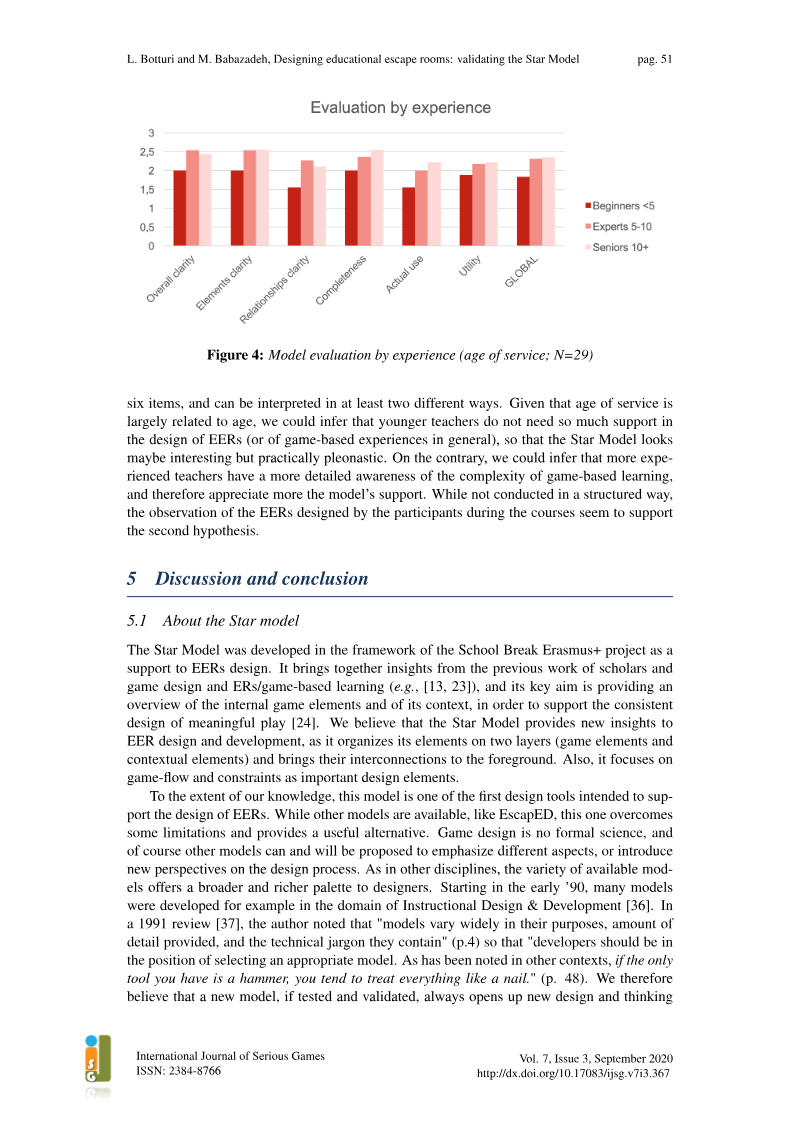
- A study of 50 primary and secondary school teachers validated the model, showing measurable improvements in participant design confidence and technical competence after implementation.
- The framework’s effectiveness is contingent upon iterative play-testing and the precise alignment of game mechanics with specific classroom environments.