
International Journal of Serious Games
Open-access peer-reviewed journal of the Serious Games Society on the design, use and assessment of serious games.
Documents
Accurate Complex Systems Design: Integrating Serious Games with Petri Nets
The integration of Petri Nets with serious game development provides a robust framework for the design and validation of complex systems.
- Integrating Petri Nets with Unity3D creates a hybrid framework that combines rigorous mathematical modeling with immersive prototyping to validate complex system logic.
- Synchronizing Petri Net simulations with game-based environments via behavioral checkpoints allows for the real-time detection of sequencing errors, logic flaws, and missing information.
- This methodology bridges the communication gap between technical developers and non-technical stakeholders by transforming abstract specifications into an interactive, accessible experience.

Enhancing Surgical Team Performance with Game-Based Training
Medical errors in surgical environments are frequently linked to breakdowns in team communication and hierarchical power imbalances.
- The Safe Surgery Trainer (SST) game significantly improved both declarative knowledge and the transfer of communication skills in a study of 141 participants compared to a control group.
- Participants who played the SST game demonstrated a superior ability to apply communication strategies to novel clinical scenarios, indicating the development of accurate mental models for team interaction.
- The study utilized a randomized controlled design to evaluate the game's efficacy in addressing surgical errors caused by communication breakdowns and hierarchical power imbalances.

Framing Serious Games Development as a Matter of Business
Serious games development is fundamentally shaped by the interplay between product design and business strategy.
- Serious games development is inseparable from business strategy, as the need for consistent cash flow and market reach directly dictates a game's design, narrative, and functional maturity.
- Developers operate on a 'pendulum' model, oscillating between creating highly specific, client-tailored versions and generic, scalable frameworks to balance customization with market growth.
- Consultancy-based firms prioritize bespoke, high-touch solutions that ensure quality control but face inherent limitations in scalability.
Using Video Games to Combine Learning and Assessment in Mathematics Education
Video games function as both powerful pedagogical interventions and sophisticated assessment instruments within mathematics education.
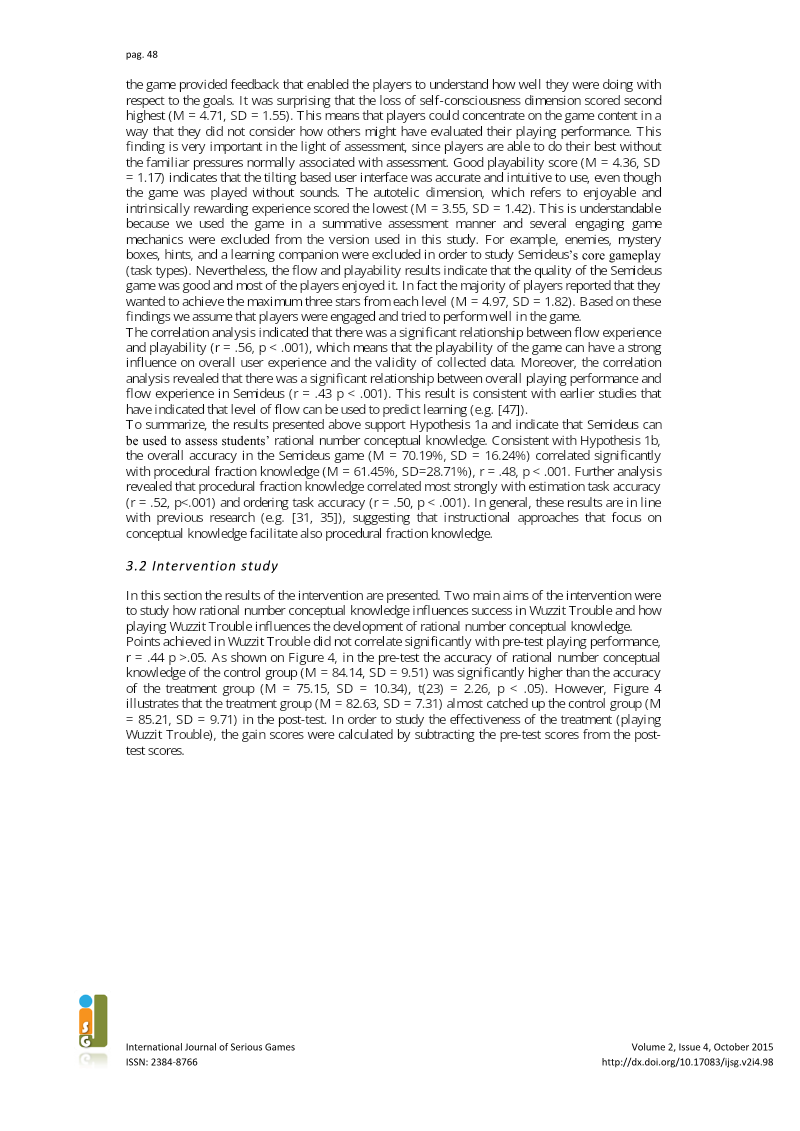
- Digital games like Semideus and Wuzzit Trouble function as both pedagogical tools and valid, reliable assessment instruments that correlate strongly with traditional metrics like the Rational Number Test.
- Short-term game-based interventions in mathematics education have demonstrated significant performance improvements, achieving effect sizes as high as 1.61 in tasks involving density and ordering.
- Game-based assessment utilizes Evidence-Centered Design to capture granular data on complex competencies such as algorithmic reasoning, magnitude estimation, and rational number conceptualization.


A Technique for Mapping Mathematics Content to Game Design
The integration of mathematics into digital entertainment often suffers from a disconnect between educational objectives and engaging gameplay.
- A new structured mapping framework integrates mathematical concepts directly into core game mechanics rather than treating them as peripheral educational additions.
- The methodology decomposes complex curricula into manageable subtopics, specifically targeting learning objectives like identification, simplification, and transposition.
- Preliminary evaluations using the GameFlow model confirm that games developed with this framework successfully maintain player engagement, challenge levels, and sustained concentration.

Full-body Movement in Numerical Trainings: A Pilot Study with an Interactive Whiteboard
Integrating full-body movement into interactive whiteboard training significantly enhances children’s arithmetic proficiency and spatial-numerical estimation skills.
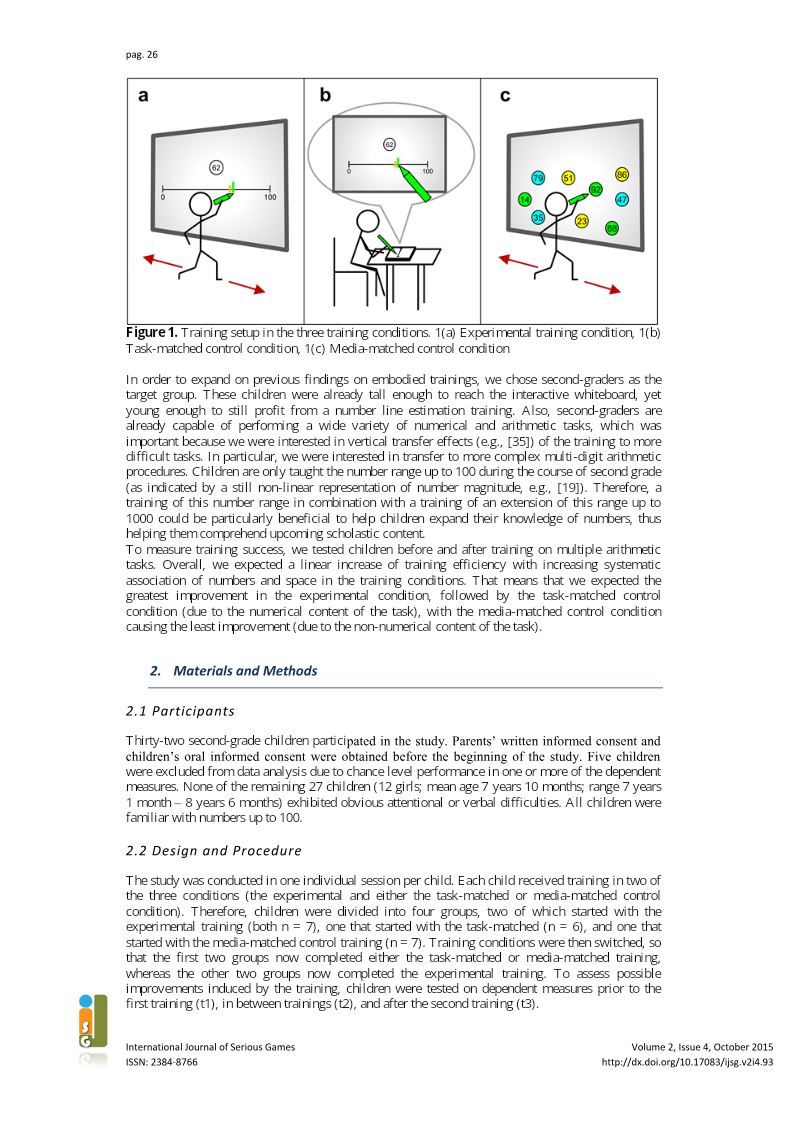
- Integrating full-body movement with interactive whiteboards significantly improves children's arithmetic proficiency and spatial-numerical estimation compared to static tablet-based or non-numerical interventions.
- The study of 27 participants confirms that experimental groups using physical movement consistently outperformed control groups in tasks such as multi-digit addition.
- Embodied learning leverages cognitive spatial mapping, creating a synergistic effect that enhances numerical associations more effectively than traditional digital interfaces.

Mathematics Learning Opportunities When Playing a Tower Defense Game
Commercial tower defense games offer a significant, underutilized platform for fostering mathematical problem-solving skills among students aged 10 to 12.
- Tower defense games like Vector Tower Defense 2 provide a natural environment for students aged 10 to 12 to practice geometric spatial reasoning, functional relationships, arithmetic, and percentages.
- Gameplay mechanics in the tower defense genre inherently require continuous cycles of observation, planning, and decision-making that align with core mathematical curricular objectives.
- Students do not spontaneously bridge the gap between intuitive gameplay and formal mathematical analysis, meaning the educational potential remains implicit without external intervention.

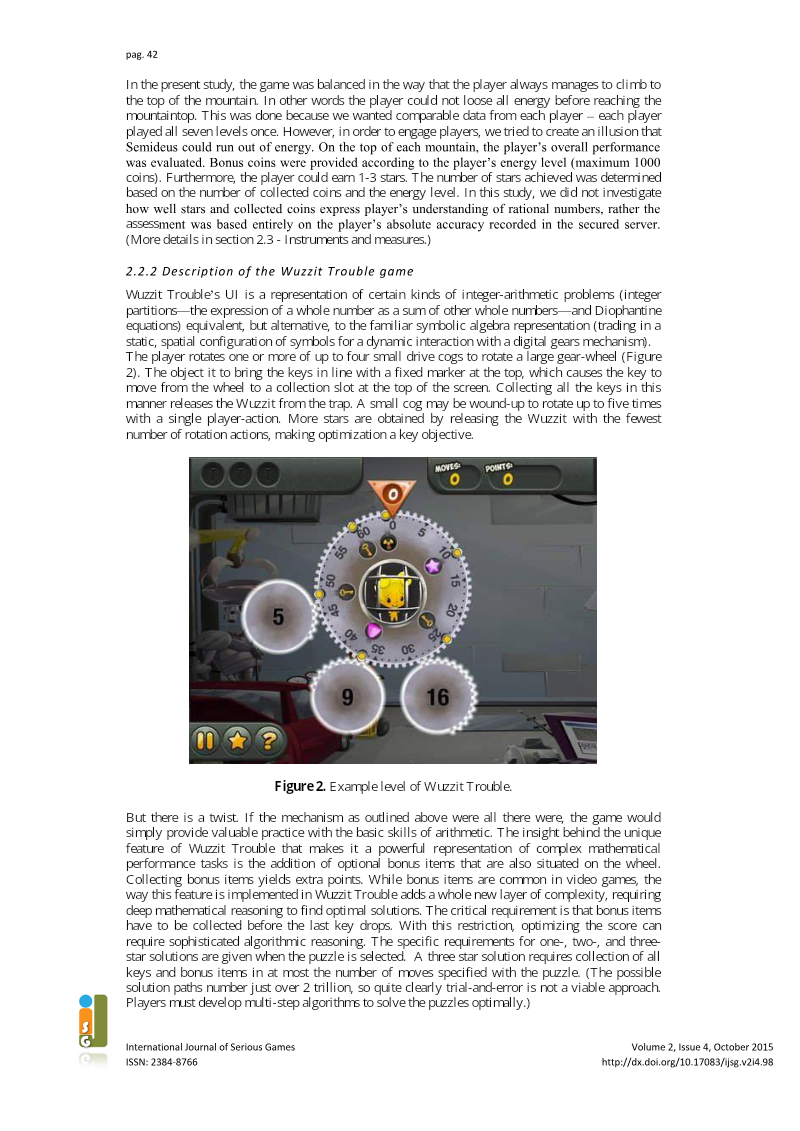
Wuzzit Trouble: The Influence of a Digital Math Game on Student Number Sense
Digital games designed with intentional mathematical constraints significantly enhance number sense among third-grade students.
- Digital games featuring intentional mathematical constraints, such as Wuzzit Trouble, improve third-grade number sense more effectively than traditional procedural memorization.
- The game’s iterative cycle of trial, verification, and revision helps students master number composition and decomposition, allowing them to solve unconventional problems.
- By providing a low-risk environment for experimentation, the game fosters a growth mindset and helps students develop cognitive strategies for managing multiple constraints.
Video Game Self-efficacy and its Effect on Training Performance
Serious games serve as highly effective training instruments that leverage experiential, active, and situated learning to outperform traditional text-based instructional methods.
- Serious games outperform traditional text-based instruction for procedural skill execution by providing authentic, risk-free environments that mirror real-world demands.
- Video game self-efficacy is a critical moderator that dictates how effectively a trainee translates simulation exposure into actual performance outcomes.
- While both game-based and text-based methods are equally effective for acquiring long-term declarative knowledge, interactive simulations are superior for maintaining and executing complex procedural tasks.
Natural Language Processing in Serious Games: A State of the Art
Natural Language Processing serves as a foundational technology for enhancing pedagogical efficacy and user engagement within serious games.
- Natural Language Processing (NLP) transforms serious games from static environments into adaptive, learner-centered platforms that facilitate complex skill acquisition like empathy and risk management.
- Current industry implementations rely on a mix of legacy methods, including finite-state machines and keyword analysis, alongside statistical classifiers like latent semantic analysis and support vector machines.
- Real-world applications such as Mission Rehearsal Exercise and PlayMancer utilize speech recognition and semantic parsing to enable non-player characters to respond to user behavior in real-time.

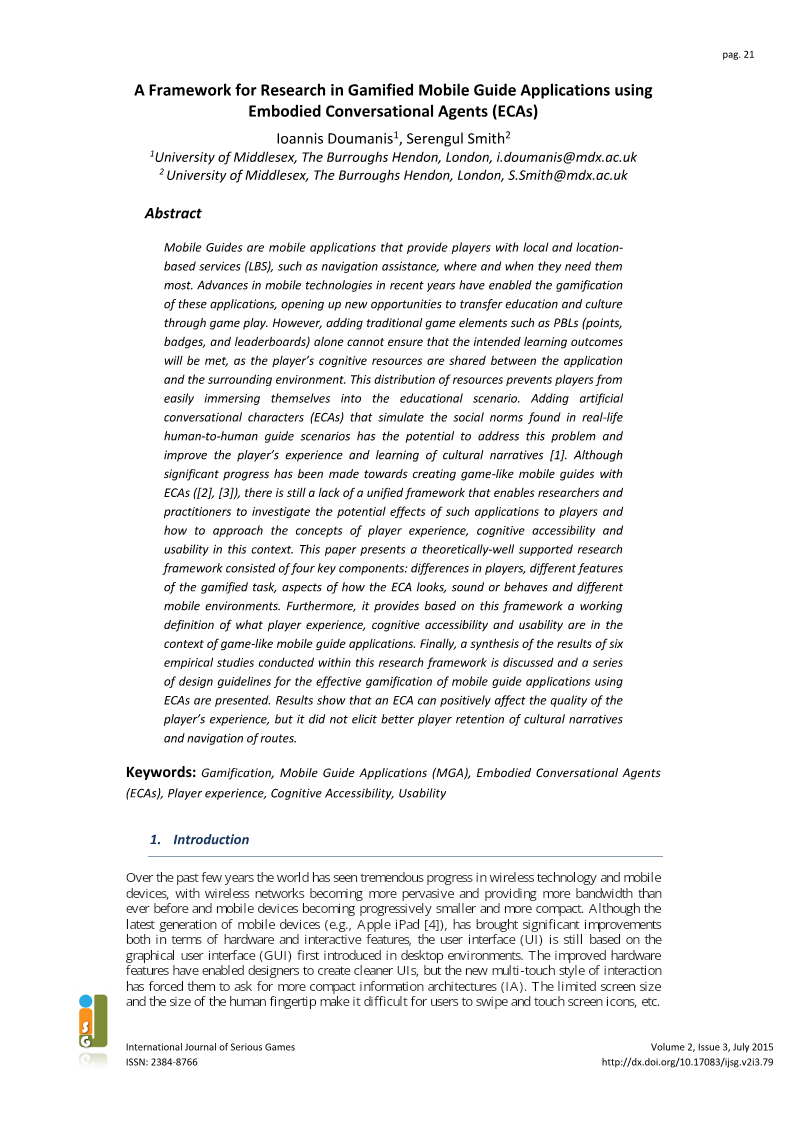
A Framework for Research in Gamified Mobile Guide Applications Using Embodied Conversational Agents
The integration of Embodied Conversational Agents (ECAs) into gamified mobile guide applications serves as a primary strategy for enhancing user immersion and educational engagement.
- Embodied Conversational Agents (ECAs) improve navigation assistance and user attitudes toward technical content, but they do not inherently ensure the retention of cultural narratives.
- The player journey should be structured into four distinct phases—Discovery, Onboarding, Scaffolding, and Endgame—to effectively manage cognitive load and emotional engagement.
- Empirical research involving 97 participants across six laboratory studies indicates that ECA effectiveness relies on the precise synchronization of verbal and non-verbal behaviors and the avoidance of excessive stimuli.


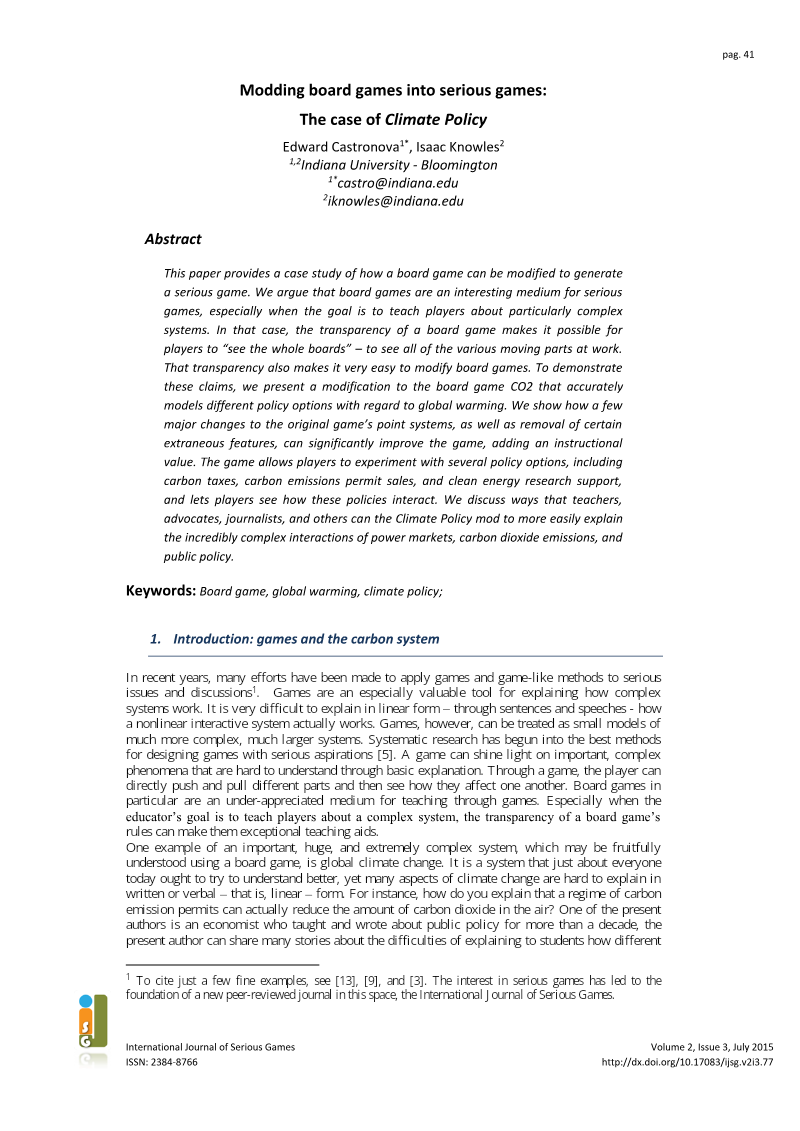
Modding Board Games into Serious Games: The Case of Climate Policy
Board games function as highly effective, transparent platforms for modeling complex, non-linear systems such as global climate policy.
- Modding existing commercial board games provides a low-barrier, tactile framework for simulating complex, non-linear systems like global climate policy.
- The adaptation of the board game CO2 demonstrates that recalibrating victory conditions to balance corporate profit against environmental thresholds effectively models real-world economic and regulatory tensions.
- Integrating specific policy variables such as carbon taxes, emission permits, research grants, and lobbying loopholes allows players to navigate the risks of reaching a catastrophic 500 PPM CO2 level.