
Game Production Alchemist
Game production craft and team leadership, by Rob Sandberg.
Documents

Paradox of Prosperity: A Hit Mobile Game’s Initial Success Eroding Into Long-Term Paralysis - Part 2
The mobile game industry frequently encounters a phenomenon where initial commercial success is undermined by long-term operational paralysis, often stemming from technical debt accumulated during early, rapid development phases.
- Producers can mitigate long-term technical paralysis by actively documenting and categorizing technical debt as backlog items, treating them with the same priority as new feature development.
- Protecting developer flow state is a critical productivity lever, as focused, distraction-free work environments can increase developer output by as much as 50%.
- Technical debt should be integrated into formal risk management processes by framing it as a specific risk, assigning an owner, and calculating a risk score to prioritize remediation.

Good Producers Have an Investigative Mindset
Effective game production requires more than traditional management skills; it demands an investigative mindset to navigate the inherent complexity and unpredictability of the development process.
- Game producers must adopt an investigative mindset—characterized by curiosity, critical thinking, and skepticism—to navigate the inherent complexity and unpredictability of game development.
- Effective producers use investigative techniques to identify and mitigate cognitive biases, such as the Primacy Effect and confirmation bias, which can otherwise distort objective project assessment.
- Agile methodologies serve as a practical tool for the investigative producer to visualize workflows, uncover bottlenecks, and predict project issues before they become critical.

Top 7 Complaints About Game Producers
This analysis identifies seven recurring criticisms of game producers based on qualitative feedback gathered from the r/gamedev community.
- Producers should adopt lean methodologies to eliminate excessive meetings and complex paperwork, ensuring every administrative task directly contributes to project goals.
- To prevent burnout and maintain team health, producers must set realistic deadlines based on actual team capacity rather than aggressive, arbitrary release dates.
- Producers must protect developers' flow states by minimizing unnecessary interruptions and implementing systems that allow team members to signal when they are unavailable.

Social Capital: Hard to Build but Easy to Topple
Social capital serves as a vital, intangible asset for game studio leaders, functioning as the essential glue that enables cooperation, innovation, and team cohesion.
- Social capital acts as a critical asset for game studio leaders, functioning as the primary mechanism for fostering team cohesion, cross-functional cooperation, and innovation.
- Earning social capital requires consistent, transparent behavior, such as fair decision-making and the practice of 'serial reciprocity,' where individuals pay forward good deeds to others rather than focusing on direct transactional returns.
- Social capital is highly fragile and can be rapidly depleted by leadership failures, including breaking promises, showing favoritism, failing to support the team during crises, or demonstrating poor professional habits like chronic lateness and distraction.

Recently Promoted to Lead: 5 Things To Do First
New leaders in the game industry frequently face a significant professional transition gap, often lacking formal management training after being promoted from individual contributor roles.
- Approximately 60% of new managers struggle within their first 24 months, often due to a lack of formal leadership training in game studios.
- Poor management can lead to a 15% decrease in direct report performance and a 20% higher likelihood of team members disengaging or leaving the company.
- New leaders should prioritize frequent one-on-one meetings with direct reports, allowing the team members to set the agenda to build rapport and trust.

Revisiting Theory of Constraints: Applications in Game Production
The Theory of Constraints (TOC) offers a robust framework for optimizing game production by identifying and managing system bottlenecks.
- The Theory of Constraints (TOC), introduced by Dr. Eliyahu M. Goldratt in 1984, posits that any system's performance is limited by a few critical bottlenecks that must be systematically identified and managed.
- The Five Focusing Steps of TOC involve identifying the constraint, exploiting it to full capacity, subordinating all other processes to it, elevating the constraint, and preventing inertia from creating new bottlenecks.
- Drum-Buffer-Rope (DBR) is a manufacturing execution methodology that synchronizes upstream production rates with the bottleneck’s pace to prevent overproduction and excess inventory.

Solely Relying on Your Team's Estimates is Costing You Time and Money
Traditional estimation methods in game development are increasingly viewed as inefficient and unreliable, often failing to account for the inherent unpredictability of software production.
- Traditional subjective estimation methods in game development are frequently inaccurate, with large-scale projects typically exceeding their scheduled completion dates by 25% to 50%.
- Relying on manual, detailed estimation processes consumes significant resources and time from high-cost developers and designers, often necessitating unproductive 'Big Upfront Planning'.
- Human cognitive biases, including optimism bias, the anchoring effect, and confirmation bias, inherently warp subjective estimates and lead to impractical delivery dates.

Watch the Work, Not the Workers: Four Flow Metrics for Your Studio
The primary objective of this analysis is to advocate for a shift in game studio management from individual-focused surveillance to system-oriented flow metrics.
- Workplace surveillance is counterproductive, as 75% of C-suite leaders admit that excessive monitoring harms morale and retention, yet many continue the practice.
- Digital surveillance often leads to 'task masking,' where employees optimize for the appearance of work rather than actual output, and can increase injury risks by pushing workers to hit arbitrary productivity targets.
- Work Item Age is the most critical flow metric because it allows producers to identify and resolve bottlenecks while work is still in progress, rather than conducting a post-mortem.
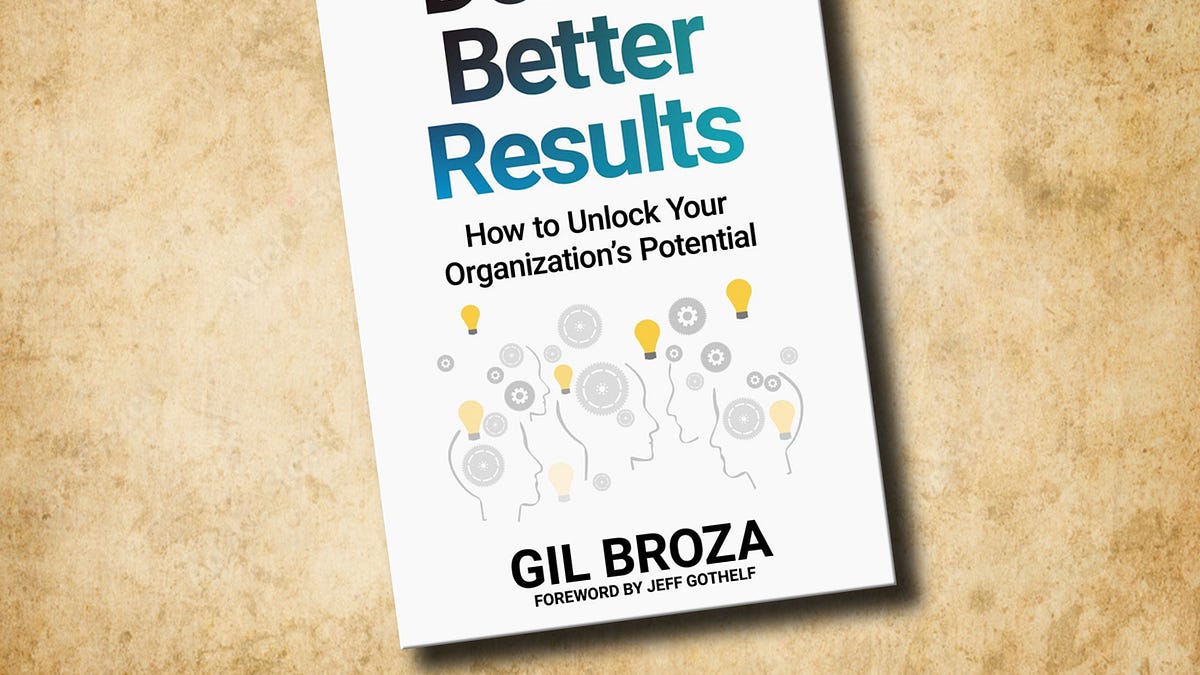
Deliver Better Results: How to Unlock Your Organization’s Potential
The book Deliver Better Results: How to Unlock Your Organization’s Potential by Gil Broza serves as a strategic guide for senior leaders in software development and project management.
- Gil Broza’s 'Deliver Better Results' introduces a framework for organizational maturity based on five levels of 'fitness for purpose,' ranging from 'Limited contribution' to 'Full realization.'
- The book utilizes the 'SQUARE' model to evaluate system health across six specific aspects: throughput, outcomes, timeliness, adaptability, consistency, and cost-efficiency.
- Effective organizational change requires three foundational elements: a comprehensive understanding of the value delivery system, a clear model for defining 'better' results, and active leadership support.

Scope Management for Game Development: Part 1
Effective scope management in game development requires a transition from fragmented, individual perceptions to a unified, shared understanding of project goals.
- Effective scope management requires distinguishing between Product Scope (the features and vision of the game) and Project Scope (the resources, planning, and constraints required to deliver it).
- Shared understanding across all stakeholders is the primary defense against misaligned goals and project conflict, necessitating clear communication and a culture of open inquiry.
- Project Scope acts as an 'iceberg' where hidden planning and resource constraints can derail development if not identified and managed alongside the visible product features.

A Call for Transformative Leadership in Corporate America
The analysis examines a perceived leadership crisis within American corporate culture, utilizing data from a U.S. News and The Harris Poll survey published in December 2023.
- A December 2023 U.S. News and The Harris Poll survey found that 77% of Americans perceive a leadership crisis in corporate America.
- 77% of respondents believe business leaders have a responsibility to address societal issues beyond their immediate corporate interests.
- 72% of survey participants believe that business leaders who maintain the status quo are causing long-term harm to their companies.

Revolutionising Meetings with Lean Coffee
Lean Coffee serves as a strategic framework for game production teams to replace inefficient, top-down meeting structures with a democratic, agenda-less approach.
- Lean Coffee replaces traditional top-down agendas with a democratic, participant-led structure where all attendees contribute, vote on, and prioritize discussion topics at the start of the meeting.
- The process utilizes strict time-boxing, typically limiting each topic to 5–10 minutes, to ensure discussions remain focused, concise, and productive.
- Digital collaboration tools like Miro or Figma are recommended for both virtual and in-person meetings to facilitate simultaneous brainstorming, voting, and the tracking of action items.