1 free read left. Create a free account for unlimited reading + AI research.
Create free accountArticle Game Production Alchemist
1 free read left. Create a free account for unlimited reading + AI research.
Create free accountArticleGame Production Alchemist
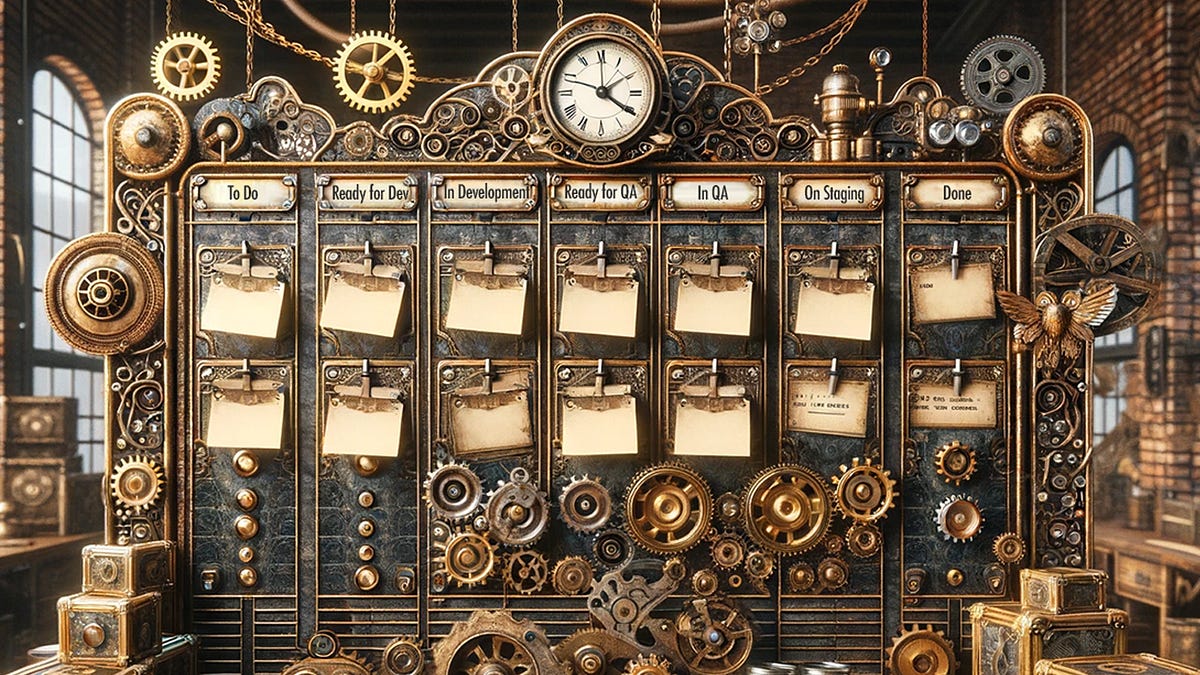
Scrum replaced rigid waterfall planning with agile iterations.
The transition from Scrum to Kanban Flow represents an evolutionary step for game development teams seeking to improve project predictability and operational efficiency. While Scrum was historically revolutionary in replacing rigid, waterfall-style planning with agile iterations, its implementation in game studios often results in a superficial layer of agility atop inflexible structures. Kanban Flow offers a more nuanced, continuous approach that moves beyond the constraints of time-boxed sprints, favoring a pull-based system that aligns with the dynamic nature of modern game production.
The core thesis posits that Kanban provides superior flexibility and responsiveness by focusing on workflow fluidity rather than prescribed ceremonies. By utilizing work-in-progress (WIP) limits and prioritizing tasks based on readiness, teams can significantly reduce cycle times and improve throughput. Unlike Scrum, which discourages mid-sprint changes, Kanban allows for continuous adaptation to shifting market demands and player feedback. This methodology relies on a data-driven mindset, where real-time metrics such as cycle time and lead time serve as the primary indicators for decision-making and process optimization.
Key benefits of adopting a Kanban-based model include enhanced predictability, improved quality through reduced multitasking, and a cultural shift toward continuous improvement. By visualizing the entire development pipeline, teams can identify bottlenecks more effectively and foster a collaborative environment. This transition is framed not merely as a change in tools or techniques, but as a fundamental paradigm shift that empowers teams to deliver value more consistently. Ultimately, Kanban Flow is presented as a robust framework for navigating the complexities of the game industry, offering a scalable and adaptable solution for teams aiming to balance high-quality output with rapid, iterative delivery.
Game Production Alchemist · 2026
Game Production Alchemist · 2026

Game Production Alchemist · 2026
Game Production Alchemist · 2026

Game Production Alchemist · 2026

Game Production Alchemist · 2026
Game Production Alchemist · 2026

Game Production Alchemist · 2026
Game Production Alchemist · 2026

Game Production Alchemist · 2026
Game Production Alchemist · 2026
Game Production Alchemist · 2026
Game Developers Conference · 2026










Comments