
Game Developers Conference
Game Developers Conference (GDC, now the GDC Festival of Gaming) is the professional event for the games industry. It publishes recorded talks and interviews, annual industry survey reports such as the State of the Game Industry, and news articles.
Documents
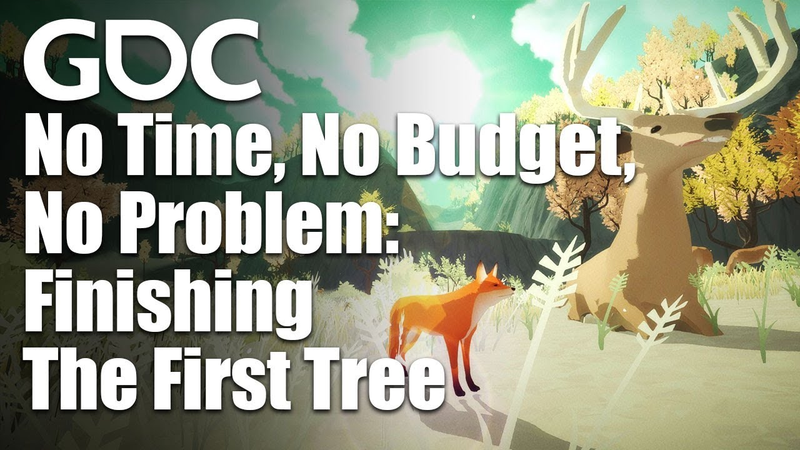
No Time, No Budget, No Problem: Finishing The First Tree
Solo game development requires a disciplined, high-impact strategy to overcome the inherent constraints of limited time and budget.
- David Wehle developed 'The First Tree' over 18 months while working a full-time job and raising two children, completing the project with approximately 1,000 hours of work and a $10,000 budget.
- The game generated $150,000 in revenue during its first year on Steam, demonstrating that a low-budget, hobbyist project can achieve commercial success through focused, high-impact strategies.
- To save roughly 600 hours of development time, Wehle utilized licensed, publicly available assets and prototypes, revising them to add a unique creative twist rather than building every element from scratch.
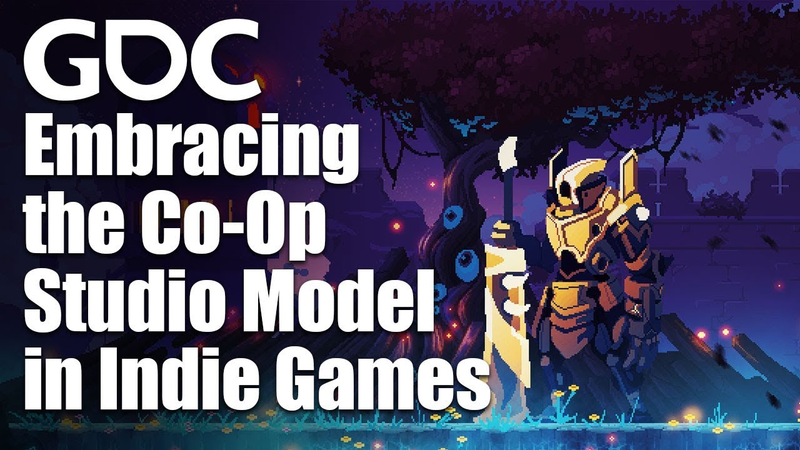
Embracing the Co-Op Studio Model in Indie Games
Worker cooperatives represent a transformative organizational model within the independent game industry, replacing traditional top-down hierarchies with democratic, horizontal governance.
- Worker cooperatives replace traditional top-down hierarchies with democratic, horizontal governance, ensuring employees share equally in profits, decision-making, and workplace management.
- This model functions as a form of micro-unionization, providing creators with a collective safety net and professional leverage against the volatility of the gig economy.
- Operational success in co-ops requires balancing individual autonomy with consensus-based governance, often utilizing vertical deployment where members maintain specialized roles.
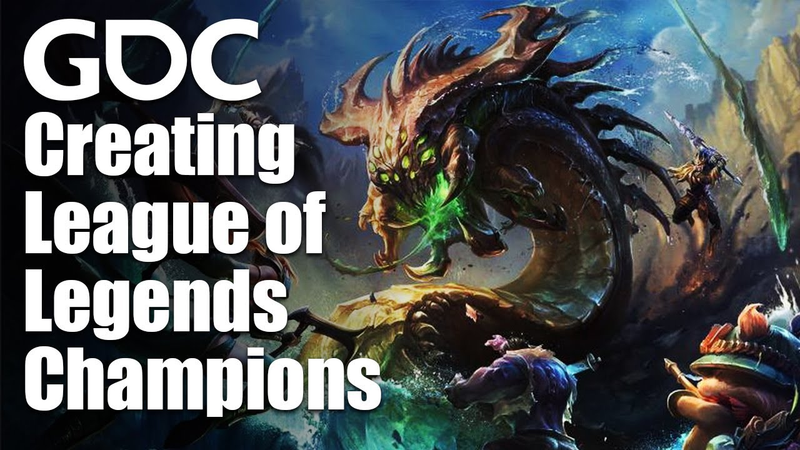
Creating League of Legends Champions: Our Production Framework Revealed
The production of champions for League of Legends relies on a rigorous, multi-phase framework designed to balance creative innovation with operational scalability.
- Riot Games manages the creative chaos of champion development by implementing a structured production framework that prioritizes clarity, scalability, and flexibility to prevent creative energy from being wasted on process-related confusion.
- The development process is divided into distinct phases—Ideation, Pre-production, Production, and Sustain—each with clearly defined deliverables to ensure the team knows exactly when a project is ready to advance.
- During the Ideation phase, the team utilizes a 'pattern lock' deliverable, which requires identifying the champion's strategic identity and finalizing three of their five core abilities to prove the character's viability.
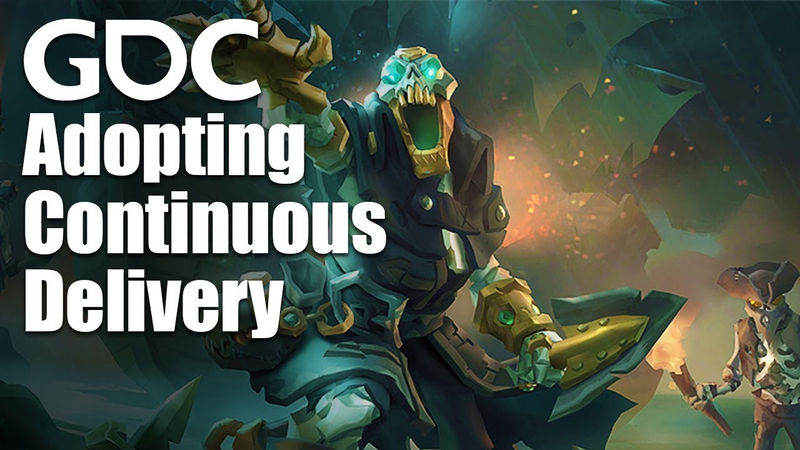
Adopting Continuous Delivery (In Sea of Thieves)
Transitioning from traditional waterfall development to a continuous delivery model has proven essential for the long-term sustainability of Sea of Thieves.
- Rare adopted continuous delivery for 'Sea of Thieves' to transition from a monolithic waterfall process to a sustainable model that minimizes crunch while supporting long-term live service updates.
- The studio successfully executed over 150 releases during the technical alpha phase, the highest volume of releases for any title on the Xbox platform at the time.
- To manage risk, developers are encouraged to submit small, atomic changes daily, as larger batches of 500+ changes exponentially increase the likelihood of build failures and complex integration issues.
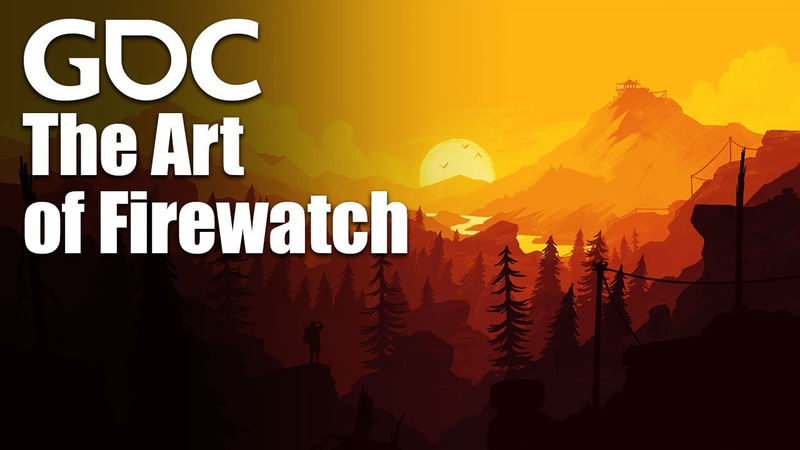
The Art of Firewatch
The development of the narrative exploration game Firewatch required a strategic approach to translating a bold, 2D graphic art style into an immersive 3D environment.
- Campo Santo utilized a small, distributed team of ten to develop Firewatch, proving that resource constraints can be leveraged as an empowering design strategy.
- To maintain a stylized 3D aesthetic, the team implemented a procedural sky system and custom 'stylistic fog' using RGB texture strips to manage atmospheric depth and mood-driven color shifts.
- The team prioritized production efficiency by using a limited set of modular rock and tree assets, reserving high-detail artistic bandwidth exclusively for unique, narrative-critical props.
The 2019 Failure Workshop
The independent game development sector is frequently defined by a culture of unsustainable labor practices and high-stakes financial volatility.
- Studio longevity is driven by collaborative workflows, transparent communication, and operational redundancies rather than individual brilliance.
- Financial instability is frequently caused by signing unfavorable publishing agreements that prioritize immediate survival over long-term profitability.
- Sustainable growth requires a shift toward human-centric management that prioritizes team well-being and strategic scoping over reactive market pressure.
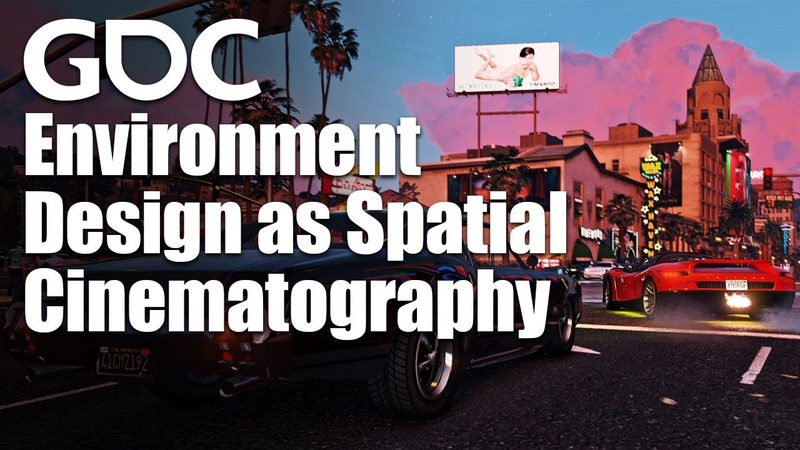
Environment Design as Spatial Cinematography: Theory and Practice
Environment design functions as a form of spatial cinematography, where 3D environments are meticulously crafted to control how they appear on a 2D screen.
- Environment design functions as spatial cinematography, where 3D spaces are crafted to ensure strong 2D compositions through techniques like the rule of thirds and the avoidance of visual tangents.
- Designers influence player navigation and focus by balancing bottom-up contrast, such as lighting and parallax, with top-down meaning derived from architectural cues.
- Shape psychology is used to evoke specific emotional responses, utilizing circular forms to signal safety and jagged lines to generate tension.
Composer Confessions: Massive, Often Painful, Lessons Learned
Professional game composition requires a fundamental shift from individual artistic expression to a service-oriented, collaborative mindset.
- Professional game composition requires shifting from individual artistic expression to a service-oriented mindset where the composer prioritizes the functional needs of the project over personal creative control.
- Composers must detach their ego from the creative process to navigate the reality that marketing teams, producers, and financiers may alter or discard their work at any time.
- When writing for live orchestras, prioritize player ergonomics and logical instrumentation over the aesthetic perfection of digital mock-ups to ensure session feasibility and efficiency.
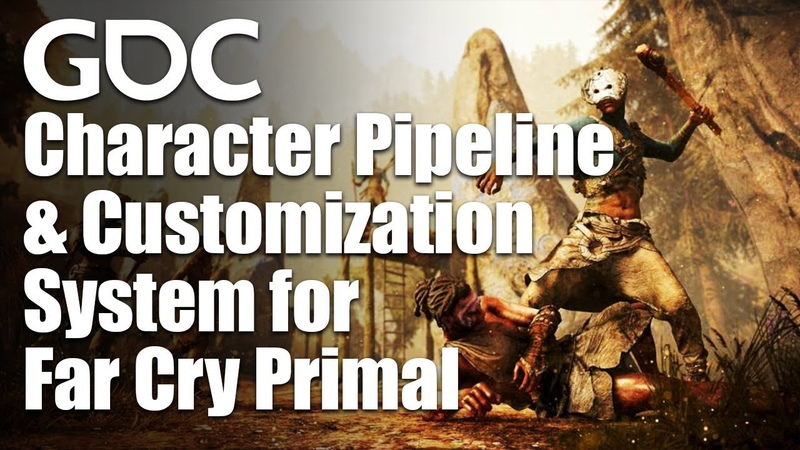
Character Pipeline and Customization System for Far Cry Primal
The development of Far Cry Primal necessitated a fundamental shift in character production, moving away from restrictive, software-specific workflows toward a flexible, cross-platform architecture.
- The character pipeline transitioned from a 3ds Max-centric model to a flexible, Python-based architecture that supports both Maya and 3ds Max, enabling a unified interface for artists.
- The 'Wolfskin' data-oriented system enables real-time asset hot-reloading and modular development, reducing character integration time from hours to minutes.
- A deterministic DNA-based generator replaced random spawning to allow for curated asset combinations, simplified debugging, and seamless integration of gameplay-driven gear upgrades.
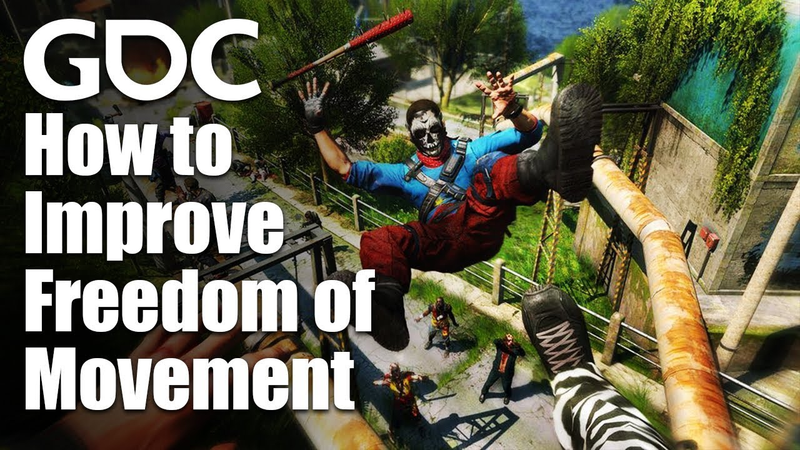
Parkour: How to Improve Freedom of Movement in First-Person Games in 20 Simple Steps
The development of parkour mechanics in the first-person game Dying Light required a shift from manual level design to a dynamic, runtime-based ledge detection system.
- To detect climbable ledges in 3D space, Techland used a series of forward traces to identify obstacles, validated the space above and below for player fit, and performed vertical traces to pinpoint the exact climbable edge.
- Techland optimized performance for complex parkour environments by implementing a 'carpet of traces' algorithm, which reduced computational overhead by batching geometry and processing traces with identical lengths and directions.
- To solve precision issues in first-person jumping, the developers implemented a 'coyote time' mechanic that allowed players to jump even when slightly off an object, effectively extending the jump window by approximately 20 centimeters.
Tips from the Trenches: An Indie Guide to Contracting
Contracting serves as a vital, sustainable revenue stream for independent game studios, provided teams move beyond the misconception that they lack negotiating power or must rely exclusively on fixed-bid models.
- Shift from fixed-bid models to time and materials structures with a 'not-to-exceed' cap to accommodate the iterative nature of game development while maintaining fiscal control.
- Standard industry contracting rates for independent studios typically range from $60 to $100 per hour, depending on project complexity, developer experience, and geographic market.
- When accepting lower rates for high-profile projects, use formal sales discounts on invoices to document the studio’s investment, which preserves leverage for future rate negotiations.

The Narrative Innovation Showcase 2019
Modern game design increasingly prioritizes the integration of narrative themes directly into core mechanics to foster cohesive player experiences.
- Modern game design is shifting toward integrating narrative themes directly into core mechanics, replacing traditional combat-centric loops with systems that reflect emotional arcs and personality traits.
- Developers are successfully using unconventional mechanics—such as text-based platforming, Jungian-archetype ensemble casts, and narrative-driven puzzle-solving—to deepen player attachment and character growth.
- Culturally informed design is replacing standard tropes with mechanics like gifting, language integration, and non-anthropomorphized nature interactions to explore complex historical topics like the Dawes Act.