
Game Developers Conference
Game Developers Conference (GDC, now the GDC Festival of Gaming) is the professional event for the games industry. It publishes recorded talks and interviews, annual industry survey reports such as the State of the Game Industry, and news articles.
Documents
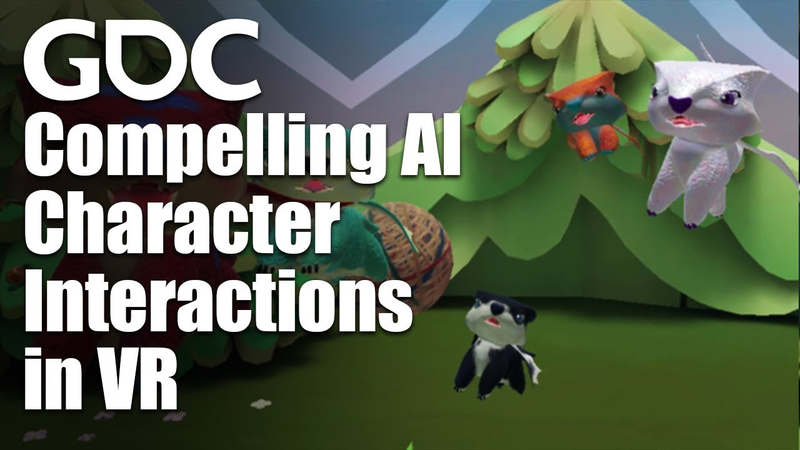
Designing Compelling AI Character Interactions in VR Using Body Language
Body language serves as the primary mechanism for establishing believable AI interactions within virtual reality, often outweighing the importance of complex dialogue or high-fidelity animation.
- Body language, specifically spatial presence and vertical positioning, is more effective than dialogue or high-fidelity animation for establishing believable AI interactions in VR.
- Designers should use physical cues like scale and proximity to communicate power dynamics and guide player behavior, eliminating the need for intrusive text-based menus.
- Managing attention pressure is critical, as excessive proximity, eye contact, or character density can trigger player anxiety even with benign AI.
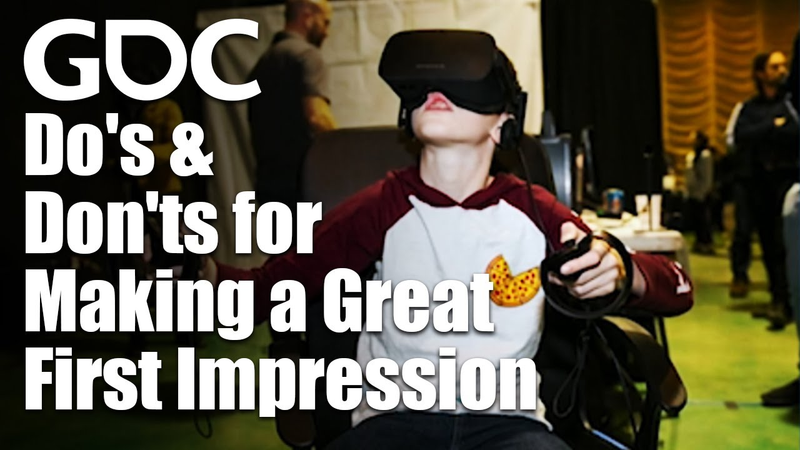
VR Demos: Do's and Don'ts for Making a Great First Impression
Virtual reality demonstrations serve as critical touchpoints for converting first-time users into long-term advocates, requiring a strategic blend of technical preparation, physical accessibility, and social engagement.
- Optimize VR demo sessions to last under ten minutes to ensure high user throughput and maintain engagement.
- Minimize physical friction and discomfort by implementing reach-assist features and providing both seated and standing play options.
- Transform the solitary nature of VR into a communal experience by using external cameras to allow onlookers to view the gameplay.
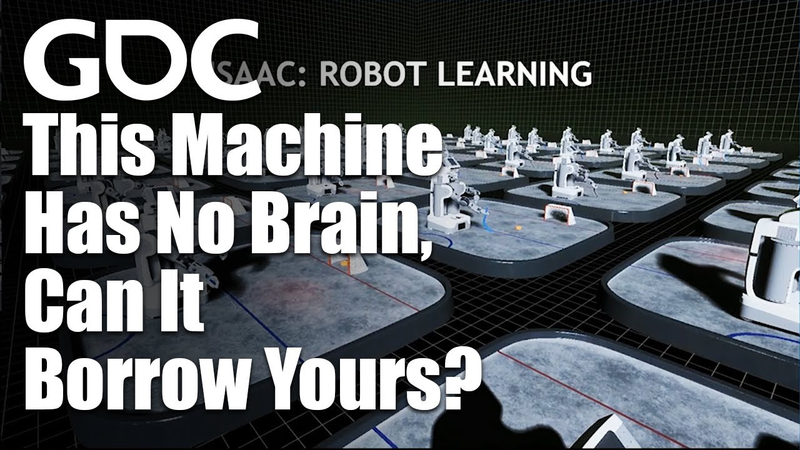
This Machine Has No Brain, Can It Borrow Yours?
The integration of autonomous systems into daily life necessitates a shift in training methodologies to overcome the limitations of traditional data-driven machine learning.
- High-fidelity simulation platforms like NVIDIA’s Isaac and Drive Sim are replacing traditional data-driven training to overcome the limitations of real-world datasets in handling rare or ethically ambiguous scenarios.
- A modular development architecture—decoupling vision, gameplay policy, and physical control—allows researchers to treat virtual and physical environments as interchangeable, significantly accelerating debugging and deployment.
- Human-in-the-loop systems using virtual reality enable robots to learn nuanced human motion through imitation, bypassing the need for traditional, cumbersome motion capture techniques.
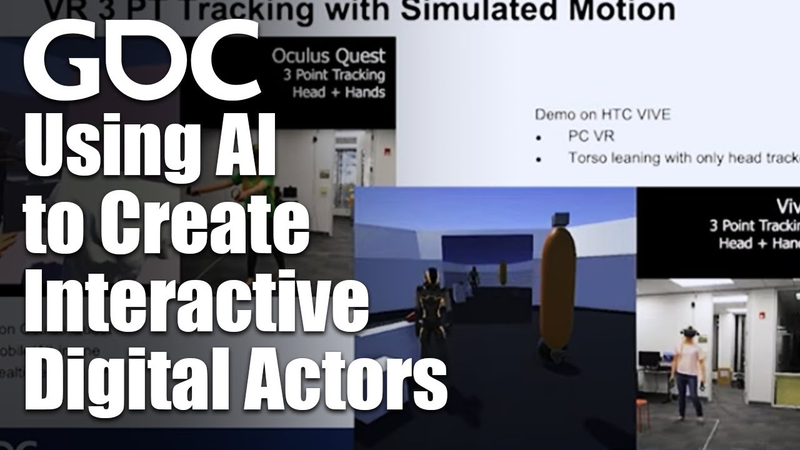
Using AI to Create Interactive Digital Actors
Physics-based simulation and reinforcement learning are transforming the creation of interactive digital actors, shifting the industry away from labor-intensive, static keyframe animation.
- Physics-based simulation and reinforcement learning are replacing manual keyframe animation with dynamic, autonomous character movement.
- The development time for sophisticated character behaviors is reduced from months to days by automating physical constraints and muscle control through machine learning.
- Robotics-based balancing algorithms and muscle models allow digital avatars to maintain posture and navigate environments using as few as three points of sensor data.

Porting Your Title to Oculus Quest
Transitioning a virtual reality title to the Oculus Quest necessitates a fundamental shift toward mobile-first development principles.
- Maintain a strict 72 FPS performance target by aggressively optimizing draw calls and vertex counts to accommodate the Quest’s mobile-first, tile-based rendering architecture.
- Manage the 2.75 GB RAM constraint by utilizing ASTC texture compression and shifting from static dependencies to dynamic asset loading.
- Avoid GPU-intensive features such as Z-passes, alpha testing, and dynamic lighting, opting instead for texture atlases, shader-based optimizations, and faked lighting effects.
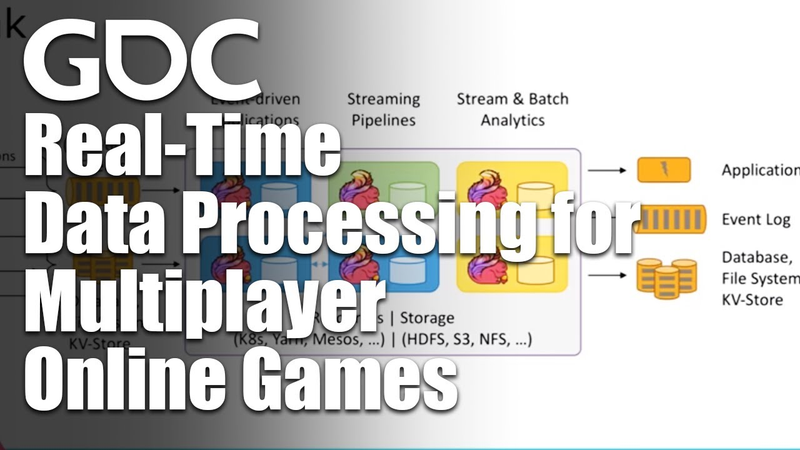
Real-Time Data Processing for Multiplayer Online Games
The primary objective of real-time data processing in multiplayer online games is to provide immediate insights into player behavior, revenue streams, and system integrity.
- A robust real-time data pipeline for MMORPGs relies on a three-tier architecture: Logstash for collection, Kafka as a high-throughput distributed transfer station, and Flink for real-time computation.
- Kafka serves as the central message broker capable of processing millions of messages simultaneously, offering fault tolerance and easy horizontal scaling without server downtime.
- Apache Flink is preferred for streaming analytics due to its 'exactly-once' processing guarantee, which prevents data loss or duplicate calculations, and its checkpointing mechanism for recovery to specific time points.

Multiple Middles & Mutazione
The narrative design of the 2019 game Mutazione utilizes a structural approach termed multiple middles to facilitate an ensemble-driven, soap opera-style narrative.
- The 'multiple middles' narrative design approach prioritizes exploration-based discovery over traditional branching dialogue or multiple endings, allowing players to engage with an ensemble cast at their own pace.
- By structuring the game around mandatory 'A-plots' and optional 'B' and 'C' subplots, the narrative ensures that all characters receive development while allowing players to choose which interpersonal dramas to investigate.
- To maintain transparency and player agency, the game uses a diegetic journal system that clearly distinguishes between mandatory story-advancing actions and optional content, giving players control over when to trigger the next time-of-day transition.

The UX Challenges of Adapting Classic UNO to Mobile
Adapting the classic card game UNO for mobile platforms requires a strategic balance between preserving the core physical experience and innovating for digital constraints.
- To bridge the gap between physical and digital play, developers transitioned from a rigid, tiled card layout to a 3D perspective that mimics the natural arc and posture of a human hand holding cards.
- To solve the problem of complex rule sets across 150 countries, the team abandoned a cluttered list of options in favor of a 'game mode' system that allows players to create and save custom rule configurations, resulting in 488 possible variations.
- The design team applied Hick's Law to address player churn, recognizing that presenting too many rule options on a small mobile screen increased decision time and negatively impacted the user experience.

How to Reduce In-Game Inflation by Monitoring Your Economic Systems
Managing economic stability in complex MMORPGs requires a proactive approach to monitoring and regulating in-game inflation, which mirrors the challenges faced by central banks in real-world economies.
- Developers must treat in-game economies as dynamic systems by balancing time, labor, and currency to prevent price volatility and maintain player confidence.
- The five primary drivers of inflation are excessive currency issuance, insufficient essential item production, declining player populations, market manipulation by bots, and the sudden influx of 'sleeping money' from returning players.
- Teams should implement robust visualization tools to track currency flow, exchange rates, and transaction networks to identify imbalances between currency issued and collected.
Rovio: A Two Year Journey into Modernizing the Production Process
Rovio has undergone a comprehensive two-year transformation to modernize its production framework, moving away from rigid, top-down management toward a model defined by transparency, autonomy, and data-driven decision-making.
- Rovio transitioned from a rigid, 'tick-box' production process to 'Flypath,' a flexible framework built on transparency and team autonomy that has successfully sustained projects for over two years.
- The Flypath framework organizes development into distinct phases—Concept, Pre-production, and Soft Launch—with a focus on validating team capabilities, technical requirements, and external compliance requirements from partners like Apple and Google.
- Rovio manages a portfolio of 15–20 live games, utilizing cross-promotion and integrated live operations to maintain the Angry Birds brand, which has surpassed 4 billion total downloads.

IL Gigante: Michelangelo's David in VR
This presentation details the technical development of a virtual reality experience featuring Michelangelo’s David, utilizing a high-fidelity, billion-polygon laser scan dataset originally captured by Stanford University in 1998.
- The project successfully converted a 1998 Stanford University billion-polygon laser scan of Michelangelo’s David into a real-time, interactive VR experience within Unreal Engine 4.
- Engineers achieved quarter-millimeter resolution, allowing users to inspect fine historical details like chisel marks and structural repairs from a virtual scaffold.
- The development team overcame the lack of UV mapping and non-aligned scans in the raw dataset by using a multi-stage workflow involving ZBrush, Instant Meshes, and Wrap3 for non-rigid mesh alignment.
Productive Dissension: How a Diverse Writers' Room Created Life is Strange: Before the Storm
The production of the 1,500-page script for the interactive game Life is Strange: Before the Storm utilized a collaborative writers' room model adapted from television production.
- To manage the 1500+ page script for 'Life is Strange: Before the Storm,' Deck Nine Games utilized a television-style writers' room to foster collaborative narrative design.
- A productive writers' room requires an 'etiquette of exchange,' which is a shared vocabulary and methodology that allows a team to debate complex story elements while maintaining focus.
- The lead writer must act as a decisive curator who frames discussions, navigates the 'whirlwind' of creative ideas, and maintains the project's compositional velocity.