
Game Developers Conference
Game Developers Conference (GDC, now the GDC Festival of Gaming) is the professional event for the games industry. It publishes recorded talks and interviews, annual industry survey reports such as the State of the Game Industry, and news articles.
Documents
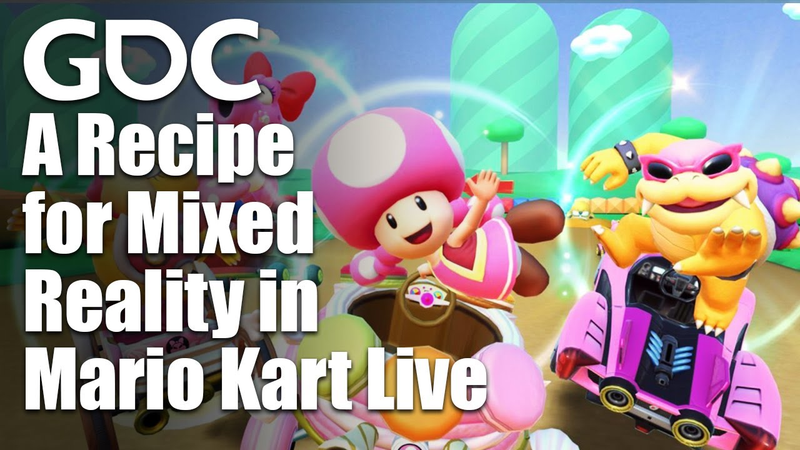
A Recipe for Mixed Reality in 'Mario Kart Live'
Mario Kart Live: Home Circuit demonstrates a sophisticated approach to mixed reality by anchoring digital gameplay elements within a physical environment through a unified coordinate system measured in centimeters.
- Mario Kart Live achieves spatial consistency by anchoring digital gameplay to a physical coordinate system measured in centimeters.
- The system utilizes a hybrid SLIEKF architecture, combining sparse gate landmark detection with 160Hz inertial measurement unit (IMU) data to mitigate tracking drift.
- Precise alignment between the physical video feed and digital field of view is maintained by using OpenCV to eliminate lens distortion.
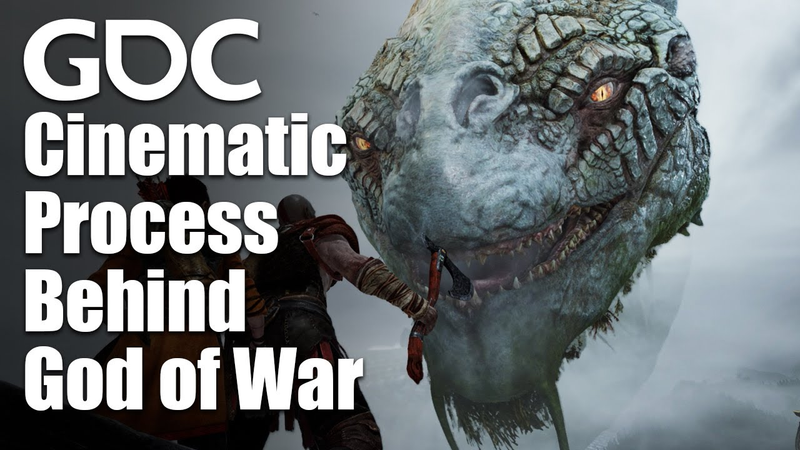
Keyframes and Cardboard Props: The Cinematic Process Behind 'God of War'
The production of God of War centers on the technical and creative challenge of maintaining a continuous, uninterrupted camera perspective throughout the entire game.
- The development team achieved a continuous, uninterrupted camera perspective by replacing traditional layout methods with a documentary-style staging process.
- Pre-production utilized live-action rehearsals, handheld camera tests, and cardboard props to establish spatial scale and character motivation before committing to motion capture.
- A custom virtual camera pipeline was implemented to bridge film-industry techniques with game-specific animation constraints, utilizing automation tools to translate data between proprietary rigs and standard software.
From Trumpets to Transients: A Composer's Guide to Sound Design
Modern game audio production requires a shift toward a holistic, cross-disciplinary approach where composers and sound designers function as a unified team.
- Over 50% of all job placements in the game audio industry are secured through networking and professional referrals rather than cold applications.
- Modern game audio requires a unified, cross-disciplinary approach where composers master both sound design and technical implementation to increase employability and creative control.
- Dynamic, non-linear scoring should replace static loops with modular, four-bar motifs that trigger based on real-time in-game drama values to mirror player intensity.
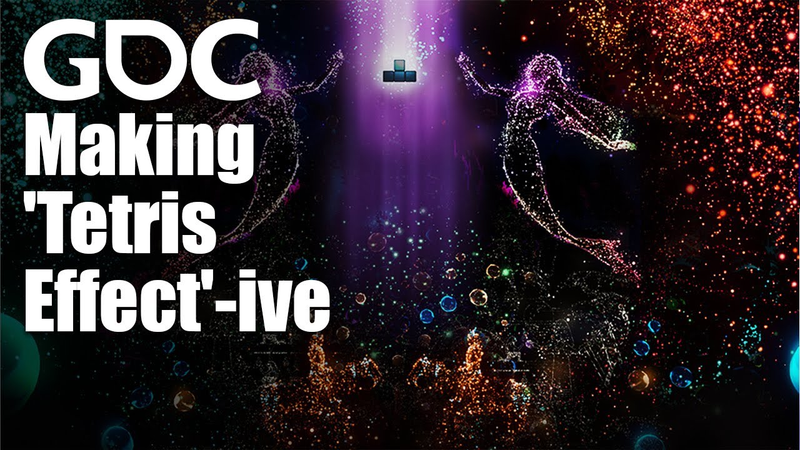
Making 'Tetris Effect'-ive
Tetris Effect reimagines the classic puzzle formula by transforming it into an immersive, sensory-driven experience that prioritizes emotional resonance over traditional competitive mechanics.
- To modernize a classic IP like Tetris, the development team focused on creating a 'synesthesia' experience by integrating a custom engine that links music, visual particles, and 3D movement to gameplay.
- The team addressed the challenge of balancing immersive VR presentation with functional gameplay by placing visual elements close to the play area, allowing players to process environmental effects without losing focus on the tetraminos.
- The 'synesthesia' engine was expanded with physics and morphing functions to provide a sense of weight and tempo to particle movements, enhancing the player's emotional connection to the game's atmosphere.

30 Minute Steam Page Makeovers
Steam page optimization serves as a critical bridge between development and commercial success, requiring a strategic shift from passive presentation to active, data-driven marketing.
- Prioritize custom-illustrated capsules over raw screenshots to signal high production value and overcome the market stigma associated with low-quality shovelware.
- Replace dense, text-heavy descriptions with animated GIFs and consistent art direction to communicate gameplay depth and genre identity to prospective players instantaneously.
- Align game metadata with the Steam algorithm by modeling tags after top-performing titles within the same genre to ensure accurate categorization and audience reach.
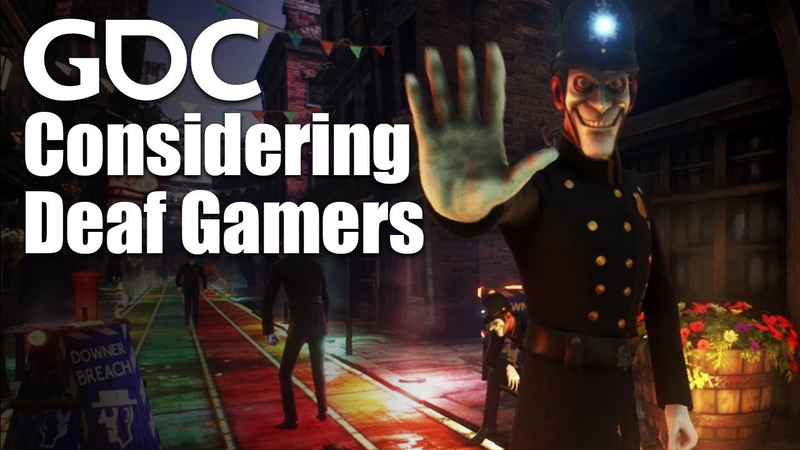
I Can't Hear You: Considering Deaf Gamers
Accessibility in modern game design is a fundamental requirement for the more than one billion people globally living with disabilities.
- Accessibility features are essential for a massive audience, as one in four adults in the U.S. has a disability, and over 40 million Americans experience some degree of life-limiting hearing loss.
- Subtitles should be at least 3% of the screen height for readability, though the television industry standard of 8% (86 pixels tall on a 1080p screen) is recommended for better accessibility.
- Designers should avoid relying on color alone to convey information, as 1 in 12 men and 1 in 200 women are colorblind; instead, use text, icons, or configurable color settings.
Voice AI For Game Developers: Optimizing the Narrative Process
Voice AI technology is fundamentally transforming the narrative production process in the gaming industry by offering a scalable, cost-effective alternative to traditional voice acting.
- Modern AI voice technology replaces traditional studio recording with scalable, emotionally nuanced dialogue that maintains player immersion.
- Early integration of AI-generated dialogue allows developers to iterate on narrative content faster by removing the financial and time constraints of professional recording studios.
- AI-driven tools now enable real-time synchronization of human cadence, tone, and facial expressions onto digital characters.

The Dao of VFX Animation
This analysis explores the application of classical Chinese Daoist philosophy to modern visual effects (VFX) animation, arguing that prioritizing underlying energy over surface-level detail creates more compelling and flexible digital assets.
- Prioritize the internal logic of motion and directional energy vectors over static surface properties like reflectivity or texture to create more authentic VFX.
- Shift the animation workflow from manipulating static sprites to designing meshes that function as paths for energy flow.
- Utilize mathematical noise, such as Voronoi patterns, to simulate complex natural movement based on fundamental structural patterns found in nature.
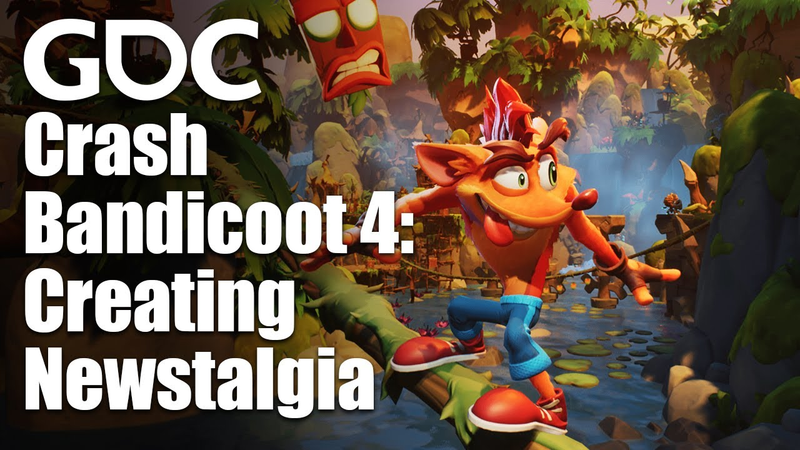
Creating Newstalgia for 'Crash Bandicoot 4': Modernizing a Classic IP
The development of Crash Bandicoot 4: It’s About Time focused on revitalizing a dormant franchise by balancing modern innovation with the authentic "newstalgia" of the original 1990s trilogy.
- Toys for Bob positioned 'Crash Bandicoot 4: It's About Time' as a direct sequel to the original 1990s trilogy, targeting the core audience that grew up with the franchise while avoiding the risks of a complete reboot or a radical departure from established gameplay.
- The development team established three core pillars—tone, gameplay, and visual identity—to guide decision-making, ensuring the game remained authentic to the series' 'Looney Tunes' inspired DNA while modernizing the experience.
- To maintain the series' reputation for high difficulty while increasing accessibility, the team replaced traditional life-count systems with a 'Modern Mode' that offers unlimited lives, allowing players to choose their preferred playstyle without compromising the game's challenging level design.
Disintegrating Meshes with Particles in 'God of War'
The particle-based mesh disintegration technique developed for God of War (2018) provides a visually cohesive method for removing defeated enemies and environmental objects from the screen without relying on traditional, immersion-breaking techniques like alpha fading or sinking models into the floor.
- To manage corpse removal without frame rate degradation, Sony Santa Monica developed a pixel-based disintegration technique that converts mesh fragments into particles the frame before they are hidden by alpha reference testing.
- The system utilizes a depth pre-pass to ensure only one fragment shader runs per pixel, preventing redundant particle emission from overlapping triangles.
- Pixel coordinates of disappearing fragments are stored in an append buffer, which is then processed via dispatch indirect to convert screen-space data into world-space particles using G-buffer attributes like depth, normals, and lighting.
Building Pipelines to Find, Grow, and Retain Diverse Talent
The gaming industry is undergoing a structural shift toward intentional diversity and inclusion, moving beyond superficial hiring practices to address systemic barriers in talent acquisition and retention.
- Gaming companies are moving toward systemic inclusion by partnering with organizations like the Black Collegiate Game Association and Game Heads to build talent pipelines starting as early as middle school.
- Long-term equity requires a data-driven operational framework that includes consistent pay equity audits and transparent tracking of demographic representation across the workforce.
- The responsibility for inclusion is shifting from marginalized employees to management, with leadership held accountable for mitigating unconscious bias and providing actionable performance feedback.
"Swiping on the Six Strings": Crafting an Interactive Guitar in 'The Last of Us: Part II'
The interactive guitar mechanic in The Last of Us: Part II serves as a narrative bridge, allowing players to experience Ellie’s emotional journey through the tactile act of music-making.
- The guitar mechanic was designed to avoid traditional rhythm game tropes, such as QTEs and strict fail states, to prioritize player-driven, introspective roleplay over reaction-time testing.
- Designers utilized the PlayStation controller's touchpad as the primary input for strumming to provide a more tactile, one-to-one correspondence between player movement and audio output.
- To enable a 'free play' mode, the team implemented a music theory-based system using six-slice chord wheels, which grouped major and relative minor chords to ensure musical harmony regardless of the player's skill level.