
Game Developers Conference
Game Developers Conference (GDC, now the GDC Festival of Gaming) is the professional event for the games industry. It publishes recorded talks and interviews, annual industry survey reports such as the State of the Game Industry, and news articles.
Documents

Social Animals: Werewolves Within and the Virtual Tabletop
The development of Werewolves Within centers on the thesis that virtual reality can successfully replicate the nuance and intimacy of face-to-face tabletop gaming by prioritizing social presence over complex digital mechanics.
- Virtual reality social experiences are most effective when they prioritize non-verbal cues like leaning, eye-tracking, and spatial awareness over complex digital mechanics.
- Stylized avatars function as digital masks that lower player inhibitions and reduce social anxiety, fostering more confident engagement than photorealistic representations.
- Design constraints, such as using gamepads instead of touch controllers and implementing randomized seating, prevent the misuse of physical gestures and keep the focus on social interaction.
Practical Creativity
Game design innovation is a learnable, systematic skill rather than an elusive, mystical process.
- Game design innovation is a systematic, learnable skill achieved by deconstructing games into atomic, mathematical substrates rather than relying on narrative-focused development.
- Designers should build a comprehensive library of mechanics by studying diverse media, including board games, mobile titles, and classic arcade experiences, to treat games as modular systems of interchangeable inputs and topologies.
- Creative breakthroughs are best achieved through mechanical mashups, which involve extracting mechanics from their original contexts and applying them to novel scenarios or intentionally using ill-suited simulation techniques to disrupt genres.

What To Do When You've Been Hacked
Game studios must transition from reactive security postures to proactive operational frameworks to effectively manage the inevitable reality of cyber incidents.
- Shift from reactive security to proactive operational frameworks by establishing a Directly Responsible Individual (DRI) model and cross-training teams to eliminate single-person dependencies.
- Minimize organizational liability by strictly limiting the collection of sensitive customer data and identifying bottlenecks within build and deployment pipelines.
- Maintain business continuity during a breach by utilizing pre-approved talking points and designating a single, authoritative spokesperson to ensure messaging is structured, factual, and unambiguous.
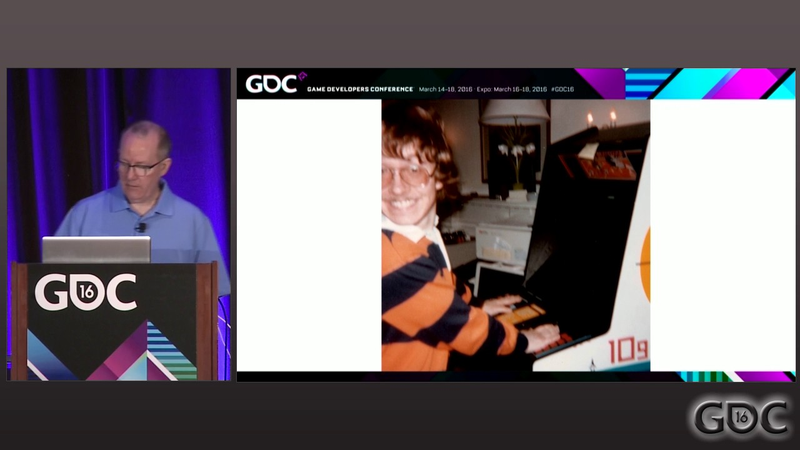
Classic Game Postmortem: Ms. Pac-Man
General Computer Corporation (GCC) emerged in 1981 as a pioneering force in the arcade industry, initially focusing on enhancement kits designed to extend the commercial lifespan of popular titles.
- Ms. Pac-Man was developed by General Computer Corporation (GCC) as a modification kit for the original Pac-Man, utilizing a custom auxiliary circuit board with 10K of ROM to patch the original game code.
- To reverse engineer Pac-Man, the GCC team used a Tektronix 85/50 Z80 emulator to disassemble the original code, allowing them to isolate and modify monster AI behaviors and maze layouts.
- The team implemented anti-copying hardware and a 'bit-swizzle' encryption method on their auxiliary board, which successfully prevented the cloning of Ms. Pac-Man for approximately six months.
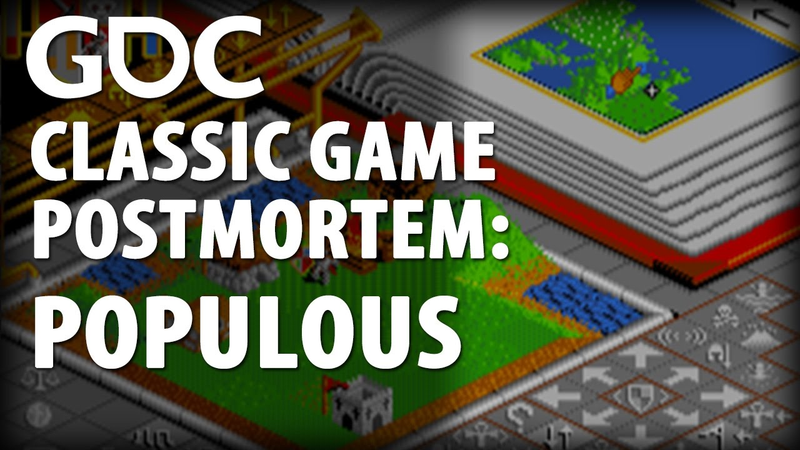
Classic Game Postmortem - Populous
The development of Populous represents a pivotal moment in the history of the god game genre, emerging from the unlikely intersection of failed business ventures and technical necessity.
- Populous achieved massive commercial success upon release, accounting for one-third of Electronic Arts' total annual revenue.
- The god game genre was born from a technical pivot when the developers abandoned complex character AI in favor of a mouse-driven terrain manipulation system.
- Despite the game's high sales, the studio faced severe financial instability due to unfavorable royalty structures, illustrating the risks of independent development in the late 1980s.
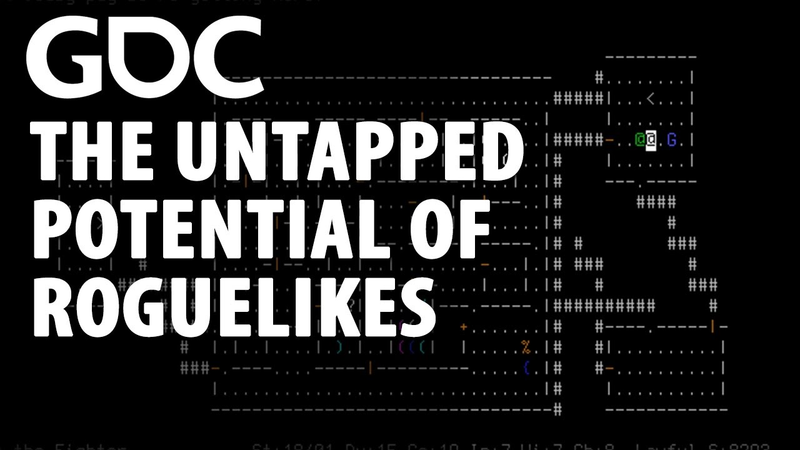
Level Up Your Game: The Untapped Potential of Roguelikes
Long-term player engagement is fundamentally driven by the pursuit of mastery, a process defined by the continuous cycle of learning, failure, and improvement.
- Roguelike design patterns, such as high-consequence permadeath and sharp in-session progression, can be adapted to other genres to create more memorable and rewarding player experiences.
- The 'Hero or Zero' pattern leverages high-stakes failure to encourage players to focus on learning and incremental progress, turning the expectation of death into a positive engagement loop.
- Designers should force players to 'make do' with diverse, imperfect tools, which encourages creative problem-solving and ensures players engage with a wider variety of game content.
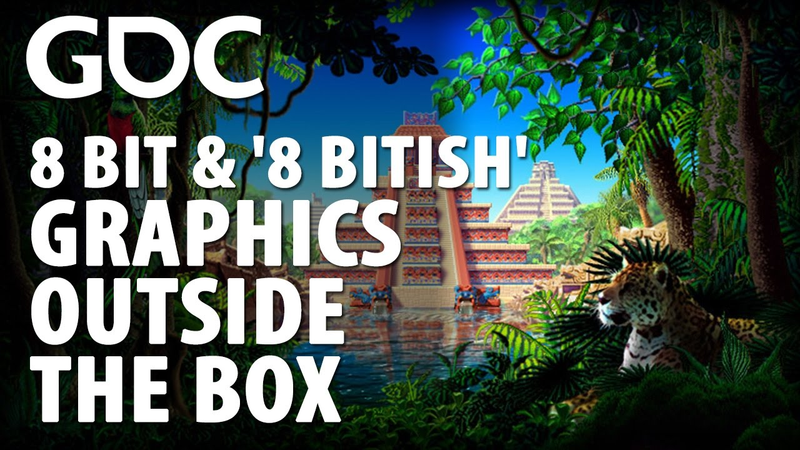
8 Bit & '8 Bitish' Graphics-Outside the Box
The evolution of 8-bit and 16-color graphic design demonstrates that technical constraints often serve as a catalyst for profound artistic innovation.
- Technical constraints in early 8-bit development, such as limited color palettes, forced the invention of efficient techniques like dithering, palette shifting, and color cycling to simulate complex motion and transparency.
- Modern projects like Thimbleweed Park demonstrate that developers can replicate the 8-bit aesthetic by using high-resolution tools like Photoshop with nearest neighbor interpolation to bypass historical hardware frustrations.
- The '8-bitish' design approach leverages modern production efficiencies, such as banded shading and structured color palettes, to manage large-scale background asset creation while maintaining a vintage visual identity.

The Reality of Making Hololens Games
Developing for the HoloLens relies on a streamlined integration between the Unity 3D engine and the HoloLens Toolkit, which provides essential prefabs for interface design, gesture recognition, and spatial mapping.
- The HoloLens market is currently restricted to specialized enterprise sectors like logistics and construction, as hardware limitations and a narrow field of view prevent mass-market consumer viability.
- Development relies on the integration of the Unity 3D engine with the HoloLens Toolkit, which provides pre-built modules for gesture recognition, voice commands, and spatial mapping to minimize custom coding.
- Spatial mapping technology allows virtual objects to interact with the physical environment by generating a 3D mesh that supports physics-based collisions and depth-buffer occlusion.

Influences: Thinking Outside the Game
Game design benefits significantly from integrating perspectives and methodologies found outside the traditional gaming industry.
- Integrating methodologies from art history, literature, and cinema—such as Italian neorealism and the French New Wave—enables developers to move beyond genre tropes toward more mature, character-driven storytelling.
- Applying Brian Eno’s theories on generative art and self-imposed constraints provides a structured framework for overcoming creative blocks and driving innovative aesthetic decisions.
- Treating game development as an iterative, system-driven process similar to abstract expressionism allows designers to prioritize mechanical purity and personal artistic vision over industry trends.
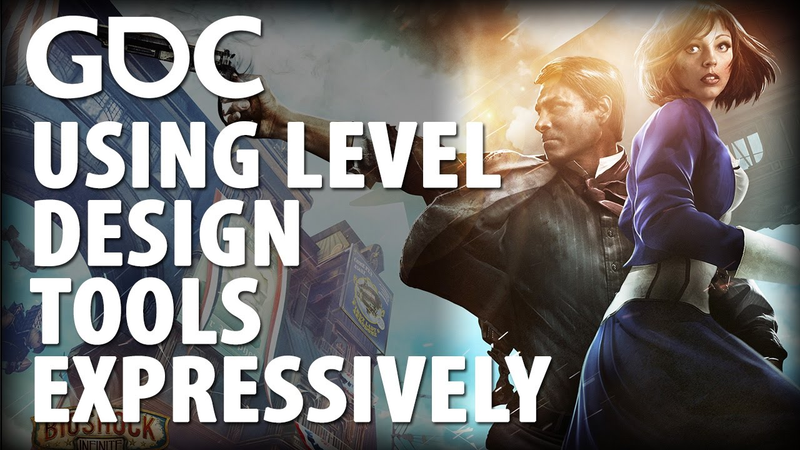
Using Level Design Tools Expressively
Level design in narrative-driven, first-person games relies heavily on the expressive use of fundamental scripting tools to create immersive, human-like interactions.
- Level designers can create immersive, human-like character behavior by repurposing standard scripting tools like triggers, delays, and counters rather than building complex, over-engineered systems.
- Simulating naturalistic character behavior is achieved by using delays to mimic human cognitive pauses, effectively bridging the gap between rigid machine logic and organic interaction.
- Implementing hysteresis—triggering events based on thresholds rather than binary switches—prevents mechanical dithering and technical bugs during erratic player movement or AI spawning.
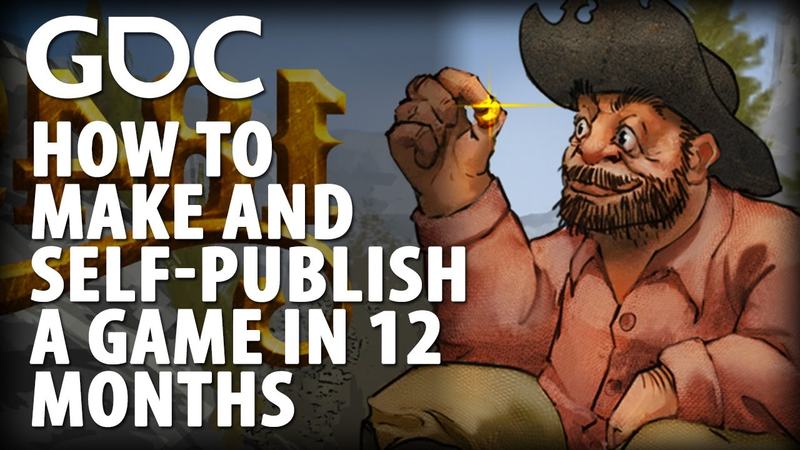
How to Make and Self-Publish a Game in 12 Months
Achieving a successful game launch within a twelve-month window requires a disciplined approach to project management, characterized by rigorous scheduling and the willingness to excise non-essential features to preserve core development timelines.
- Achieve a 12-month development cycle by strictly prioritizing core features and cutting non-essential elements to maintain the project schedule.
- Mitigate technical and financial risks by utilizing familiar technology stacks and vetting contractors exclusively through established professional networks.
- Maintain high-quality art production with limited internal resources by outsourcing tasks to trusted former colleagues.


State of the Game Industry 2017
The 2017 State of the Game Industry report provides a comprehensive snapshot of the global development landscape leading into the 31st Game Developers Conference.
- The HTC Vive has overtaken the Oculus Rift as the primary platform for VR/AR development, with 40% of developers planning to support it for their next project.
- Despite 61% of developers not currently working in VR, 75% of the industry views immersive technology as a sustainable long-term business, with AR expected to dominate within 20 years.
- For the first time in the survey's history, developer interest in Android (54%) has surpassed iOS (51%) as a primary mobile target.