
Game Developers Conference
Game Developers Conference (GDC, now the GDC Festival of Gaming) is the professional event for the games industry. It publishes recorded talks and interviews, annual industry survey reports such as the State of the Game Industry, and news articles.
Documents
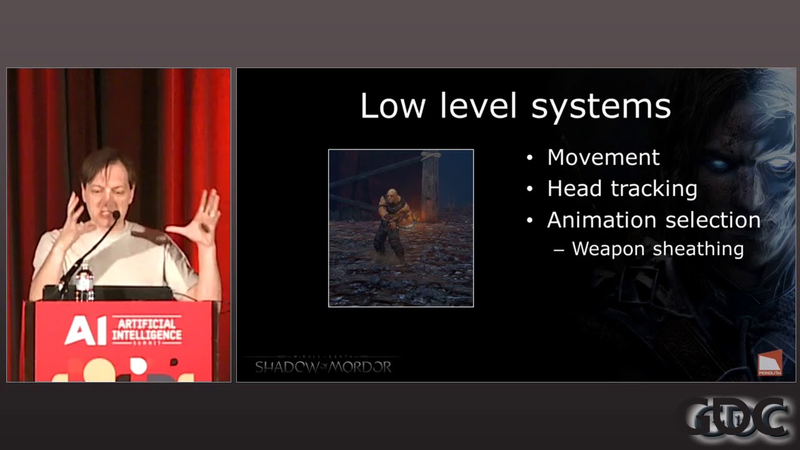
Goal-Oriented Action Planning: Ten Years of AI Programming
Goal-Oriented Action Planning (GOAP) serves as a robust framework for creating reactive, intelligent non-player characters by utilizing A search algorithms to navigate sequences of world-state variables.
- Goal-Oriented Action Planning (GOAP) utilizes A search algorithms to replace rigid, hard-coded scripts with dynamic, state-driven NPC behaviors.
- Performance in complex environments like F.E.A.R., Shadow of Mordor, and Ryse is maintained by focusing computational power on the 20 percent of actions that drive 80 percent of AI behavior.
- Scalability is achieved by offloading low-level tasks, such as animation or weapon equipping, to external systems while using hierarchical blackboards for group-level coordination.
PR & Marketing Lessons Learned from Goat Simulator
The viral success of Goat Simulator demonstrates that indie developers can achieve significant market penetration by abandoning traditional, polished PR strategies in favor of radical honesty and humor.
- Embrace technical flaws and nonsensical gameplay as a unique selling proposition rather than attempting to hide them behind polished, AAA-style marketing.
- Prioritize authentic, humorous community engagement over corporate messaging to build brand loyalty and manage player expectations effectively.
- Focus marketing efforts on creating short, highly shareable visual content like GIFs and screenshots that transcend language barriers and drive organic influencer coverage.
Been There, Done That: Industry Vets Share Experiences and Advice
Professional success in the game development industry requires a strategic balance between technical proficiency, adaptability, and the cultivation of robust interpersonal networks.
- Long-term career sustainability in game development requires setting firm boundaries and declining non-essential tasks to actively prevent burnout.
- Professional success relies on a strategic balance of technical proficiency, adaptability, and the cultivation of robust interpersonal networks.
- Career pivots between disciplines, such as engineering and production, are best managed through proactive shadowing, mentorship, and demonstrating value in the new role.
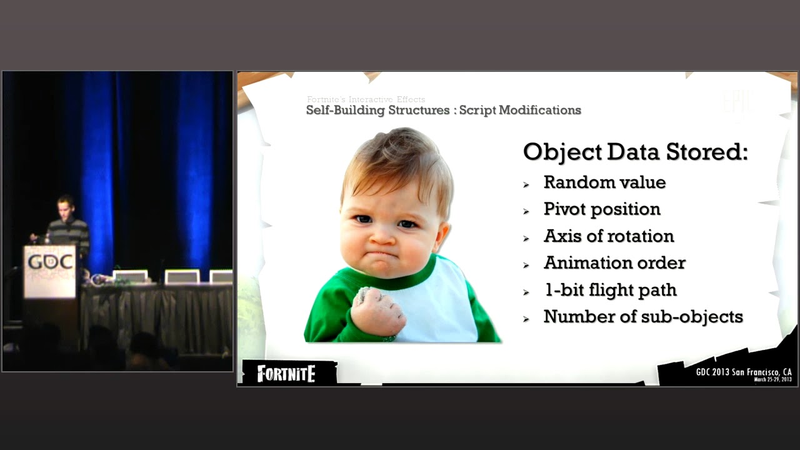
The Inner Workings of Fortnite's Shader-Based Procedural Animations
The development of Fortnite’s procedural animation system relies on vertex shaders to achieve a stylized, responsive aesthetic while maintaining high performance.
- Fortnite achieves high-performance procedural animation by offloading complex movement from the CPU to the GPU using vertex shaders, avoiding the high computational costs of traditional skeletal animation.
- The system uses a custom 3ds Max toolset to embed animation metadata—including flight paths, pivot points, and animation order—directly into the UV channels of static meshes.
- Gameplay code drives procedural movement by feeding real-time variables like impact vectors and health status into the shader, which then manipulates individual mesh components.
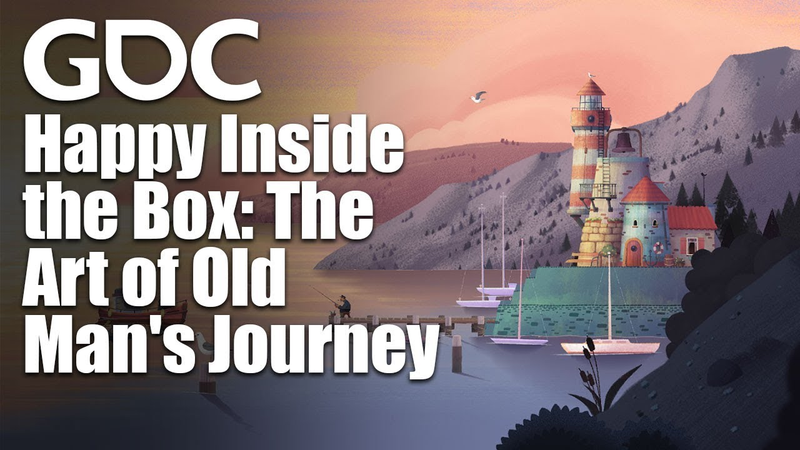
Happy Inside the Box: The Art of Old Man's Journey
The development of Old Man’s Journey demonstrates how strategic creative constraints can foster emotional resonance and technical efficiency in independent game design.
- Broken Rules utilized strategic creative constraints to prioritize non-verbal, narrative-driven gameplay, ensuring the project remained focused on atmospheric storytelling rather than complex mechanics.
- The team achieved a high-fidelity, hand-drawn 2D aesthetic by implementing a dual-shader pipeline that separated opaque sprite cores from transparent outlines.
- To maintain performance across both mobile and 4K platforms, the developers utilized custom Unity shaders and level-specific sprite atlases.
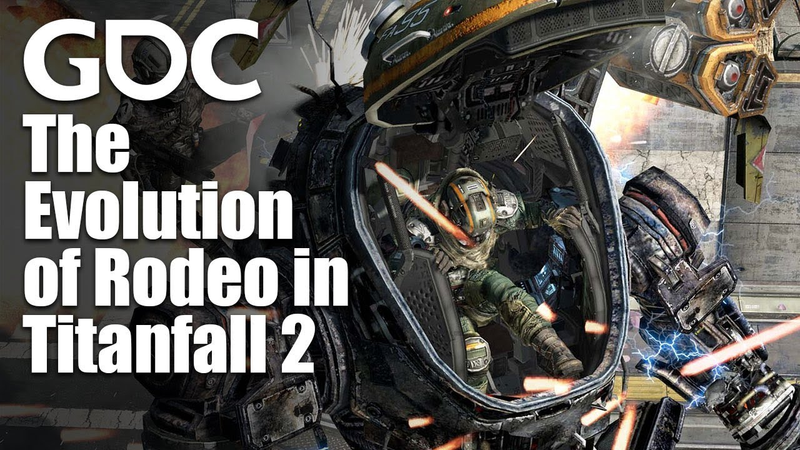
The Evolution of Rodeo in Titanfall 2
The rodeo mechanic in the Titanfall series serves as a critical design bridge between agile pilot movement and armored Titan combat, aiming to capture a cinematic David versus Goliath dynamic.
- The 'rodeo' mechanic in Titanfall 2 was fundamentally redesigned from a long-duration damage-over-time process into a short-duration event centered on stealing and delivering batteries to create a dynamic 'cat-and-mouse' gameplay loop.
- In Titanfall 1, the rodeo sequence lasted 15 to 20 seconds to provide a cinematic experience, but this was shortened in the sequel to prevent the mechanic from feeling like a disconnected minigame.
- The introduction of the 'battery' system in Titanfall 2 allowed for increased team coordination, as pilots could insert stolen batteries into friendly Titans to restore health or shields.
You Suck at Showcasing Your Game
Effective game showcasing at industry events requires a strategic shift from a sales-oriented mindset to one focused on relationship building and long-term brand awareness.
- Industry events should be treated as networking and brand-building opportunities rather than direct sales drivers, as event attendance rarely correlates with immediate revenue spikes.
- Developers should prioritize building long-term relationships with press, influencers, and industry peers to secure secondary benefits like media coverage, localization partnerships, and mentorship.
- Booth design must focus on high-visibility elements, such as vertical height and bold colors, while replacing traditional flyers with business-card-sized materials or social-media-driven interactive activities.
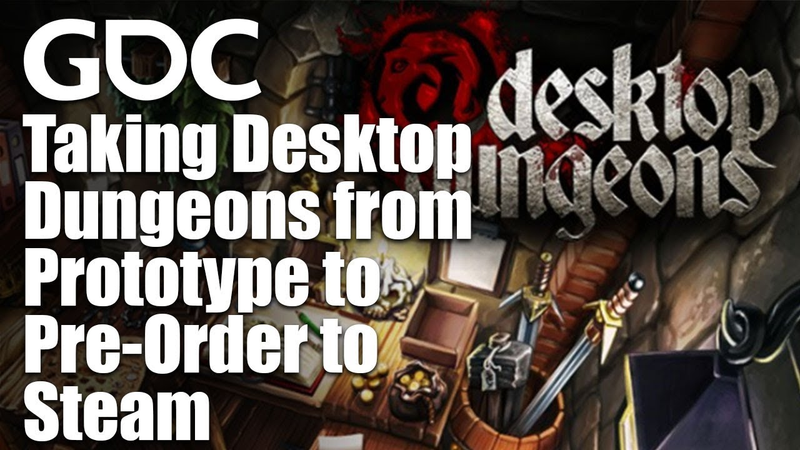
Taking Desktop Dungeons from Prototype to Pre-Order to Steam
The development of the roguelike game Desktop Dungeons serves as a case study for the efficacy of open development, a methodology defined by the continuous release of prototypes to a player community to gather feedback and iterate on design.
- QCF Design utilized open development to identify thousands of bugs and edge-case strategies by releasing continuous, iterative prototypes to a community-based testing network.
- Open development should be conducted through independent channels before transitioning to Steam Early Access to avoid the risks associated with the platform's high user volume during early, unrefined stages.
- The iterative feedback loop serves as a marketing strategy by cultivating a base of 'superfans' who act as organic advocates for press outreach and community management.
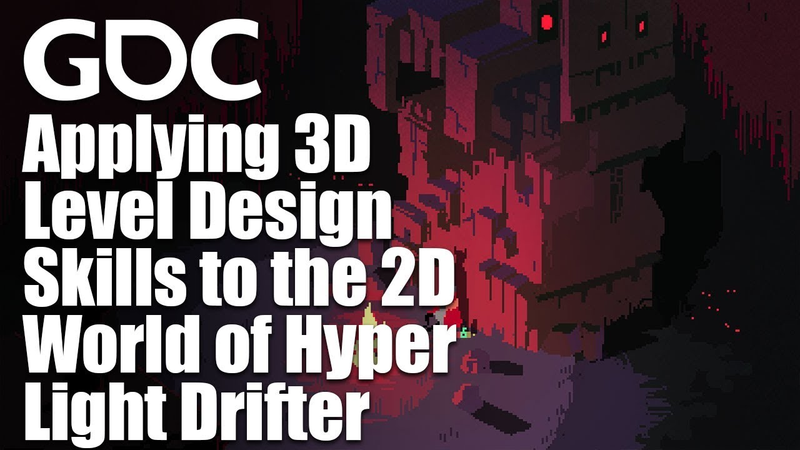
Applying 3D Level Design Skills to the 2D World of Hyper Light Drifter
Core level design principles are fundamentally universal, transcending the technical divide between 3D action titles and 2D environments.
- Level design principles are highly transferable between 3D and 2D; core concepts like 'prospect and refuge'—the contrast between vulnerable open areas and safe, enclosed spaces—remain effective regardless of the game's dimensionality.
- Instead of using a subtractive 'sculpting' method to block out levels, designers can use a metrics-driven approach by establishing fixed distances for movement and combat, then growing the level outward from those connected pieces.
- In 2D overhead games like Hyper Light Drifter, designers can effectively use camera locks to isolate combat encounters, forcing player focus and creating distinct, self-contained pacing beats.
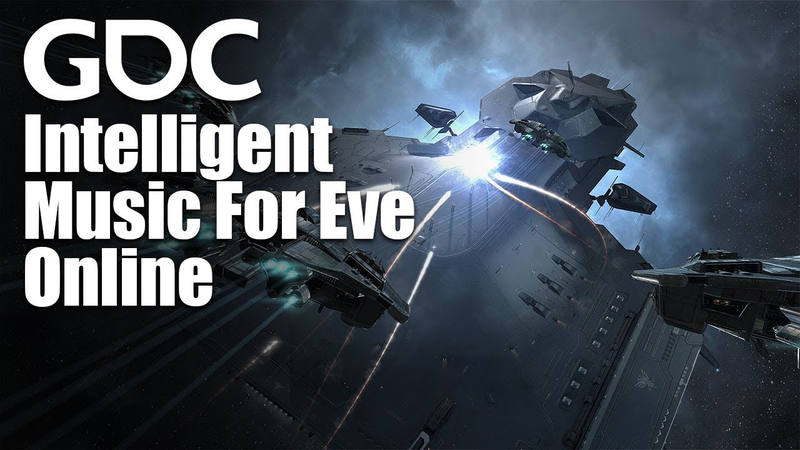
Intelligent Music For Eve Online
The integration of an intelligent, procedural music system into the sandbox environment of EVE Online addresses the inherent limitations of static, pre-composed audio.
- CCP Games integrated the CALMUS AI system, developed by Kjartan Olafsson over 20 years, to generate real-time, non-repeating orchestral music for the vast, 77,000+ solar system environment of EVE Online.
- The CALMUS system utilizes artificial intelligence to compose music based on defined composer frameworks, allowing for the creation of specific textures and styles rather than relying on static, pre-recorded audio files.
- The system operates by comparing new pitch and melody constructions against input cells, using probability distributions and set theory to ensure the generated music adheres to the intended harmonic and rhythmic structure.
A Crash Course in Business and Leadership for Indie Game CEO's and GM's
Financial stability serves as the foundational pillar for independent game studios, where the preservation of capital is the primary determinant of business longevity.
- Financial longevity depends on treating only liquid assets as capital, while ignoring speculative revenue to avoid cash flow gaps.
- Studios should adopt a conservative, late-stage spending mindset from the start of a project to mitigate the risks of contract negotiations that often exceed 90 days.
- Operational processes like pipeline management and post-launch planning must be designed with the same rigor as the game development itself.
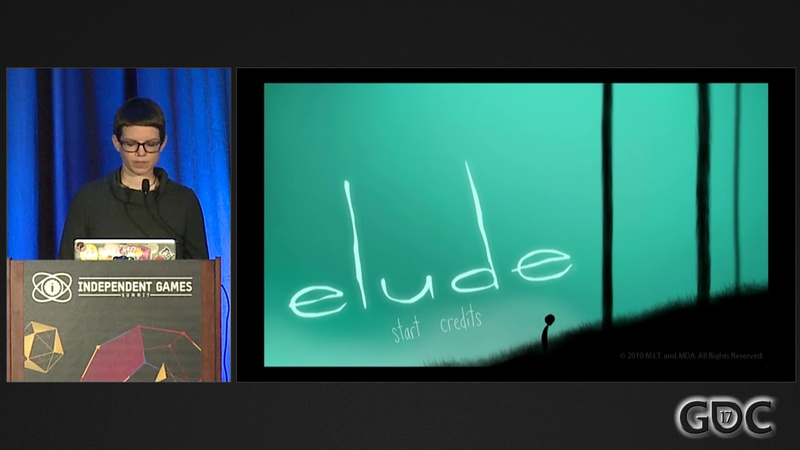
Jocoi: Three Challenges of Designing for Grief
Designing for grief requires a departure from conventional gaming tropes that frequently reduce death to a repetitive failure state or a simple narrative obstacle.
- Designing for grief requires moving away from traditional gaming tropes that treat death as a simple failure state or narrative obstacle.
- The development of Jocoi utilizes metaphorical and symbolic design to represent complex emotional states rather than relying on literal or prescriptive storytelling.
- The core gameplay establishes an intimate bond between a mother and child sheep, which is then abruptly severed to simulate the sudden nature of bereavement.