
Game Developers Conference
Game Developers Conference (GDC, now the GDC Festival of Gaming) is the professional event for the games industry. It publishes recorded talks and interviews, annual industry survey reports such as the State of the Game Industry, and news articles.
Documents
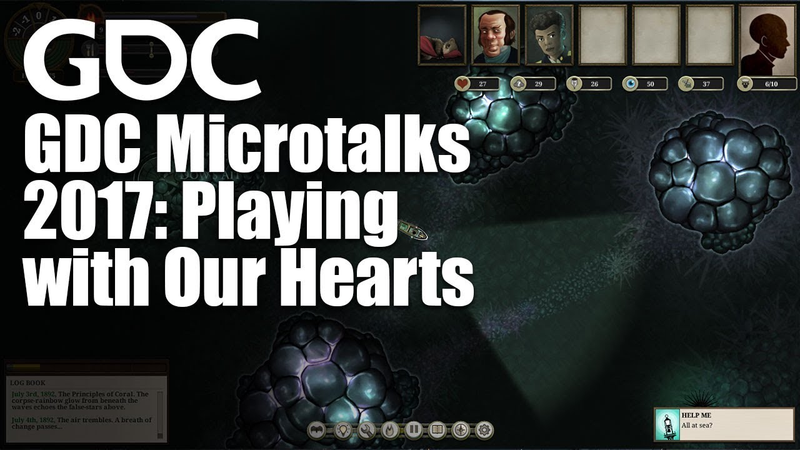
GDC Microtalks 2017: Playing with Our Hearts
Modern game development requires a fundamental shift from profit-driven optimization toward a design philosophy rooted in empathy, human connection, and ethical responsibility.
- Developers should shift from profit-driven, grind-heavy mechanics that commoditize player frustration toward design systems that prioritize empathy, alliance-building, and meaningful social engagement.
- Designers can optimize narrative and mechanical pacing by using 'heartbeat' visualizations to map player excitement, a technique historically utilized in titles like Pac-Man and Resident Evil 4.
- To ensure accessibility and remove developer bias, teams should prioritize low-fidelity prototyping and user flow diagrams during the early stages of production.
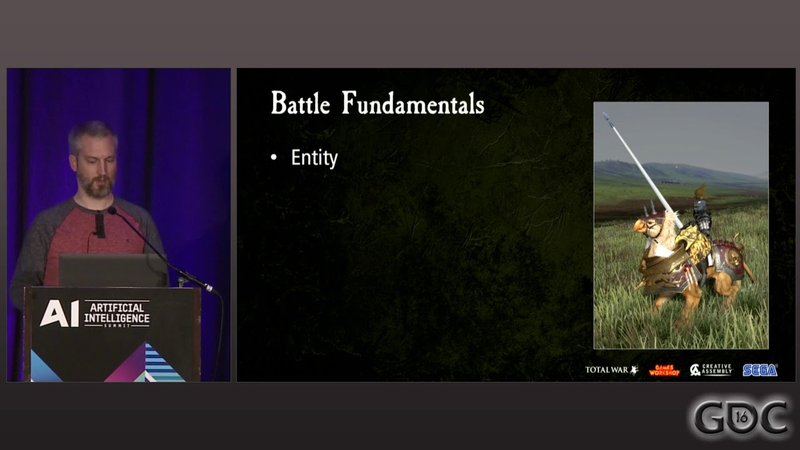
Siege Battle AI in Total War: Warhammer
The siege AI architecture in Total War: Warhammer represents a fundamental shift from the deliberate, multi-phase engagements of previous titles toward a high-intensity, streamlined combat model.
- The siege AI utilizes a hierarchical structure governed by a Grand Tactical Analyzer, replacing traditional finite state machines to enable coordinated, human-like maneuvers during wall assaults and street fighting.
- A flexible bit-field flag system replaces rigid unit classifications, allowing the AI to dynamically assign roles based on functional capabilities like gate-breaking or melee combat.
- The system employs a prefab-based layout architecture that integrates AI hints and settlement perimeters to ensure consistent tactical performance across diverse urban maps.
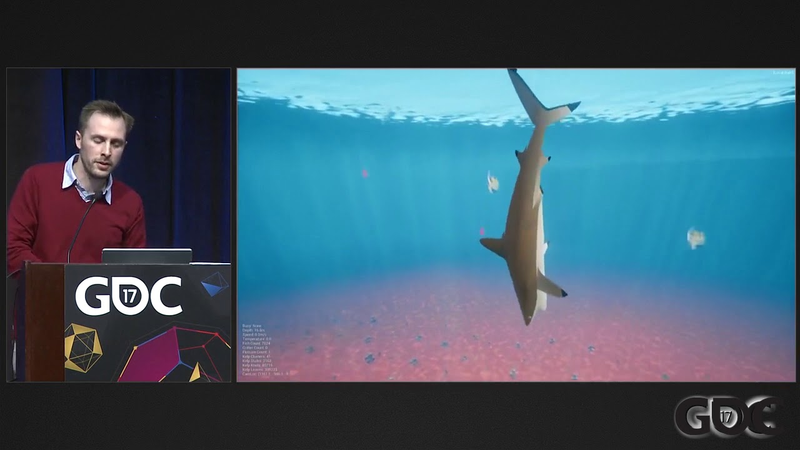
Creating the Art of ABZU
The development of the underwater adventure game Abzu by Giant Squid Studios highlights innovative technical solutions for rendering high-density environments with a small team.
- Giant Squid Studios utilized a custom static mesh instancing system in Unreal Engine 4 to render up to 10,000 interactive fish on-screen simultaneously.
- By replacing traditional skeletal rigging with vertex animation and material shaders, the team bypassed the performance limitations that would have restricted skeletal rigs to only a few dozen entities.
- The development team, consisting of only ten people, completed the project over a three-year cycle by prioritizing efficient, performance-friendly rendering techniques.

Play Your Way to Higher Pay: What Leaders Can Learn from Game Designers
Employee disengagement remains a pervasive challenge in the modern workforce, with data indicating that approximately 70 percent of employees feel disconnected from their roles.
- Approximately 70 percent of employees currently feel disconnected from their roles, highlighting a critical need for new leadership strategies to combat disengagement.
- The ARMS framework—Autonomy, Relatedness, Mastery, and Surprise—provides a structured approach to improving employee well-being and productivity by applying proven game design principles.
- Leaders can foster autonomy and maintain high performance by avoiding micromanagement and using 'rubber banding' to adjust task difficulty, keeping employees in a productive state of flow.
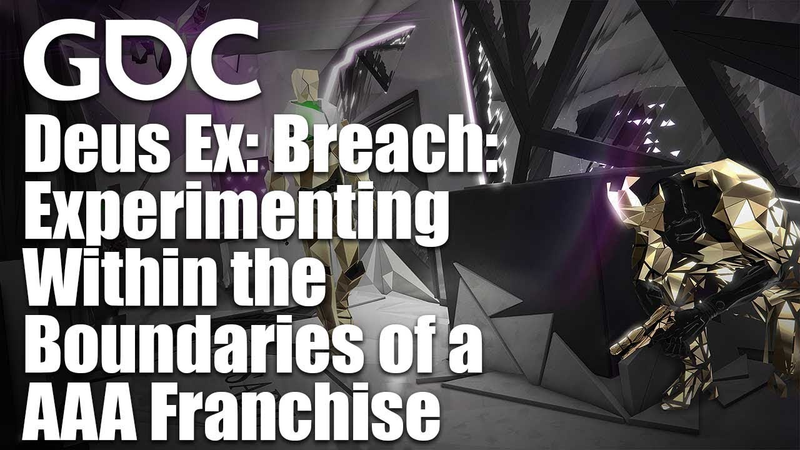
Deus Ex: Breach: Experimenting Within the Boundaries of a AAA Franchise
The development of Deus Ex: Breach represents a strategic effort to expand the scope of a AAA franchise through agile, small-team innovation.
- The Deus Ex: Breach mode was developed by Eidos-Montreal's 'Live Team' to expand the franchise universe and experiment with non-traditional gameplay while the core team focused exclusively on the main Deus Ex: Mankind Divided campaign.
- Approximately 30% of Deus Ex: Mankind Divided players engaged with the Breach game mode, which was designed to teach core mechanics through challenge maps and competitive leaderboards.
- The development team operated with significant autonomy during the first month of the project in 2014, allowing them to iterate quickly and deliver a playable prototype within three months of the initial concept.
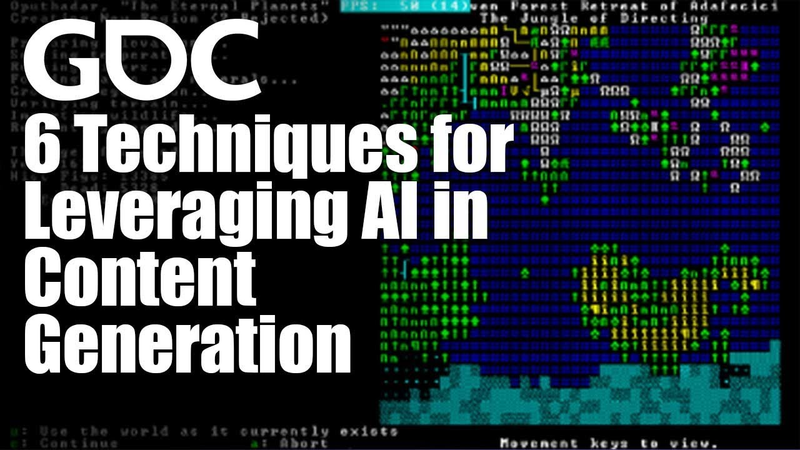
6 Techniques for Leveraging AI in Content Generation
Procedural generation and artificial intelligence serve as powerful tools for scaling game content while deepening narrative immersion.
- Developers should employ a hybrid design approach that balances high-level manual control over critical choke points and map layouts with automated generation for room-specific content.
- To ensure player readability of complex AI systems, designers must prioritize overt behavioral cues and dynamic character evolution to make subtle agent traits interpretable during gameplay.
- Systematizing world objects into shared data structures allows AI agents to reference and propagate information, creating a more cohesive and reactive environment.
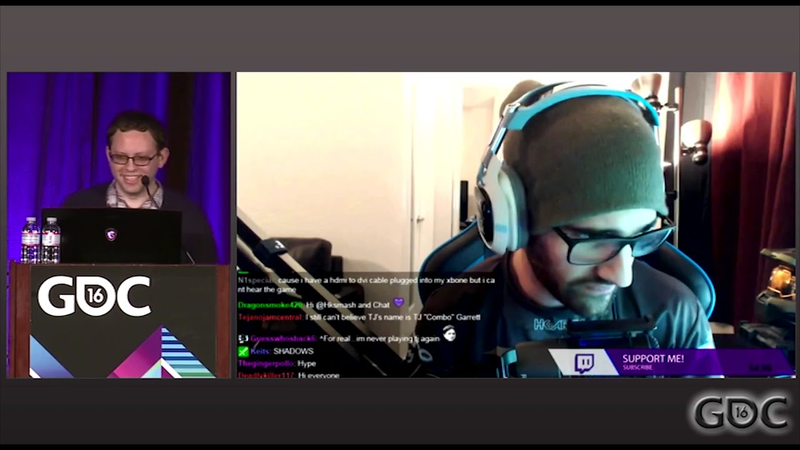
Designing AI for Killer Instinct
Traditional fighting game artificial intelligence often fails to prepare players for competitive environments because it relies on static logic and perfect information, which rarely mirrors the unpredictable nature of human opponents.
- The 'Shadow' system in Killer Instinct uses machine learning to create AI personalities that mimic individual player behaviors, strategies, and even specific playstyles rather than relying on traditional, hard-coded behavior trees.
- Human reaction time is a critical design constraint; data shows the vast majority of players react between 200 and 300 milliseconds, which is slower than many high-level fighting game actions, making 'perfect' AI feel unnatural or unfair.
- The Shadow system proved highly popular with the player base, with more users engaging with the Shadow mode than with traditional online multiplayer modes.
Far Cry 4: Gameplay Team Workflow, Iteration and Philosophy
The development of Far Cry 4 centered on a cross-functional, autonomous team structure designed to prioritize systemic gameplay and player agency over mere visual fidelity.
- The development team utilized a cross-functional, autonomous structure that embedded programmers, animators, designers, and testers into single units to prioritize systemic gameplay and player agency over visual fidelity.
- Development was managed across six global locations by treating remote studios as integrated partners rather than traditional outsourcing vendors, utilizing dedicated co-dev teams to manage communication and ownership boundaries.
- The project employed a rigorous de-risking strategy that evaluated the return on investment for every mechanic, resulting in the elimination of features that lacked depth or introduced excessive technical debt.

How (and When) to Not Give up on Your Game
The primary objective of this strategy is to sustain independent game development by leveraging platform-specific funding to iteratively build, refine, and release games.
- Developers can sustain independent projects by securing upfront funding from niche or hardware-focused platforms, typically ranging from $20,000 to $30,000 per deal.
- This iterative development model allows studios to retain 100% ownership of their intellectual property while using platform-specific revenue to fund ongoing polish and bug fixes.
- The strategy relies on treating a game as a living project, porting a high-quality core prototype across multiple platforms to build expertise and capital before a wider commercial launch.

John Carmack on The Issues and Rewards of Bleeding Edge Engine Development
The evolution of computing power has brought graphical fidelity to the threshold of cinematic realism, shifting the industry’s primary challenge from rendering to the advancement of complex physics simulations and artificial intelligence.
- The primary challenge in game development has shifted from graphical rendering to the implementation of complex physics simulations and artificial intelligence.
- Studios are trapped in a 'mainframe-like' cycle where ballooning team sizes and legacy production pipelines stifle innovation and agility.
- To combat rising development costs and multi-year project inefficiencies, studios must prioritize strategic asset reuse, standardized workflows, and smaller, iterative releases.
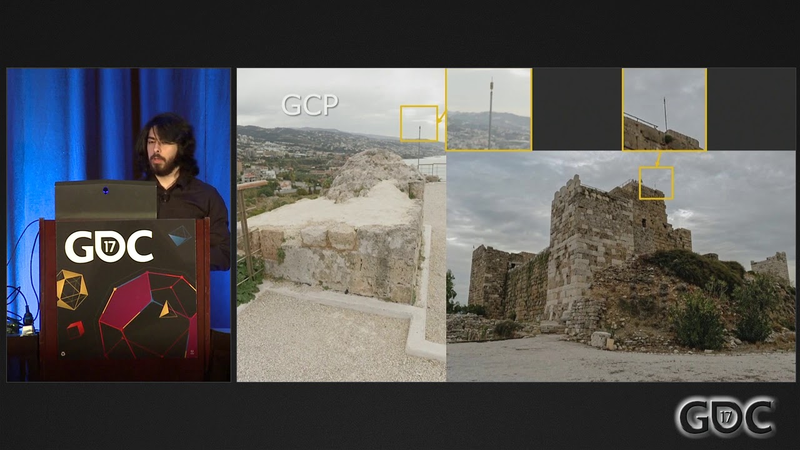
Porting a Real Life Castle into Your Game When You're Broke
This presentation outlines a cost-effective methodology for indie developers to perform high-quality 3D photogrammetry of large-scale historical structures, such as castles, without significant capital investment.
- Large-scale photogrammetry of historical structures can be achieved using consumer-grade hardware like standard DSLRs or high-end smartphones instead of professional-grade equipment.
- To minimize errors from shifting light or environmental obstacles, complex structures should be broken down into manageable individual components rather than captured in a single continuous loop.
- Ground control points are essential for accurately aligning disparate sections of a model, especially when aerial drone access is unavailable.
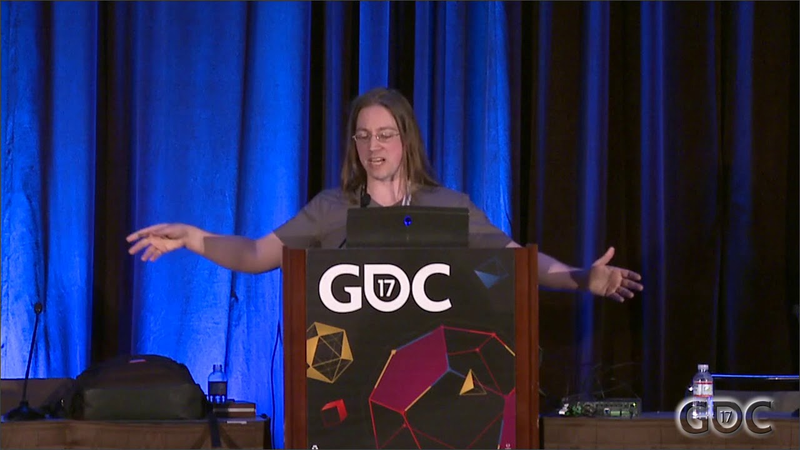
So, You Want to Be a Game Professor?
Transitioning from the game industry to higher education requires a nuanced understanding of the distinct structural and cultural demands of academia.
- Securing a permanent, tenure-track position in academia typically requires an advanced graduate degree, as formal accreditation standards often discourage institutions from hiring based on industry experience alone.
- Academic roles are defined by a tripartite mandate that requires balancing classroom instruction with the production of peer-reviewed research, grant acquisition, and institutional administrative service.
- Industry professionals looking to transition should build a portfolio of thought leadership through conference presentations, creative exhibitions, and collaborations on university-led research initiatives.