
Decentraland
Blockchain-based virtual world where users own land and build and monetise experiences and games.
Connections
Each row is a game or company named alongside Decentraland, each column a document, oldest first. A mark means that document names it. Select a row to see those documents.
Documents
No published documents yet
Reports about Decentraland
17 documents by other writers name Decentraland in the title or summary.
Super League Enterprise Q3 2023 Form 10-Q
Super League Enterprise (Nasdaq: SLE, formerly Super League Gaming) reports third-quarter and nine-month 2023 results for the period ended September 30, 2023, showing a company growing revenue and narrowing losses while facing substantial doubt about its ability to continue as a going concern.
- Super League Enterprise reported a net loss of $17.1 million for the first nine months of 2023, a significant improvement from the $69.2 million loss recorded during the same period in 2022.
- The company experienced strong top-line growth in Q3 2023, achieving a 60% increase in revenue compared to the prior year quarter and a 42% increase sequentially.
- As of September 30, 2023, the company held $1.1 million in cash and cash equivalents, down from $2.5 million at the end of 2022, and continues to operate under a going concern assumption.
Super League Enterprise Form 10-Q: Q2 2023
Super League Gaming's Q2 2023 quarterly filing, covering the period ended June 30, 2023, shows a U.S. publisher and creator of games and experiences on Roblox, Minecraft, Fortnite, Sandbox and Decentraland operating under substantial going-concern doubt.
- Management has identified conditions that raise substantial doubt about the company's ability to continue as a going concern, necessitating future capital raises through equity or debt financing.
- Net loss for Q2 2023 was $6.8 million ($0.17 per share), an improvement from the $8.7 million ($0.24 per share) loss reported in the same period of 2022.
- Total operating expenses for Q2 2023 decreased to $10.3 million from $10.6 million in the prior year, with non-GAAP operating expenses (excluding stock compensation and amortization) falling by 28%.
The Great Reset: Your 2023 Guide to Web3 Games
The web3 gaming industry is undergoing a significant transformation, dubbed "The Great Reset," shifting its focus from unsustainable "play-to-earn" (P2E) models to developing fun, sustainable, and scalable games.
- The play-to-earn (P2E) model has collapsed, evidenced by a 99% decline in unique trades and a 77% drop in trading volume for virtual land NFTs since early 2022.
- Despite the market downturn, web3 gaming investment remained resilient in 2022, with approximately $3.7 billion raised, slightly surpassing the $3.6 billion total from 2021.
- The majority of the estimated 24,000 web3 guilds are likely to fail due to decimated treasuries and unsustainable business models, forcing survivors to pivot away from traditional guild structures.

Legless
The document, "Legless," published on October 14, 2022, critiques the current state and future prospects of the metaverse, particularly Meta's "Horizon Worlds," and its potential negative impact on the broader virtual reality (VR) industry.
- Meta’s Horizon Worlds is facing internal pressure to increase employee usage, with leadership demanding staff spend more time in the platform to address low engagement levels.
- Meta announced the upcoming addition of legs to avatars in Horizon Worlds, a feature that relies on inferred positioning rather than actual tracking of user limbs.
- Decentraland, a prominent web3 metaverse platform, reported low daily active user counts, with data suggesting figures as low as 38, though the company disputes this, claiming over 8,000 daily users.
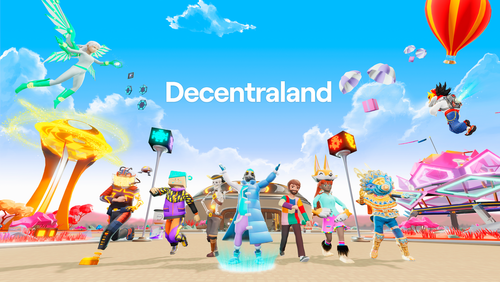
Decentraland: The Open-Source & Decentralized Ghost Town
Decentraland, a blockchain-based virtual world launched in 2017, aimed to create a decentralized, open-source metaverse utilizing MANA for currency and NFTs for land ownership.
- Decentraland’s LAND is a weak economic asset because the ability to teleport instantly between locations negates the value of physical proximity, leaving parcel contiguity as the only significant driver of land utility.
- The Decentraland DAO is highly centralized in practice, as a small number of 'whale' token holders possess enough voting power to exert disproportionate control over the allocation of community funds.
- Engagement in Decentraland is minimal and dominated by gambling, with approximately 72% of users in top-trending experiences concentrated in 'ICE Poker' as of October 2022.


2022 Blockchain Gaming Report: New Frontiers And The Path Forward
Blockchain gaming in Q3 2022 remains far from mass adoption, and the central thesis of this Naavik and CoinMarketCap analysis is that the sector is leaving a failed first era of play-to-earn for a fun-first, Free-to-Own model.
- The blockchain gaming sector shifted from speculative 'Play-to-Earn' models toward 'Free-to-Own' and 'Play-and-Own' frameworks that prioritize gameplay over yield-focused mechanics.
- Market valuations for major projects dropped by over 90% in 2022, while NFT transaction volumes fell 30% to $500 million despite unique active wallets stabilizing at approximately one million.
- Investment activity transitioned toward seed-stage game studios and user-friendly wallets, resulting in a 2.6x increase in the number of funding deals even as total deal value declined 19% year-over-year to $875 million in Q3.
Bad Romance: The AppLovin/Unity Merger
AppLovin's roughly $18 billion unsolicited bid for Unity, made in August 2022 shortly after Unity agreed to merge with ad rival IronSource, is unlikely to succeed. Four reasons are given.
- The $18 billion AppLovin bid for Unity is unlikely to succeed due to a $150 million termination fee tied to Unity's existing IronSource merger and a strategic mismatch with Unity's pivot toward non-gaming sectors.
- Hardware manufacturers including Corsair and Turtle Beach have reported year-over-year revenue declines of 40% or more, reflecting a significant post-pandemic market cooling.
- AppLovin’s merger attempt is characterized as a defensive move driven by the company's high debt-to-capital ratio and slowing growth within the consolidating mobile advertising landscape.
June 2022: Monthly Market Update
Blockchain gaming in June 2022 was sharply bifurcated: unsustainable, play-to-earn-driven games continued to deteriorate during the crypto bear market, while teams building the next generation of fun-first, better-designed games had not yet launched.
- Blockchain gaming is experiencing a significant market downturn, characterized by declining unique active wallets (UAW), volatile NFT transaction volumes, and a slowdown in fundraising as unsustainable play-to-earn models deteriorate.
- Top blockchain games, including Alien Worlds and Splinterlands, saw substantial player churn in June, with Splinterlands experiencing a sharp decline in active wallets following major reward structure changes.
- Casual and puzzle games are emerging as a resilient sub-sector, with Solitaire Blitz debuting in the top five and other titles like Arc8 and Gameta maintaining steady engagement despite broader market weakness.
July 2022: Monthly Market Update
Blockchain gaming in July 2022 was in a consolidation phase: no industry-changing releases or NFT hype, but early signs of recovery as Bitcoin and Ethereum rebounded and fallout from the Luna crash faded.
- Total web3 gaming funding reached $291 million in July 2022, marking a 21% increase over June despite broader market volatility.
- Secondary NFT transaction volumes remained stagnant, continuing a downward trend that has returned to levels seen one year prior.
- Unique Active Wallets (UAW) for top blockchain games remained relatively flat in July, with casual titles like Solitaire Blitz showing significant growth while Arc8 saw a 35% decline in UAW.
Land Value Tax in Online Games and Virtual Worlds: A How-To Guide
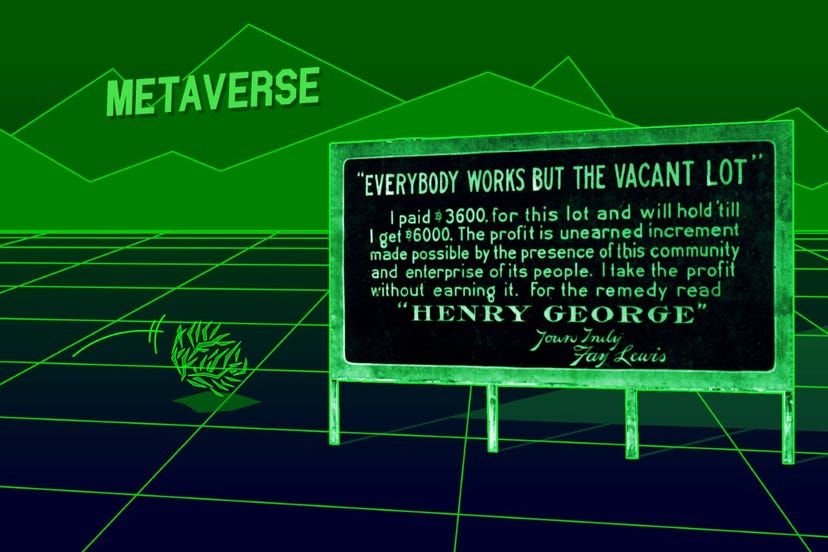
Lars Doucet and Dan Cook argue that virtual worlds containing land-like assets, including Ultima Online, Star Wars Galaxies, Final Fantasy XIV, and metaverse platforms, predictably suffer land crises.
- Land Value Tax (LVT) mitigates speculation by increasing the cost of holding scarce virtual assets, forcing land into the hands of players who will put it to its highest and best use.
- To calculate LVT, developers must distinguish between the value of 'improvements' (player-added value) and 'land' (inherent value), using the equation Total Market Value = Improvements Value + Land Value.
- Short-term leases with Vickrey auctions are the recommended implementation method for new games due to their simplicity and effectiveness in price discovery.

Gaming DAOs: A New Way of Coordinating Gaming Communities
Decentralized autonomous organizations represent an underappreciated web3 force in gaming, with the potential to redistribute ownership across entire communities rather than only between players and creators.
- Gaming DAOs redistribute ownership of game ecosystems among players, creators, and investors, moving beyond traditional corporate structures by utilizing tokenomics to align incentives and shared fandom.
- Gaming guilds, such as Yield Guild Games (YGG), have become highly financialized, operating as investment clubs that accumulate and lend digital assets to generate yield for their members.
- Incubators and accelerators like Game7 are emerging to support the web3 gaming ecosystem through grants, education, and strategic initiatives, often backed by major industry players like BitDAO and Solana Ventures.
The Sandbox: Where Digital Land and UGC Collide
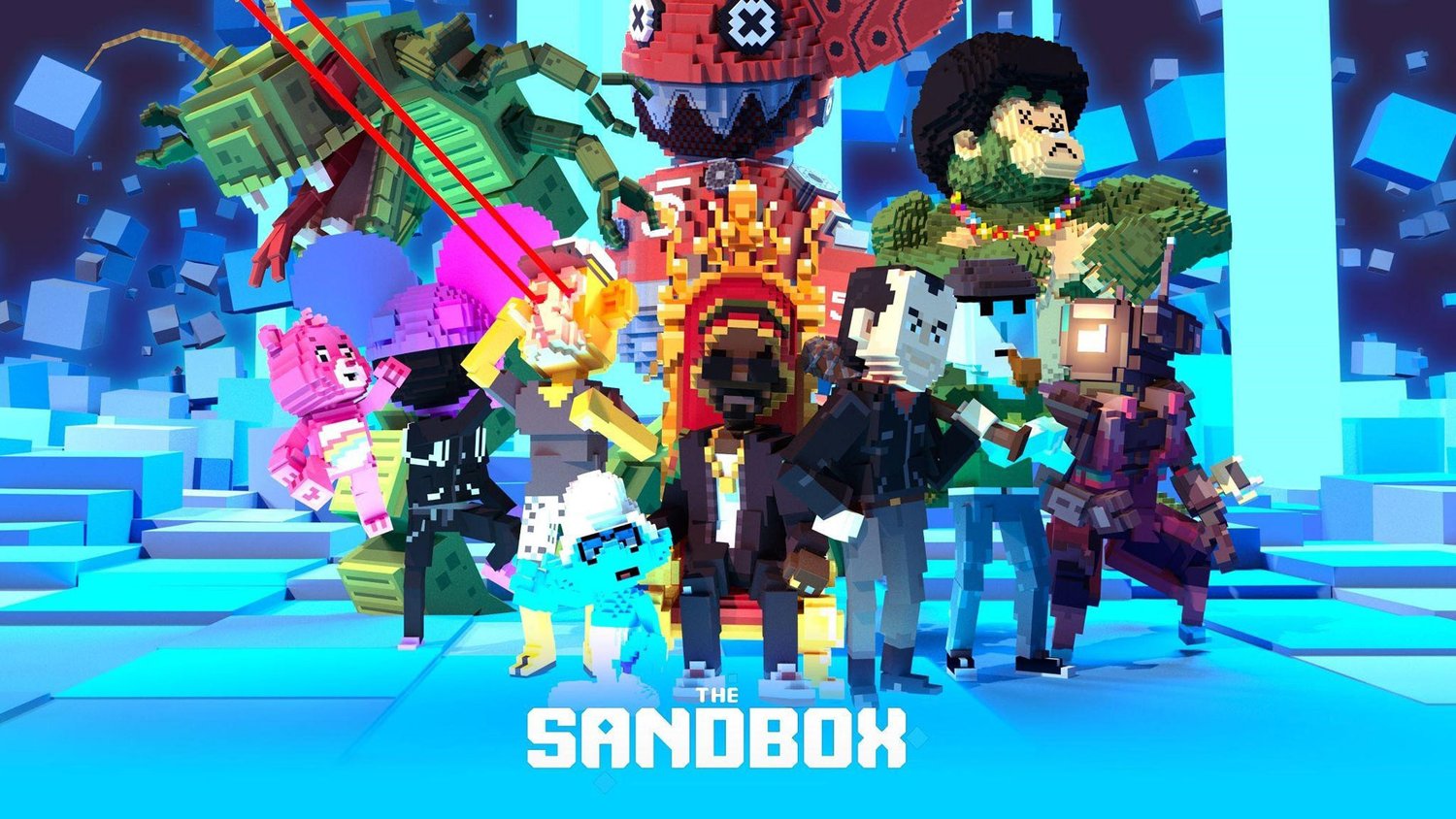
Blockchain-based virtual real estate has become a prominent investment theme in early 2022, with nearly a quarter of early-December NFT sales tied to digital land.
- The Sandbox is currently valued at a fully diluted market cap of $13.8 billion, despite having only 30,000 monthly active users (MAUs) and approximately 15,000 users playing more than one hour per day.
- The platform's valuation-to-MAU ratio is significantly higher than industry peers, sitting nearly 20 times higher than Decentraland and over 400 times higher than Rec Room.
- The Sandbox lags behind competitors in content density, with a capital-to-experience ratio of $24,017 per user-generated experience, compared to $36 per experience for Roblox.