Country & Regional Reports·Updated Apr 30, 2026 by Riot Games
Report · January 1, 2022
Published by Riot Games
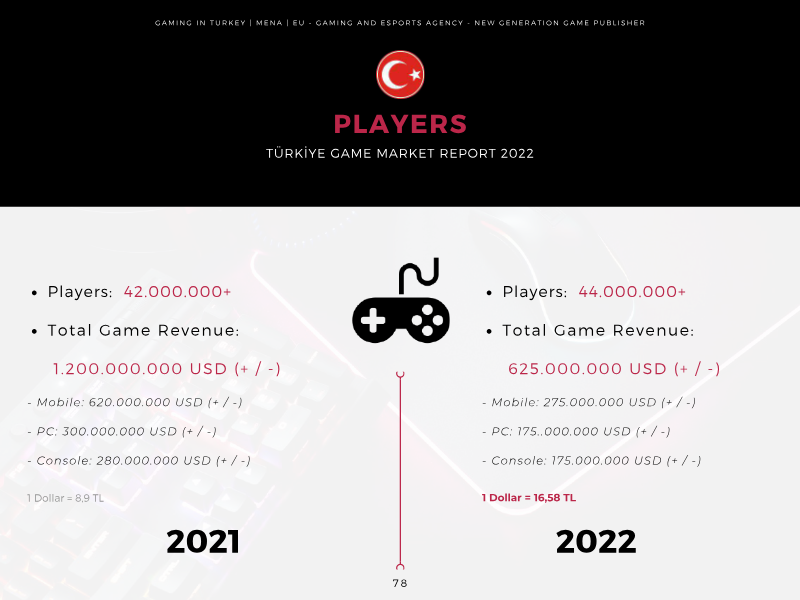
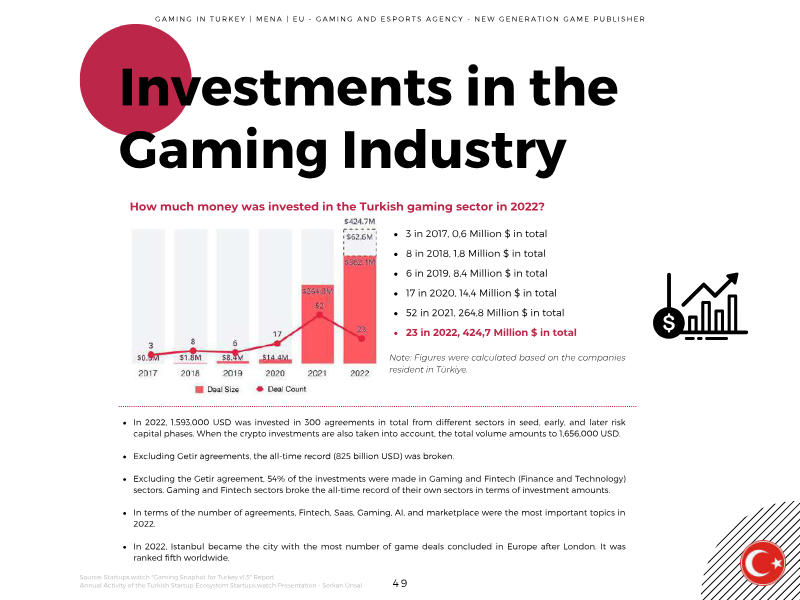
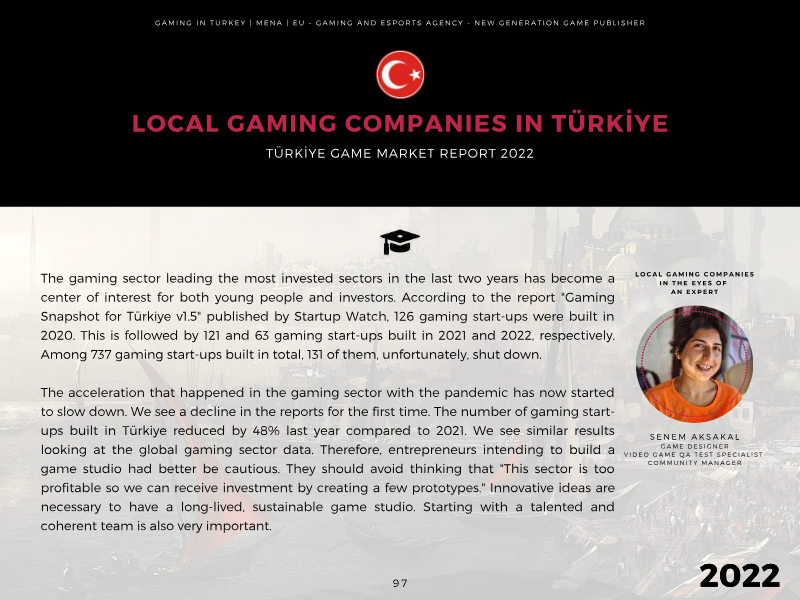
The 2022 Turkish gaming market represents a landscape of significant resilience and structural transition. Despite facing substantial economic headwinds, including currency depreciation and a contraction in total revenue to $625 million, the industry solidified its position as a major global hub for mobile development and esports. The primary thesis of the market’s evolution is a strategic pivot away from the rapid, volume-based "gold rush" of hyper-casual gaming toward sustainable, high-quality production, intellectual property creation, and diversification into PC, console, and hybrid-casual projects. The sector’s maturity is evidenced by record-breaking investment activity, with over $424 million raised across 23 deals, positioning Istanbul as a top-tier global city for gaming capital. This financial influx supports a robust ecosystem of nearly 6,000 publishers and a growing network of entrepreneurship centers and academic programs. While the number of new startups declined by 48% compared to the previous year, the remaining entities are increasingly focused on long-term viability through technological integration, including AI and gamification, as well as a professionalized esports infrastructure that saw the Turkish Esports Federation gain official status. Geographically and demographically, the market remains highly engaged, with 44 million players and a notable shift toward high-income consumer segments. While traditional physical venues like internet cafes have contracted due to rising operational costs, the digital infrastructure remains strong, supported by widespread social media penetration and a sophisticated network of payment institutions. Moving forward, the industry’s trajectory is defined by a need for better alignment between academic curricula and commercial requirements, alongside a continued focus on global expansion and the development of specialized talent to maintain Türkiye’s competitive edge in the international gaming arena.
We are deeply saddened by the Kahramanmaraş earthquakes on February 6, 2023, that caused terrible destruction in 11 provinces of our country. We wish God's mercy on those who lost their lives in these terrible earthquakes and we convey our condolences to their families and relatives. We hope that these wounds we have received as a country will be healed as soon as possible. GET WELL TÜRKİYE
Report Contents Sponsors 6 Partners 7 Prologue 8-10 2022 Türkiye Overview 11-12 Estimated 2022 Media and Advertising Investments in Türkiye 13-15 The Most Used Social Media Platforms in Turkey 16-18 Important Considerations About the Internet Use in Türkiye 19-20 Preferred Brands in Türkiye MARKET 21 Turkish Mobile Player Habits 22-29 World of Android Games and Applications in Türkiye 30-31 Why is Localization Essential for Turkish Players? 32-33 Music is an Indispensable Part of Gaming 34-36 Characteristics of Turkish Players 37-39 Beverages Consumed by the Turkish Players During Game 40 Eating Habits of the Turkish Players 41 What’s the Status of Turkish Gaming Market? 42-43 The Most Remarkable Developments in 2022 44-46 Investments in the Gaming Industry 47-52 Investments in the Gaming Industry - Boğaziçi Ventures 53-54 Turkish Esports Federation TESFED 55-57 Riot Games 2022 - 2023 58-59 Gamification in Türkiye - Ercan Altuğ Yılmaz 60-63
Report Contents Current Status of the Gaming Media - Murat Oktay - Burak Akmenek 64-68 Serious Games in Türkiye - Afra Çalık 69-70 PC Games On Rise - Burak Akmenek 71-72 Turkey Game Market 2021 - 2022 Comparison 73-93 Popular Gaming Companies in Türkiye 94-95 Local Gaming Companies in Türkiye - Senem Aksakal Overview 96-118 Popular Twitch Streamers in Türkiye TOP 20 119-120 Popular Youtube Channels in Türkiye TOP 20 121-122 Popular Instagram Influencers in Türkiye TOP 20 123-124 Active Payment Institutions 125 Active Electronic Money Institutions 126-127 Associations 2022 REPORT 128 Game Exhibitions 129 GameX 130-131 GIST 132-133 Education in Türkiye - Güven Çatak Overview 134-137 Game Design Bachelor's and Master's Degree Programs in Türkiye 138-141 Gaming Entrepreneurship Centers in Türkiye 142-144 General Evaluation of Education in Türkiye - Senem Aksakal 145-147 Professions in the Gaming Industry 148 Internet Cafes and Details 149-153 Key Esports Teams in Türkiye 154-159
Report Contents Number of Licensed Players and Teams 160 Esports Teams That Make Best Use of Social Media 161-164 On/Off Gaming and Esports Events Organized in Türkiye 165-167 Brands Investing in Esports and Gaming 168 Esports Games 169 Esports Media Channels 170 Top Gaming Sites MARKET 171 Top Online Sales Websites 172 Top Online Gaming Platforms 173 Gaming Magazines 174 Expert Opinions 175-212 ByNoGame 2022 REPORT 213-214 Coca-Cola 215-216 GAMEON 217-218 Gamer Arena 219-220 Polity 221-222 xDrive 223-224 What About Middle East Game Market? 225-226 Source 227 Information Note 228 Gaming in TURKEY | MENA | EU - Gaming and Esports Agency - New Generation Game 229 Publisher
Thank You We acknowledge our sponsors, accompanying and supporting us, in the 2022 version of the Turkish Gaming Sector Reports that we prepare rigorously and interpret data from many published resources for 7 years. (The logos of our sponsor brands are l sted alphabet cally and by sponsorsh p category.) TÜRKIYE Platinum Sponsors E GAME MARKET ByNoGame Coca-Cola GAMEON Türkiye's Biggest Gamer FMCG - Beverages Türkiye's Gamer-Oriented Friendly Shopping Site 2022 REPORT Internet Brand Gold Sponsors Gamer Arena Gensh n Impact Pol ty xDr ve Competitive Open-World Virtual World Professional Gaming Gaming Platform Adventure RPG Chairs
Thank You We thank our partners who have walked with us for years and been with us for their support. TÜRKIYE GAMESCOM ESI GAME CAFE BAZAAR gamescom China Mobile Game Iran Android Mobile Game Türkiye Strategic Partner Publishing Partner Publishing Partner SANALİKA DOT’S Eco XIGNCODE3 In-Game Brand Integration The Environmental Rewards Anti Hacking Strategic Partner Platform Strategic Partner Strategic Partner PLAYABLE FACTORY LIVAD PERISCOPE Playable Ads Livestream Marketing Digital Marketing Strategic Partner Strategic Partner Partner
The 2026 mobile marketing landscape is defined by a fundamental transition from media-centric targeting to creative-driven acquisition, necessitated by tightening privacy constraints and the saturation of traditional advertising channels. Competitive advantage now hinges on the speed of creative iteration and the ability to unify product development, monetization, and distribution. By leveraging early behavioral signals to predict long-term value, industry leaders are successfully aligning short-term performance metrics with sustainable user lifecycle growth. This evolution is supported by a strategic shift toward AI-powered personalization and behavior-driven gamification, as non-gaming applications increasingly adopt the engagement tactics traditionally reserved for the mobile gaming sector. Data from 2025 reveals a period of significant market consolidation, marked by a 16.7% decline in active advertisers alongside a 73.3% surge in creative output per advertiser. Playable ads have emerged as the premier format, consistently yielding the highest attention duration, scroll-stop rates, and conversion metrics. While the AI app sector experienced a sharp 48% contraction in the number of advertisers, top-tier players have responded by aggressively scaling localized marketing efforts. Simultaneously, the finance and health sectors have maintained greater stability, focusing on service-centric, medical-grade solutions and persuasive, value-based messaging to capture mature markets in North America and Europe. Global strategies for 2026 prioritize a balanced media mix, typically favoring video content, while emphasizing hyper-local operations in emerging regions like Southeast Asia and the Middle East. Success in these diverse markets requires intensive user education and culturally nuanced, scenario-based ad updates. As the industry moves toward subscription-based models and on-device AI integration, the focus has shifted from mere technological development to the large-scale monetization of AI-enhanced user experiences. Ultimately, the market is moving toward a future of highly segmented, interactive, and performance-driven advertising that prioritizes technical precision and regulatory compliance to foster long-term user trust.
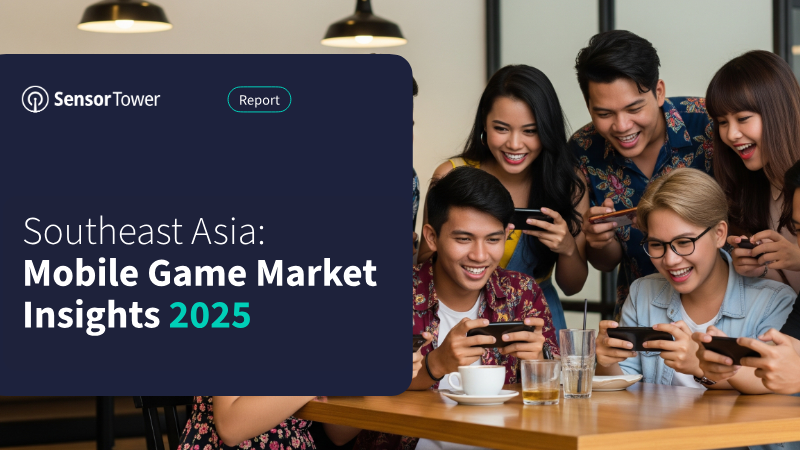
Southeast Asia solidified its position as the world’s second-largest mobile gaming market by downloads in early 2025, reaching 1.93 billion installs. While the region currently ranks seventh globally in revenue at $625 million, it demonstrates significant monetization potential fueled by expanding digital payment infrastructure and rising smartphone penetration. Indonesia serves as the primary volume driver with 870 million installs, while Thailand leads the region in consumer spending, generating $162 million. This growth is increasingly supported by publishers based in Singapore and Vietnam, who have emerged as a dominant global force, contributing over 5.8 billion installs to the international market through a mix of hypercasual hits and competitive titles. Market dynamics reveal a shift toward high-engagement genres and localized content strategies. Although casual arcade and simulation games drive the highest download volumes, monetization is concentrated in Strategy, MOBA, and RPG segments. Mobile Legends: Bang Bang remains the regional revenue leader, sustained by hyper-local live operations and community engagement. Simultaneously, the 4X Strategy genre is experiencing rapid expansion, highlighted by a 77.7% revenue surge for titles like Last War: Survival. Conversely, traditional MMORPGs have seen a decline of nearly 20%, making way for Open World Adventure RPGs and sophisticated strategy games that leverage deep social and competitive mechanics. The regional landscape is characterized by distinct national preferences and the global expansion of local firms. Vietnam has become a powerhouse for survival-themed hypercasual games, while Thailand shows a unique affinity for realistic sports simulations. Established titles like Garena Free Fire continue to dominate global charts by blending cultural relevance with nostalgic collaborations. Ultimately, the region’s trajectory is defined by a transition from high-volume downloads to sophisticated monetization, driven by a combination of community-led activations and the strategic global influence of Southeast Asian publishers.
The mobile app industry demonstrated significant resilience throughout 2023, characterized by a global advertising spend of $362 billion and a late-year surge in installations. While the landscape faced challenges such as rising acquisition costs and evolving privacy regulations, the fintech and e-commerce sectors emerged as primary growth engines. Fintech experienced a 42% increase in installs and a 118% surge in in-app revenue, while e-commerce saw a 43% year-over-year rise in installs alongside a 34% increase in revenue. These sectors successfully optimized their acquisition strategies, with banking eCPIs falling from $2.33 to $1.37, allowing marketers to achieve rapid returns on investment within the first week of user acquisition. The gaming sector navigated a more complex trajectory, ending the year with a 2% annual decline in installs despite a notable recovery in the fourth quarter. This rebound was driven by a 7% year-over-year growth in installs and the emergence of the hybrid casual genre. Although overall gaming sessions dipped, specific subverticals like racing and simulation saw dramatic install spikes of 61% and 53%, respectively. Global gaming stickiness remained stable at 20%, and high-engagement genres like RPG and adventure continued to command strong lifetime value, even as broader retention rates across the mobile ecosystem faced downward pressure. Future industry success depends on the strategic integration of artificial intelligence and predictive analytics to enhance personalization and automate complex workflows. To achieve sustained growth in 2024 and beyond, developers must diversify their media mixes by expanding into emerging channels like Connected TV and adopting holistic measurement frameworks. By combining incrementality testing with media mix modeling, stakeholders can better navigate the shift toward privacy-centric marketing while capitalizing on the high-potential returns offered by the global mobile marketplace.
The mobile gaming landscape experienced a notable shift in monetization and user acquisition patterns between 2022 and the first half of 2023. In-app purchase (IAP) activity demonstrated robust growth across both major mobile operating systems, with Android and Apple platforms recording increases of 23% and 24%, respectively. This upward trend in monetization suggests a resilient consumer base despite broader economic fluctuations within the mobile app ecosystem. Geographic distribution of installs remained relatively stable on Android, with India, Brazil, and the United States maintaining their positions as the top three markets. Conversely, the iOS landscape underwent more significant regional changes, as the United Kingdom, Canada, and Germany gained prominence, displacing China and Saudi Arabia from the top five rankings. These shifts highlight the evolving importance of Western markets for iOS-based mobile game developers. Ad network performance also saw a realignment in competitive dominance. On Android, Google Ads ascended to the top position for total installs in the first half of 2023, while Meta entered the top five. On iOS, AppLovin reclaimed the leading position, and Meta secured a top-five spot, reflecting a dynamic advertising environment where major platforms continue to vie for market share. This analysis relies on anonymized data aggregated by Tenjin from January 1, 2022, through June 30, 2023. The findings are restricted to ad networks and countries that achieved a minimum threshold of 25 million installs, ensuring that the reported trends represent significant market activity. By tracking these metrics, the data provides a clear view of the shifting priorities and regional focus areas for mobile publishers navigating the transition toward hybrid monetization models.