Netherlands
Documents
Netherlands Games Monitor 2024
AUTHORS SPECIAL THANKS TO Manuel Kerssemakers (Abbey Christel van Grinsven APPLIED Games) Arjan Terpstra Bowie Derwort (Game Tailors) Laurens Rutten (CoolGames Matthijs Dierckx Michaël Bas (&ranj) & Dutch Games Association) Roger ter Heide (Improvive) Tuur Hendrikx (Sonic Picnic) RESEARCH CHAPTER 1 ...
- The Dutch games industry employed 4,291 people by the end of 2023, a decline of 269 persons compared to 2021, with employment decreasing by 3% per year between 2021 and 2023, though revenue increased by an average annual rate of 10.5% to €763 million.
- The percentage of female workers in the Dutch games industry is rising, reaching 23.2% currently, aligning with broader European and North American industry averages.
- Applied games studios are adopting generative AI faster than entertainment studios, using or testing it for localization, dialogue, training content, and audio, with clients open to custom AI-enabled solutions, while entertainment studios are more hesitant due to potential player backlash.
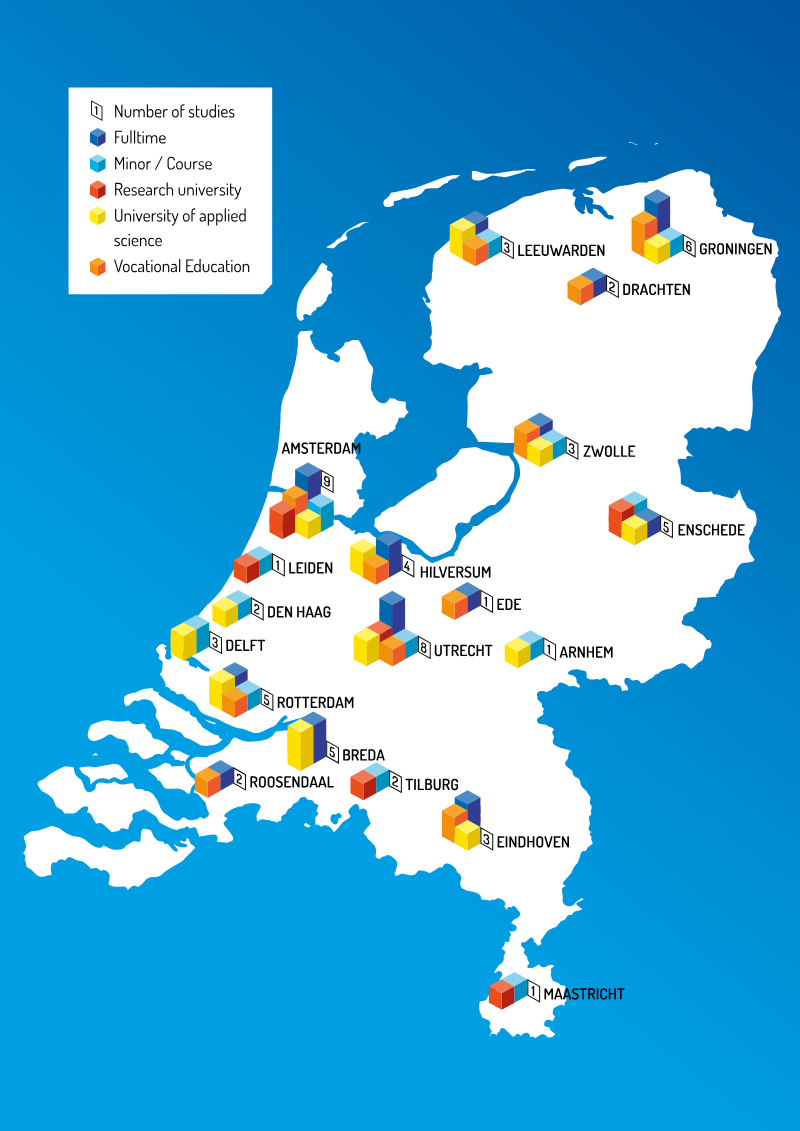
- The Greater Amsterdam urban region remains the primary hub for the Dutch games industry, offering nearly 1,800 jobs by the end of 2023, and notably continued to grow employment between 2021 and 2023 despite an overall industry decline.
- There are 41 game education programs in the Netherlands, similar to 2022, primarily focusing on programming or game art, with a majority of courses having around 40% of students stating they will never use AI for finished assets.
Dutch Games Monitor 2022
TEXT AND ANALYSIS DESIGN All rights reserved NEO Observatory COVER IMAGE This publication is made possible with Walter Manshanden Horizon Forbidden West the support of Province of Utrecht, by Guerrilla Games Gemeente Utrecht, HKU: University of PROOFREADING AND the Arts Utrecht, Breda University of GENERAL SUPPORT SPECIAL THANKS TO Applied Sciences (BUAS), Hanze Marilla Valente ...
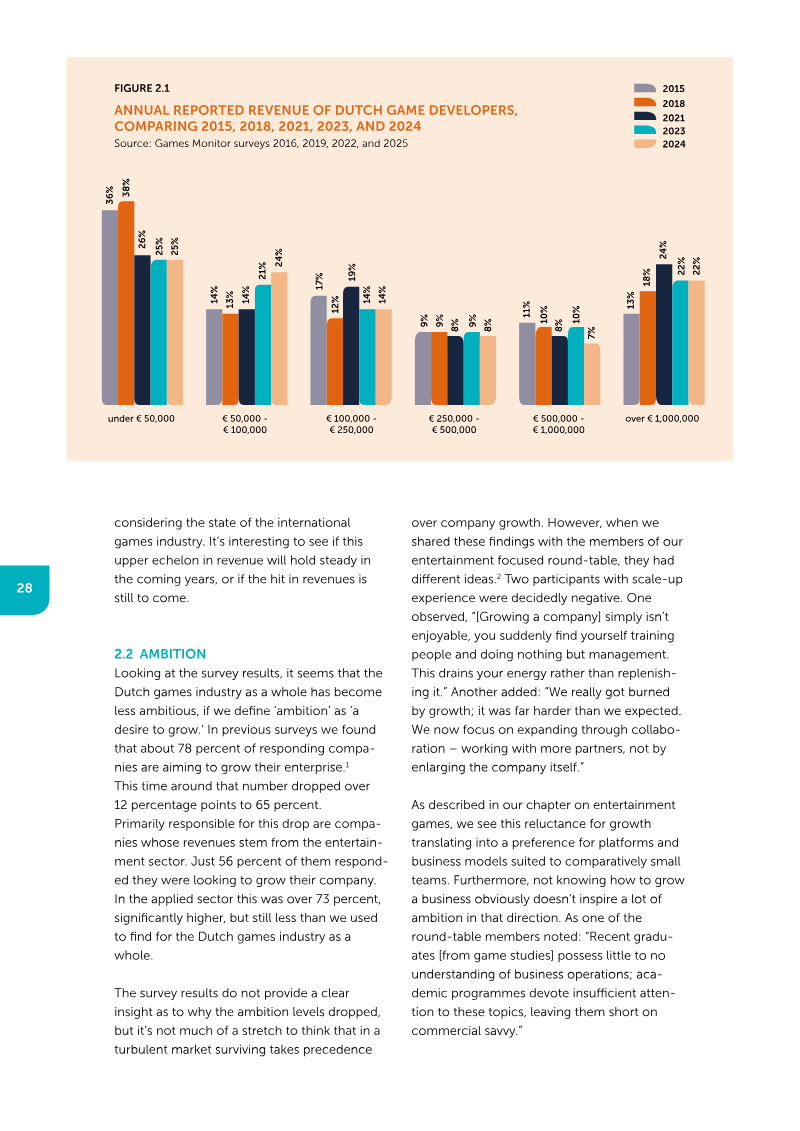
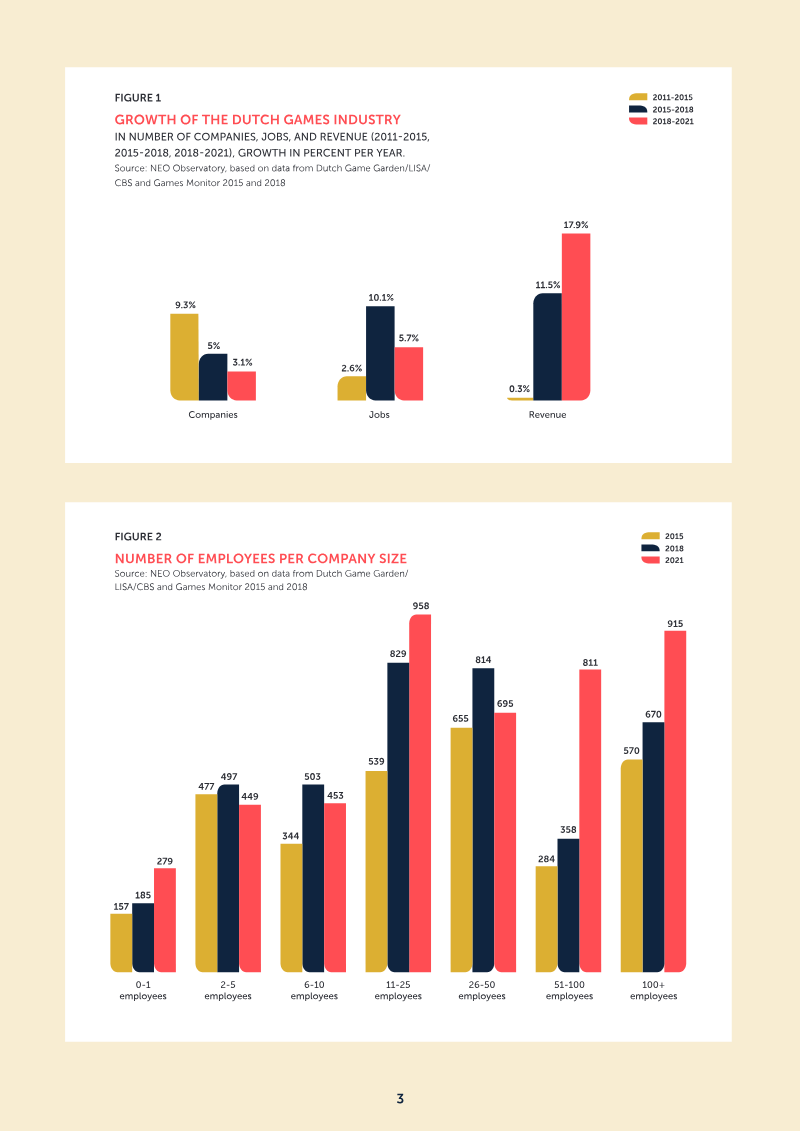
- The Dutch video game industry generated €420-€440 million in revenue in 2021, growing almost 18% annually between 2018 and 2021. The number of companies with over €1 million in revenue increased from 18% in 2018 to 24% in 2021.
- The industry employs 4560 people across 630 companies, with approximately 700 graduates annually. Companies with more than 50 employees doubled from 6 to 12 between 2018 and 2021, indicating significant scaling.
- The Dutch games industry is maturing, with a majority of companies having existed for over 7 years. The largest potential for scaling up is seen in companies with 4 to 12 years of experience.
- Dutch game developers utilize a multi-platform, multi-distribution, and multi-monetization strategy. While Unity remains the most popular game engine, Unreal Engine's usage grew significantly from 8% in 2018 to 25% in 2021.
- Growth is expected across various market segments, with the console/PC market (68% agree/strongly agree) and subscription services showing the most positive outlook. Expectations for the VR market are also more positive than three years ago.
Dutch Games Monitor 2022: Factsheet
The Dutch Games Monitor 2022 provides a comprehensive analysis of the Netherlands' video game industry, covering the period from 2018 to 2021. The primary objective is to evaluate the sector's growth, maturity, and structural evolution. The research methodology incorporates desk research, roundtable discussions, and a survey of approximately 500 companies, yielding nearly 200 responses. The analysis focuses on two distinct domains: entertainment games and applied (serious) games, which serve sectors such as healthcare and education.
The industry demonstrates significant maturation, characterized by a shift from an initial increase in the number of companies to a more recent surge in revenue and employment. By the end of 2021, the sector comprised 630 companies, generating between €420 million and €440 million in annual revenue. This represents an average annual revenue growth of nearly 18%, outpacing global industry averages. Employment also expanded, reaching 4,560 jobs with an annual growth rate exceeding 5%. This job creation is particularly concentrated in larger organizations, with the number of scale-ups employing over 50 people doubling to 12 companies over the three-year period.
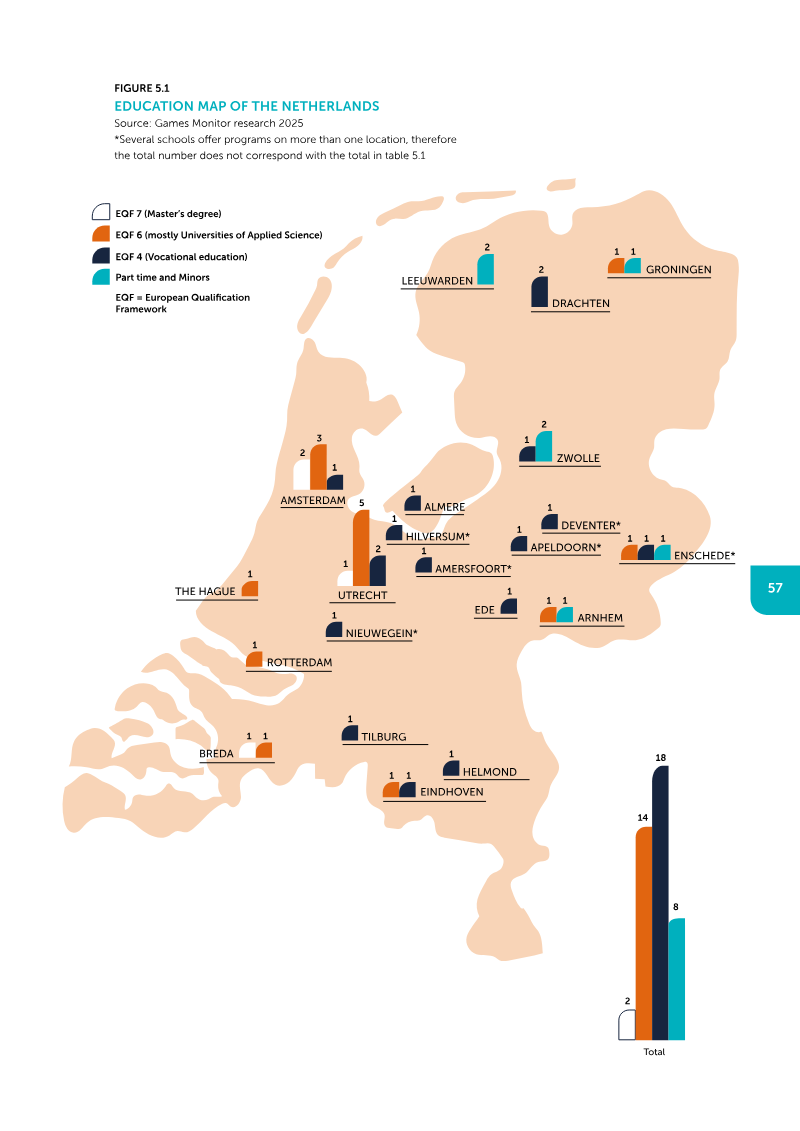
Geographically, the Greater Amsterdam region leads in total employment, while Utrecht maintains the highest concentration of applied game developers. Although the number of dedicated game education programs has slightly decreased, the industry is seeing a rise in diversity, with the percentage of women in the workforce reaching 23% by 2021. Furthermore, the sector is increasingly characterized by international expansion, a rise in external investments, and a growing number of mergers and acquisitions, signaling that the Dutch games industry is successfully transitioning into a more mature and globally competitive market.
- The Dutch games industry generated between €420 million and €440 million in annual revenue by the end of 2021, achieving an average annual growth rate of nearly 18%.
- Total employment in the sector reached 4,560 jobs by 2021, reflecting an annual growth rate of over 5%.
- The industry is scaling up, with the number of companies employing more than 50 people doubling to 12 firms between 2018 and 2021.
- The sector comprised 630 companies by the end of 2021, with the Greater Amsterdam region leading in total employment and Utrecht hosting the highest concentration of applied game developers.
- Workforce diversity has improved, with women accounting for 23% of the industry's employees by 2021.
Games Monitor: The Netherlands 2020 Update – COVID Impact
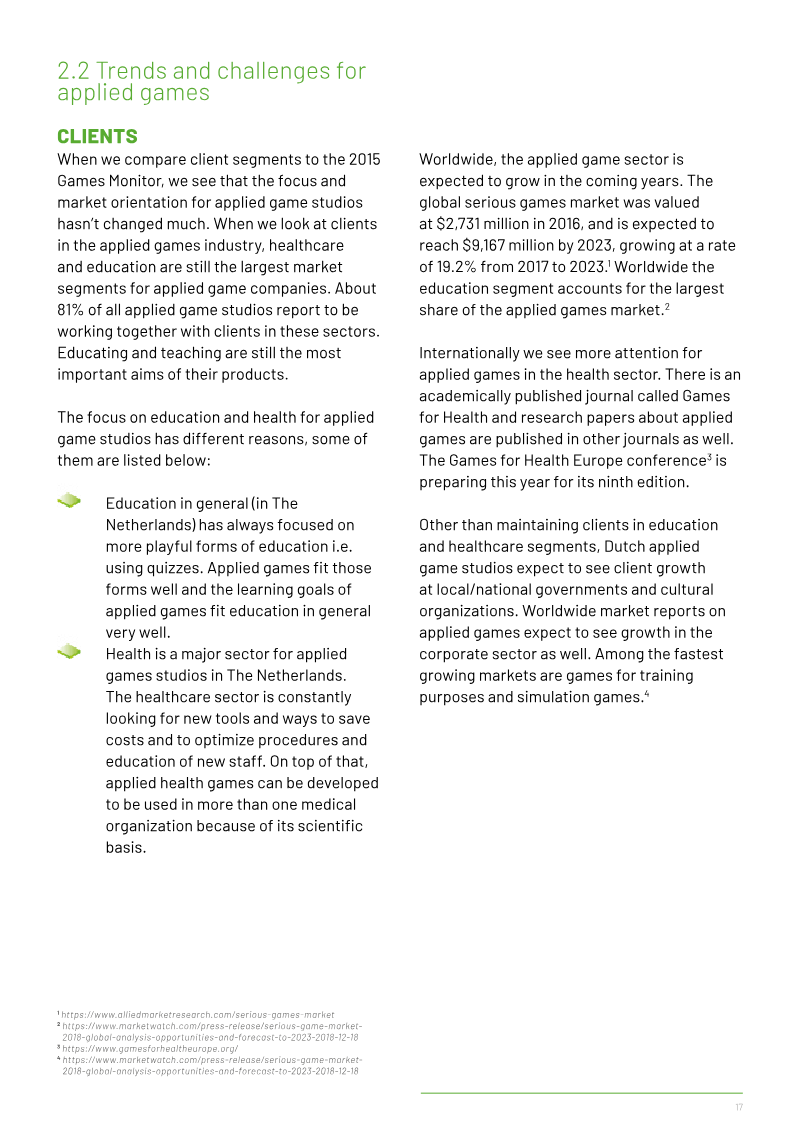
This update provides an analysis of the Dutch video game industry’s performance during 2020, specifically examining the operational and economic impacts of the COVID-19 pandemic. The findings are based on a survey of over 100 industry professionals conducted in late 2020, supplemented by desk research and database updates. The report tracks industry growth, employment trends, and the shift in business dynamics necessitated by global lockdowns.
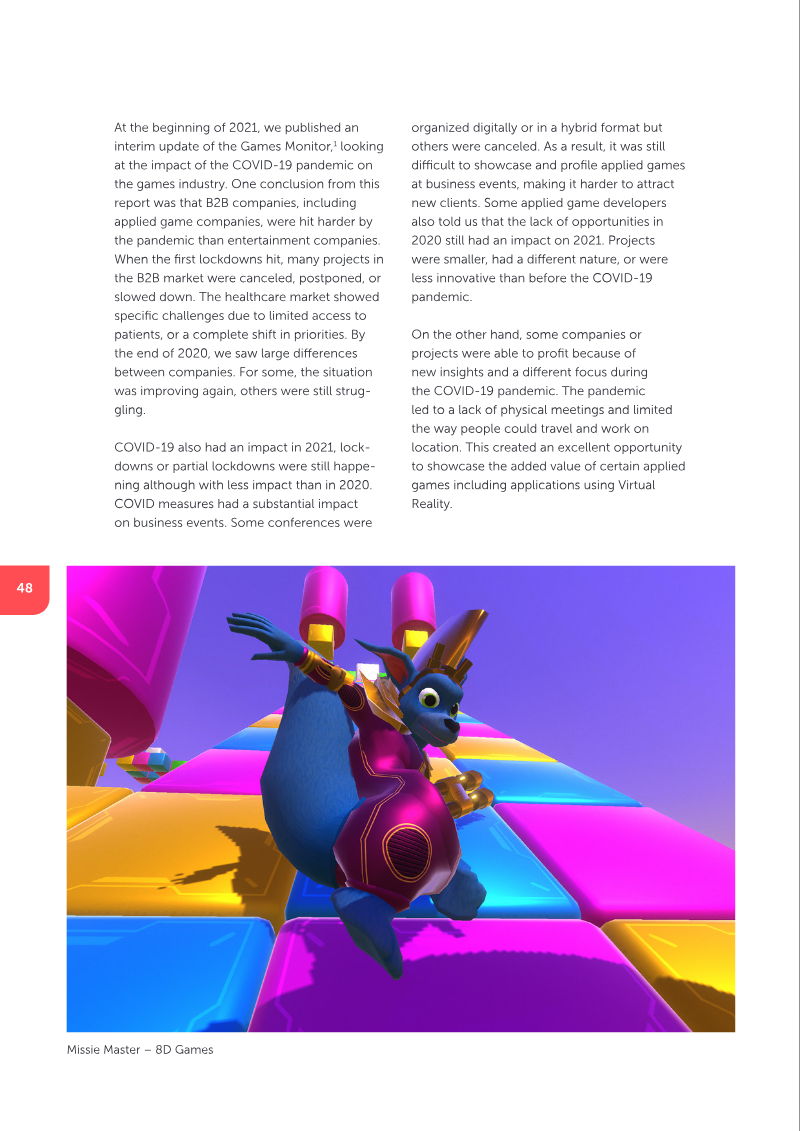
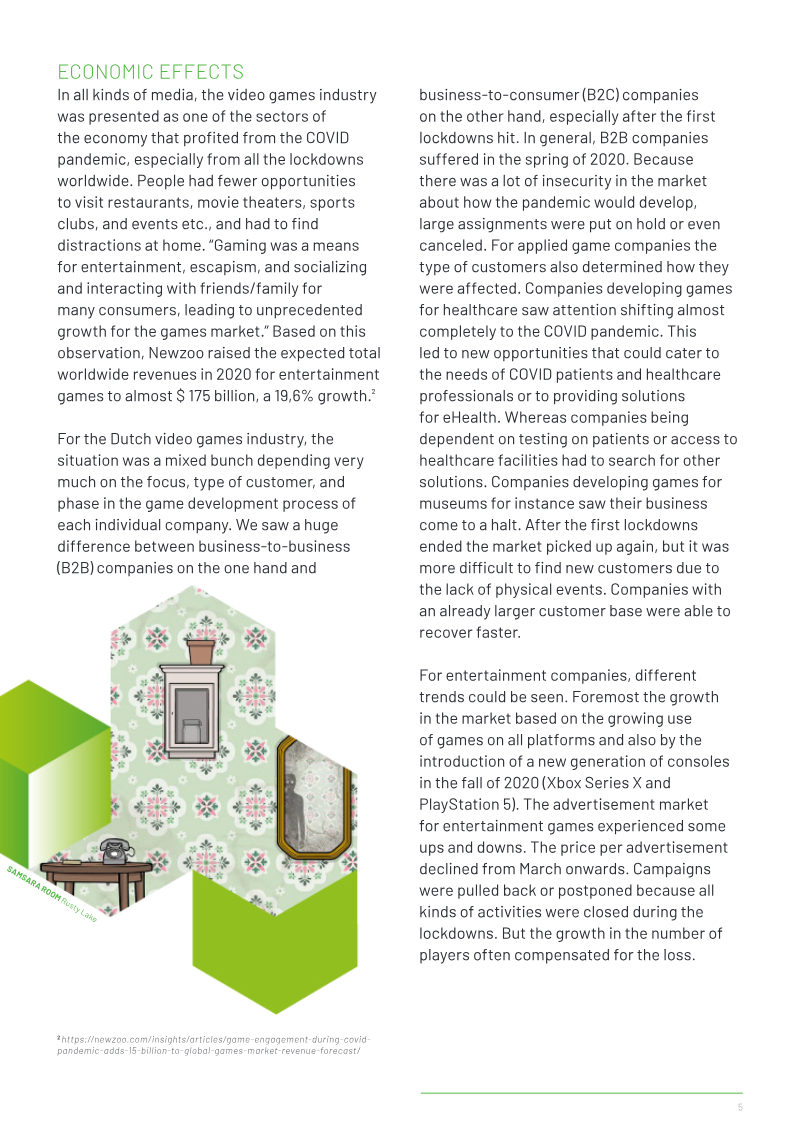
The Dutch games sector demonstrated resilience, growing from 575 companies in 2018 to 615 by the end of 2020, with total employment reaching approximately 4,000 jobs. While the industry largely transitioned to remote work with minimal impact on output quality, the pandemic created a divide between business-to-consumer (B2C) and business-to-business (B2B) entities. B2C entertainment companies generally benefited from increased consumer demand for home-based entertainment. Conversely, B2B and applied game developers faced significant challenges in the spring of 2020 as client projects were paused or canceled, though some firms in the healthcare sector identified new opportunities.
Operational challenges were primarily centered on human resources and networking. While productivity remained stable for most, employee engagement declined due to the loss of informal office culture, and nearly half of respondents reported increased stress levels. The absence of physical industry events hindered the establishment of new business relationships, with one-third of respondents unable to pursue new business opportunities effectively. Despite these hurdles, the industry maintained its growth trajectory, supported by government labor cost subsidies that assisted approximately 85 companies during the initial lockdown phases. Overall, the sector proved adaptable, leveraging digital infrastructure to sustain operations while navigating a volatile market environment.
- The Dutch video game industry grew from 575 companies in 2018 to 615 by the end of 2020, supporting approximately 4,000 total jobs.
- B2C entertainment developers experienced increased consumer demand during the pandemic, while B2B and applied game developers faced project cancellations and delays.
- Operational productivity remained stable despite the transition to remote work, though nearly 50% of industry professionals reported increased stress levels.
- The loss of physical industry events hindered business development, with one-third of surveyed professionals unable to effectively pursue new opportunities.
- Approximately 85 companies in the sector utilized government labor cost subsidies to maintain operations during the initial 2020 lockdown phases.
The Games Monitor 2018
We are honored to present The Games Monitor 2018 edition with the latest facts, figures, trends and developments in the Dutch games industry. The Games Monitor was first published in 2012 and was followed by new research in 2015. Both reports generated a lot of interest into the Dutch games industry’s facts and figures, which is why we are pleased to be able to provide you with an update for 2018.
- The Dutch games industry saw a net job growth of over 60% concentrated in Utrecht, Eindhoven, and Amsterdam between 2015 and 2018.
- The total number of entertainment game companies increased by over 50 since 2015, continuing a previous trend, while the number of applied game developers stabilized at 114 companies.
- Applied games have a strong foothold in the Dutch industry, with healthcare and education remaining the largest market segments for applied game companies, and 62% of studios working on five or more projects in 2018.
- Dutch game companies are most positive about growth for mobile games, consoles/PC, and Augmented Reality (AR), but less so for Virtual Reality (VR) due to expensive hardware and lack of user-friendliness.
- Key challenges for both applied and entertainment game studios include finding enough players/sales, acquiring sufficient funds, and securing suitable personnel, with a noted lack of investors in the Netherlands.
Games Monitor: The Netherlands 2018
The Games Monitor 2018 provides a comprehensive analysis of the Dutch video games industry, tracking its evolution and maturation between 2015 and 2018. The industry is defined by companies whose core activities involve the development, production, publication, or distribution of electronic games, categorized into entertainment and applied (serious) games. The research methodology combined desk research with a survey of 165 companies, supplemented by industry roundtable discussions to validate findings.
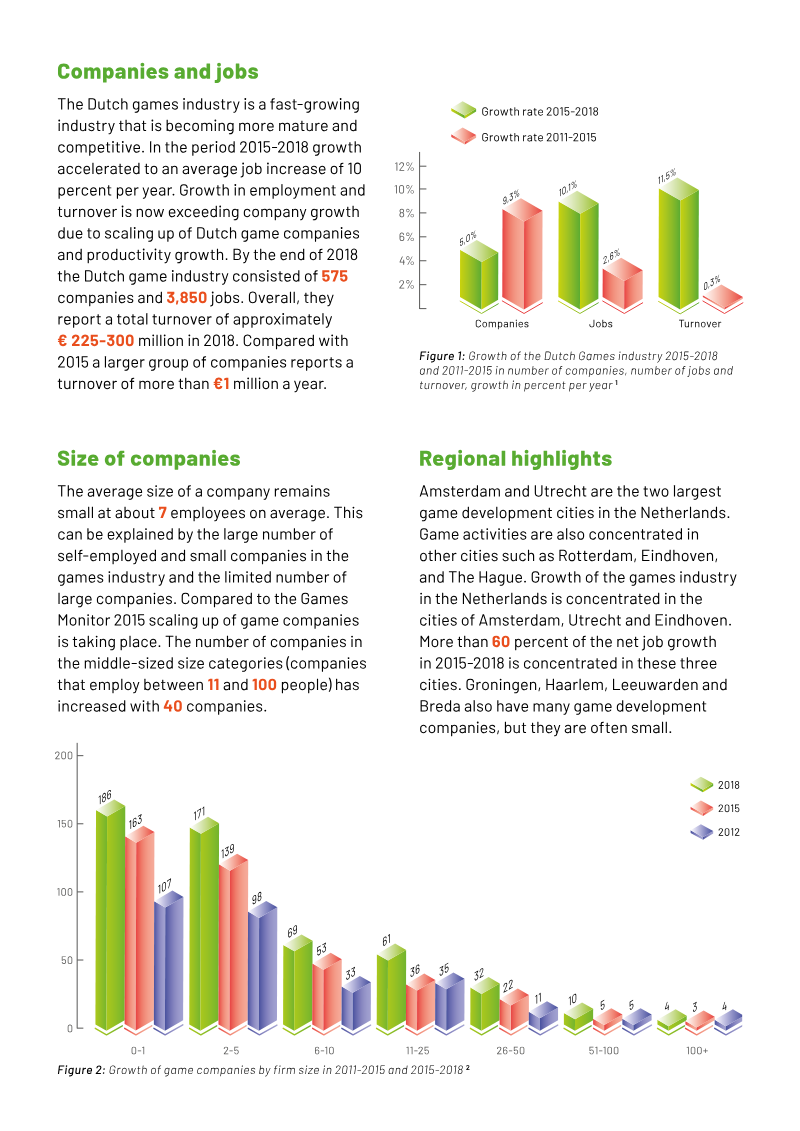
The Dutch games sector experienced accelerated growth during the 2015–2018 period, characterized by an average annual job increase of 10 percent. By the end of 2018, the industry comprised 575 companies and 3,850 jobs, generating an estimated annual turnover of €225–300 million. While the average company size remains small at approximately seven employees, there is a clear trend toward scaling up, evidenced by a significant increase in mid-sized firms employing between 11 and 100 people. Geographically, the industry is concentrated in major urban centers, with Amsterdam, Utrecht, and Eindhoven accounting for over 60 percent of net job growth.
Market dynamics show a strong expansion in entertainment game development, which grew by 33 percent, while the applied games sector—primarily serving healthcare, education, and government—has stabilized. Business models in the entertainment sector rely heavily on premium monetization and in-app advertising, whereas applied studios frequently utilize work-for-hire models. The educational landscape remains robust, with 44 game-related study programs producing over 900 graduates annually. Overall, the industry is transitioning toward a more mature, competitive state, marked by increased productivity, strategic acquisitions, and international expansion.
- The Dutch games industry reached 575 companies and 3,850 jobs by the end of 2018, generating an estimated annual turnover of €225–300 million.
- The sector experienced accelerated growth between 2015 and 2018, maintaining an average annual job increase of 10 percent.
- Entertainment game development expanded by 33 percent, while the applied games sector, serving healthcare, education, and government, stabilized.
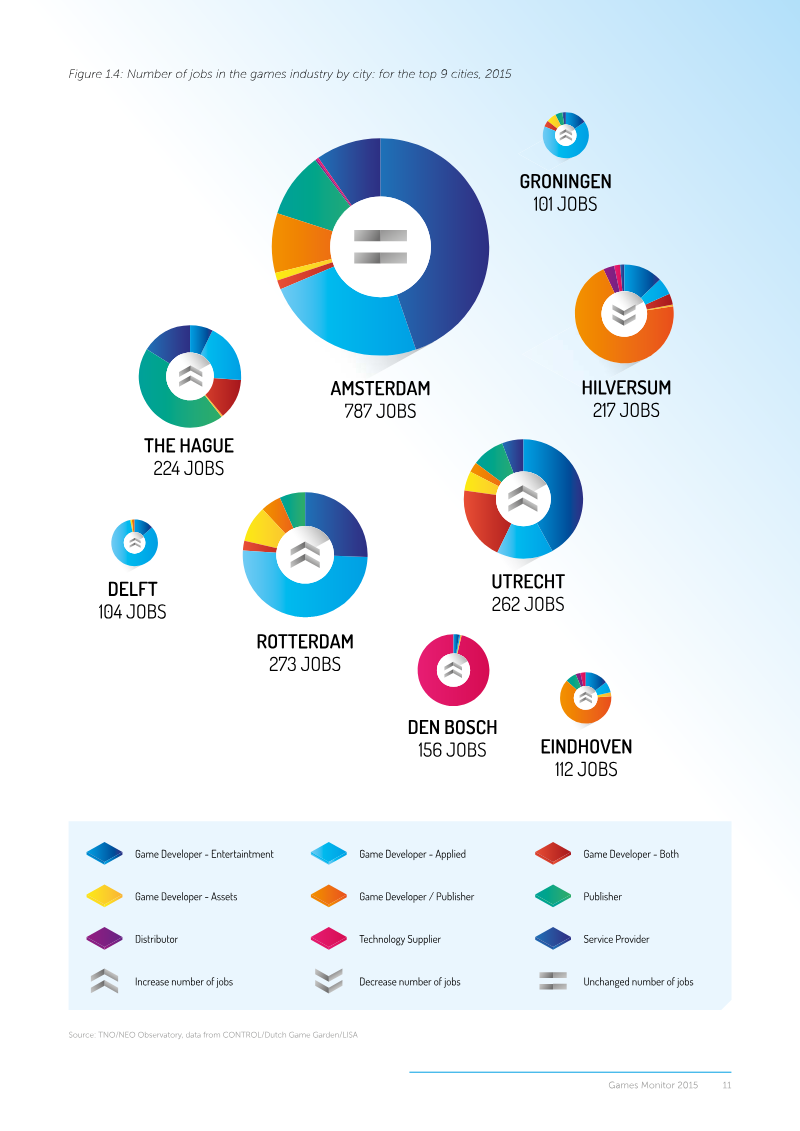
- Industry growth is highly centralized, with Amsterdam, Utrecht, and Eindhoven accounting for over 60 percent of net job gains.
- While the average firm size remains small at seven employees, there is a clear trend toward scaling, with a notable increase in mid-sized companies employing 11 to 100 people.
Dutch Games Monitor: The Netherlands 2015
In 2012 the first edition of the Dutch Games Monitor was presented. Whilst maybe not the first research focusing on the Dutch games industry, it was the first where an extensive survey and a series of interviews provided a broad insight into the state of the industry. In the past few years interest in games and data about the games industry has increased. Many people were interested in an updated version of the Games Monitor .
- The Dutch games industry saw its number of professionals grow from 2730 in 2011 to 3030 in 2015, an annual job growth of 2.6%, which is above the national average of -0.4% for the same period.
- Over half of Dutch game companies are less than 5 years old, and the average company size is 7 employees, indicating a young industry dominated by small studios.
- Access to funding, availability of qualified staff, and sales are the top three challenges for Dutch game companies, with over 40% reporting issues in obtaining funds.
- Applied games are a significant domain, with expected growth in healthcare and education. However, 42% of applied game companies' turnover is fully realized domestically, while 58% have international clients.
- The mobile market is dominated by Free to Play games, the PC marketplace by mid-sized games, and the console market by high-production-value games. Forty-four percent of respondents developed for the PC platform Steam in 2015, but its popularity makes success increasingly difficult.
Dutch Games Monitor: Main Facts & Figures 2015
The Dutch games industry experienced significant expansion between 2011 and 2015, characterized by a 42% increase in the number of companies, which grew from 320 to 455. This growth was primarily driven by a surge in new, small-scale game development studios. Despite this rise in firm count, the industry remains dominated by micro-enterprises with an average of seven employees. While the total workforce expanded from 2,730 to 3,030 professionals, the rate of job creation was slower than the rate of company formation, reflecting the challenges start-ups face in scaling operations and achieving long-term sustainability.
The industry is bifurcated into entertainment and applied games, with the latter maintaining a particularly strong foothold in the Netherlands compared to other European nations. Applied game studios, which focus on training, education, and health, faced significant market volatility between 2013 and 2014, though demand for these services rebounded sharply by 2015. To mitigate risks associated with the hit-driven nature of the entertainment market and the project-based cycles of applied games, many studios are shifting toward product-based models and forming strategic alliances for marketing and funding.
Data for this analysis was gathered through a questionnaire sent to over 400 companies, with 130 responses, supplemented by industry roundtable discussions and existing databases. Financial performance remains modest, with most companies reporting annual profits under €100,000. While the number of game-related educational programs has increased by 25%, a persistent skills gap remains, as studios struggle to find employees with the necessary entrepreneurial and business acumen. Ultimately, while the Dutch ecosystem shows robust growth, the industry continues to grapple with the difficulty of transitioning from small start-ups to larger, commercially stable entities.
- The Dutch games industry grew by 42% between 2011 and 2015, increasing from 320 to 455 companies, though the sector remains dominated by micro-enterprises with an average of only seven employees.
- Total industry employment grew from 2,730 to 3,030 professionals, a slower rate of expansion than company formation, highlighting the difficulty studios face in scaling operations.
- Financial performance across the industry is modest, with the majority of companies reporting annual profits of less than €100,000.
- The Netherlands maintains a strong market position in applied games for training, education, and health, a sector that rebounded sharply in 2015 following volatility between 2013 and 2014.
- Studios are increasingly shifting from project-based cycles toward product-based business models and strategic alliances to mitigate the risks of the hit-driven entertainment market.
Gamesmonitor '12: Gamesindustrie Onderzocht
Sinds entertainment games ook de smartphones en tablets hebben ver - overd dankzij hits als Wordfeud en Angry Birds, staat de gamesindustrie volop in de schijnwerpers. Met deze casual games is het spelen van com - puterspelletjes doorgedrongen tot het grote publiek en tot elk moment van de dag. Een laagdrempelig, onderhoudend tijdverdrijf, waarmee mensen zich op een speelse manier kunnen meten met tegenstrevers.
- Amsterdam remains the leading city for the games industry in the Netherlands, with nearly 800 jobs in 2011, followed by Hilversum (over 500 jobs) and Utrecht (270 jobs).
- The traditional computer games industry, dominated by US and Japanese platforms like Sony, Nintendo, and Microsoft, is seeing limited growth (2% annually for console gaming) and a shrinking market for PC games, due to the rise of casual games.
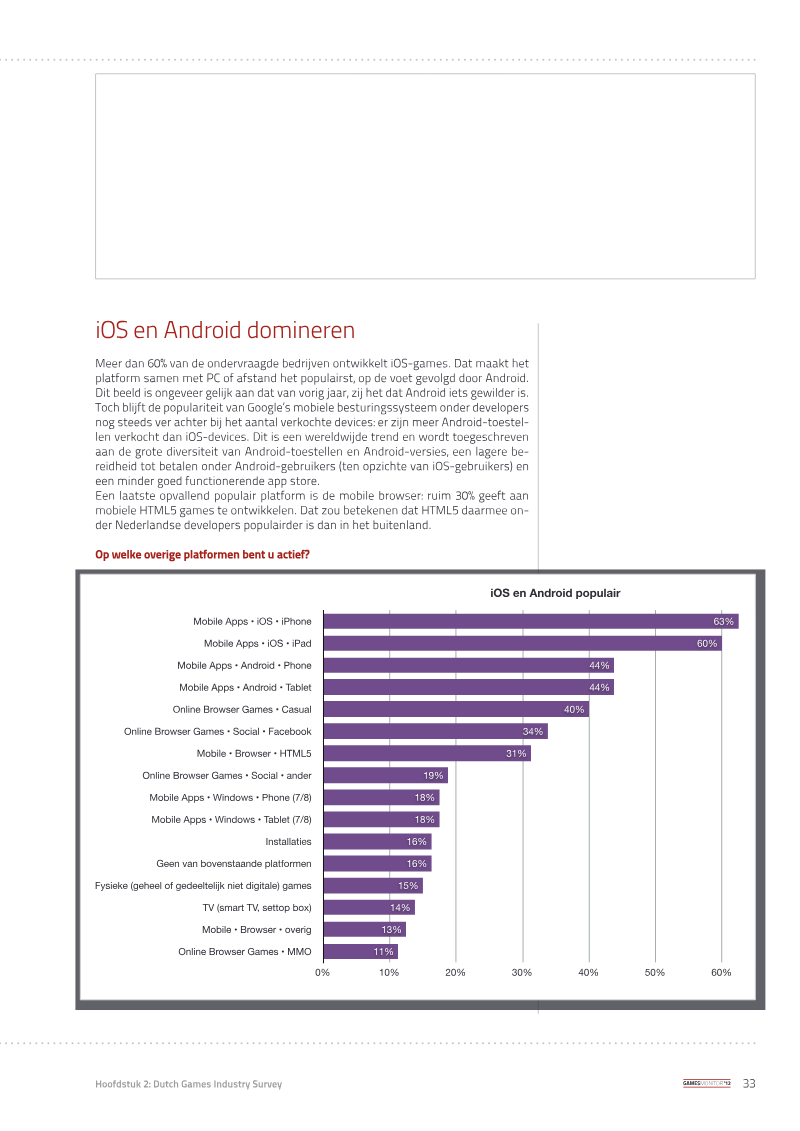
- Mobile apps, particularly for iOS (iPhone 63%, iPad 60%) and Android (Phone 60%, Tablet 44%), are highly popular platforms in the Dutch games industry.
- The Dutch games industry is not yet mature; high expectations from a few years ago have not been met, with challenges including intense international competition and difficulty in monetizing single games.
- The traditional publisher model, involving pre-financing, distribution, and marketing, is being supplanted by alternative self-publishing methods, with digital distribution increasingly replacing physical sales.