Mobile
Documents

Innovate to Win on the Next Level with Hybrid Genre Games
The global mobile gaming landscape has entered a period of sustained growth following the pandemic, with overseas consumer spending reaching $36 billion in the first half of 2021. This represents a 73% increase since 2018, a trend largely spearheaded by China-based publishers who now command a 23% share of the international market. To sustain this trajectory, the industry is shifting toward hybridization, a strategy that blends core mechanics from disparate subgenres to broaden player demographics and optimize revenue streams. By integrating casual elements like farming or social multiplayer features into hardcore frameworks, developers are successfully diversifying their monetization models beyond traditional structures.
Market performance in early 2021 reveals that while Strategy, RPG, and Match subgenres remain the primary revenue drivers, high-growth categories such as Luck Battle and Merge-Saga are emerging as significant leaders. The 4X March-Battle subgenre, in particular, saw a 51% year-over-year increase in consumer spend, fueled by strong performance in the United States, Japan, and Germany. Additionally, the Idol Training subgenre experienced an explosive 129% surge in spending, highlighting the rising influence of Asian cultural themes and "Nijigen" aesthetics in the global market.
Despite these gains, the industry faces challenges from evolving user privacy policies, which contributed to a 12% contraction in Puzzle RPG spending. In response, successful developers are increasingly utilizing hybrid tactics such as Gacha monetization, home design meta-layers, and social connectivity to maintain engagement. The transition toward these multifaceted game designs suggests that the future of mobile gaming lies in the ability to merge deep, mid-core progression systems with accessible, casual mechanics to capture a more diverse and resilient global audience.
- Mobile gaming consumer spending reached $36 billion in H1 2021, marking a 73% increase since 2018, with China-based publishers now capturing 23% of the international market.
- The industry is pivoting toward hybrid game design, which integrates casual mechanics like farming or social features into hardcore frameworks to diversify monetization and broaden demographics.
- The Idol Training subgenre saw a 129% surge in consumer spending, signaling the growing global influence of Asian cultural themes and 'Nijigen' aesthetics.
- The 4X March-Battle subgenre experienced a 51% year-over-year increase in spending, driven by strong performance in the United States, Japan, and Germany.
- Evolving user privacy policies have negatively impacted specific categories, evidenced by a 12% contraction in Puzzle RPG spending.
Hyper-Casual Games – Industry Snapshot
The 2020 Hyper-Casual Sub-Genre Snapshot provides a detailed analysis of the hyper-casual mobile gaming market, focusing on performance benchmarks and sub-genre classification. Utilizing data from a network of over 140,000 integrated games and 2 billion monthly players, the analysis categorizes the industry into distinct mechanics: Timing, Traversal, Physics, Shooting, Spatial, Crafting, and Matching. The primary objective is to establish actionable KPIs for developers to optimize game development and monetization strategies.
Geographic data reveals significant variations in player engagement and retention. European markets, specifically France, Germany, Italy, and the Netherlands, lead in Day 1 retention at 49%. However, Japan emerges as a dominant market for deep engagement, boasting the highest Day 7 retention at 19% and a leading average playtime of 63 minutes. In contrast, the United States shows moderate performance with 43% Day 1 retention and 43 minutes of playtime, while China lags behind in these specific engagement metrics.
The findings highlight the dominance of specific titles launched in 2020, such as High Heels! and Slap Kings, which achieved high performance scores through simple, portrait-oriented, and advertising-focused business models. Successful games in this category are characterized by short, satisfying gameplay loops and forgiving mechanics. A critical benchmark for developers is the 40% Day 1 retention threshold; titles falling below this mark are generally considered unpromising, necessitating either rapid iterative sprints or project termination to maintain development efficiency.
- A 40% Day 1 retention rate serves as the critical performance benchmark for hyper-casual titles; games falling below this threshold should be iterated upon immediately or terminated.
- European markets lead in short-term engagement with a 49% Day 1 retention rate, while Japan excels in long-term retention at 19% and average session lengths of 63 minutes.
- The United States market shows moderate engagement metrics, recording a 43% Day 1 retention rate and an average playtime of 43 minutes.
- Successful 2020 titles like High Heels! and Slap Kings demonstrate that high performance is driven by portrait-oriented design, short gameplay loops, and advertising-focused monetization.
- The hyper-casual industry is categorized into seven core mechanics: Timing, Traversal, Physics, Shooting, Spatial, Crafting, and Matching.

2021 H1 Global Mobile App Marketing Whitepaper
The global mobile marketing landscape experienced a massive surge in activity during the first half of 2021, characterized by a 108% year-on-year increase in advertising creatives totaling over 19 million. This growth was primarily driven by hard-core gaming titles and a significant expansion in the non-game sector, where creatives rose 38% to 47.6 million. Despite this volume increase, Apple’s IDFA policy changes caused a 13% decline in the share of iOS creatives, shifting more focus toward Android platforms. Geographically, the United States remained the largest advertising market, while Oceania emerged as the fastest-growing region for non-game advertisers.
Chinese companies solidified their global dominance during this period, accounting for 70% of top-charting mobile game media buying and over 25% of the total global market share. These developers maintained a particularly strong presence on major social platforms, representing 100% of the top ten advertisers on Facebook’s News Feed. However, this increased competition contributed to a sharp rise in acquisition costs, with Facebook’s average CPC and CPM both climbing 128% year-over-year. RPG and Puzzle genres led in total creative volume, while Strategy games exhibited the highest media buying intensity per advertiser.
Marketing strategies have evolved toward high-engagement, "snackable" short-form video content and influencer-led campaigns to combat rising costs and privacy-related tracking challenges. In the gaming sector, creative tactics shifted toward live-action footage and gameplay extensions, while non-game apps—particularly in the education and shopping sectors—capitalized on pandemic-related lifestyle shifts. As the industry navigates the post-IDFA era, the integration of high-quality in-game ads and diverse creative formats has become essential for maintaining user retention and driving monetization across both domestic Chinese and international markets.
- Chinese developers dominated the global market in 2021 H1, accounting for 70% of top-charting mobile game media buying and 100% of the top ten advertisers on Facebook’s News Feed.
- Advertising costs surged significantly, with Facebook’s average CPC and CPM increasing by 128% year-over-year due to heightened competition.
- Apple’s IDFA policy changes triggered a 13% decline in the share of iOS advertising creatives, forcing a strategic shift in focus toward Android platforms.
- Total advertising creatives for hard-core gaming and non-game sectors saw massive growth, with non-game creatives rising 38% to 47.6 million and total creatives increasing 108% year-on-year to over 19 million.
- Strategy games exhibited the highest media buying intensity per advertiser, while RPG and Puzzle genres led the industry in total creative volume.
Mobile Ad Creative Report: August 2021
Mobile gaming creative trends in August 2021 centered on humanizing digital experiences and leveraging high-profile cultural partnerships. Analysis of top-performing ads across platforms like YouTube, Instagram, Snapchat, and Facebook reveals a heavy reliance on real-world celebrities, particularly musicians. Notable examples include Garena Free Fire featuring DJs Dimitri Vegas & Like Mike as playable characters and Call of Duty Mobile partnering with artist Ozuna. These collaborations often utilize cinematic storytelling and high-fidelity animations to bridge the gap between gaming and mainstream entertainment.
The industry continues to utilize specific psychological triggers and visual formats to drive engagement. Fail-state elements, where ads demonstrate a player losing a level to pique viewer interest, remain prevalent in titles like Royal Match and Evony. Additionally, hyper-casual games are increasingly adopting popular music soundtracks and expressive callouts to appeal to younger demographics on Snapchat. Other emerging visual trends include split-screen layouts, the use of Bitmojis, and "search bar" call-to-actions that visually demonstrate how to find the app in stores.
Geographically, the findings cover global releases with specific performance data from major ad networks including ironSource, Applovin, and Vungle. The scope encompasses diverse genres, from mid-core shooters and RPGs to hyper-casual and puzzle games. Methodology involves ranking creatives based on their performance and visibility across social media and ad networks during the August 2021 period. Conclusions suggest that successful creatives are moving away from pure gameplay footage in favor of narrative-driven content, anniversary themes, and interactive elements like Buzzfeed-style quizzes or "Christmas in July" promotions.
- Mobile gaming ads in August 2021 shifted toward high-fidelity, narrative-driven content featuring real-world celebrity partnerships, such as Garena Free Fire’s collaboration with Dimitri Vegas & Like Mike and Call of Duty Mobile’s integration of Ozuna.
- Top-performing creatives are increasingly moving away from pure gameplay footage in favor of cinematic storytelling, anniversary-themed promotions, and interactive elements like Buzzfeed-style quizzes.
- Psychological triggers remain a core engagement strategy, with 'fail-state' ads—demonstrating a player losing a level—continuing to drive performance for titles like Royal Match and Evony.
- Hyper-casual games are targeting younger demographics on platforms like Snapchat by integrating popular music soundtracks and expressive visual callouts.
- Emerging visual design trends for mobile ads include the use of split-screen layouts, Bitmojis, and 'search bar' call-to-actions that provide users with direct visual instructions on how to locate apps in stores.

Mobile Game Video Ads Analysis: Optimal Video Lengths and End Cards
This analysis examines the relationship between video ad length, end card formats, and campaign performance across five major mobile gaming genres: Hyper-Casual, RPG, Strategy, Puzzle, and Social Casino. By evaluating 3.7 billion in-app video ad impressions and subsequent installs via the Vungle platform, the study establishes creative benchmarks using a proprietary Power Index to measure efficacy. The findings suggest that as the industry moves toward a post-IDFA environment with limited user-level data, marketers must prioritize creative optimization and mass-appeal strategies to drive engagement.
The data reveals distinct audience preferences for each genre. Social Casino players favor efficiency, responding best to 10-second ads paired with standard static end cards. Puzzle and Strategy games both see peak performance when utilizing app store end cards that provide a direct path to download, though their optimal video lengths differ at 22 seconds and 33 seconds, respectively. Conversely, genres with deeper gameplay loops require more extensive creative storytelling. Hyper-Casual games perform best with 37-second ads and video end cards, while RPGs benefit from the longest engagement times, peaking at 46 seconds with looping video end cards to showcase aesthetic and narrative depth.
The scope of the research covers a global audience of over one billion unique devices, focusing on the structural elements of ad creatives rather than specific visual content. The methodology filters out low-performing impressions to ensure the Power Index accurately reflects the most successful format pairings. Ultimately, the findings conclude that aligning ad duration and post-roll interactive elements with genre-specific player expectations is essential for maximizing return on ad spend in an increasingly competitive mobile marketplace.
- Optimal video ad length varies significantly by genre, ranging from 10 seconds for Social Casino to 46 seconds for RPGs.
- Hyper-Casual games achieve peak performance with 37-second ads paired with video end cards.
- Strategy games perform best with 33-second ads, while Puzzle games reach peak efficacy at 22 seconds; both benefit most from app store end cards.
- Social Casino players prefer short, efficient 10-second ads combined with standard static end cards.
- RPGs require the longest engagement times at 46 seconds, utilizing looping video end cards to highlight narrative and aesthetic depth.
Post-IDFA Mobile Game Advertising Costs: Casual vs Core
The analysis quantifies how Apple’s post‑IDFA privacy updates have reshaped user‑acquisition economics for mobile games, contrasting casual titles with core experiences. By aggregating 13.5 billion programmatic ad impressions from iOS and Android between January 1 2021 and September 30 2021, the study tracks cost‑per‑install (CPI) trends across three intervals—pre‑iOS 14.5, during the iOS 14.5‑14.6 rollout, and post‑iOS 14.6—using Moloco’s proprietary game taxonomy to separate titles into casual and core categories.
Casual games experienced a sharp decline in iOS CPI, falling 38 % after the iOS 14.6 release, while Android CPI for the same segment rose modestly by 16 %. In contrast, core games saw iOS CPI surge 78 % and Android CPI increase 36 % over the same period, reflecting intensified competition for a shrinking pool of high‑value, trackable users. The narrowing of the historical iOS‑Android CPI gap for casual titles indicates that Android installs now command comparable monetary value, whereas iOS remains the premium channel for core audiences due to higher in‑app‑purchase conversion rates.
Methodologically, the research averages weekly CPI data across the defined date ranges, applying a taxonomy that classifies games by genre and engagement depth, with subcategories overlapping between casual and core groups. Findings suggest that the divergent CPI trajectories are driven by user churn characteristics and lifetime‑value differentials rather than seasonal factors.
Strategic recommendations emphasize diversifying media spend, allocating budget to campaigns optimized for return‑on‑ad‑spend, and leveraging machine‑learning‑based bidding to mitigate volatility. These practices aim to preserve profitability amid the evolving privacy‑driven market dynamics for both casual and core mobile game publishers.
- Core games experienced a 78% surge in iOS CPI following the iOS 14.6 release, driven by intensified competition for a shrinking pool of high-value, trackable users.
- Casual games saw a 38% decline in iOS CPI post-iOS 14.6, while Android CPI for the same segment rose by 16%.
- Android CPI for core games increased by 36% during the same period, reflecting broader market volatility across platforms.
- The historical CPI gap between iOS and Android has narrowed for casual titles, suggesting that Android installs now provide monetary value comparable to iOS for that segment.
- iOS remains the premium channel for core games due to higher in-app purchase conversion rates, despite the significant cost increases.
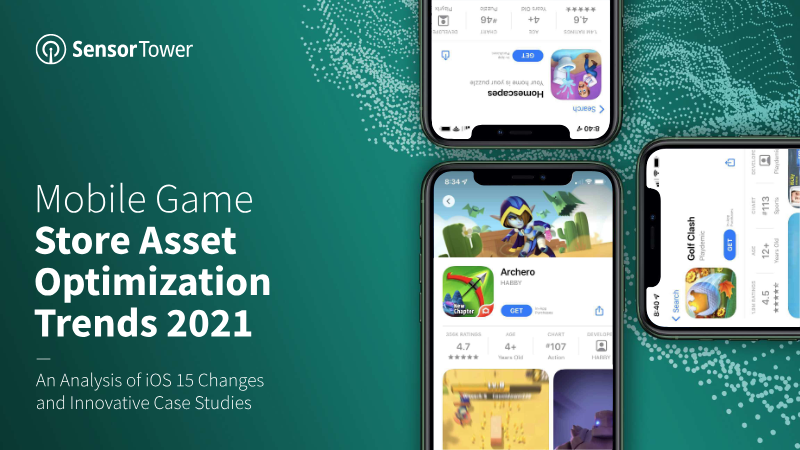
Mobile Game Store Asset Optimization Trends 2021
Strategic store asset optimization is a critical driver for increasing conversion rates and reducing user acquisition costs in the mobile gaming industry. Analysis of top-performing publishers reveals that the most successful entities treat app icons, screenshots, and product pages as dynamic marketing tools rather than static assets. This approach is particularly relevant following the release of iOS 15 in late 2021, which introduced Custom Product Pages and Product Page Optimization. These features allow developers to create up to 35 unique landing pages and conduct native A/B testing for up to 90 days, enabling highly targeted campaigns for specific audiences and influencers.
Data from major titles illustrates several dominant trends in asset management. Seasonal updates are a primary strategy; for instance, Golf Clash implemented 17 icon changes between 2017 and 2021 to reflect holidays like Halloween and St. Patrick’s Day. Other publishers, such as King and Garena, prioritize brand identity by integrating corporate logos across their entire portfolios to leverage existing brand equity. Furthermore, "forever franchises" like Animal Crossing: Pocket Camp use icon updates to signal anniversaries and live operations events, driving re-engagement among lapsed players.
A significant shift in the industry involves the alignment of store assets with high-performing ad creatives. Publishers like Playrix and Nexters successfully utilized "Pull the Pin" advertisements—which often differ from core gameplay—to lower costs per install. To minimize friction and improve conversion, these companies updated their App Store screenshots and icons to match the ad content. While such experimentation was historically more prevalent on Google Play due to its long-standing A/B testing tools, the new iOS 15 capabilities are expected to catalyze similar data-driven optimization strategies across the Apple ecosystem. This analysis utilizes Sensor Tower’s proprietary intelligence platforms to track these trends across global markets and major gaming segments.
- The release of iOS 15 in late 2021 introduced native A/B testing for up to 90 days and the ability to create 35 unique Custom Product Pages, enabling highly targeted audience acquisition.
- Top-performing publishers are aligning App Store screenshots and icons with high-performing ad creatives—such as Playrix and Nexters' 'Pull the Pin' ads—to reduce user acquisition costs and minimize conversion friction.
- Successful mobile game publishers treat store assets as dynamic marketing tools rather than static elements, frequently updating them to reflect seasonal events, anniversaries, and live operations.
- Strategic icon management is a proven re-engagement tactic, exemplified by Golf Clash, which implemented 17 distinct icon updates between 2017 and 2021 to capitalize on holiday-themed content.
- Major publishers like King and Garena leverage brand equity by integrating consistent corporate logos across their entire game portfolios to strengthen brand identity.
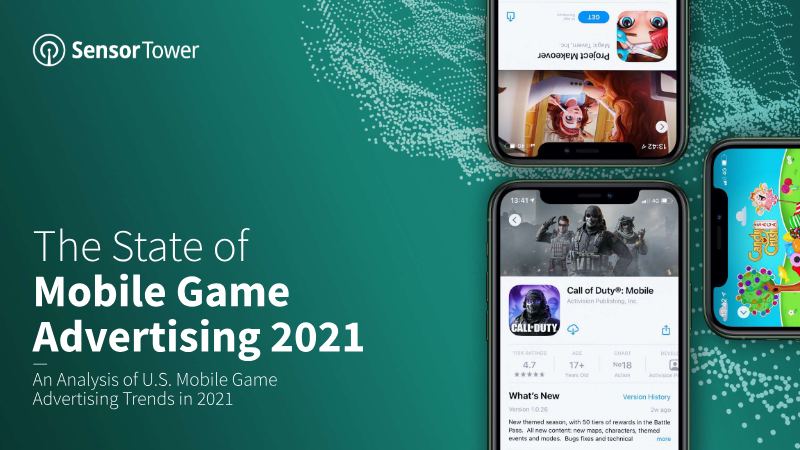
The State of Mobile Game Advertising: An Analysis of U.S. Mobile Game Advertising Trends in 2021
Mobile game advertising in the United States remained resilient through the first half of 2021, showing no immediate negative impact from privacy changes such as the deprecation of IDFA. Analysis of the advertising landscape reveals a strategic divide between ad networks. Specialized platforms like AppLovin, Chartboost, and Vungle maintain a high concentration of gaming content, often exceeding 90 percent share of voice. In contrast, diversified platforms like Facebook, TikTok, and YouTube maintain a more balanced split between gaming and non-gaming advertisements, serving as critical channels for reaching broader audiences.
Market trends indicate that ad network selection is increasingly driven by genre and demographic alignment. Puzzle and Hypercasual games dominate gaming-focused networks, while mid-core genres like Strategy and Shooter find higher engagement on social platforms like YouTube and Instagram. Notably, Adcolony emerged as a primary hub for Casino games, catering to an older, female-leaning demographic. Across most platforms, video remains the dominant creative format, though playable ads have gained significant traction, particularly on AppLovin where they account for over 40 percent of gaming share of voice.
Creative strategies are evolving to include "fake playables," relaxing music for casual titles, and real-world testimonial-style conversations. Even mid-core titles with complex mechanics, such as Call of Duty: Mobile, have begun adopting simplified playable "mini-games" to lower the barrier for user acquisition. This data, compiled by Sensor Tower using its Ad Intelligence platform, covers U.S. trends across iOS and Android from 2018 through the second quarter of 2021, suggesting that success in the current market requires a sophisticated mix of genre-specific network targeting and experimental creative formats.
- Mobile game advertising in the U.S. remained resilient through H1 2021, showing no immediate negative impact from the deprecation of IDFA.
- Playable ads have become a dominant creative format, accounting for over 40 percent of the gaming share of voice on AppLovin.
- Specialized ad networks like AppLovin, Chartboost, and Vungle maintain a gaming-focused inventory exceeding 90 percent share of voice, while platforms like Facebook, TikTok, and YouTube provide broader audience reach.
- Ad network selection is increasingly genre-specific, with Puzzle and Hypercasual games favoring gaming-focused networks, while Strategy and Shooter titles find higher engagement on social platforms like YouTube and Instagram.
- Adcolony has established itself as a primary hub for Casino games, effectively targeting an older, female-leaning demographic.
Turkey Game Market 2021 Report
The Turkish gaming market experienced a transformative period of growth and institutionalization in 2021, reaching a total market volume of $1.2 billion. Despite global challenges such as hardware shortages and pandemic-related delays in AAA titles, the local ecosystem expanded to include over 42 million active players. This growth was primarily catalyzed by the mobile segment, which generated $620 million in revenue and solidified Turkey’s position as a global leader in the hyper-casual genre. The year was further defined by record-breaking financial activity, with $266 million invested across 54 startups and the emergence of Dream Games as a new industry "unicorn."
Strategically, the market is shifting toward a "gaming-focused entertainment" model, characterized by the rapid adoption of Web3 technologies, including blockchain, NFTs, and Play-to-Earn (P2E) frameworks. While mobile gaming remains the dominant force, there is a burgeoning esports ecosystem supported by approximately 6 million followers and a national federation overseeing 165 licensed clubs. Turkey’s selection as the host for the Global Esports Games 2022 underscores its rising international profile. However, industry experts note a strategic need to diversify beyond mobile platforms into PC and console development to ensure long-term sustainability.
The regional landscape reveals Turkey as the primary gaming powerhouse in the Middle East, outperforming neighboring markets in both revenue and player engagement. Success for international entrants remains contingent on high-quality localization and cultural adaptation, given the country's low English proficiency and unique consumer preferences for competitive genres and specific musical influences. As the sector transitions into 2022, the focus remains on bridging the talent gap through specialized academic programs and leveraging the return of large-scale physical exhibitions to maintain momentum in the evolving Metaverse and digital advertising spaces.
- The Turkish gaming market reached a total volume of $1.2 billion in 2021, supported by a player base of 42 million active users.
- Mobile gaming generated $620 million in revenue, cementing Turkey's status as a global leader in the hyper-casual genre.
- Financial activity hit record levels in 2021 with $266 million invested across 54 startups, highlighted by the emergence of Dream Games as a unicorn.
- The esports ecosystem is growing rapidly, featuring 6 million followers and 165 licensed clubs overseen by a national federation.
- Turkey is the primary gaming powerhouse in the Middle East, though experts advise diversifying into PC and console development for long-term sustainability.
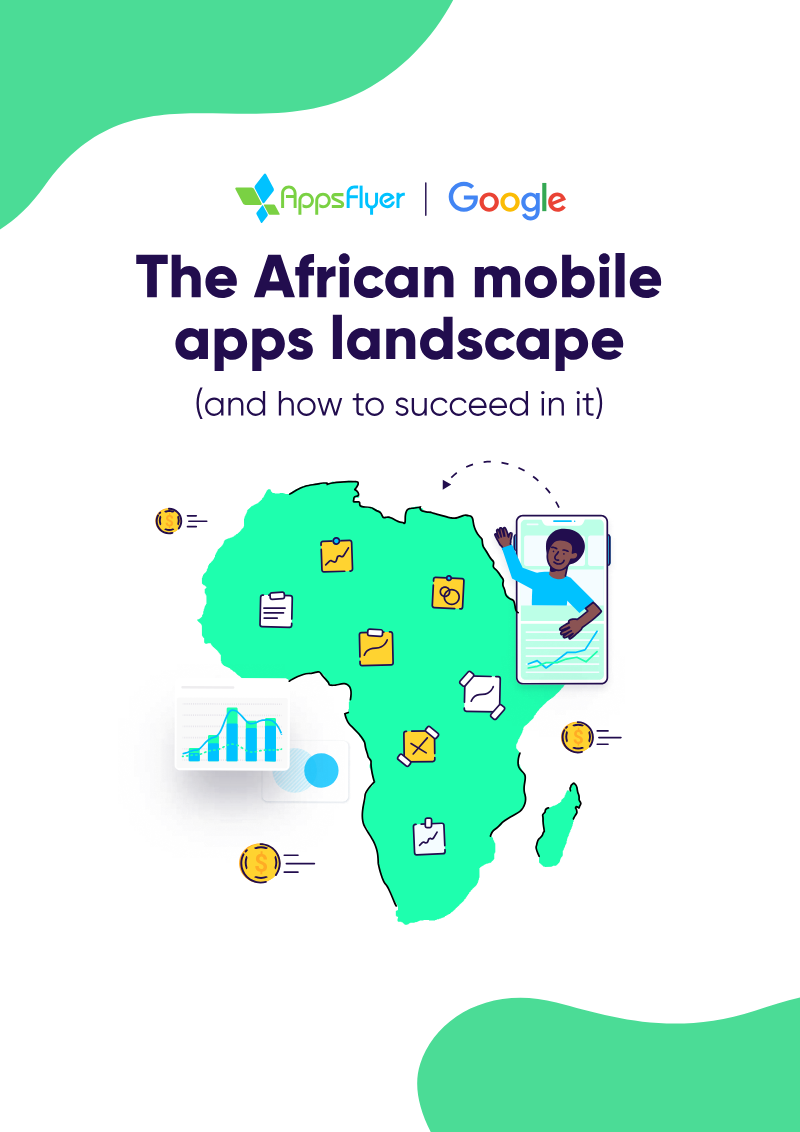
The African Mobile Apps Landscape (2021)
The African mobile app market experienced a period of rapid acceleration between Q1 2020 and Q1 2021, driven by a young, mobile-first population and the unique conditions of the COVID-19 pandemic. Analysis of 6,000 apps and 2 billion installs across South Africa, Nigeria, and Kenya reveals that overall app installs grew by 41% during this period. Nigeria led this growth with a 43% increase, while South Africa saw the most immediate surge in downloads following strict lockdown measures.
The gaming sector proved particularly resilient, with installs jumping 50% in Q2 2020 as consumers sought home entertainment. This trend extended to monetization, as in-app advertising revenue surged by 167% between Q2 2020 and Q1 2021. Furthermore, in-app purchasing revenue peaked in Q3 2020, accounting for one-third of the year's total revenue. While Android remains the dominant platform with a 54% increase in non-organic installs, iOS also showed growth despite a 21% rise in cost-per-install.
Several structural trends define the current landscape, including the rise of fintech apps addressing the needs of unbanked populations and the emergence of super apps that consolidate multiple services to overcome device storage limitations. Despite this progress, challenges remain regarding connectivity, as mobile internet adoption in Sub-Saharan Africa stands at 26%, well below the global average. To succeed, marketers are encouraged to move toward a multi-moment maturity model by integrating durable measurement foundations, focusing on high-value user acquisition, and utilizing remarketing strategies to drive long-term engagement.
- Between Q1 2020 and Q1 2021, mobile app installs across Nigeria, South Africa, and Kenya grew by 41%, with Nigeria leading the growth at 43%.
- The gaming sector saw a 50% jump in installs during Q2 2020, while in-app advertising revenue for gaming surged by 167% between Q2 2020 and Q1 2021.
- In-app purchasing revenue for gaming peaked in Q3 2020, contributing one-third of the total annual revenue.
- Android remains the dominant platform with a 54% increase in non-organic installs, while iOS growth persists despite a 21% rise in cost-per-install.
- Market growth is driven by fintech apps serving unbanked populations and the adoption of super apps designed to mitigate device storage limitations.
Next-Gen Mobile Games: The Arrival of Cross-Platform and Evolution of High-Fidelity Mobile Games
Mobile gaming has emerged as the dominant force in the global games industry, projected to generate $90.7 billion in 2021 and represent over half of all global gaming revenue. This growth is underpinned by a massive player base of 2.8 billion people, which is expected to expand to 3.2 billion by 2023. The industry is currently undergoing a fundamental transformation as it shifts toward high-fidelity experiences characterized by complex mechanics, 3D graphics, and AAA-quality production. While Western markets still lean toward casual titles, mobile-first regions like China are leading this evolution, with high-fidelity games accounting for nearly 70% of the top-grossing iOS titles in that region.
The convergence of mobile hardware and traditional console capabilities is a primary driver of this trend. Advancements in 5G connectivity, cloud computing, and AI-powered procedural storytelling are enabling developers to port flagship PC and console franchises to mobile devices without sacrificing depth. This technological leap has positioned mobile as a first-class platform where cross-platform play and social connectivity are now essential requirements. Furthermore, the rise of dedicated gaming smartphones and premium 5G-ready devices reflects a growing consumer demand for competitive, mid-core, and immersive experiences that were previously restricted to high-end hardware.
Industry leaders anticipate that mobile gaming will achieve technical parity with high-end PCs and consoles within the next five to ten years. As major publishers increasingly prioritize platform-agnostic development, the gap between Western and Eastern market compositions is expected to narrow. The future of the medium lies in its ability to provide sophisticated, snackable, yet deeply immersive content to a mobile-native generation, solidifying the smartphone as the primary gateway for global gaming engagement.
- Mobile gaming is the industry's dominant force, generating $90.7 billion in 2021 and accounting for over half of total global gaming revenue.
- The global mobile player base is projected to grow from 2.8 billion in 2021 to 3.2 billion by 2023.
- High-fidelity games with AAA-quality production now account for nearly 70% of the top-grossing iOS titles in China, signaling a shift away from casual-only dominance.
- Technological advancements in 5G, cloud computing, and AI are enabling developers to port flagship PC and console franchises to mobile without sacrificing mechanical depth.
- Industry experts expect mobile hardware to reach technical parity with high-end PCs and consoles within the next five to ten years.
How to Win on Mobile in LATAM
This analysis examines the mobile application ecosystem in Latin America (LATAM) from July 2020 through June 2021, a period marked by rapid digital acceleration due to the COVID-19 pandemic. The region emerged as a high-growth market, generating 20.9 billion new app downloads and $3 billion in consumer spend. A defining characteristic of this landscape is the dominance of Android, which accounted for 89% of all downloads, though iOS maintained a significant 56% share of total consumer spend, indicating high monetization potential per user.
The geographic scope focuses primarily on Brazil and Mexico, which together generated 73% of the region's downloads. However, the findings highlight a fragmented market where smaller nations like Uruguay show higher per capita spend despite lower download volumes. Engagement is exceptionally high across the region; users in Brazil and Mexico averaged 5.4 and 4.8 hours daily on mobile devices, respectively, surpassing averages in the United States. This high engagement is driven by a young demographic, particularly in Brazil, where the average age is 33.
Industry segments showing the most significant momentum include Finance, Shopping, and Gaming. Finance app downloads in Brazil grew by 36% year-over-year as users shifted toward neobanks and digital wallets. In the gaming sector, which represents 50% of total consumer spend, hypercasual titles lead in downloads while core subgenres like Strategy and RPGs drive 60% of revenue. The retail sector saw the rapid rise of foreign entities like Shopee alongside established regional leaders like MercadoLibre, often utilizing gamification to drive retention.
The data, sourced from App Annie Intelligence, suggests that success in LATAM requires a platform-specific strategy favoring Android for reach and a localized approach to subscription pricing. As internet penetration continues to expand, the region is positioned as a critical frontier for global mobile publishers and developers.
- Brazil and Mexico dominate the LATAM mobile market, collectively accounting for 73% of the region's 20.9 billion downloads between July 2020 and June 2021.
- While Android commands 89% of total downloads, iOS captures 56% of consumer spend, highlighting a significant disparity in monetization potential between the two platforms.
- Gaming represents 50% of total consumer spend in the region, with hypercasual titles driving volume while Strategy and RPG subgenres account for 60% of gaming revenue.
- Daily mobile engagement is exceptionally high, with users in Brazil and Mexico averaging 5.4 and 4.8 hours per day, respectively, exceeding US averages.
- Finance app downloads in Brazil grew by 36% year-over-year, fueled by a rapid consumer shift toward digital wallets and neobanking services.