
ReportNewzoo
Next-Gen Mobile Games: The Arrival of Cross-Platform and Evolution of High-Fidelity Mobile Games
202147 pages~50 min full read
Mobile gaming has emerged as the dominant force in the global games industry, projected to generate $90.7 billion in 2021 and represent over half of all global gaming revenue. This growth is underpinned by a massive player base of 2.8 billion people, which is expected to expand to 3.2 billion by 2023. The industry is currently undergoing a fundamental transformation as it shifts toward high-fidelity experiences characterized by complex mechanics, 3D graphics, and AAA-quality production. While Western markets still lean toward casual titles, mobile-first regions like China are leading this evolution, with high-fidelity games accounting for nearly 70% of the top-grossing iOS titles in that region.
The convergence of mobile hardware and traditional console capabilities is a primary driver of this trend. Advancements in 5G connectivity, cloud computing, and AI-powered procedural storytelling are enabling developers to port flagship PC and console franchises to mobile devices without sacrificing depth. This technological leap has positioned mobile as a first-class platform where cross-platform play and social connectivity are now essential requirements. Furthermore, the rise of dedicated gaming smartphones and premium 5G-ready devices reflects a growing consumer demand for competitive, mid-core, and immersive experiences that were previously restricted to high-end hardware.
Industry leaders anticipate that mobile gaming will achieve technical parity with high-end PCs and consoles within the next five to ten years. As major publishers increasingly prioritize platform-agnostic development, the gap between Western and Eastern market compositions is expected to narrow. The future of the medium lies in its ability to provide sophisticated, snackable, yet deeply immersive content to a mobile-native generation, solidifying the smartphone as the primary gateway for global gaming engagement.

Google · 2026
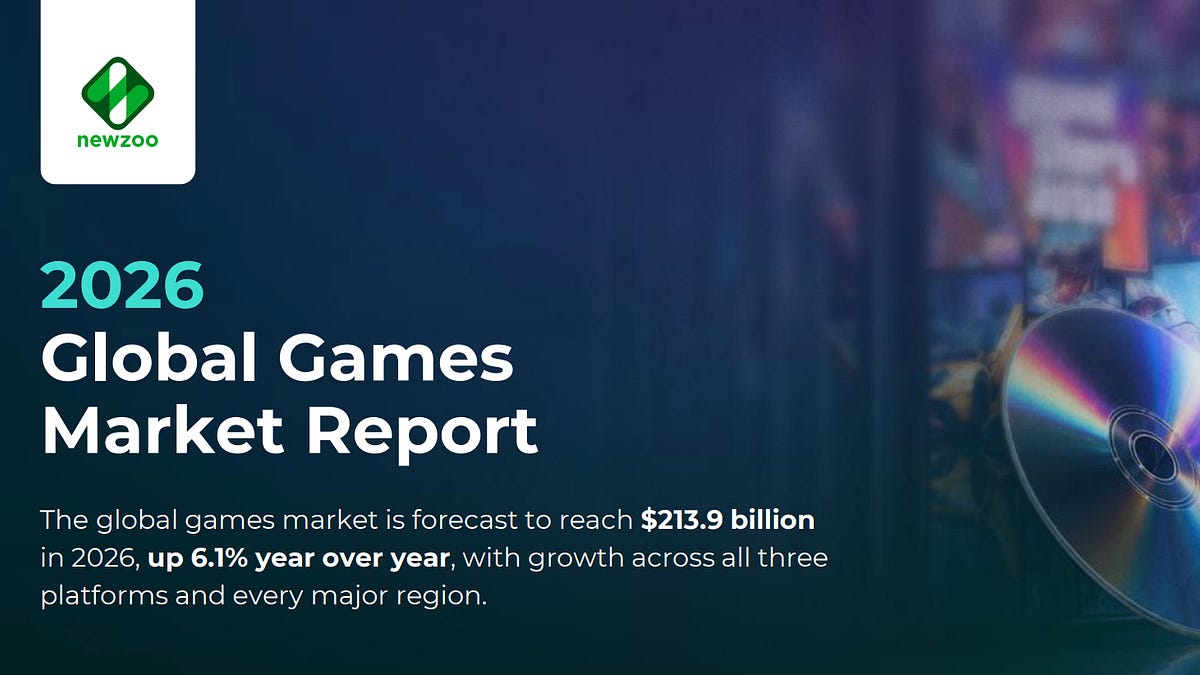
Newzoo · 2026

Newzoo · 2026
Newzoo · 2026

Deconstructor of Fun · 2026
Newzoo · 2026
Newzoo · 2026
Newzoo · 2026
Newzoo · 2026

Newzoo · 2026
Newzoo · 2026
Newzoo · 2025
Aream & Co · 2026

InvestGame · 2026

Epyllion · 2026
Xsolla · 2025

Aldora · 2025

Aldora · 2024
Sensor Tower · 2024

Xsolla · 2024
Sensor Tower · 2024

data.ai · 2023

Newzoo · 2023
Sensor Tower · 2022