Europe reports and market data
Documents
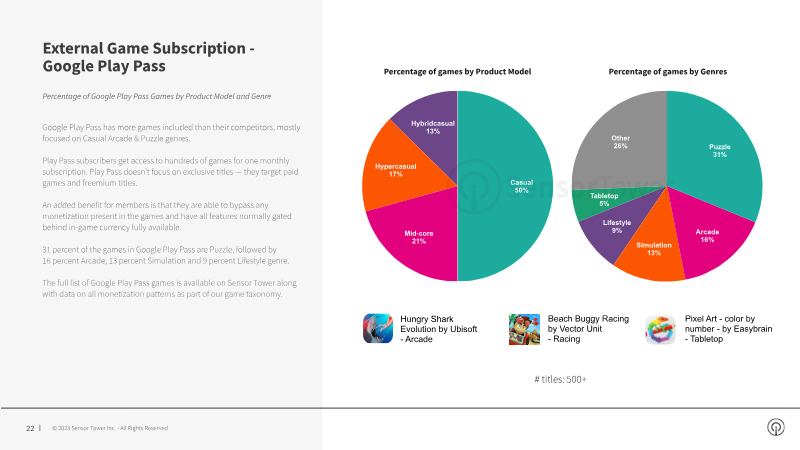

The State of Mobile Gaming 2023: Mobile Gaming Market Trends and Top Titles in the U.S., Europe, and Asia
The global mobile gaming landscape underwent a significant structural transition in 2022, characterized by a 14% decline in total player spending from its 2021 peak alongside a stabilization of download volumes at approximately 13.8 billion per quarter.
- Global mobile gaming revenue declined 14% in 2022 from its 2021 peak, though total market size remains above pre-pandemic levels.
- The hypercasual genre saw an 18% decline in downloads, while the hybridcasual model grew by 13% to reach $1.4 billion in revenue.
- Live Ops are now critical to commercial success, accounting for 97% of revenue among top-grossing titles through features like character collection and social clans.



Il valore economico e sociale dei videogiochi in Italia
The Italian video game industry has emerged as a vital strategic asset, functioning as both a catalyst for economic growth and a significant driver of social well-being.
- The Italian video game industry generated approximately 2.2 billion euros in market turnover in 2020.
- Strategic state support and targeted fiscal policies could create over 1,000 new high-quality jobs by 2026.
- The domestic ecosystem currently consists of 160 companies and a dedicated esports fan base of 1.6 million people.
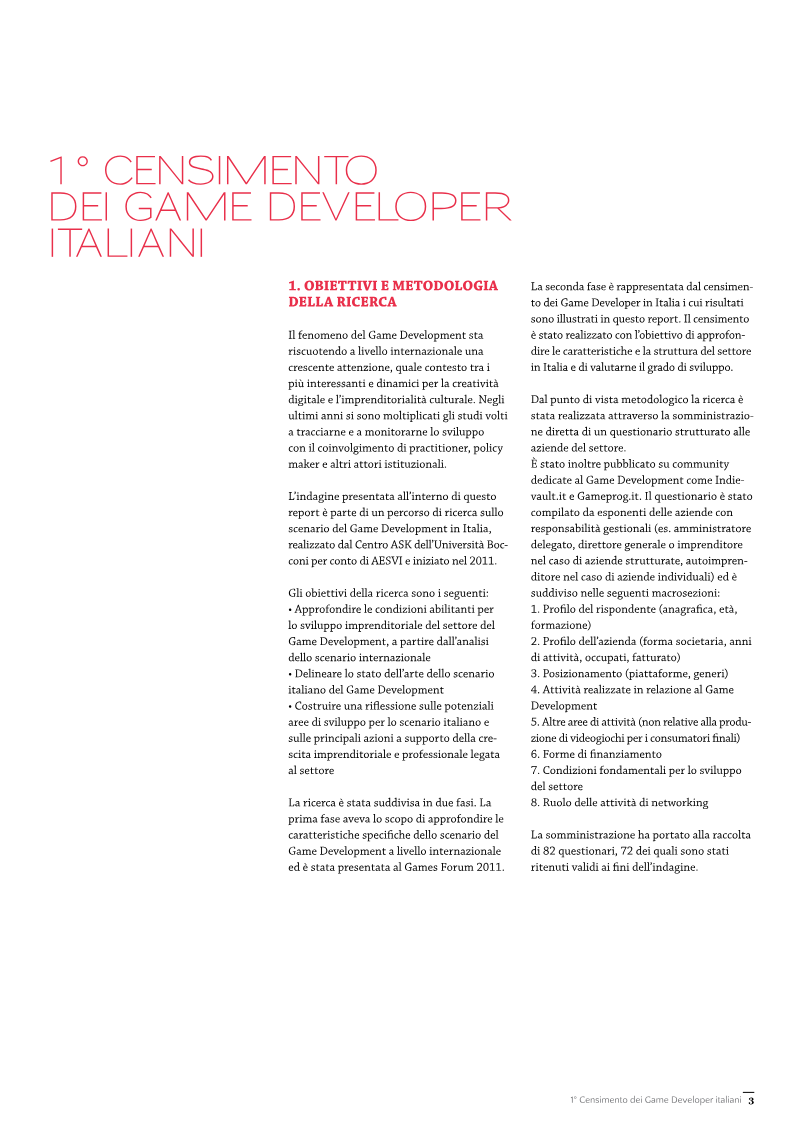
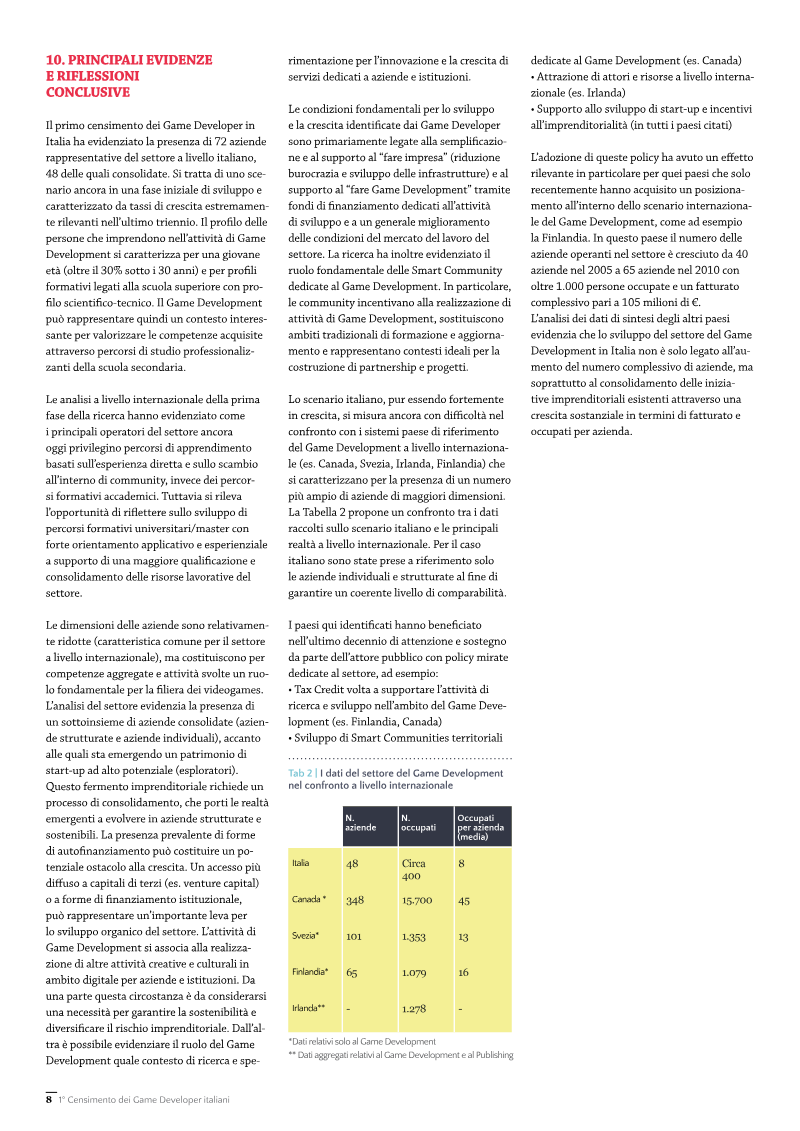

1° Censimento dei Game Developer italiani
The first census of Italian game developers, conducted by the ASK Center of Bocconi University on behalf of AESVI, provides a comprehensive analysis of the domestic video game production sector.
- The Italian game development sector is highly fragmented and early-stage, with 62% of firms established within the last three years and 52% operating as individual enterprises.
- Financial growth is constrained by a 90% reliance on self-financing, preventing most companies from scaling beyond their current small-scale operations.
- To maintain financial sustainability, 65% of developers supplement consumer-facing game production with B2B services like marketing, communication, and training software.
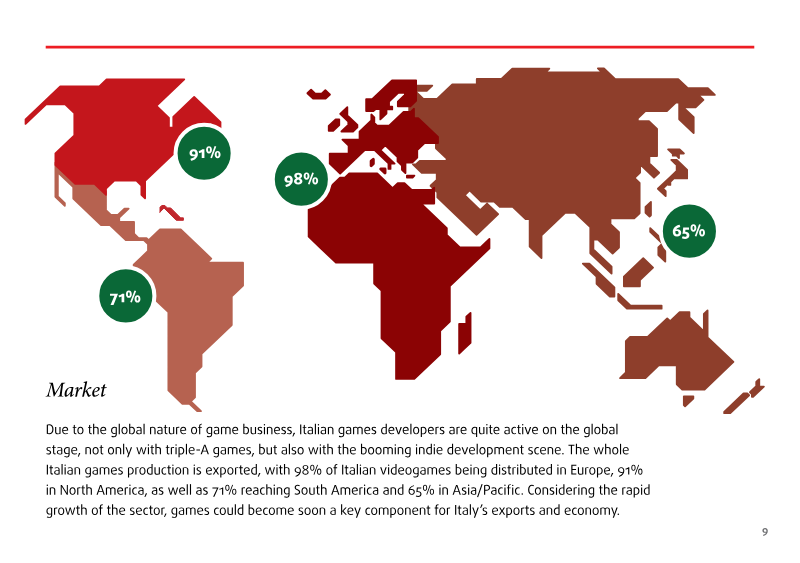

Italian Game Developers Census 2014
The Italian video game industry in 2014 represents a burgeoning, export-oriented sector defined by a high concentration of startups and a strong emphasis on mobile development.
- In 2014, the Italian video game industry comprised over 100 studios and approximately 700 professionals, generating an annual turnover of roughly €20 million.
- The sector is characterized by a high concentration of startups and a strong strategic focus on mobile platform development.
- The industry is undergoing a transition toward professionalization, moving from informal operations to more structured business models.



Censimento Game Developer Italiani 2016
The 2016 Census of Italian Game Developers provides a comprehensive analysis of the domestic video game industry, documenting a sector characterized by significant growth, youthful entrepreneurship, and a strong international orientation.
- The Italian game development sector is highly fragmented and early-stage, with 47% of studios employing five or fewer staff and 44% generating less than 10,000 euros in annual revenue.
- While 86% of studios target the consumer market, 61% of total studio activity is now dedicated to business-to-business (B2B) services.
- The industry is geographically concentrated in Northern Italy, with Milan and Rome serving as the primary hubs for development activity.
Censimento Game Developer Italiani 2018
The Italian video game industry in 2018 is characterized by a vibrant but fragmented landscape dominated by micro-enterprises.
- The Italian game industry is highly fragmented, with 63% of studios employing fewer than five people and two-thirds generating annual revenues under €100,000.
- Financial growth is severely constrained by a lack of external capital, as 88% of studios rely entirely on self-financing.
- The market is primarily driven by PC development, which is the focus for 52% of studios, and self-publishing, which is the business model for 65% of the sector.

Posizione sullo Sviluppo del Settore Esports in Italia
The Italian esports sector represents a dynamic and rapidly expanding industry defined by its reliance on intellectual property and global digital infrastructure.
- The esports industry functions as a unique commercial entity driven by intellectual property and publishers, rather than as a traditional sport.
- Global esports revenues currently stand at approximately one billion euros, with significant secondary economic impact through technological innovation and event-driven tourism.
- Applying traditional sports regulatory frameworks to esports is counterproductive because it threatens the agility and innovation required by the sector's proprietary digital environments.
Let's Play! 2022: The European Esports Market
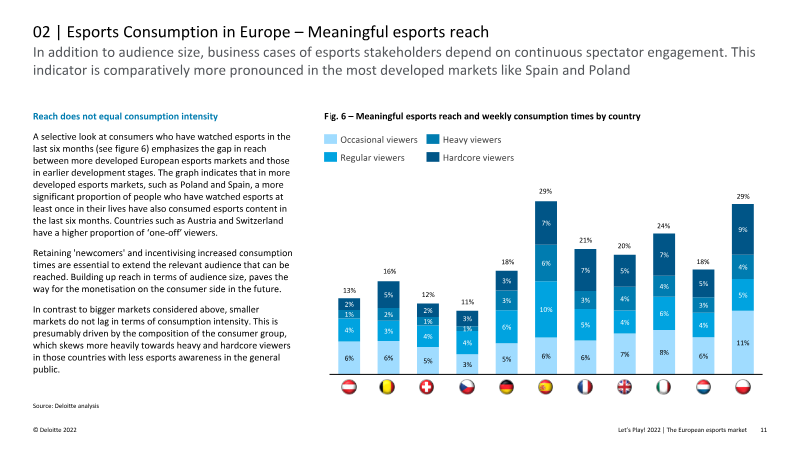
The European esports market has reached a critical inflection point, transitioning from the rapid, pandemic-driven expansion of 2020 toward a phase of stabilization and strategic maturation.
- The European esports market has shifted from pandemic-driven expansion to a phase of stabilization, characterized by a plateau in total reach and a decline in regular viewership.
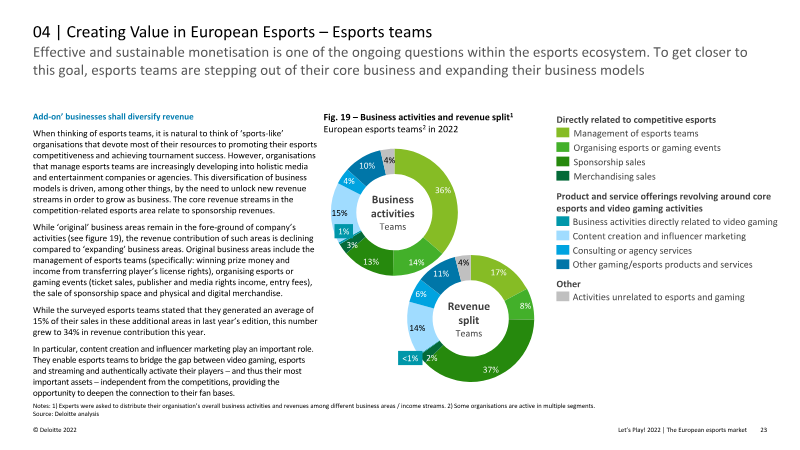
- Esports organizations are pivoting away from pure competitive play toward diversified business models that integrate agency services, media production, and content creation to ensure long-term sustainability.
- The industry is currently under-monetized due to a historical reliance on free-to-access content, necessitating a shift toward converting casual viewers into consistent, paying consumers.

The State of Social Apps in Europe 2022
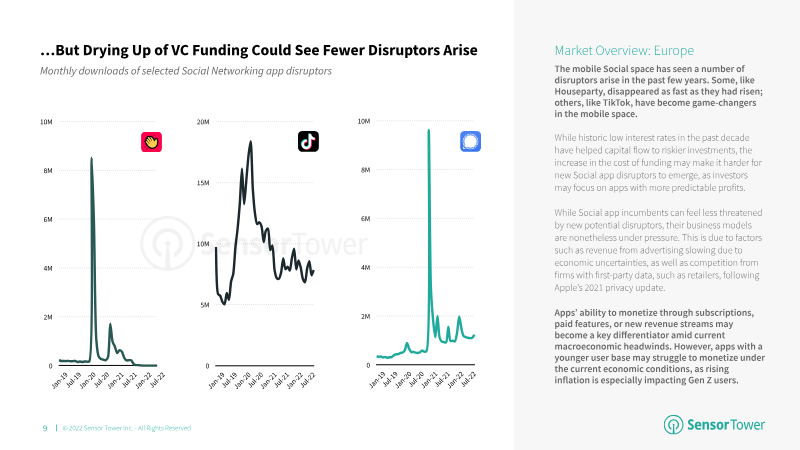
The European social application market in 2022 was characterized by a significant shift from rapid user acquisition toward aggressive monetization and the rise of niche, authenticity-driven platforms.
- European social app consumer spending reached $830 million in the first ten months of 2022, marking an 86% year-over-year increase.
- TikTok dominated the European market in 2022 but saw its revenue growth decelerate by the third quarter, indicating a maturing market.
- The barrier to entry for top-tier App Store rankings decreased, with the required download threshold falling 30% compared to 2019.
Slovak Game Development Industry 2022
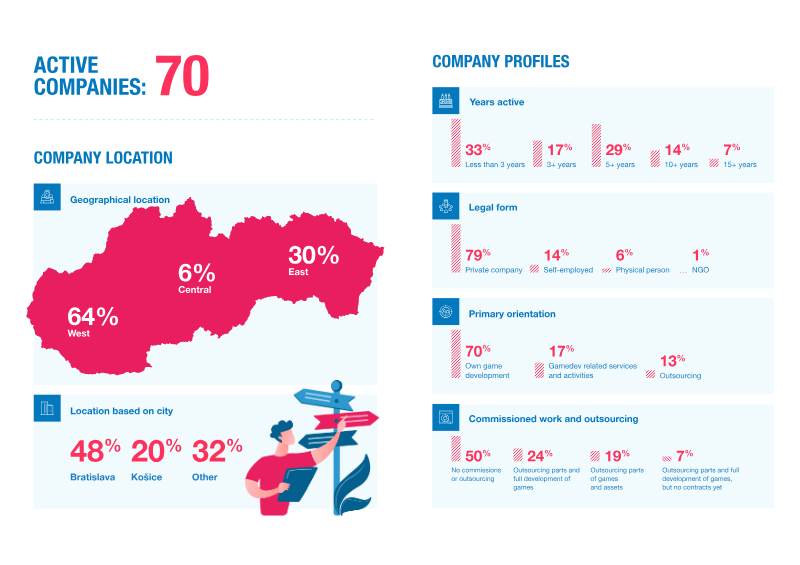
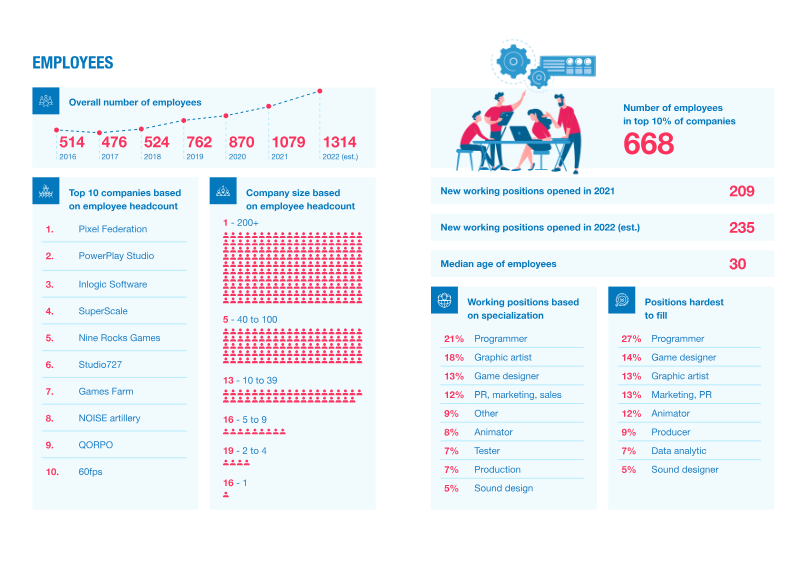
The Slovak game development industry experienced significant growth through 2022, characterized by a robust expansion in both workforce size and total financial turnover.
- The Slovak game development industry grew to 83.2 million EUR in total turnover in 2022, a significant increase from 24.1 million EUR in 2016.
- The workforce expanded to 1,314 professionals by the end of 2022, more than doubling the 514 employees recorded in 2016.
- The sector is highly concentrated, with 70 active companies primarily based in the western region, where 64% of the industry is located in Bratislava.

Building Supercell Under the Sun with Massimo Caporale, CPO at Bandai Namco Mobile
Bandai Namco Mobile, headquartered in Barcelona, functions as a strategic innovation hub designed to complement the parent company’s traditional Japanese-led portfolio through the development of original mobile intellectual property.
- Bandai Namco Mobile operates as a strategic innovation hub in Barcelona, focusing on original mobile IP to complement the parent company’s traditional Japanese portfolio.
- The studio maintains agility by capping team size at approximately 70 people, prioritizing a flat organizational structure over rigid corporate hierarchies.
- Operational philosophy is modeled after Supercell, emphasizing peer-to-peer accountability and the removal of unnecessary management layers to accelerate iteration.
Games as a Driving Force of the 21st Century
The European Games Developer Federation (EGDF) presents a comprehensive analysis of the video game industry’s evolution, positioning games as a primary driver of 21st-century digital culture, technological innovation, and economic growth.
- The European Games Developer Federation represents a network of over 2,500 studios and 40,000 employees across 22 countries, positioning the sector as a primary driver of digital culture and economic growth.
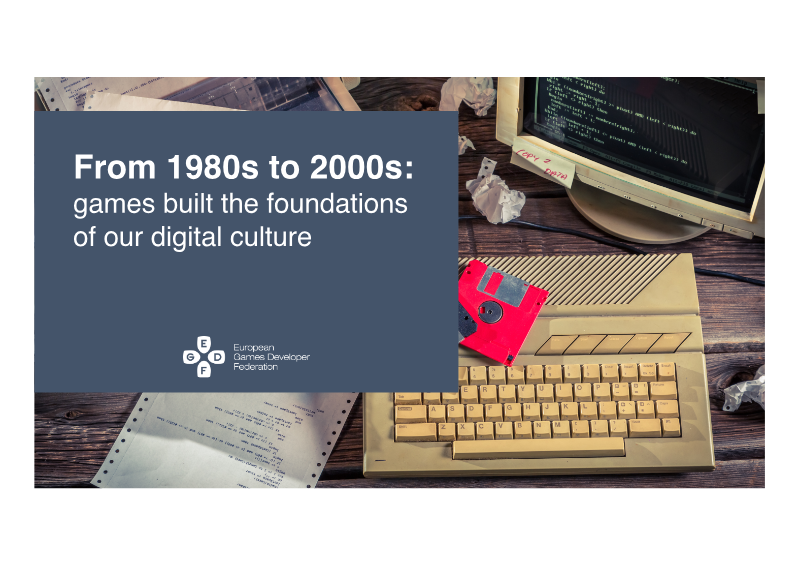
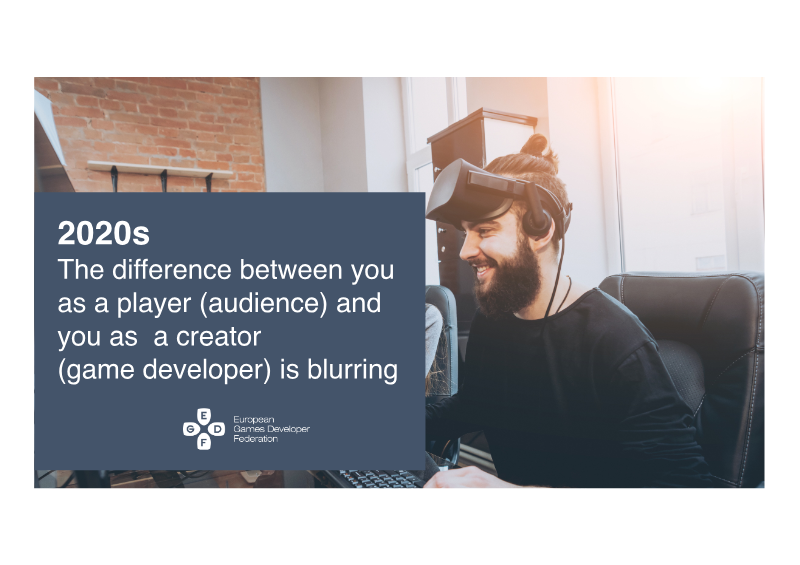
- The industry has evolved from a niche 1980s hobbyist market to a dominant medium, transitioning through 2010s mobile-first and freemium models toward a creator economy defined by user-generated content.
- Current 2020s technological trends are centered on the convergence of cloud gaming, 5G, and artificial intelligence to decentralize content creation.