Cloud Gaming reports and market data
Documents

Tools & Services Survey: November 2024
This analysis examines the evolving landscape of game development tools and services amidst a period of significant market volatility.
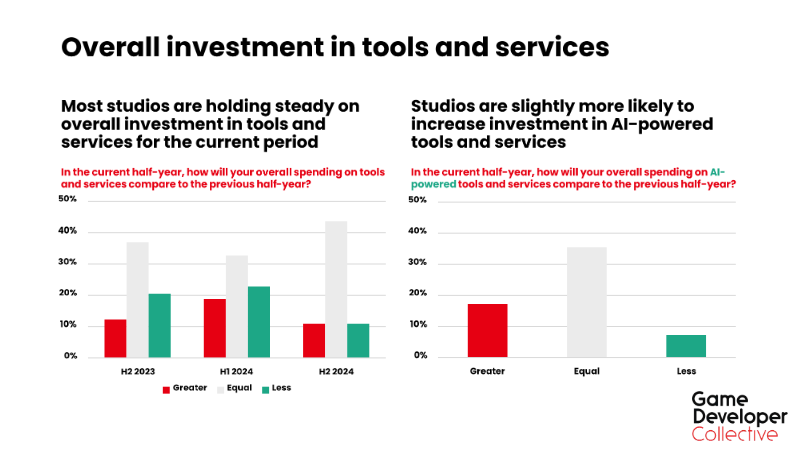
- Market sentiment is increasingly negative, with 55% of developers describing current conditions as 'bad' and 41% of studios reporting underperformance against expectations.
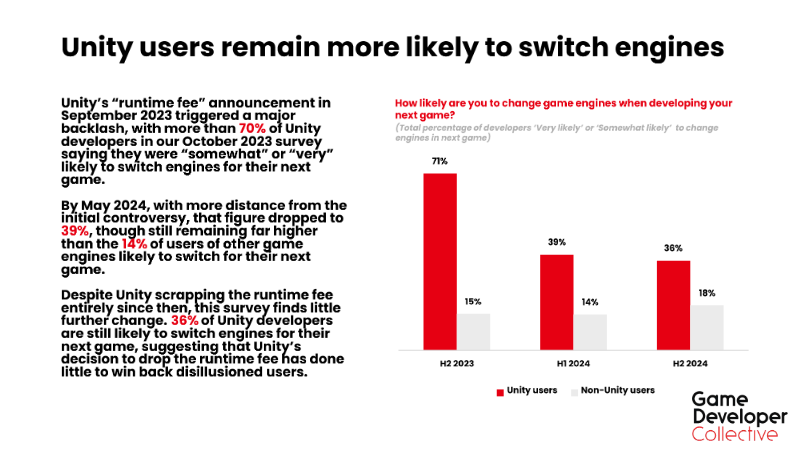
- Unity continues to lose market share following its 2023 runtime fee controversy, with 36% of its users still planning to switch engines compared to only 14% for competitors.
- Brand trust in Unity remains damaged, as only 30% of developers report being happy with the company despite the reversal of its controversial fee policy.

Session: No More BS: Demystifying Game Hosting Beyond Marketing Speak - Lucas Tak, i3D.net
Effective multiplayer game hosting requires balancing high-quality player experiences with strict cost management.
- To minimize latency, game servers must be physically located near the player base to overcome the speed-of-light limitations inherent in data transmission.
- A hybrid hosting strategy is the most effective approach, combining the rapid scalability of cloud computing for fluctuating player counts with the cost-efficient, high-performance nature of bare metal servers for steady-state traffic.
- Direct peering agreements with local internet service providers are essential to bypass inefficient public routing, which reduces both latency and unnecessary bandwidth costs.

The Business of Cloud and Game Servers
Modern game development relies heavily on sophisticated backend infrastructure to ensure high-performance, low-latency experiences for global player bases.
- Studios optimize long-term profitability by transitioning from variable-cost public cloud providers to hybrid models incorporating bare metal servers once player populations stabilize.
- Server-authoritative architecture is the industry standard for competitive gaming, serving as the primary mechanism for enforcing security and anti-cheat validation.
- Effective backend orchestration relies on abstraction layers to manage complex services like matchmaking and identity management, allowing developers to focus resources on core gameplay.
How to Master Europe’s Digital Infrastructure Needs?
Video Games Europe argues that Europe’s digital infrastructure policy should reinforce, rather than reshape, the existing market dynamics that underpin the continent’s thriving video-game ecosystem.
- Video Games Europe opposes new network fees or expanded regulation of cloud services, arguing these measures would threaten net neutrality, increase consumer costs, and damage European digital competitiveness.
- The European video game industry generates €24.5 billion in annual revenue and employs approximately 110,000 people, with 53 percent of the European population participating in gaming.
- Gaming traffic is significantly lower than video streaming, with typical online gameplay consuming 60–80 megabytes per hour and high-intensity titles rarely exceeding 300 megabytes per hour.
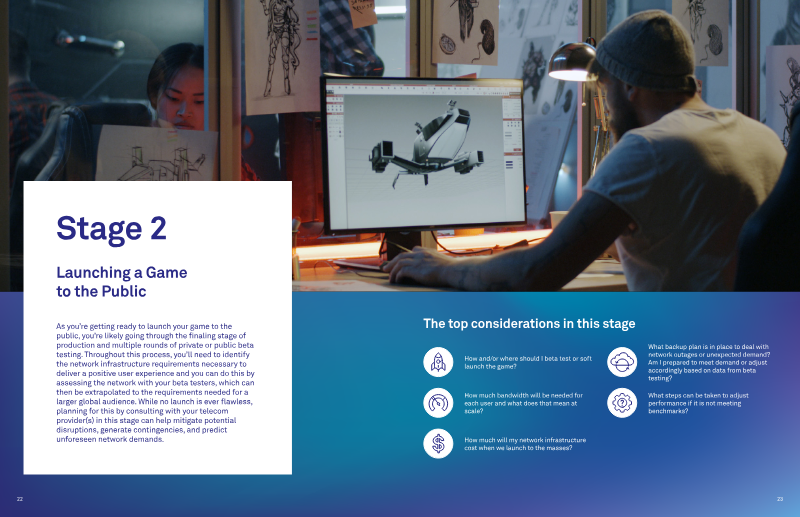
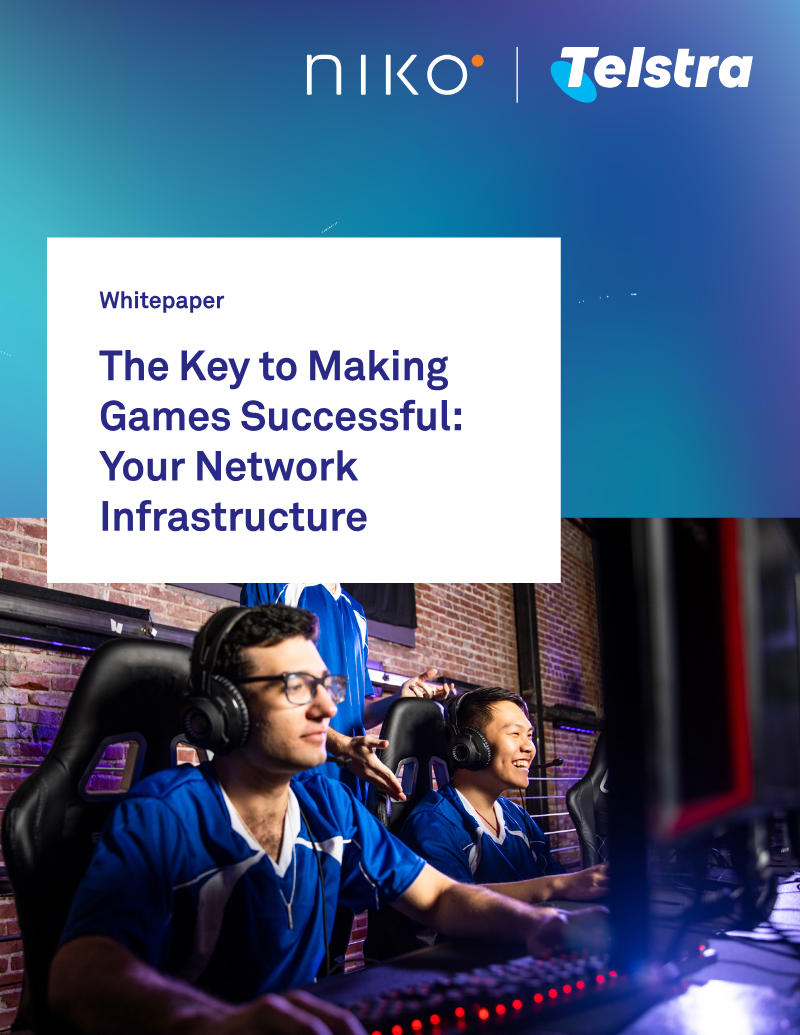
The Key to Making Games Successful: Your Network Infrastructure
Robust, scalable network infrastructure serves as the foundational pillar for modern game development, directly influencing player retention, long-term profitability, and overall market success.
- Robust network infrastructure is a foundational requirement for player retention and long-term profitability in modern globalized game development.
- Strategic network planning must be initiated during the conceptual phase of development and maintained throughout the entire lifecycle of live services.
- Developers must proactively partner with specialized telecommunications providers to navigate fragmented international connectivity and ensure carrier diversity.
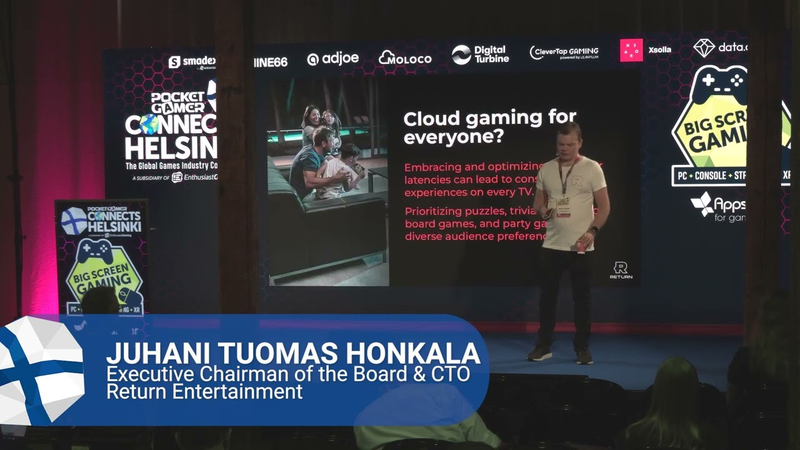
TV Gaming: What Does it Mean for the Audience and Types of Game - Juhani Tuomas Honkala, Return Ent.
The evolution of TV gaming represents a significant shift in interactive entertainment, moving away from the traditional console-centric model toward a more accessible, casual, and social experience.
- The future of TV gaming is shifting away from high-end, console-style experiences toward casual, bite-sized interactive content integrated directly into video-on-demand (VOD) services.
- Mass-market adoption of TV gaming is currently hindered by a disconnect between existing cloud gaming strategies and a target audience that does not identify as hardcore gamers.
- To eliminate the need for dedicated hardware, developers are increasingly utilizing mobile devices as primary controllers and second-screen interfaces.

NAVIGATING GAMING MARKET: TRENDS, TRIUMPHS & TROUBLES with Tom Wijman, Newzoo'a Lead Analyst
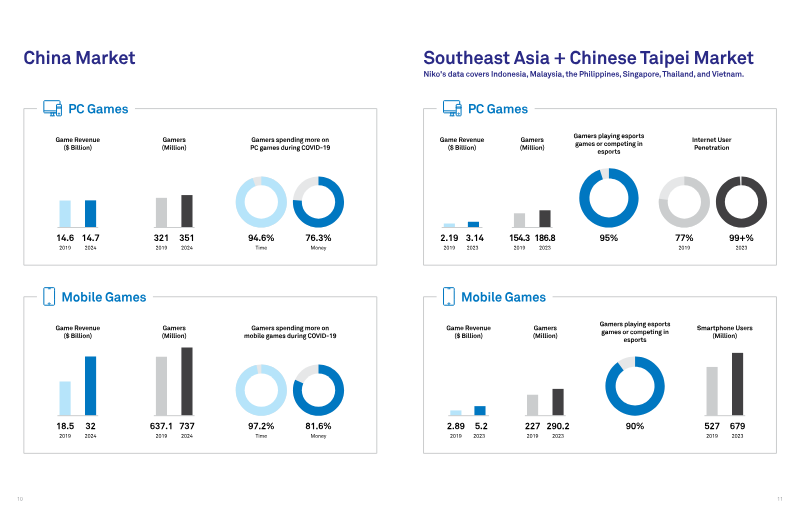
The global gaming market is undergoing a period of stabilization and strategic recalibration as it moves past the post-pandemic volatility of recent years.
- The global gaming market is shifting from rapid expansion to stabilization, with 2023 growth primarily driven by console hardware availability and a backlog of major title releases.
- Publishers are pivoting toward live-service models and subscription platforms to combat slowing player base growth and intense competition for limited consumer time.
- Mobile gaming revenue is stagnating in mature markets due to privacy-related monetization challenges, forcing developers to target growth in Southeast Asia, the Middle East, and Latin America.

PlayStation Portal / Ubisoft Gets Microsoft’s Streaming Rights / NetEase Expansion
The global gaming industry is currently undergoing a period of significant structural realignment, characterized by shifting development strategies, complex regulatory concessions, and aggressive international expansion.
- Microsoft has transferred the cloud streaming rights for Activision Blizzard’s entire portfolio to Ubisoft for a 15-year term to satisfy UK regulatory requirements.
- Baldur’s Gate 3 achieved over 5.2 million PC sales, signaling strong consumer demand for premium RPGs that do not utilize microtransactions.
- NetEase is aggressively expanding into Western markets by acquiring and building AAA studios to move beyond its traditional mobile-centric model in China.

Zynga’s Web3 Launch / Netflix Cloud Gaming / Gran Turismo Movie Release
The gaming industry is currently undergoing a significant recalibration, shifting away from pandemic-era growth expectations toward a model defined by fiscal discipline and sustainable development.
- The gaming industry is shifting toward fiscal discipline and cash conservation, evidenced by the collapse of a $2 billion partnership between Savvy Games Group and Embracer Group that led to widespread studio restructuring.
- Investors are increasingly risk-averse, favoring sustainable development models over the speculative expansion strategies that defined the pandemic era.
- Studios are adopting cautious transmedia strategies by licensing secondary intellectual property for film adaptations rather than risking their most valuable franchises.
Microsoft’s Activision Acquisition: Implications for the Cloud Gaming Market and Industry
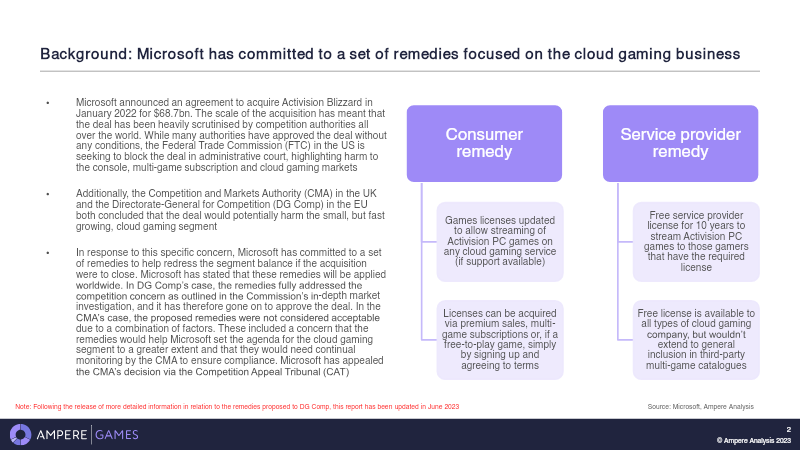
This analysis examines the implications of Microsoft’s $68.7 billion acquisition of Activision Blizzard, specifically focusing on the cloud gaming remedies proposed to global competition authorities.
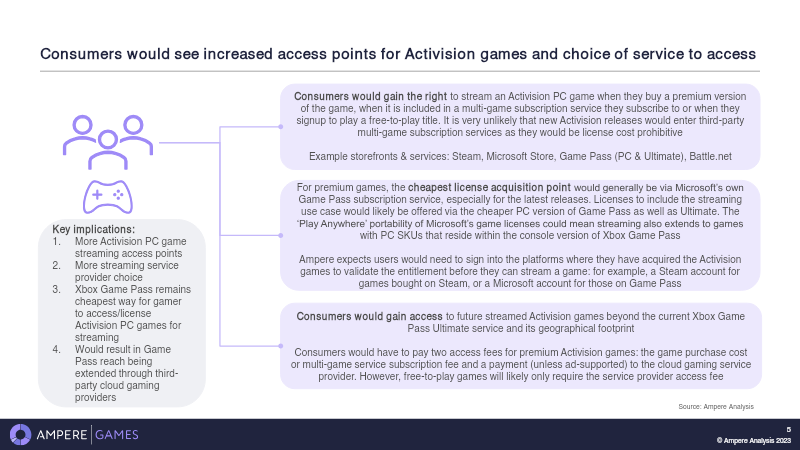
- Microsoft’s $68.7 billion acquisition of Activision Blizzard includes a ten-year commitment to provide free streaming licenses for Activision PC games to third-party cloud providers.
- The cloud gaming market is currently a nascent sector, valued at $446 million in 2022 and accounting for less than 0.3% of total global consumer spending on games.
- The mandated 'bring-your-own-game' (BYOG) licensing model allows consumers to stream Activision titles on competing platforms, potentially forcing third-party providers to adopt these games to remain competitive.

Amazon's New MMO / Google Shows Off AI / Cross Platform Gaming Data
The gaming industry is currently undergoing a structural transformation defined by aggressive consolidation, the prioritization of established intellectual property, and a decisive shift toward cross-platform accessibility.
- Over 72 percent of gamers now engage across multiple platforms, forcing developers to prioritize cross-platform accessibility to reach broader audiences and bypass platform-specific revenue fees.
- Major publishers like Amazon Games and Embracer Group are shifting toward an IP-led strategy, focusing on established franchises to mitigate the high risks and user acquisition costs of launching new products.
- Service providers such as Keywords Studios are scaling into comprehensive development hubs to support the industry's structural consolidation and the demand for multi-media IP ecosystems.
The Future of the Electronic Communications Sector and Its Infrastructure – Video Games Europe Reply
Video Games Europe argues that imposing network fees on high-bandwidth users would harm consumers, the broader Internet ecosystem and the European video-games sector.
- Video Games Europe opposes mandatory network fees for high-bandwidth users, arguing they violate net-neutrality principles and would harm the European video-game sector.
- The European video-games industry comprises approximately 5,100 studios and publishers, generating €12 billion in annual turnover and €23 billion in consumer spending as of 2021.
- Imposing traffic-based fees would create significant financial and technical burdens for publishers, who are already required by the Digital Content Directive to provide frequent security patches and updates.