Showing 30 of 406 results · 0.55s
Oct 2018
FY2019 First Quarter Financial Results
GREE
quarter-over-quarter basis. The business strategy focuses on three primary pillars: mobile game engines, intellectual property (IP) development, and global expansion. Key operational highlights include the release
Financial30 pages
Feb 2022
Summary of Financial Results for Fiscal Year Ended December 31, 2021 (Japanese GAAP)
KLab
high costs of intangible asset development and the diminishing returns from the current mobile gaming portfolio within the Japanese market. Looking forward, the outlook remains cautious as earnings
Financial18 pages
Oct 2017
FY2018 1Q Result Presentation
GREE
This performance was driven primarily by the successful release and operation of native mobile games and a stable browser-based business. While net income appeared lower year
Financial5 pages
Oct 2017
Summary of Main Questions and Answers at the FY2018 First Quarter GREE Results Briefing Held on October 27, 2017
GREE
strong financial base to fund large-scale development and multi-media collaborations. Beyond mobile gaming, there is a continued commitment to the virtual reality sector, focusing on building
Financial3 pages
Apr 2022
Form 20-F: Bilibili 2021
Bilibili
secondary listing in Hong Kong. Management continues to prioritize platform diversification—expanding from mobile gaming into value-added services, advertising, and e-commerce—while navigating a stringent regulatory
Financial1 pages
Playstudios, Inc. Third Quarter Results 2024
Playstudios
scaling, and function consolidation. Overall, PlayStudios demonstrated improved profitability margins amid a challenging mobile gaming environment while maintaining liquidity and pursuing strategic growth initiatives
Financial10 pages
Nov 2025
Take-Two Interactive Software, Inc. Reports Results for Fiscal Second Quarter 2026
Take-Two Interactive
cornerstone of the business model, accounting for 95% of total revenue. Although mobile gaming remains a significant contributor, console bookings have reclaimed the lead in platform mix, representing
Financial14 pages
Nov 2025
Second Quarter Fiscal 2026 Results & Guidance Summary
Take-Two Interactive
toward enhanced profitability. The geographic scope is international, covering global console, PC, and mobile gaming segments
Financial16 pages
Feb 2026
Financial Results: Fiscal Year Ended December 31, 2025 (Japan)
GungHo Online Entertainment
million. The downturn is attributed to higher development costs and a flat mobile‑gaming market, while total assets increased to ¥169,474 million. Cash balances fell sharply
Financial20 pages
Dec 2024
Annual Report: G5 Entertainment AB 2024
G5 Entertainment AB
reflects a strategic pivot toward operational efficiency and margin expansion within the global mobile gaming sector. Despite a 14% year-over-year revenue decline
Financial95 pages
Q1 2025 Earnings Release
Devsisters
scaling of UA initiatives, positioning the company for sustained profitability across its core mobile gaming segment
Financial18 pages
Ten Square Games Q2 2026 Earnings Presentation
Ten Square Games
capital-light operational framework designed to navigate the complexities of the global mobile gaming market. By leveraging internal data to optimize monetization and user acquisition, the firm continues
Financial39 pages
May 2026
Playtika Form 10-Q: Q1 2026
Playtika
liquidity, and a disciplined approach to debt and risk management across its global mobile gaming operations
Financial1 pages
Unaudited Financial Results: Third Quarter Fiscal 2026
Gamehaus Holdings
quarter of fiscal year 2026, ending March 31, 2026. The company, a global mobile game publisher, focuses on a strategy of disciplined cost management and product portfolio diversification
Financial6 pages
Oct 2023
Financial Results for the First Half of the Fiscal Year Ending March 2024
Koei Tecmo
fueled by the successful launch of Fate/Samurai Remnant and record performance within the mobile gaming segment, specifically through titles like Atelier Resleriana. While operating profit experienced
Financial33 pages
Jan 2011
Fiscal Year Ended March 2012 Financial Results
Koei Tecmo
globalization of core IPs and an aggressive pivot toward digital download revenue and mobile gaming markets. While these projections reflect a robust outlook for the 2012 fiscal year
Financial34 pages
Take-Two Interactive Reports Results for Fiscal First Quarter 2027
Take-Two Interactive
accounted for 60% of net revenue, while international markets contributed 40%. By platform, mobile games represented 50% of net revenue, followed by console
Financial12 pages
Consolidated Financial Results: FY2026 1st Quarter
Koei Tecmo
profit margin of 31%, supported by a robust portfolio of console, PC, and mobile gaming assets. The entertainment segment remains the primary revenue driver, contributing 15.93 billion
Financial7 pages
Nov 2022
SciPlay Q3 FY2022 10-Q
SciPlay
filed on November 4, 2022, present a mixed performance for the emerging‑growth mobile gaming company. Revenue rose 17 % to $170.8 million, driven by robust in‑app purchase
Financial1 pages
Nov 2024
AppLovin 10-Q: Q3 2024
AppLovin
advertising engine, AXON, and the expansion of its platform into new verticals beyond mobile gaming have been central to this trajectory, resulting in an Adjusted EBITDA
Financial1 pages
Consolidated Financial Results for the Three Months Ended June 30, 2026
mixi
Digital Entertainment, Sports, Lifestyle, and Investment. The Digital Entertainment business, anchored by the mobile game Monster Strike, saw net sales grow by 21.5% to ¥19,532 million, driven
Financial14 pages
May 2014
First Quarterly Report 2014
IGG
year-over-year increase. This growth was primarily fueled by the mobile gaming segment, which accounted for 79.3% of total revenue, largely due to the widespread success
Financial32 pages
Nov 2024
Skillz Inc. Form 8-K
Skillz
year, moving from $18.5 million to $13.9 million. Key performance indicators for the mobile gaming platform showed a paying monthly active user (PMAU) count of 121,000, which
Financial13 pages
Summary of Financial Results for First 3 Quarters of Fiscal Year Ending December 2014: Japan
KLab
after its absorption merger. The results reflect a robust recovery in the Japanese mobile gaming segment during
Financial12 pages
Summary of Financial Results: Fiscal Year Ending December 31, 2018
KLab
under Japanese GAAP. Revenue rose 22.0 % to ¥32.67 billion, driven by mobile game titles such as Love Live! School Idol Festival, BLEACH Brave Souls, and YU HAKUSHO
Financial18 pages
Jan 2024
Q1’24 Gaming Deals Report
InvestGame
renewed appetite for strategic consolidation even as overall market confidence remains tentative. Mobile gaming, the largest revenue generator within the industry, shows a modest contraction in the current
Financial33 pages
Aug 2023
Huuuge 2Q 2023 Presentation
Huuuge
program concluded in July 2023. Geographically and industrially, the scope covers the global mobile gaming market, specifically the social casino segment. Methodology involves the analysis of key performance
Financial22 pages
Apr 2023
Gravity Co. 20-F: FY2022
Gravity Co.
limited voting rights and withholding taxes. Overall, Gravity Co. balances robust growth in mobile gaming against concentrated franchise risk, regulatory complexity, and currency exposure
Financial1 pages
Mar 2022
Form 10-K: FY 2021
AppLovin
platform—comprising AppDiscovery, Adjust, and MAX—with a vast portfolio of over 350 mobile games. This "strategic flywheel" leverages internal and third-party data to optimize marketing
Financial1 pages
Feb 2025
AppLovin Form 10-K: FY 2024
AppLovin
into e-commerce and Connected TV—AppLovin has initiated the divestiture of its mobile gaming studio portfolio, marked by a pending $900 million sale. This shift is accompanied
Financial1 pages
FY2019 First Quarter Financial Results
Oct 201830 pages2k words
Summary
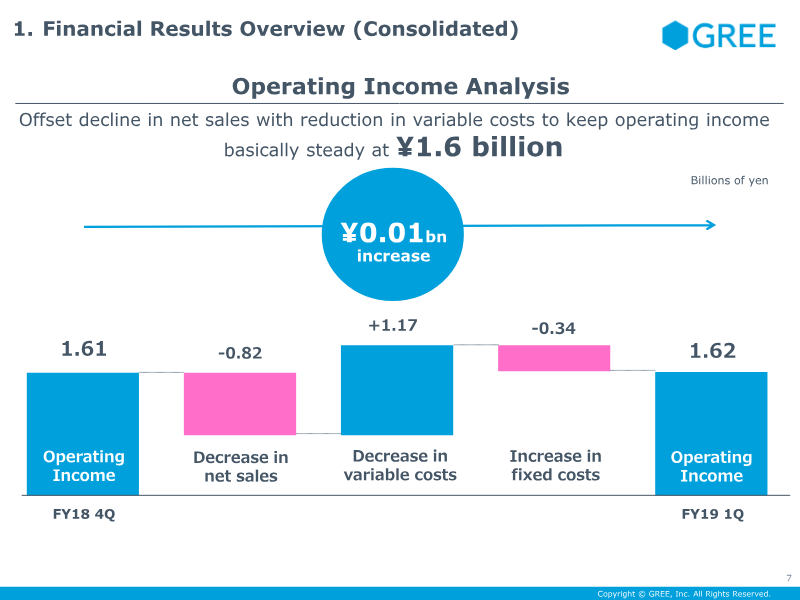
The financial results for the first quarter of fiscal year 2019 detail a period of strategic transition characterized by steady operating income despite a year-over-year decline in net sales. Net sales reached ¥18.2 billion, a decrease from ¥21.6 billion in the same period the previous year, while operating income remained stable at ¥1.6 billion. This stability was achieved by offsetting declining revenue with a reduction in variable costs, specifically through more efficient advertising spend and lower commission fees. The operating income margin improved slightly to 8.9% on a quarter-over-quarter basis.
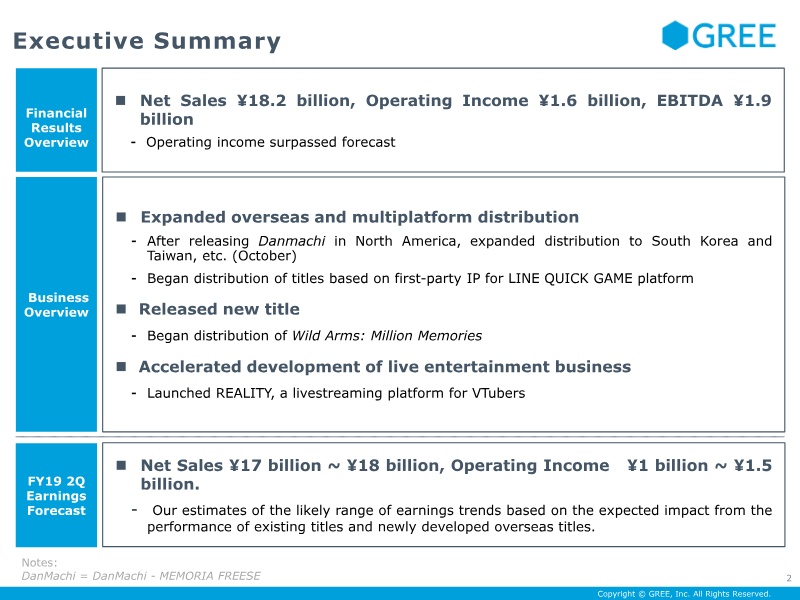
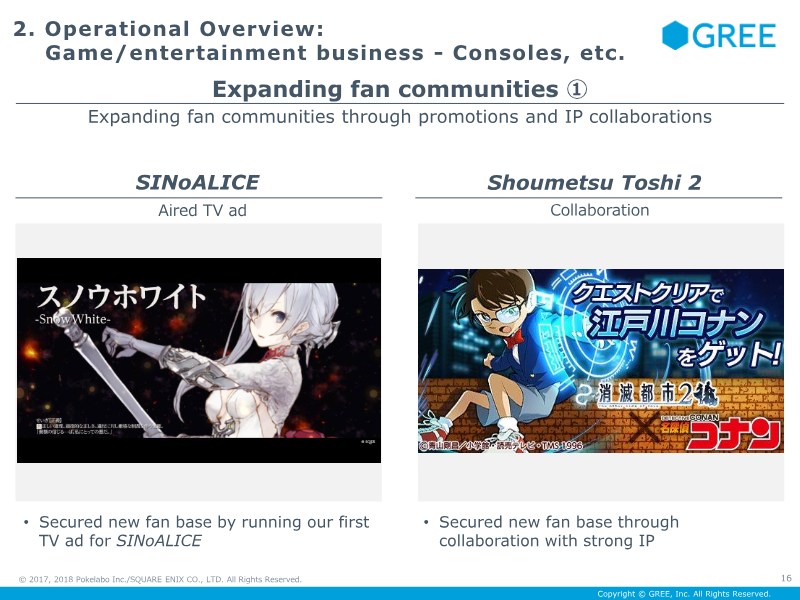
The business strategy focuses on three primary pillars: mobile game engines, intellectual property (IP) development, and global expansion. Key operational highlights include the release of Wild Arms: Million Memories and the expansion of Danmachi: Memoria Freese into South Korea and Taiwan. The company is also diversifying its platform reach by developing titles for the Nintendo Switch and the LINE QUICK GAME platform. Furthermore, there is a significant push into the live entertainment sector with the launch of REALITY, a dedicated livestreaming platform for VTubers, supported by joint ventures with King Records and Idea Factory.
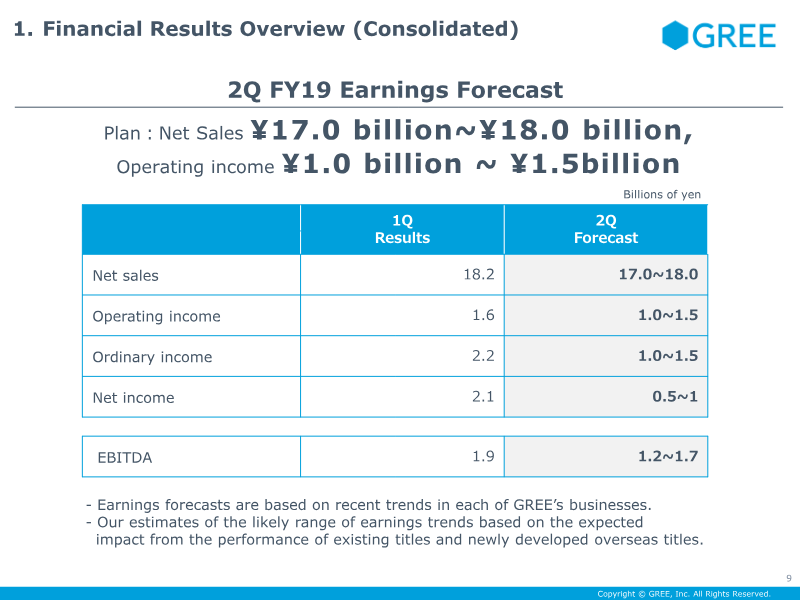
Geographically, the focus remains on the Japanese market while aggressively pursuing growth in North America, Europe, and Greater China through both self-distribution and partnerships. For the second quarter of fiscal 2019, the earnings forecast anticipates net sales between ¥17 billion and ¥18 billion, with operating income projected between ¥1 billion and ¥1.5 billion. This outlook reflects the expected performance of existing titles and the continued rollout of newly developed overseas projects. The consolidated headcount grew to 1,604 employees by the end of the first quarter, reflecting ongoing investment in development and new business segments.
Pages
Insights
- Net sales for Q1 FY2019 declined to ¥18.2 billion from ¥21.6 billion year-over-year, though operating income remained stable at ¥1.6 billion due to reduced advertising and commission costs.
- The operating income margin improved to 8.9% on a quarter-over-quarter basis through strategic cost efficiencies.
- The company is diversifying its platform strategy by developing titles for the Nintendo Switch and LINE QUICK GAME, alongside the release of 'Wild Arms: Million Memories' and the regional expansion of 'Danmachi: Memoria Freese'.
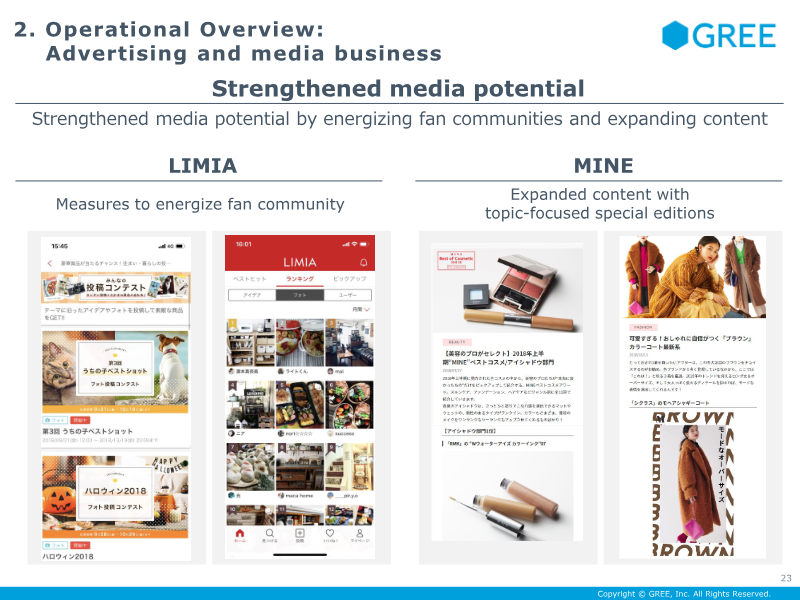
- A new growth pillar is the live entertainment sector, marked by the launch of the VTuber livestreaming platform 'REALITY' in partnership with King Records and Idea Factory.
- Q2 FY2019 earnings forecasts project net sales between ¥17 billion and ¥18 billion, with operating income expected to range from ¥1 billion to ¥1.5 billion.
Operating Income Analysis