
AppLovin’s fiscal year 2024 performance reflects a strategic pivot toward high-margin advertising technology, underscored by significant financial growth and a restructuring of its core business segments. The company, which operates as a large accelerated filer, generated $4.71 billion in total revenue in 2024, a 43% increase over the previous year. This growth was primarily driven by its AI-powered advertising engine, AXON, which facilitates large-scale user acquisition and monetization across its Advertising segment. The company successfully transitioned from a net loss in 2022 to a net income of $1.58 billion in 2024, while simultaneously improving operational efficiency by reducing operating expenses as a percentage of revenue.
The company’s primary business segments consist of Advertising and Apps. To sharpen its focus on advertising technology—including expansion into e-commerce and Connected TV—AppLovin has initiated the divestiture of its mobile gaming studio portfolio, marked by a pending $900 million sale. This shift is accompanied by a disciplined approach to capital allocation, highlighted by a $3.6 billion refinancing of its debt through senior notes and an aggressive share repurchase program that retired over 16 million shares in 2024. Despite this strong financial trajectory, the company maintains a "controlled company" governance structure, with approximately 68% of voting power held by its co-founders.
Operational risks remain a central theme, as the company navigates a complex global landscape defined by evolving data privacy regulations, reliance on third-party platforms like Apple and Google, and intense competition. Management emphasizes that future performance is subject to volatility stemming from macroeconomic factors, geopolitical tensions, and the integration challenges inherent in its international expansion. While the company reports a stable liquidity position and effective internal controls, its long-term success depends on its ability to maintain technological innovation, navigate shifting regulatory requirements, and successfully execute its strategy of prioritizing high-margin advertising services over its legacy app portfolio.
AppLovin · 2026
AppLovin · 2026

AppLovin · 2026

AppLovin · 2026

AppLovin · 2025

AppLovin · 2025
AppLovin · 2025
AppLovin · 2025

AppLovin · 2024

AppLovin · 2024

AppLovin · 2024

AppLovin · 2023
Almedia · 2026
Sensor Tower · 2026
Modern Times Group · 2026
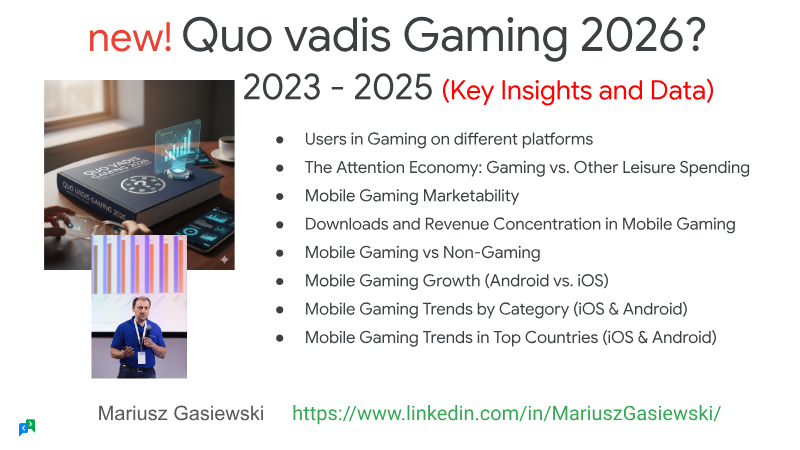
InvestGame · 2026
Unity · 2025

Sensor Tower · 2025

Moloco · 2025

AppsFlyer · 2025

King · 2025

GamingReport · 2025

Adjust · 2025

Adjust · 2025