GREE’s financial performance for the third quarter of fiscal year 2016 reflects a period of strategic transition characterized by rigorous cost management and a pivot toward native mobile game development. Net sales reached ¥16.8 billion, while operating income remained stable at ¥3.6 billion. This stability was largely achieved through a ¥1.0 billion reduction in quarterly operating costs, specifically targeting advertising expenditures and server leasing fees. Although underperforming native titles necessitated a downward revision of the full-year sales forecast to ¥70.0 billion, the company increased its net income projection to ¥11.5 billion, signaling confidence in its bottom-line efficiency and upcoming domestic releases.
The operational focus has shifted toward stabilizing the core gaming business while diversifying into emerging technologies and services. While total coin consumption declined year-over-year to 22.2 billion, the expansion of the "funplex" game operation business and the global launch of titles like League of War: Mercenaries represent key growth initiatives. Beyond traditional gaming, there is a concerted effort to scale segments in home renovation, health, and advertising. Furthermore, the establishment of the GVR Fund highlights a strategic commitment to the North American virtual reality market as a long-term investment pillar.
Organizational resources are heavily concentrated in the domestic Japanese market, which employs over half of the 1,516-person global workforce. The Native Game Business, including subsidiaries such as Pokelabo and Wright Flyer Studios, serves as the primary engine for human capital allocation. This internal structure supports a broader strategy of balancing established browser-based game operations with the high-growth potential of native applications and international commerce. As the company enters the final quarter of the fiscal year, its trajectory depends on the successful deployment of new domestic titles and the continued optimization of its diversified business portfolio.
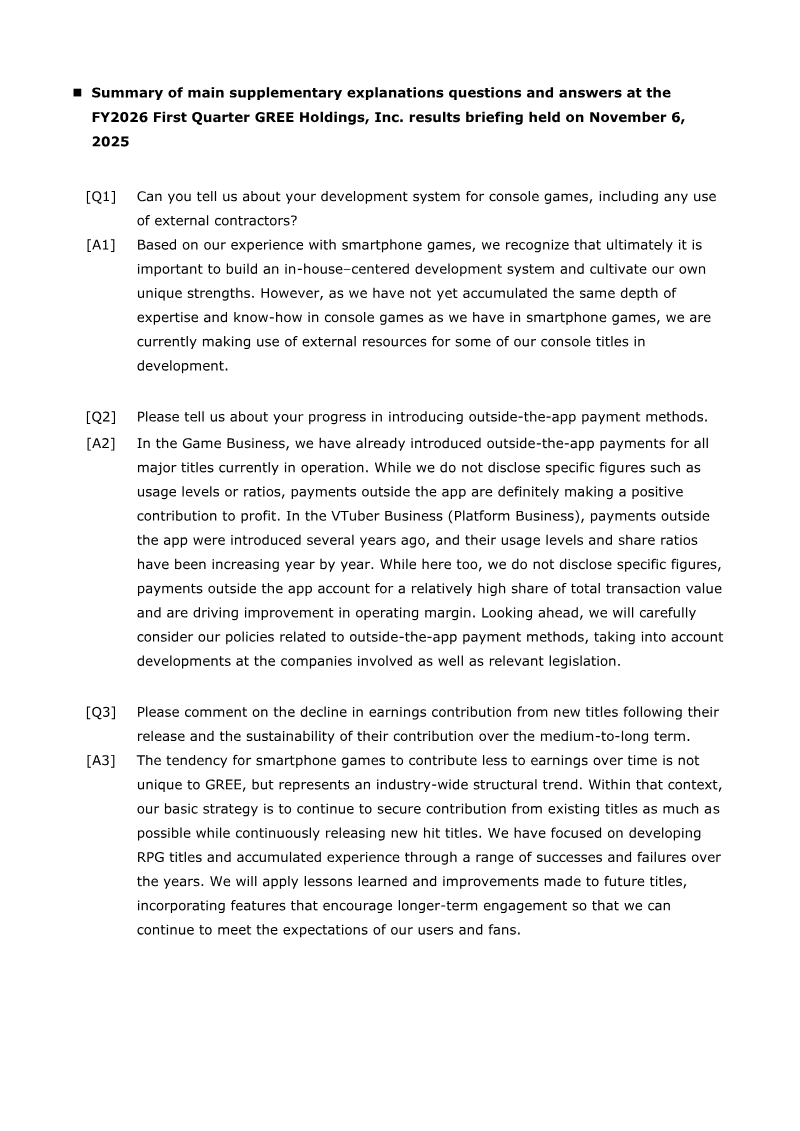
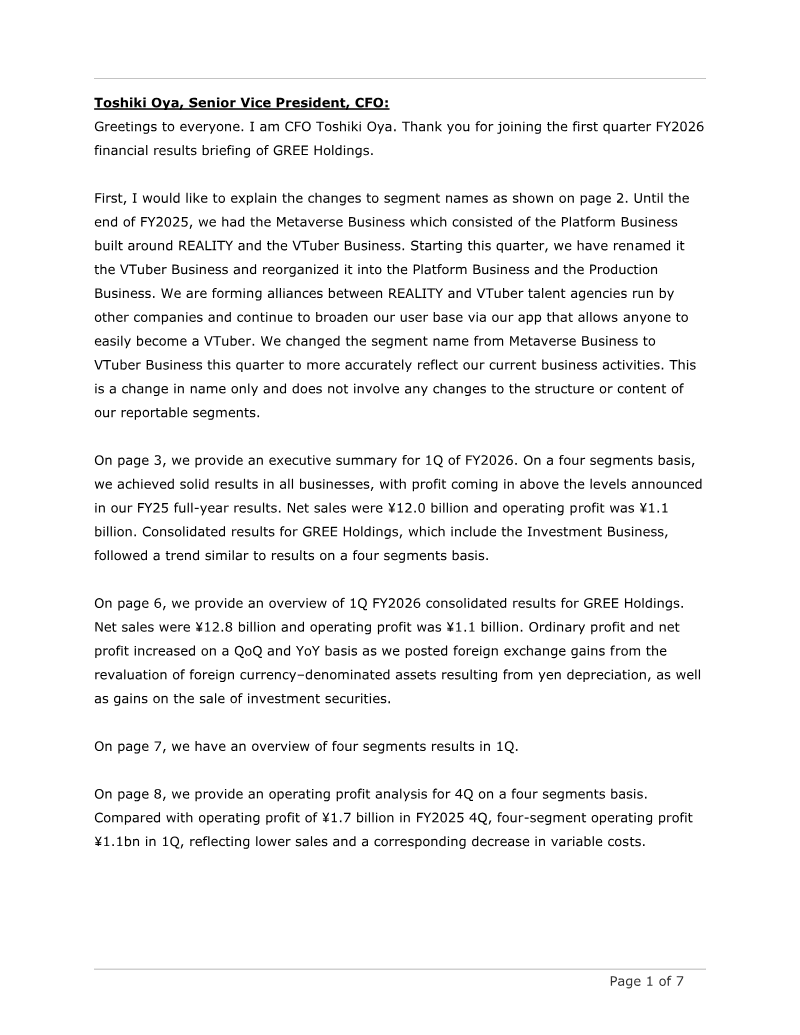
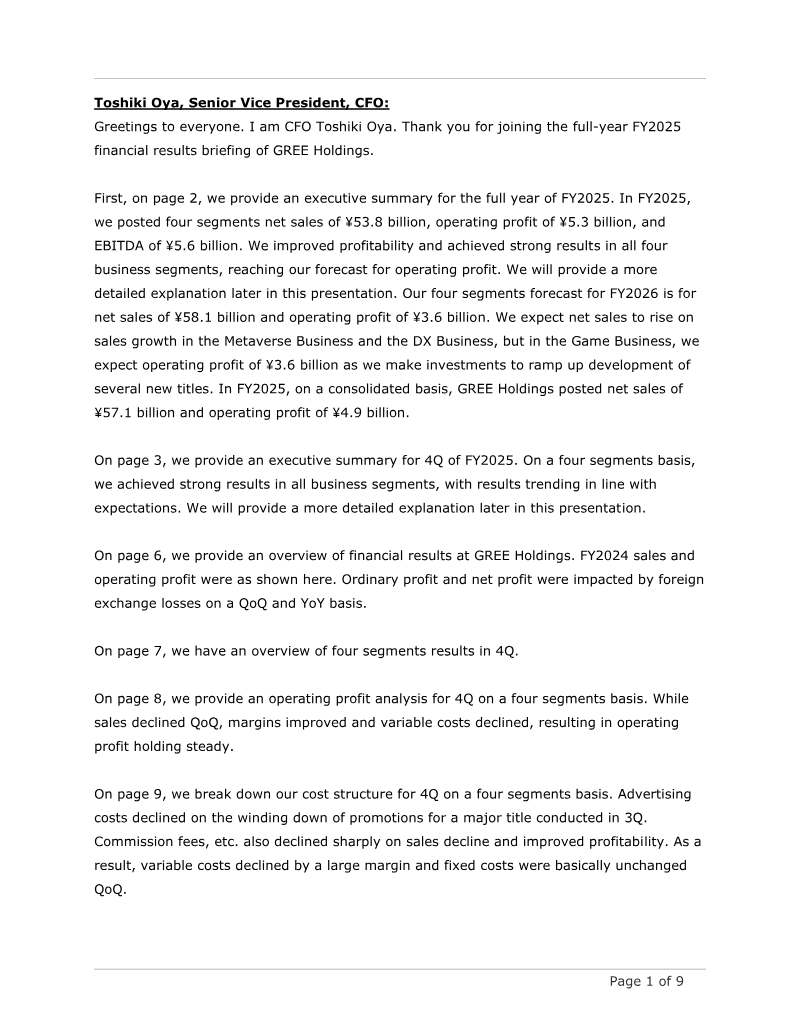
GREE · 2026
GREE · 2026
GREE · 2026
GREE · 2025
GREE · 2025
GREE · 2025
GREE · 2025
GREE · 2025
GREE · 2025
GREE · 2025
GREE · 2025
GREE · 2025
Capcom · 2026
Capcom Co. · 2026
Capcom · 2026
Sony Group Corporation · 2026

Square Enix · 2026
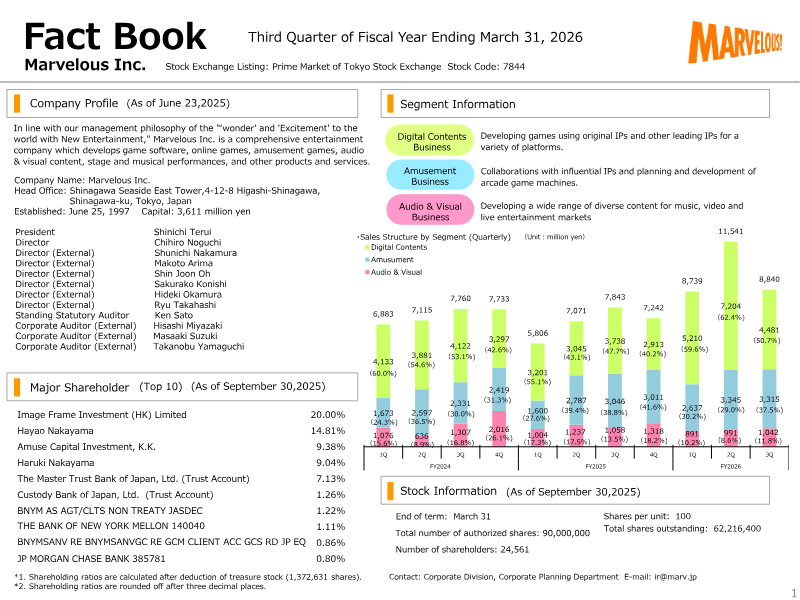
Marvelous · 2026
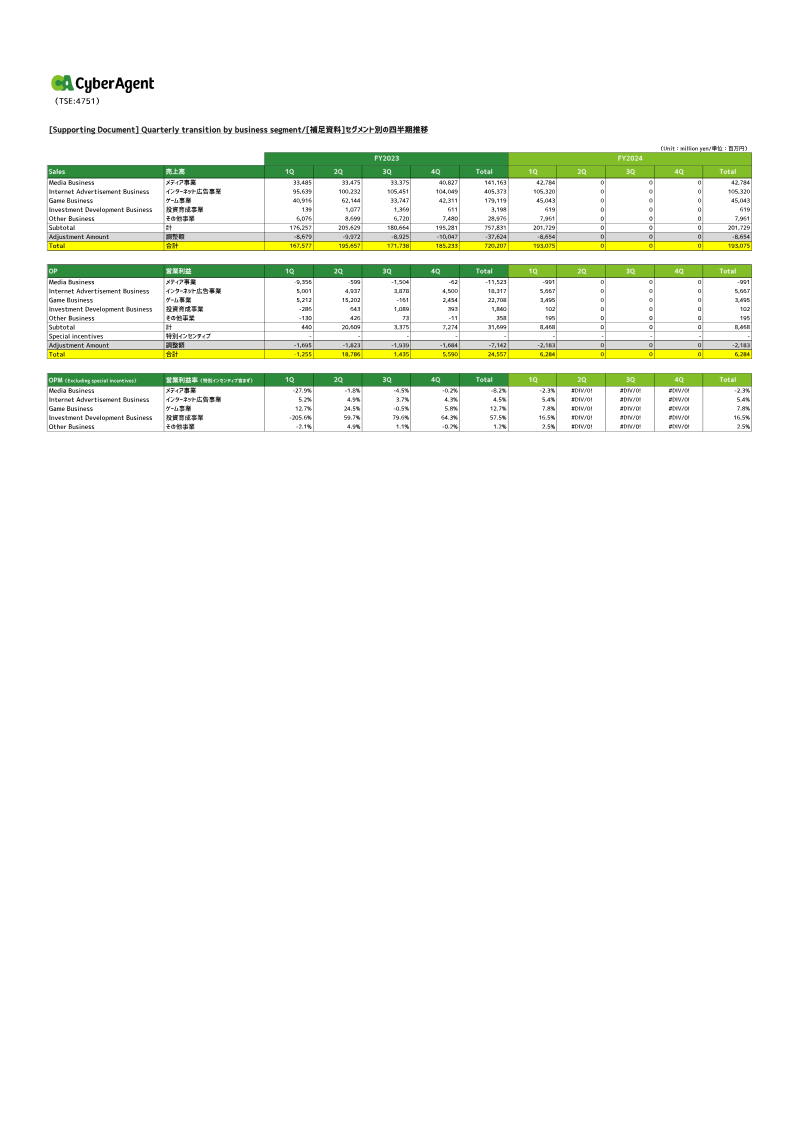
CyberAgent · 2026
Square Enix · 2026
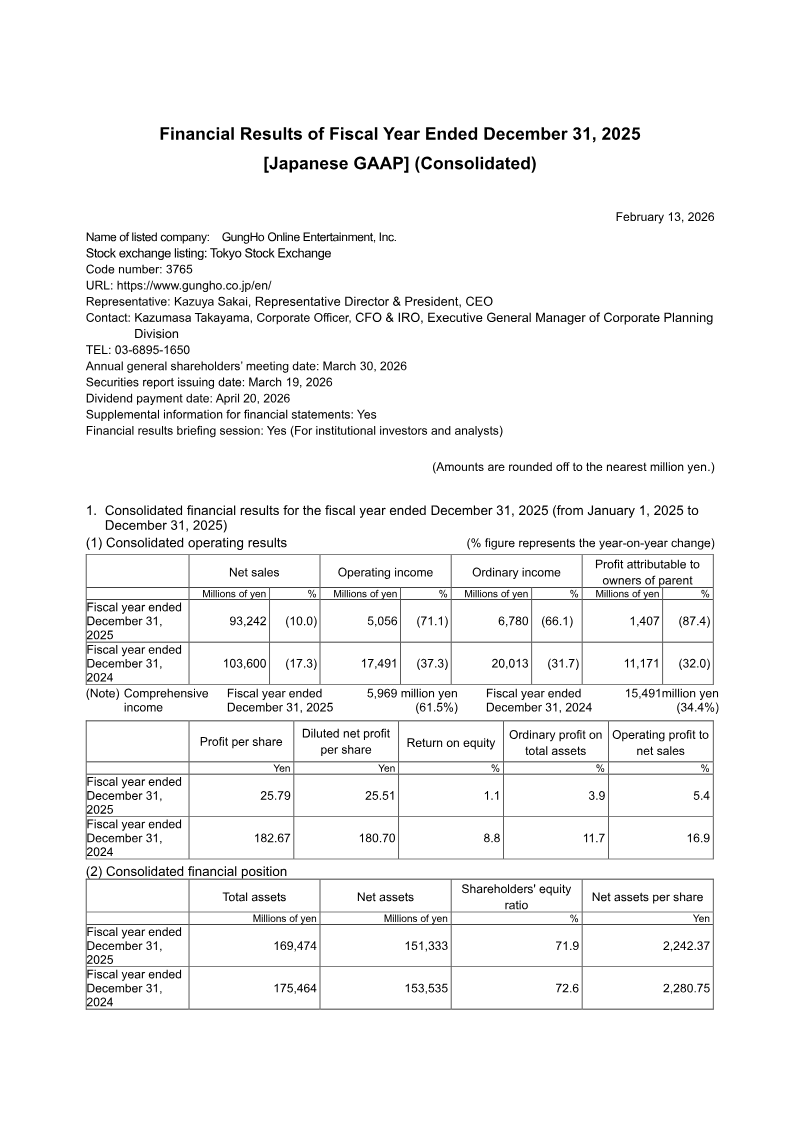
GungHo Online Entertainment · 2026
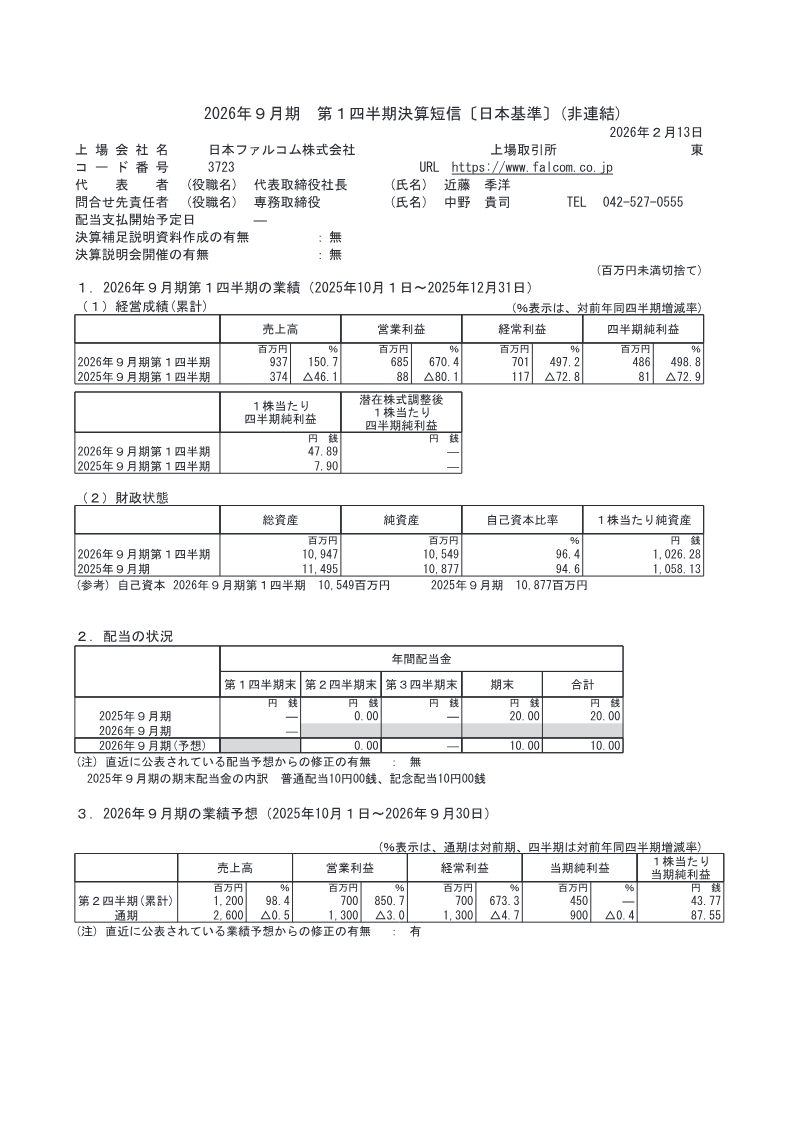
Nihon Falcom Corporation · 2026
Sega Sammy Holdings · 2026
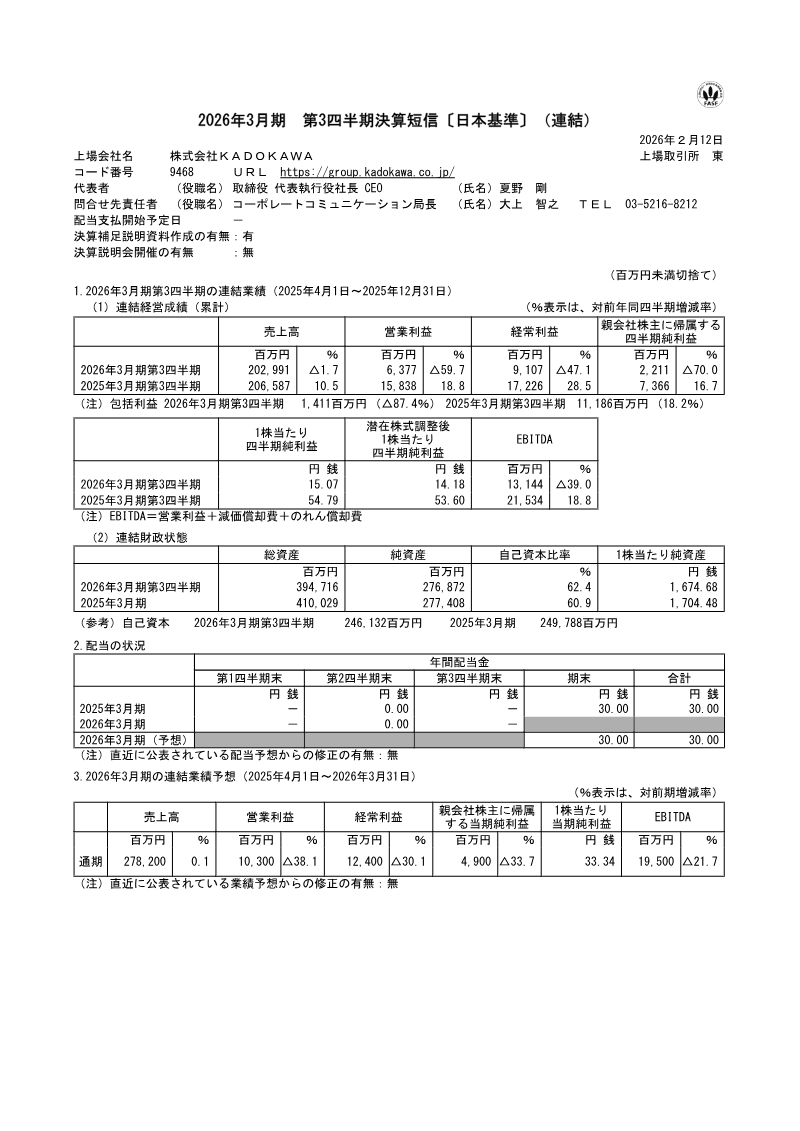
Kadokawa Corporation · 2026