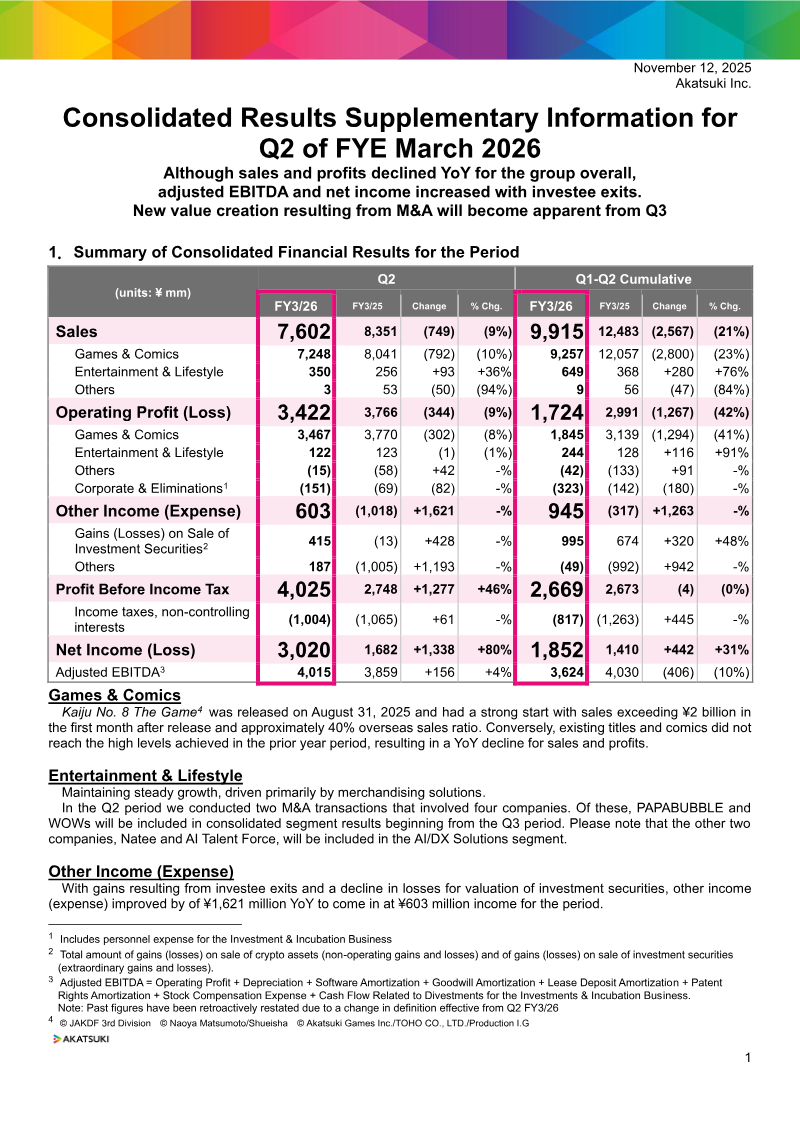
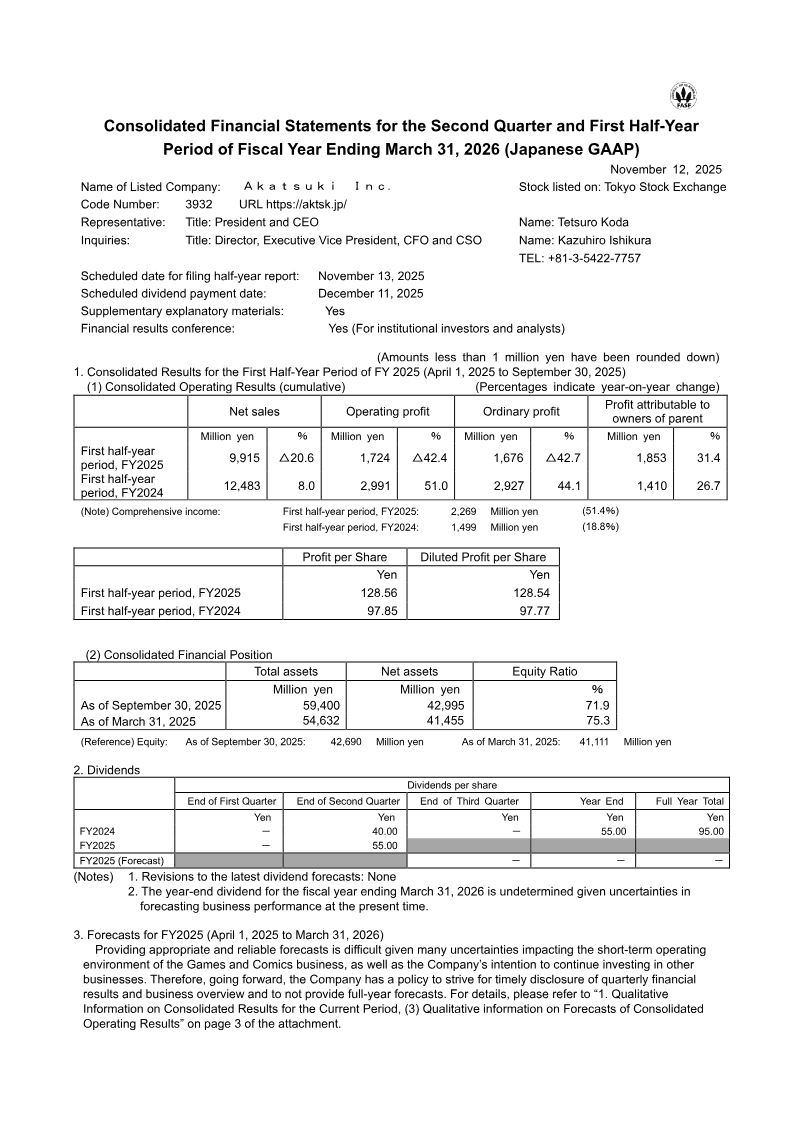
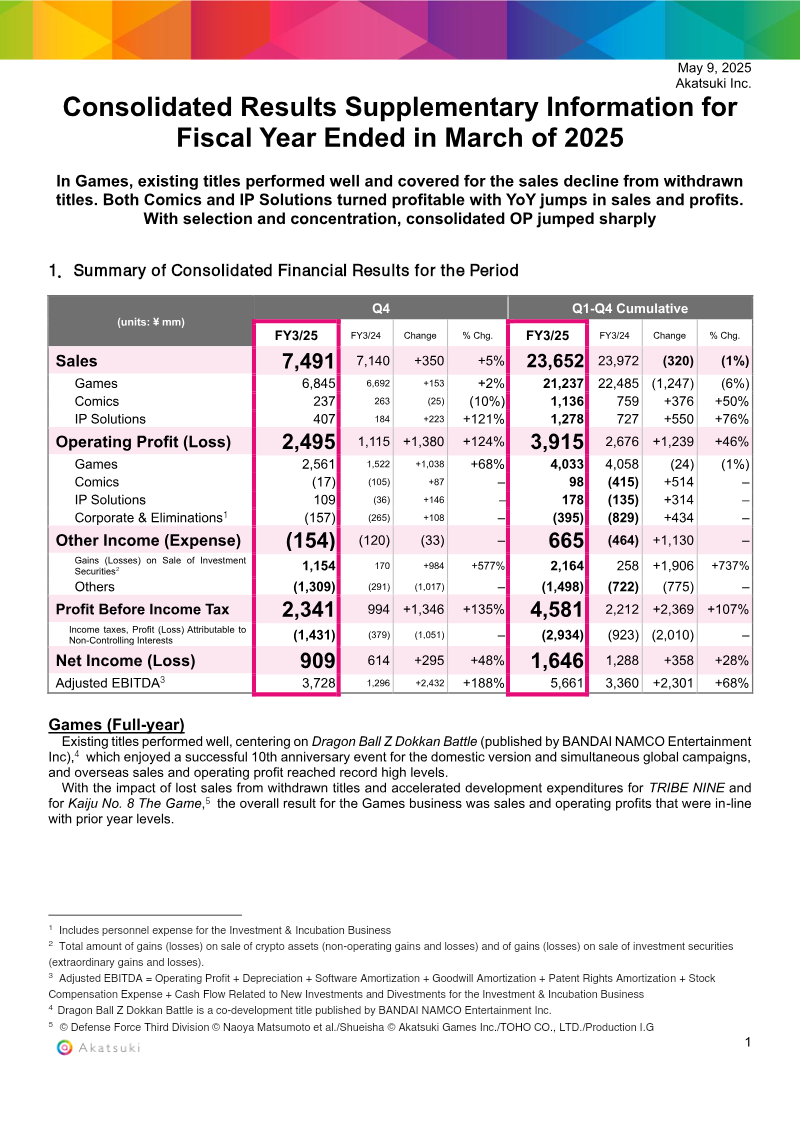
Akatsuki Inc. achieved consolidated sales of ¥7,602 million and a net income of ¥3,020 million during the second quarter of the fiscal year ending March 2026, representing an 80% year-over-year increase in profitability. This financial performance was primarily bolstered by strategic investment exits and the successful launch of Kaiju No. 8 The Game, which secured over 5 million downloads and generated more than ¥2 billion in its debut month. While the core Games & Comics segment experienced a 10% decline in sales compared to the previous year’s high benchmarks, the company maintained strong operational momentum through established titles like Dragon Ball Z Dokkan Battle and a significant 40% overseas sales ratio for new releases.
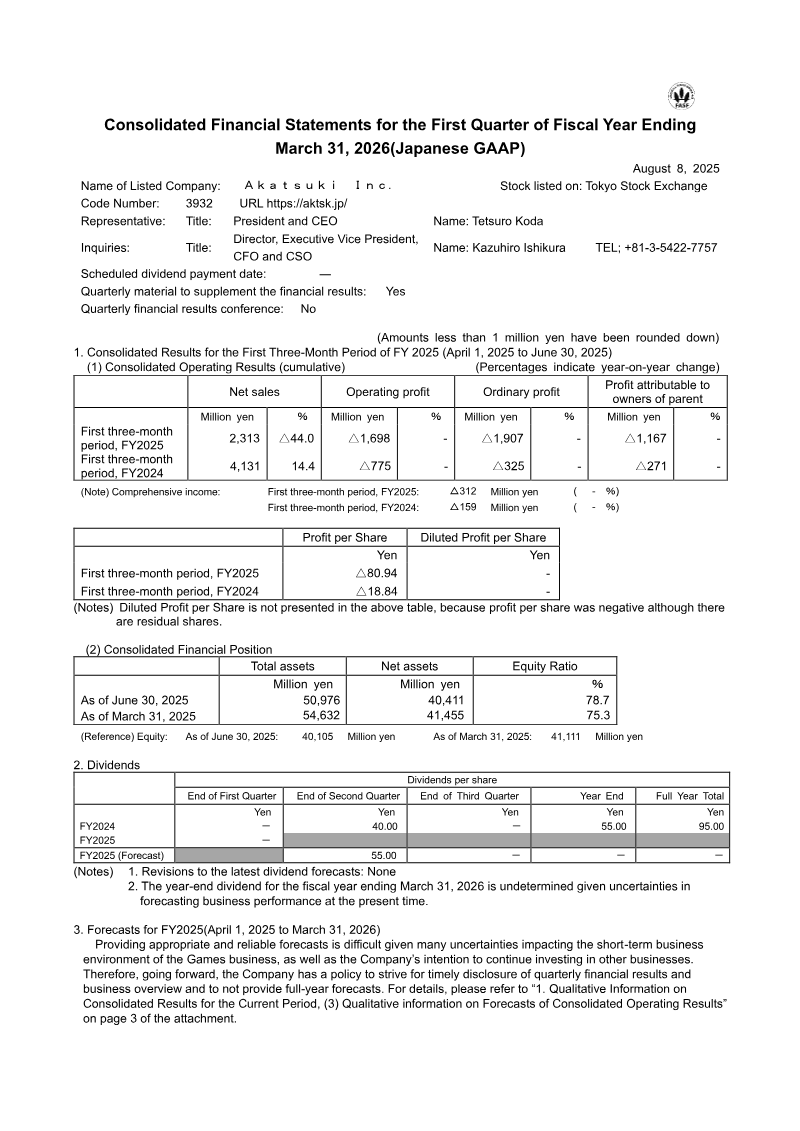
The strategic focus has shifted toward a reorganized three-segment business model designed to diversify revenue streams beyond traditional mobile gaming. This evolution includes the expansion of the Entertainment & Lifestyle pillar, highlighted by the acquisition of the candy brand PAPABUBBLE, and the establishment of an AI/DX Solutions division. Total assets rose to ¥59.4 billion as a result of aggressive M&A activity, which added substantial goodwill and software assets to the balance sheet despite a corresponding decrease in cash equivalents used for these acquisitions.
Human capital remains a priority, with permanent staff increasing to 561 to support new business ventures, even as the core gaming division saw a slight contraction in headcount. The company is positioning itself for long-term growth by leveraging investment exit gains, which totaled approximately ¥400 million in the second quarter, to fund its transition into a broader entertainment conglomerate. These structural changes and recent product successes suggest a pivot toward a more diversified portfolio intended to mitigate the volatility of the gaming market while capitalizing on global intellectual property.
Akatsuki · 2026
Akatsuki · 2026
Akatsuki · 2026
Akatsuki · 2025
Akatsuki · 2025
Akatsuki · 2025
Akatsuki · 2025
Akatsuki · 2025
Akatsuki · 2025
Akatsuki · 2025
Akatsuki · 2025
Akatsuki · 2025
Capcom · 2026
Capcom Co. · 2026
Capcom · 2026
Sony Group Corporation · 2026

Square Enix · 2026
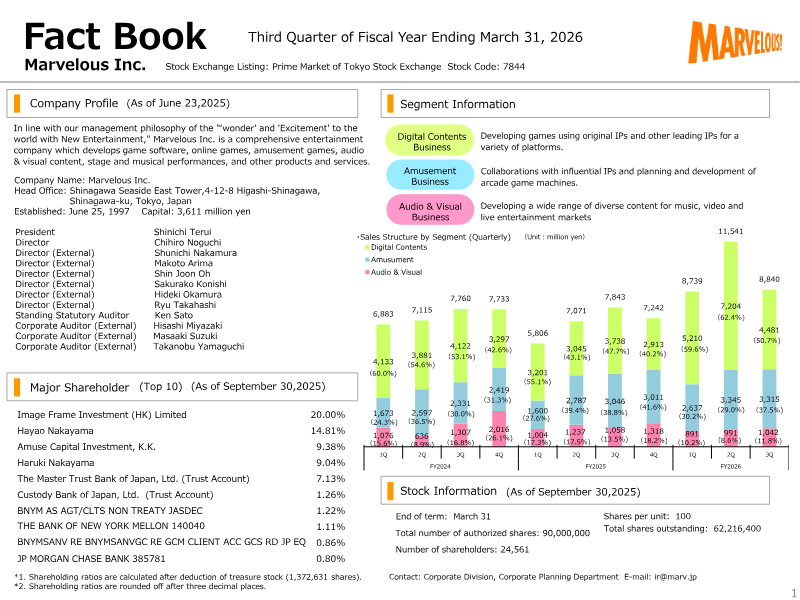
Marvelous · 2026
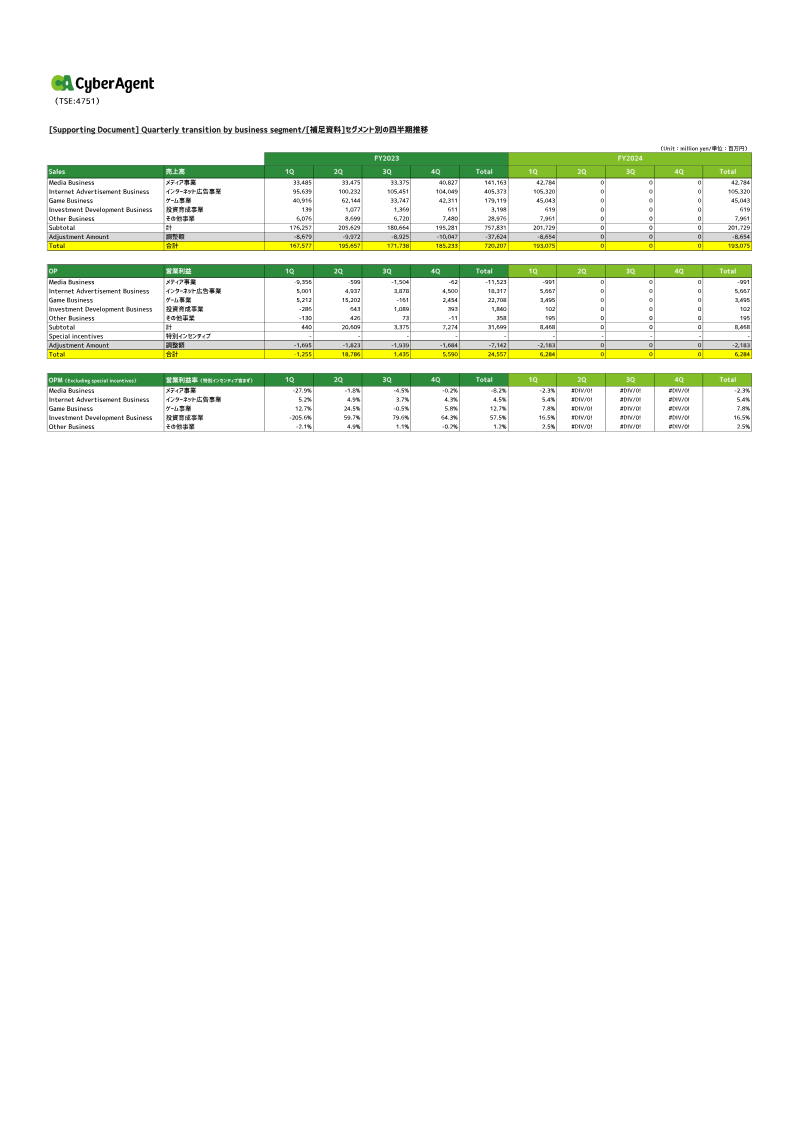
CyberAgent · 2026
Square Enix · 2026
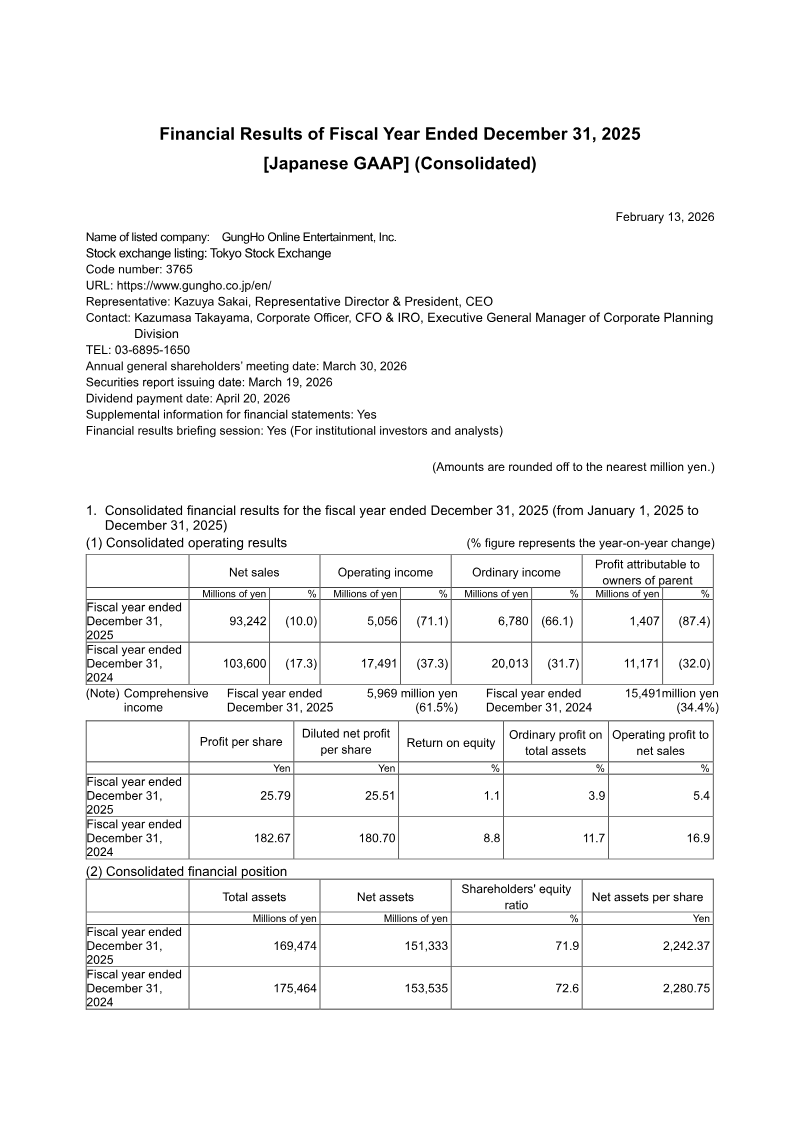
GungHo Online Entertainment · 2026
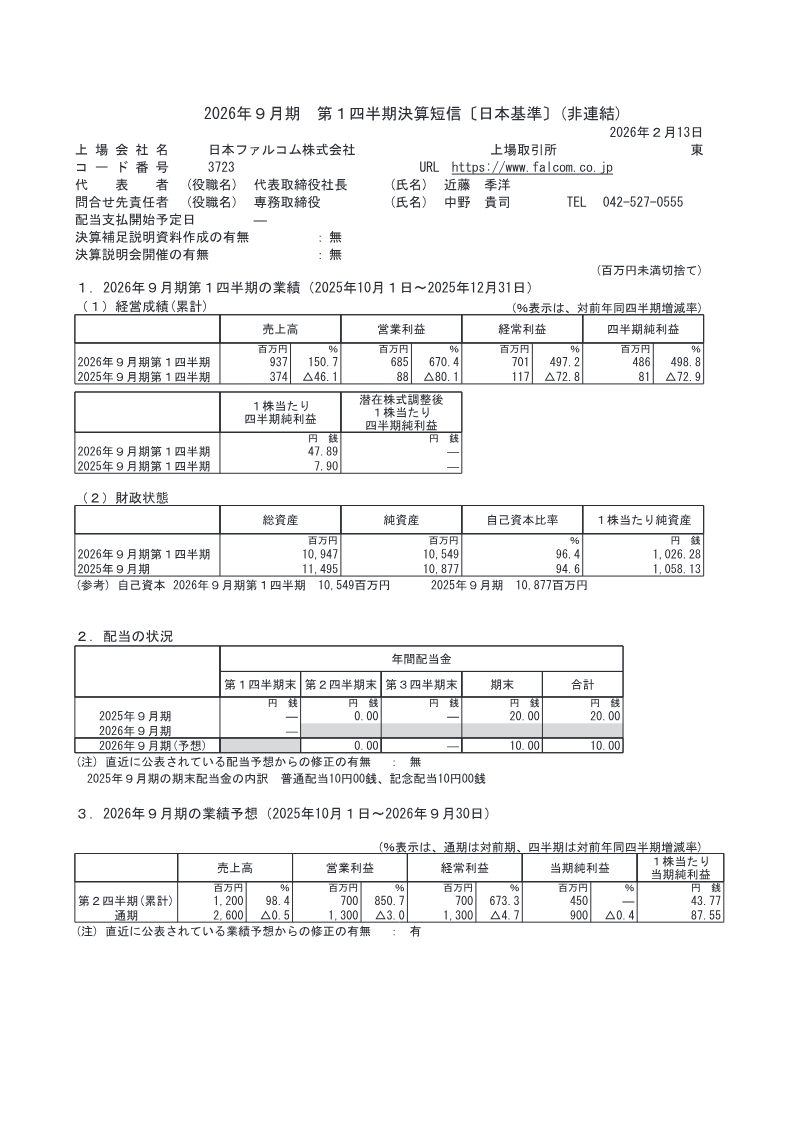
Nihon Falcom Corporation · 2026
Sega Sammy Holdings · 2026
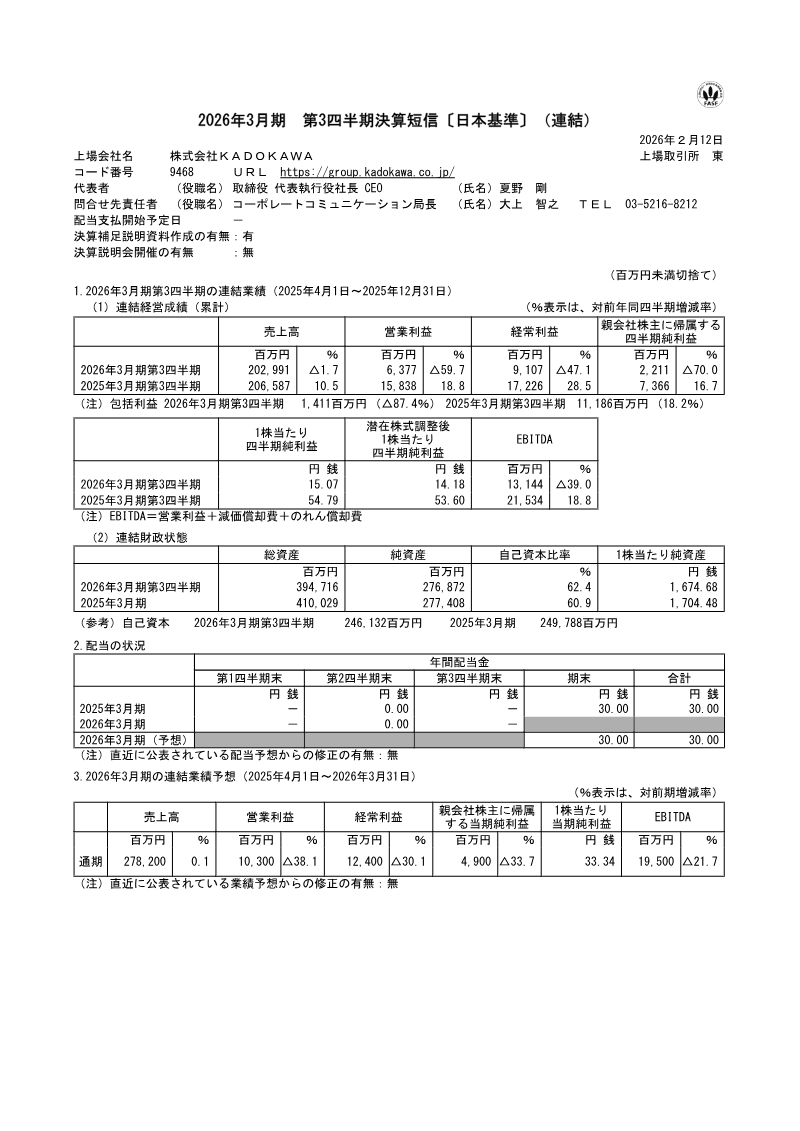
Kadokawa Corporation · 2026