Report33 pages
2024 State of Game Technology Report
The global game technology landscape has reached a critical inflection point in 2024, characterized by the widespread expansion of game engines into non-gaming sectors such as automotive, healthcare, and media. Approximately 50% of developers now utilize these engines for cross-industry applications, with Unreal Engine maintaining a dominant 63% market share, particularly within media and entertainment. Despite this growth, the industry contends with significant structural challenges, including acute funding shortages, personnel deficits, and the technical complexities of managing massive data sets across distributed teams. To mitigate these hurdles, organizations are prioritizing toolset consolidation and robust version control systems, with Perforce Helix Core and Git-based platforms serving as the primary infrastructure for modern development pipelines.
The technical ecosystem remains highly fragmented but is increasingly defined by a shift toward automation and cloud integration. Microsoft Visual Studio and Jenkins continue to lead in the AAA space, though modern alternatives like JetBrains Rider and GitHub Actions are gaining substantial traction. Cloud-based development has become a standard practice for nearly half of the industry, with Amazon Web Services emerging as the preferred provider. Furthermore, generative AI has seen rapid institutional integration, with 65% of organizations adopting the technology to streamline workflows. This technological evolution coincides with a shift in labor dynamics; following widespread industry layoffs, employers now prioritize cross-functional adaptability over narrow specialization, while the workforce increasingly values direct access to leadership and mental health support.
Geographically and industrially broad, these findings reflect a transition toward more agile, cloud-native development environments that must balance aggressive timelines against resource constraints. The move toward indie development and the diversification of game engine utility suggest that the boundaries between traditional gaming and broader digital creation are permanently blurring. Success in this environment depends on the ability to manage increasingly large file sizes and complex collaboration requirements through integrated CI/CD and version control strategies.
- Game engines are expanding beyond gaming, with 50% of developers now applying them to sectors like automotive, healthcare, and media, while Unreal Engine holds a 63% market share.
- Generative AI has reached 65% institutional adoption as organizations integrate the technology to streamline development workflows.
- Cloud-based development is now standard for nearly 50% of the industry, with Amazon Web Services serving as the primary infrastructure provider.
- To combat technical complexities and data management challenges, firms are prioritizing toolset consolidation and robust version control systems like Perforce Helix Core and Git-based platforms.
- Industry labor dynamics have shifted toward cross-functional adaptability following recent layoffs, with employers prioritizing versatile skill sets over narrow specialization.
+1
PerforceJan 2024
Report68 pages
Spelutvecklarindex 2023: Swedish Games Industry
The Swedish games industry serves as a powerhouse of global digital entertainment, characterized by rapid revenue expansion and a vast international footprint. In 2022, the sector generated 86.5 billion SEK in global revenue, marking a 47% increase largely fueled by aggressive acquisition strategies. With 392 Swedish-owned studios operating across 59 countries, the industry employs approximately 25,000 people worldwide, including 8,445 domestic staff. This reach is immense, with Swedish-developed titles accumulating nearly 7 billion downloads and engaging roughly one-quarter of the global population.
Despite this commercial success, the industry faces structural bottlenecks that threaten long-term sustainability. A persistent talent shortage remains the primary constraint on production capacity, exacerbated by challenges regarding work permits and a lack of formal financial support structures for early-stage startups compared to European peers. To mitigate these issues, studios are increasingly leveraging productivity-enhancing technologies like generative AI, standardized game engines, and collaborative regional ecosystems that bridge the gap between specialized education and professional development.
Social and operational evolution remains a core priority for the sector. Efforts to improve gender diversity are yielding tangible results, with women accounting for nearly half of all new hires in 2022, bringing female representation to 23.4% of the workforce. Simultaneously, the industry is pivoting toward broader sustainability goals, focusing on reducing environmental footprints and fostering healthy, inclusive workplace cultures. As the sector navigates the complexities of hybrid work environments and the integration of emerging technologies, it continues to function as a vital catalyst for innovation, driving value that extends well beyond the boundaries of traditional game development.
- The Swedish games industry generated 86.5 billion SEK in global revenue in 2022, representing a 47% year-over-year increase driven largely by acquisition strategies.
- Swedish-owned studios now number 392 across 59 countries, employing 25,000 people globally with 8,445 staff based domestically.
- Swedish-developed titles have reached a massive scale, accumulating nearly 7 billion downloads and engaging approximately 25% of the global population.
- Gender diversity is improving, with women accounting for nearly 50% of all new hires in 2022, raising total female workforce representation to 23.4%.
- A persistent talent shortage and difficulties with work permits remain the primary constraints on production capacity, compounded by a lack of early-stage financial support compared to other European markets.
+2
DataspelsbranschenOct 2023
Report3 pages
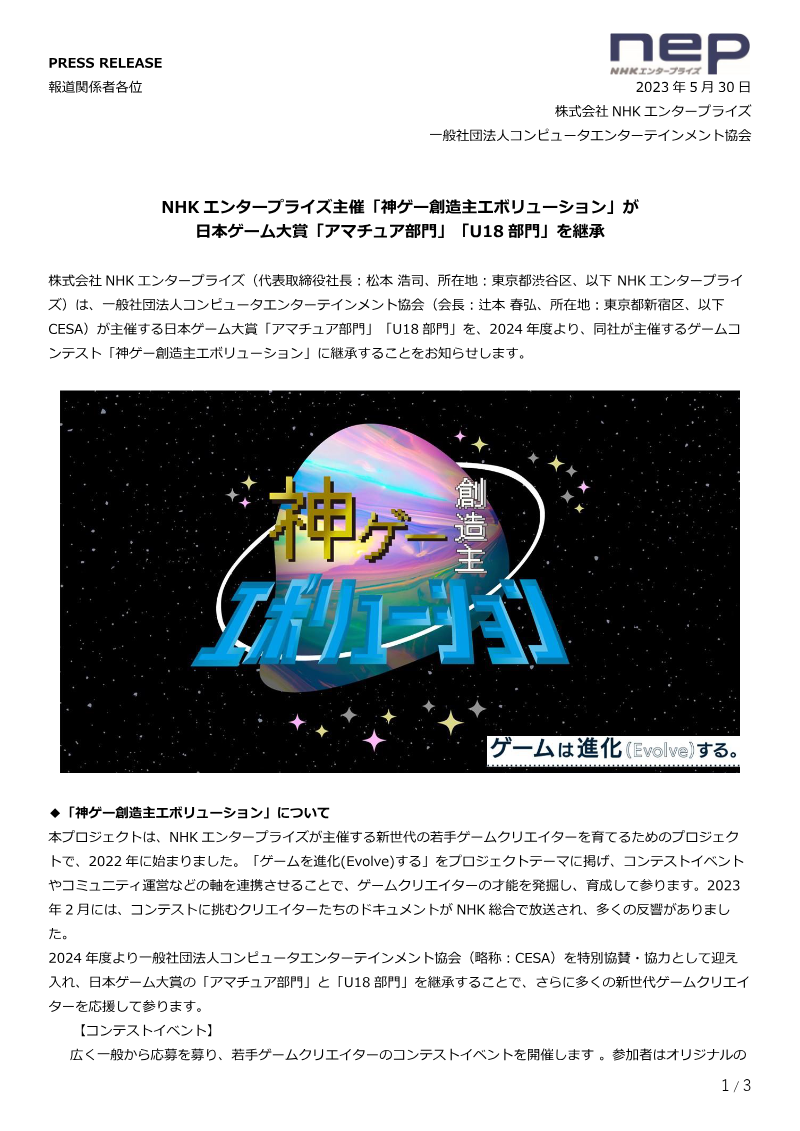
NHK Enterprise's 'Kami-Ge Creator Evolution' Succeeds Japan Game Awards 'Amateur' and 'U18' Divisions
NHK Enterprise is launching the “Kami‑Ge Creator Evolution” contest as a dedicated platform for nurturing the next generation of Japanese game developers, and from 2024 it will incorporate the Japan Game Awards’ Amateur and U18 divisions. The initiative, begun in 2022 under the theme “Evolve the Game,” seeks to discover and develop talent through a series of contest events, community support, and media exposure, including a documentary broadcast on NHK General in February 2023 that generated strong public interest.
The competition invites creators from across Japan to submit original games, which are evaluated for innovative expansion of the medium’s boundaries by a diverse panel of established game designers, media artists, and other industry figures. In addition to expert judging, a public popularity vote is conducted, and the contest awards a Grand Prize, Excellence Awards, and Honorable Mentions in the Amateur category, while the U18 category focuses on participants aged 18 or younger, reflecting the Japan Game Awards’ long‑standing commitment to youth development since 2018. The 2024 schedule begins with an entry period from 1 February to the end of April, followed by nomination, second‑round video submissions in July, third‑round game submissions in October, finalist announcements at the end of October, and a final event slated for December.
A closed Discord community supports participants with exclusive benefits, knowledge sharing, and mentorship, reinforcing the project’s role as a learning environment. Special cooperation from the Computer Entertainment Supplier’s Association (CESA) provides additional industry credibility and resources. The contest is open to individuals, teams, corporations, and organizations regardless of age, gender, nationality, or the number of entries, emphasizing inclusivity and broad outreach.
By integrating the Amateur and U18 awards, the “Kami‑Ge Creator Evolution” aims to broaden the creative framework of Japanese games, foster innovative design, and strengthen the pipeline of skilled developers. The organizers are actively seeking sponsors to sustain the project’s growth and align with NHK Enterprise’s broader commitment to sustainable development and cultural enrichment.
- NHK Enterprise has integrated the Japan Game Awards’ Amateur and U18 divisions into its 'Kami-Ge Creator Evolution' contest, effective from 2024.
- The 2024 competition timeline spans from February 1 to a final event in December, featuring a multi-stage evaluation process including video submissions in July and game submissions in October.
- The contest is open to all applicants regardless of age, nationality, or organizational status, with specific categories for general amateur creators and those aged 18 or younger.
- Participants gain access to a closed Discord community providing mentorship, knowledge sharing, and exclusive resources to support developer growth.
- The initiative is supported by the Computer Entertainment Supplier’s Association (CESA) to provide industry credibility and resources for the project.
+2
CESA – Computer Entertainment Supplier's AssociationMay 2023
Report4 pages
スペイン、カナリア諸島の州政府機関から「ビデオゲーム業界視察ミッション」のご案内
The invitation seeks to generate business opportunities for Japanese video‑game, animation and related audiovisual firms by showcasing the Canary Islands as a strategic production hub. It positions the archipelago as an emerging, tax‑friendly environment, highlighting preferential rates for game development, film and animation, as well as a reduced corporate tax rate, alongside high‑quality infrastructure, skilled talent pools, and strong public support. The core thesis is that direct exposure to local studios, financing mechanisms and regulatory incentives will encourage Japanese companies to establish subsidiaries, pursue co‑production agreements, or outsource projects to Canary Island partners.
The mission is scheduled for 9 – 15 October, with participants traveling from Japan to Tenerife on 9 October and returning after the final day on 15 October. The itinerary includes briefings on the regional industry and tax regime, visits to multiple development studios such as Drakhar, Foxter, The Game Kitchen, Promineo and No Brake Games, a tour of a super‑computer facility, and attendance at the Canarias Game Show on Gran Canaria, featuring B2B matchmaking, conference sessions and networking dinners. All travel costs—including economy‑class round‑trip airfare, hotel accommodation, meals and intra‑island transport—are covered by the organizers, with additional support offered for group participation.
Target participants are Japanese firms contemplating legal entity formation in the Canary Islands, joint‑development projects, or outsourcing production to local studios. The program is coordinated by the Spanish Embassy’s Economic and Commercial Section in Tokyo and the Canary Islands government agency Proexca, which also serves on the regional game office. While the embassy assists with logistics, detailed tax‑incentive information is to be obtained from the Canary Islands authorities and specialist advisors. The initiative aims to deepen Japan‑Spain investment ties within the audiovisual sector by converting the exploratory visit into concrete commercial collaborations.
- The Canary Islands government is hosting a business mission for Japanese video game and animation firms from October 9–15 to promote the region as a strategic production hub.
- The mission covers all travel expenses, including economy-class airfare, accommodation, meals, and local transport, for qualified Japanese companies interested in expansion or outsourcing.
- The Canary Islands offer a competitive business environment featuring reduced corporate tax rates and specific financial incentives for game development, animation, and film production.
- The itinerary includes site visits to local studios such as Drakhar, Foxter, The Game Kitchen, Promineo, and No Brake Games, alongside a tour of a regional super-computer facility.
- Participants will attend the Canarias Game Show on Gran Canaria, which provides dedicated B2B matchmaking, industry conferences, and networking opportunities.
+2
CESA – Computer Entertainment Supplier's AssociationMay 2023
Report1 pages
New Generation Game Creator Contest: Kami‑Game Creator Evolution Broadcast Notice (Japan)
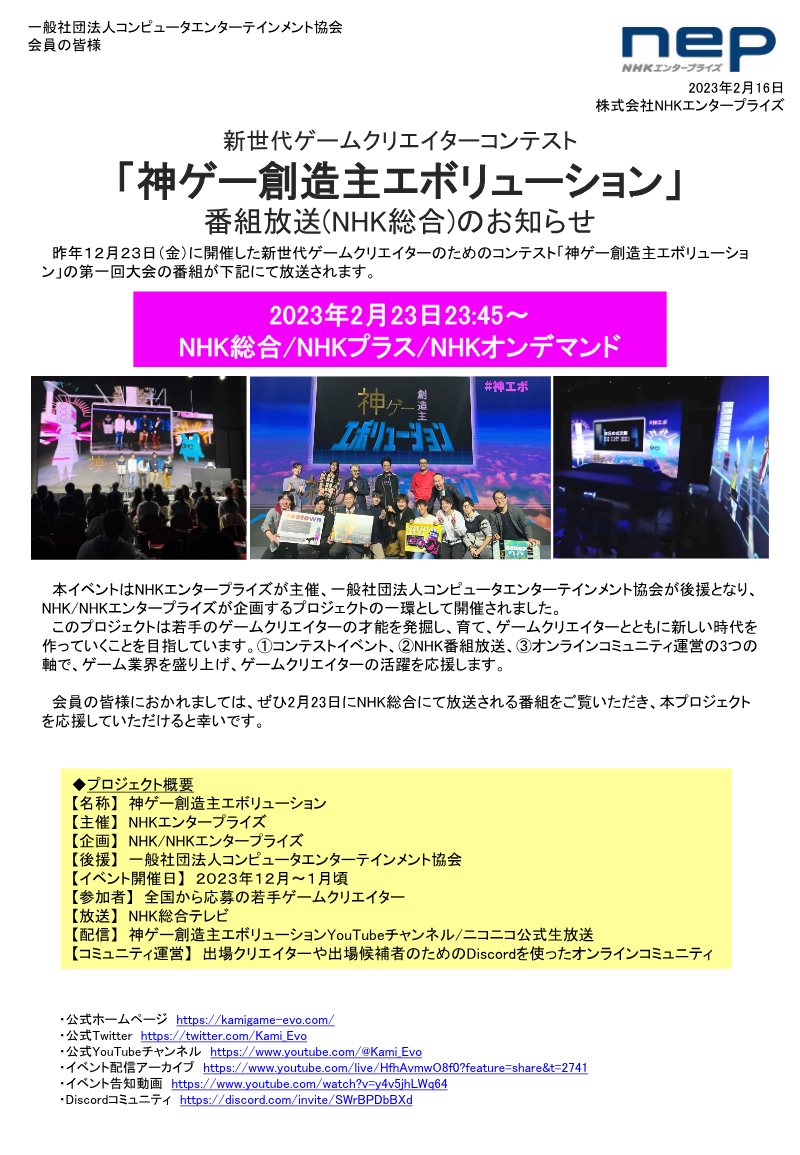
The announcement serves to inform viewers of the upcoming televised presentation of the inaugural “Kami‑Game Creator Evolution” contest, a competition designed to discover and nurture emerging game developers across Japan. The broadcast is scheduled for February 23, 2023 at 23:45 on NHK General, with simultaneous streaming on NHK Plus, NHK On‑Demand, and the contest’s official YouTube and Niconico channels, ensuring broad accessibility for a national audience.
Organized by NHK Enterprise and endorsed by the Computer Entertainment Association, the project integrates three pillars: a nationwide contest held between December 2022 and January 2023, a televised program that showcases the finalists, and an online community hosted on Discord for participants and candidates. The contest solicited entries from young creators throughout the country, aiming to spotlight innovative concepts and support their development through exposure, mentorship, and peer interaction.
The initiative’s strategic goal is to invigorate the Japanese gaming sector by fostering fresh talent and encouraging collaboration between creators and broadcasters. By leveraging both traditional television and digital platforms, the program seeks to reach diverse demographics, from casual viewers to industry professionals, thereby amplifying the impact of the selected works.
Supporting resources include a dedicated website, official Twitter feed, YouTube channel, and archived event streams, which together provide continuous updates, promotional material, and a repository of contest content for ongoing community engagement.
- NHK Enterprise is launching the inaugural 'Kami-Game Creator Evolution' contest to identify and nurture emerging game development talent across Japan.
- The contest's televised finale will broadcast on NHK General on February 23, 2023, at 23:45, with simultaneous streaming on NHK Plus, NHK On-Demand, YouTube, and Niconico.
- The project, endorsed by the Computer Entertainment Association, ran its nationwide entry phase between December 2022 and January 2023.
- The initiative utilizes a three-pillar structure consisting of a nationwide competition, a televised showcase for finalists, and a dedicated Discord community for peer interaction and mentorship.
- The program aims to revitalize the Japanese gaming sector by bridging the gap between independent creators and traditional broadcasting platforms to reach a broader demographic.
NHK EnterpriseFeb 2023
Report55 pages
PowerUP Games Industry: A Report on the Swedish Games Industry
The Swedish games industry stands as a globally dominant economic and cultural force, generating €5.8 billion in total revenue as of 2021. Despite its immense success—evidenced by the fact that one in four people worldwide has interacted with a Swedish-made title—the sector operates without the cohesive national strategic support afforded to traditional industries. The primary thesis posits that while regional clusters and private investment have fueled historical growth, the industry now faces systemic bottlenecks that threaten its long-term competitiveness and sustainability.
The most critical barrier to continued expansion is a severe talent deficit, where the demand for specialized labor significantly outpaces the output of domestic educational institutions. This shortage is compounded by administrative hurdles in international recruitment, a lack of industry-aligned educational classifications, and insufficient public funding for early-stage prototypes. Furthermore, the industry’s role as a catalyst for cross-sector technological innovation—particularly in healthcare, manufacturing, and simulation—remains under-leveraged due to outdated public support models that fail to recognize the unique service-driven nature of digital game development.
To secure its future, the industry requires a unified national strategy that bridges the gap between regional hubs and central government policy. Essential interventions include reforming labor migration regulations, increasing investment in specialized research schools, and establishing dedicated funding mechanisms for small, early-stage enterprises. By integrating the games sector into Sweden’s broader public infrastructure and fostering deeper collaboration between academia and industry, the nation can mitigate current growth risks and maintain its position as a world-class leader in digital entertainment and technological innovation.
- The Swedish games industry generated €5.8 billion in revenue as of 2021, with one in four people globally having interacted with a Swedish-made title.
- A severe talent deficit exists where the demand for specialized labor significantly outpaces the output of domestic educational institutions.
- The industry lacks a cohesive national strategy, relying instead on regional clusters and private investment, which creates systemic bottlenecks for long-term sustainability.
- Administrative hurdles in international recruitment and a lack of industry-aligned educational classifications are primary barriers to addressing the current labor shortage.
- Public support models are outdated and fail to recognize the service-driven nature of game development, resulting in insufficient funding for early-stage prototypes.
+1
The Swedish Games IndustryJan 2023

Report36 pages
Vägar in i spelbranschen: Kompetens, utbildning och konsten att skapa spel (2023)
The Swedish game industry is currently experiencing a critical talent shortage that threatens its long-term competitiveness and growth. With the sector recording 1,348 new hires in 2021 alone, domestic educational institutions are failing to meet demand, producing fewer than half of the required professionals. This imbalance is exacerbated by the rapid expansion of the industry and the lack of official recognition for game development as a formal academic discipline, which complicates data tracking and strategic planning. To sustain its global standing, the industry must bridge the gap between educational output and the evolving needs of studios, particularly in core disciplines such as programming, design, and graphics.
The Swedish educational landscape is characterized by a robust ecosystem of vocational programs and academic institutions that prioritize project-based, team-oriented learning. While these programs are highly effective at producing job-ready graduates, the reliance on international recruitment remains essential, with roughly one-third to half of the workforce originating from abroad. However, this dependency is hampered by significant bureaucratic obstacles, including restrictive work permit policies for non-EU vocational students and complex regulations regarding international remote work. Furthermore, the industry faces persistent challenges related to housing shortages and the need to improve gender diversity within the workforce.
To ensure future stability, the industry must foster closer alignment between academic research funding and practical studio requirements. Strengthening the pipeline for domestic talent while simultaneously streamlining pathways for international professionals is vital. By formalizing game development within the academic framework and addressing the administrative barriers that currently impede the retention of global talent, Sweden can maintain its position as a leading hub for game development. These systemic adjustments are necessary to transform the current recruitment bottleneck into a sustainable model for continued innovation and economic success.
- The Swedish game industry faces a critical talent shortage, with domestic educational institutions producing fewer than half of the professionals required to meet the demand of 1,348 new hires recorded in 2021.
- Between one-third and one-half of the current Swedish game industry workforce consists of international talent, highlighting a heavy reliance on global recruitment to sustain growth.
- Restrictive work permit policies for non-EU vocational students and complex regulations regarding international remote work act as significant bureaucratic barriers to maintaining the necessary talent pipeline.
- The lack of official recognition for game development as a formal academic discipline hinders effective data tracking and strategic planning for the sector.
- Industry growth is further constrained by domestic infrastructure challenges, specifically persistent housing shortages and a need to improve gender diversity within the workforce.
+1
DataspelsbranschenJan 2023

Report32 pages
Hybridcasual Games Playbook (2023)
Hybridcasual gaming represents a strategic evolution in the mobile industry, bridging the gap between the accessibility of hypercasual titles and the sophisticated progression systems of casual games. The primary thesis of this analysis is that by blending simple, intuitive mechanics with deeper metagame layers—such as narrative progression, resource management, and social features—developers can significantly increase user retention, session length, and lifetime value (LTV). This shift addresses the declining interest in traditional hypercasual games, which saw a 15% decrease in downloads between 2021 and 2022, while hybridcasual titles experienced continued growth, reaching 5 billion downloads in 2022.
Key performance data highlights the superiority of the hybridcasual model in maintaining player interest. Top-tier hybridcasual games demonstrate average session lengths of 372 seconds, exceeding hypercasual benchmarks by 160 seconds. Furthermore, retention rates are substantially higher, with hybridcasual titles achieving 54% Day 1 retention and 9% Day 60 retention, compared to significantly lower figures for hypercasual counterparts. Revenue models have also matured; while advertisements remain a core component, they are increasingly optional and rewarded, allowing in-app purchases (IAPs) to account for a growing share of total revenue. Successful implementation of IAP strategies, such as secondary currencies and exclusive content packs, has been shown to increase IAP revenue by as much as 35% in specific case studies.
The industry scope covers global mobile gaming, with a focus on subgenres including arcade idle, tower defense, and simulation. Methodologically, the findings rely on comparative performance metrics from 2022, internal product strategy analysis, and specific case studies of titles like Zombie Defense and Aquarium Land. The analysis concludes that long-term success in this segment requires a rigorous, data-driven approach to post-launch optimization, including A/B testing of game economies, audience segmentation, and the continuous integration of new content to sustain player engagement.
- Hybridcasual games reached 5 billion downloads in 2022, contrasting with a 15% decline in traditional hypercasual downloads between 2021 and 2022.
- Hybridcasual titles achieve a 54% Day 1 retention rate and a 9% Day 60 retention rate, significantly outperforming traditional hypercasual benchmarks.
- Average session lengths for top-tier hybridcasual games reach 372 seconds, which is 160 seconds longer than hypercasual industry benchmarks.
- Integrating in-app purchase strategies like secondary currencies and exclusive content packs can increase IAP revenue by up to 35%.
- The hybridcasual model shifts revenue dependency away from mandatory advertisements toward optional, rewarded ad formats and increased in-app purchases.
+4
Sensor TowerJan 2023
Presentation17 pages
Aktualizacja Strategii Nowe Otwarcie 2023
The strategy overview presents PCF Group S.A. as a leading Polish producer of AAA‑level shooter games built on Unreal Engine, emphasizing its extensive experience, proprietary technology, and international development network. It positions the company as a high‑profile creator of original and co‑produced titles that have repeatedly appeared on the cover of the prestigious “Game Informer” magazine, citing notable releases such as Gears of War series, Bulletstorm, and collaborations with Epic Games on Fortnite.
Financial highlights indicate that cumulative revenue reached 608 million złoty between 2018 and 2022, representing a 4.9‑fold increase and a 2.4‑fold rise in EBITDA to 185 million złoty. The firm projects a similar revenue multiplier for 2023‑2027, driven primarily by a self‑publishing model and the launch of four core AAA projects and three supplementary titles, including two VR offerings slated for 2025‑2026. Shareholder structure after the IPO shows a diversified ownership with significant ESOP participation, and the capital plan anticipates issuing up to 5.85 million new shares.
Operationally, the group employs more than 600 specialists across two continents, organized into matrix‑based centers of excellence that support simultaneous development of multiple projects. The PCF Framework, an Unreal Engine add‑on, accelerates production pipelines and standardizes agile practices across seven development studios located in Warsaw, Newcastle, Montreal, Katowice, Rzeszów, New York, and Kraków. Recent acquisitions have expanded the portfolio with new IPs such as Gemini, Dagger, Bifrost, and Victoria, now in pre‑production.
Strategic goals focus on scaling the self‑publishing business, introducing “games‑as‑a‑service” monetization with micro‑transactions and seasonal passes, and strengthening the company’s position as an independent AAA publisher. The plan anticipates a workforce of over 1 200 employees by 2027, supported by incentive programs for shareholders and a robust cash flow structure designed to fund continued growth without external dilution.
- PCF Group targets a revenue multiplier for 2023–2027 comparable to the 4.9-fold growth seen between 2018 and 2022, when cumulative revenue reached 608 million złoty.
- The company is shifting to a self-publishing model to support the launch of four core AAA projects and three supplementary titles, including two VR games scheduled for 2025–2026.
- Strategic monetization will pivot toward a 'games-as-a-service' model, incorporating micro-transactions and seasonal passes to scale independent AAA publishing.
- The firm plans to double its workforce to over 1,200 employees by 2027, supported by a matrix-based operational structure across seven international studios.
- Development efficiency is driven by the proprietary 'PCF Framework' add-on for Unreal Engine, which standardizes production pipelines across studios in locations including Warsaw, Montreal, and New York.
+1
PCF GroupJan 2023
Report56 pages
Sustainability Report 2023
Room 8 Group transitioned toward a formal Environmental, Social, and Governance (ESG) framework in 2023, achieving Global Reporting Initiative (GRI) compliance while scaling its global operations. The organization expanded its workforce to 1,300 professionals across diverse geographic regions, including Brazil and Romania, while simultaneously improving customer satisfaction ratings to 8.7 out of 10. This growth was accompanied by a strategic focus on leadership seniority and the implementation of a "Green Office" policy designed to mitigate the environmental footprint of its physical and digital infrastructure.
Environmental performance remains a low-impact area for the group, with total Scope 1 and 2 emissions estimated at under 1,000 tCO2. These results are supported by a shift toward green-energy data centers and high renewable energy usage in specific regional hubs, such as Brazil’s 100% renewable energy mix. Social responsibility initiatives are anchored by a significant commitment to Ukraine, totaling over $8 million in donations. These efforts provided critical humanitarian aid, including water purification for 15,000 people and technology hardware to support remote education for displaced students.
Internal governance and workforce development saw measurable progress through a 50/50 gender split at the board level and a 34% female representation across the total workforce. The establishment of a compliance hotline and an updated Code of Ethics resulted in zero reported discrimination incidents during the period. Moving into 2024, the strategic focus shifts toward formalizing a comprehensive Corporate Social Responsibility strategy that prioritizes mental health, enhanced e-waste management, and rigorous data protection through mandatory cybersecurity training for all employees.
- Room 8 Group achieved GRI compliance in 2023 while scaling its global workforce to 1,300 professionals across regions including Brazil and Romania.
- The company contributed over $8 million in humanitarian aid to Ukraine, supporting water purification for 15,000 people and remote education hardware for displaced students.
- Total Scope 1 and 2 emissions remained under 1,000 tCO2, supported by the use of green-energy data centers and a 100% renewable energy mix in Brazilian regional hubs.
- Internal governance metrics include a 50/50 gender split at the board level and 34% female representation across the total workforce, with zero reported discrimination incidents.
- Customer satisfaction ratings reached 8.7 out of 10 during the 2023 reporting period.
Room 8 GroupJan 2023
Report56 pages
Room 8 Group Sustainability Report 2023
The 2023 sustainability analysis presents Room 8 Group’s comprehensive ESG strategy, positioning environmental stewardship, social responsibility, and robust governance as core drivers of its competitive advantage in the global gaming services sector. By integrating sustainability into corporate planning, the firm seeks to demonstrate that long‑term value creation can coexist with measurable reductions in ecological impact and heightened stakeholder trust.
During the reporting year, the organization expanded its workforce to more than 1,260 specialists and delivered 1,300 projects for roughly 700 clients, achieving a 12.7 % increase in customer‑satisfaction scores and earning 89 award nominations across more than 300 distinct titles. The environmental program centers on cutting greenhouse‑gas emissions, improving energy efficiency, and scaling renewable‑energy and recycling initiatives, with the Green Office policy applied across sites in Poland, Romania and Brazil. This policy has introduced green computing, renewable‑energy‑sourced data centres, remote‑work options, low‑carbon transport and mandatory waste‑sorting, while internal audits and training ensure compliance; the combined Scope 1 and 2 emissions are classified as non‑significant.
Social initiatives emphasize diversity, equity and inclusion, health and safety, charitable engagement and transparent governance. A dedicated data‑protection framework—featuring a Data Protection Officer, compulsory privacy and cybersecurity training, and regular DPIAs—aligns the company with GDPR and global privacy standards. Looking ahead to 2024, the firm pledges to broaden workforce diversity, strengthen mental‑health and burnout support, further reduce e‑waste, and refine CSR performance through KPI tracking, external benchmarking and periodic policy reviews. These actions collectively illustrate a holistic approach to sustainability that spans operational, social and governance dimensions across multiple geographic regions within the gaming industry.
- Room 8 Group scaled its operations in 2023 to over 1,260 specialists, delivering 1,300 projects for approximately 700 clients.
- The company achieved a 12.7% increase in customer-satisfaction scores while securing 89 award nominations across more than 300 gaming titles.
- The firm’s Green Office policy, implemented in Poland, Romania, and Brazil, utilizes renewable-energy-sourced data centers and remote-work models to keep Scope 1 and 2 greenhouse-gas emissions at non-significant levels.
- A formal data-protection framework, managed by a dedicated Data Protection Officer, ensures compliance with GDPR and global privacy standards through mandatory cybersecurity training and regular Data Protection Impact Assessments (DPIAs).
- The 2024 sustainability roadmap prioritizes expanding workforce diversity, enhancing mental-health and burnout support, and reducing e-waste through structured KPI tracking and external benchmarking.
Room 8 GroupJan 2023

Report106 pages
Llibre Blanc d’Accessibilitat per al Desenvolupament de Videojocs
The central thesis is that video‑game accessibility must be embedded from the earliest design stages, using a standardized, non‑subjective evaluation framework, to achieve universal inclusion while avoiding the steep costs of retro‑fitting. Drawing on the European EN 301 549 ICT‑accessibility standard and the Ga11y portal launched in July 2022, the analysis provides a comprehensive catalogue of functional measures that map directly to specific disability profiles.
The market context is global, with more than three billion gamers worldwide, roughly 400 million of whom have a disability, and an estimated 18 million regular players in Spain. Despite growing awareness since 2014 and heightened industry focus from 2018, major publishers often omit disclosure of the accessibility features they implement. The work outlines 28 “star‑rated” guidelines, ranging from simple one‑star options such as clear iconography, customizable audio mixes, and control‑swap mechanisms, to complex five‑star solutions like sign‑language interpretation and AI‑driven navigation assistance. Each measure is linked to visual, auditory, motor, speech or cognitive impairments, and the guidance stresses that low‑complexity features can be integrated early with minimal technical effort, delivering broad, cost‑effective support.
A parallel emphasis is placed on the expanding hardware ecosystem. Commercial adaptive controllers—from the modular Sony Access Controller to eye‑tracking solutions like Tobii Eye Tracker 5—are complemented by low‑cost 3‑D‑printed accessories that enable bespoke adaptations. Collaboration between industry bodies such as AEVI and the Fundación ONCE underpins the push for mandatory, inclusive design practices across the European development landscape, positioning accessibility as a strategic imperative rather than an optional add‑on.
- Accessibility must be integrated during early design phases to avoid the high costs of retrofitting, utilizing the European EN 301 549 ICT-accessibility standard as a foundational framework.
- The global gaming market includes over three billion players, with approximately 400 million individuals living with a disability and 18 million regular players in Spain.
- The Ga11y portal, launched in July 2022, provides a catalogue of 28 star-rated accessibility guidelines that map specific technical solutions to visual, auditory, motor, speech, and cognitive impairments.
- Low-complexity features, such as customizable audio mixes and control-swap mechanisms, can be implemented with minimal technical effort to provide broad, cost-effective support.
- Hardware accessibility is expanding through a combination of commercial adaptive controllers like the Sony Access Controller and Tobii Eye Tracker 5, alongside low-cost, 3D-printed bespoke accessories.
+2
AEVIJan 2023

Report106 pages
Libro Blanco de Accesibilidad para Desarrolladores
The core thesis emphasizes that video‑game accessibility must be embedded from the earliest design stages, rather than added later, because retro‑fitting dramatically inflates development time and cost. Drawing on the European EN 301 549 standard and the Ga11y catalogue, the work presents a systematic methodology for evaluating both closed platforms (consoles) and open platforms (PC and mobile) and supplies developers with a practical reference for implementing auditory, visual, motor and cognitive options.
Globally, roughly three billion people play video games, of whom about four hundred million experience some form of disability. Within the Spanish ecosystem, industry bodies such as AEVI and Fundación ONCE have positioned universal accessibility as a strategic priority, encouraging adoption of the outlined standards across the period 2018‑2023, when systematic measures began to emerge after an initial appearance in 2014.
A tiered catalogue of more than thirty accessibility measures is detailed, ranging from basic 1‑star options—identifiable icons, joystick swapping, sound‑mix controls and puzzle‑skip functions—to advanced 5‑star features such as sign‑language interpretation, voice‑to‑text and text‑to‑voice for multiplayer. Each measure is mapped to specific disability profiles (partial or total vision loss, colour‑vision deficiency, hearing loss, motor impairments and cognitive challenges) and is recommended for early integration with configurable settings. A self‑assessment matrix forces developers to verify compliance for every mandatory feature, underscoring that true inclusivity also depends on compatible adaptive peripherals.
The analysis of hardware solutions lists the principal adaptive controllers and accessories available for major consoles, including the Xbox Adaptive Controller, Hori Flex, PlayStation Access Controller, QuadStick, Tobii Eye Tracker 5, the Ford Adapta racing simulator and the OWO haptic jacket, together with their price ranges. It concludes that while commercial peripherals are expanding, gaps remain, making coordinated software‑hardware strategies essential for delivering fully inclusive gameplay across the global market.
- Accessibility must be integrated during the earliest design stages to avoid the significant cost and time inflation associated with retrofitting features.
- Approximately 400 million of the 3 billion global gamers live with some form of disability, making inclusive design a critical market consideration.
- The framework categorizes over 30 accessibility measures into a 5-star system, ranging from basic joystick swapping and puzzle-skipping to advanced sign-language interpretation and text-to-voice features.
- Developers should utilize the European EN 301 549 standard and the Ga11y catalogue to systematically map accessibility features to specific visual, auditory, motor, and cognitive disability profiles.
- Industry bodies like AEVI and Fundación ONCE have established universal accessibility as a strategic priority within the Spanish ecosystem since 2018.
+2
AEVIJan 2023
Report1 pages
Ayudas AEVI Innovación: Edición 2023
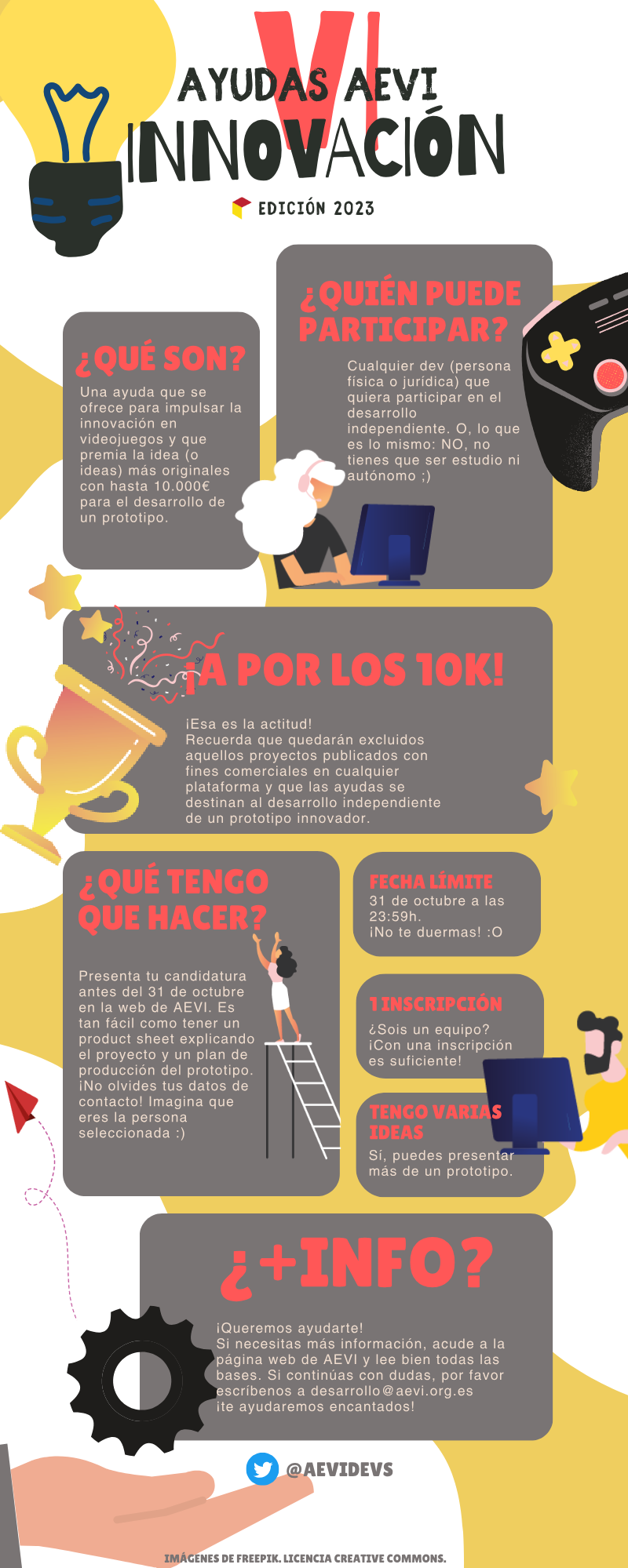
The AEVI Innovation program for 2023 offers financial support of up to €10,000 to independent developers—both individuals and legal entities—who wish to create an innovative prototype in the video‑game sector. The aid is expressly targeted at non‑commercial projects, and any work that has already been published on any platform for commercial purposes is excluded from eligibility. Applicants may submit more than one prototype idea, provided each proposal meets the program’s criteria.
Eligibility is open to any developer, regardless of prior experience, who can demonstrate a novel concept and a clear production plan for the prototype. The application process is streamlined: candidates register through the AEVI website, upload a concise product sheet describing the project, and provide contact details. The deadline for submissions is 31 October at 23:59, and the program emphasizes a proactive attitude, encouraging developers to act promptly.
The initiative focuses exclusively on the Spanish independent game development ecosystem, with no geographic restrictions beyond the national context. No statistical data or survey methodology is presented, as the program functions as a grant call rather than a research study. The primary objective is to stimulate creativity and technical experimentation within the indie sector by reducing financial barriers to prototype development.
- The AEVI Innovation program provides financial grants of up to €10,000 to support the development of innovative video game prototypes.
- Applications must be submitted by the deadline of 31 October at 23:59 via the official AEVI website.
- Eligible projects must be non-commercial and cannot have been previously published on any platform.
- The program is open to all independent developers, including individuals and legal entities, operating within the Spanish ecosystem.
- Applicants are permitted to submit multiple prototype proposals, provided each individual project meets the program's criteria.
AEVIJan 2023
Report138 pages
The Game Industry of Finland Report: 2022
The Finnish game industry established itself as a premier global hub between 2021 and 2022, maintaining a record annual turnover of €3.2 billion. This performance places Finland among the top five national game industries in Europe. Despite a shift toward the "games-as-a-service" model and macroeconomic headwinds that reduced the frequency of new game launches, the sector experienced a surge in startup activity and employment. By late 2022, the industry supported 232 active studios and approximately 4,100 employees, characterized by a highly international workforce and a stable presence of female professionals.
While mobile remains the dominant platform by revenue, there is a significant strategic pivot toward PC and multiplatform development, with 64% of studios now targeting the PC market. This evolution is supported by a sophisticated funding ecosystem that includes over €300 million in private investment and substantial public R&D support from Business Finland. The industry’s maturity is further evidenced by high-profile acquisitions from global giants such as Sony, Netflix, and Playtika, alongside the continued success of established leaders like Supercell, Rovio, and Remedy Entertainment.
The ecosystem is anchored in Helsinki, which accounts for the vast majority of turnover and employment, but it also benefits from thriving regional clusters in Tampere, Oulu, and Kajaani. These hubs specialize in diverse technologies ranging from VR and Web3 to simulation and narrative-driven titles. Despite challenges such as rising marketing costs due to privacy changes and a persistent talent shortage, the industry remains resilient through robust institutional support from organizations like Neogames and Suomen Pelinkehittäjät ry. This collaborative infrastructure, combined with a focus on original intellectual property and emerging technologies like Creative AI, ensures Finland’s continued influence on the global gaming landscape.
- The Finnish game industry generated a record annual turnover of €3.2 billion in 2022, securing its position as one of the top five national game markets in Europe.
- The sector comprises 232 active studios and 4,100 employees, supported by a robust funding ecosystem that includes over €300 million in private investment and significant public R&D backing from Business Finland.
- While mobile remains the primary revenue driver, 64% of studios have pivoted toward PC development, reflecting a broader strategic shift toward multiplatform releases.
- The industry is experiencing a trend of consolidation and international interest, evidenced by high-profile acquisitions from major global entities including Sony, Netflix, and Playtika.
- Helsinki remains the primary industry hub, though regional clusters in Tampere, Oulu, and Kajaani contribute specialized expertise in areas such as VR, Web3, and simulation technologies.
Suomen Pelinkehittäjät ryJan 2023
Report57 pages
Gaming Report 2023
The global gaming industry in 2023 is defined by a strategic shift toward development efficiency and long-term player retention. Studios are increasingly prioritizing speed to market, with 62% of indie developers now shipping titles in under a year. This acceleration is largely fueled by the widespread adoption of premade assets and a reduction in average developer hours. While large studios are expanding their reach through a 16% increase in multiplatform development, indie studios remain predominantly focused on single-platform desktop releases. Simultaneously, there is a notable pivot toward mobile production, where global daily active users have risen by 8% despite a slight decline in the number of paying players.
Monetization strategies are evolving to address this shift in player behavior, moving toward a balanced model where ad-supported structures and in-app purchases hold nearly equal weight. To ensure financial viability, 70% of studios now integrate monetization and LiveOps within the first 30 days of development. This early focus on the product lifecycle has contributed to a 33% increase in the average game lifespan, supported by frequent core content updates and a 27% rise in battle pass adoption. Emerging markets, particularly in regions like Kazakhstan, are driving a 15.7% year-over-year increase in total game builds, signaling a lower barrier to entry for new creators.
Looking forward, the industry is embracing generative AI and user-generated content to streamline workflows and deepen engagement. The rise of "hybrid-casual" mobile games reflects a broader trend of blending accessible mechanics with sophisticated retention loops. Success in the current economic climate requires rigorous scope control and a transition from simple user acquisition to the maintenance of long-term player relationships. By leveraging achievements, community building, and real-time operational updates, developers are successfully extending the relevance and profitability of their titles in an increasingly competitive global market.
- To ensure financial viability, 70% of studios now integrate monetization and LiveOps within the first 30 days of development, contributing to a 33% increase in average game lifespans.
- Development efficiency has accelerated, with 62% of indie developers now shipping titles in under a year by utilizing premade assets and reducing average developer hours.
- Monetization models are shifting toward a balance between ad-supported structures and in-app purchases, supported by a 27% rise in battle pass adoption.
- Mobile gaming daily active users have grown by 8%, even as the industry sees a slight decline in the number of paying players.
- Large studios have increased multiplatform development by 16%, while emerging markets like Kazakhstan are driving a 15.7% year-over-year increase in total game builds.
+2
UnityJan 2023
Report22 pages
State of Game Development & Design Report 2023
The 2023 State of Game Development & Design Report provides a comprehensive analysis of the current trends, technological preferences, and operational hurdles facing the global gaming industry. Based on an annual survey of creators ranging from indie developers to AAA studios, the findings highlight a significant shift in industry priorities. While funding was previously the primary concern for developers, talent acquisition and retention have emerged as the leading challenge in 2023, cited by 32% of respondents. This labor shortage is compounded by development velocity issues, particularly for AAA studios, where 49% of respondents identify time-related bottlenecks—such as lengthy build times—as their greatest obstacle.
The geographic and sectoral scope of the data reveals a consolidation toward established markets and platforms. Despite previous forecasts suggesting a surge in immersive technology, interest in AR and VR has declined sharply, with only 13% of developers currently working on VR projects compared to 28% the previous year. PC remains the dominant platform, utilized by 90% of developers, while 45% of studios now opt for self-publishing, frequently utilizing Steam for distribution.
Technologically, the industry shows a clear preference for specific toolsets. Unreal Engine remains the most popular game engine at 57%, while Unity saw a significant drop in usage. Perforce Helix Core has solidified its position as the industry standard for version control, used by 73% of respondents. Looking forward, the report identifies generative AI as the most anticipated technological advancement, with creators expecting it to revolutionize the creative process. Simultaneously, there is a growing industry-wide push for improved work-life balance, reduced "crunch" culture, and a shift away from profit-driven monetization models in favor of original gameplay experiences.
- Talent acquisition and retention has overtaken funding as the industry's primary challenge, cited by 32% of developers as their leading hurdle.
- Development velocity is a critical issue for AAA studios, with 49% of respondents identifying time-related bottlenecks and lengthy build times as their greatest operational obstacle.
- Unreal Engine is the industry's leading game engine with 57% usage, while Perforce Helix Core has become the standard for version control, utilized by 73% of developers.
- Interest in immersive technology has waned, as developer engagement in VR projects dropped from 28% in 2022 to 13% in 2023.
- PC remains the dominant development platform at 90% usage, with 45% of studios now choosing to self-publish their titles.
+1
PerforceJan 2023
Report31 pages
State of the Game Industry Report: 2022
The global game development landscape in 2022 reflects a period of significant structural and cultural transition. PC remains the primary development platform, while the PlayStation 5 maintains its position as the leading console choice. Conversely, mobile development has experienced a decade-long decline in developer interest. Emerging hardware like the Steam Deck and PlayStation VR2 continues to capture attention, yet the industry remains deeply skeptical of speculative technologies such as the metaverse, cryptocurrency, and NFTs. These concerns are rooted in anxieties regarding environmental sustainability, ethical business practices, and the long-term viability of blockchain-based models.
Workplace culture and labor dynamics have emerged as central themes, marked by a measurable improvement in work-life balance as 60 percent of developers now maintain a 40-hour work week or less. Despite this progress, the industry struggles with systemic issues, as a majority of studios have failed to adequately address internal reports of misconduct and toxicity. This environment has fueled a growing movement toward collective bargaining, with 55 percent of developers supporting unionization and nearly one-quarter of workplaces engaging in active discussions regarding labor organization.
The industry continues to prioritize accessibility, with a record 39 percent of developers integrating inclusive design features into their projects. However, broader efforts toward diversity and social activism remain inconsistent across various studios. Furthermore, the workforce remains predominantly male and early-career, highlighting a demographic imbalance that persists alongside ongoing tensions between developers and major platform holders. As evidenced by the 34 percent of developers who support Epic Games in its legal conflict with Apple, there is a clear desire for greater autonomy and a shift in the power dynamics that currently govern the digital distribution ecosystem.
- Labor organization is gaining significant momentum, with 55 percent of developers supporting unionization and nearly 25 percent of workplaces actively discussing collective bargaining.
- Work-life balance has improved, as 60 percent of developers now report working 40 hours per week or less.
- Despite progress in working hours, a majority of studios have failed to effectively address internal reports of workplace toxicity and misconduct.
- Developers are increasingly seeking autonomy from platform holders, evidenced by 34 percent of the industry supporting Epic Games in its legal battle against Apple.
- Accessibility is a growing priority, with 39 percent of developers incorporating inclusive design features into their projects.
+5
GDCJan 2022
Report40 pages
Unity Gaming Report 2022
The global gaming industry experienced a massive production surge throughout 2021, characterized by a 93% increase in game creation and a 31% rise in the number of active creators. While the easing of pandemic-related restrictions led to a stabilization of engagement levels, the market established a "new normal" where total revenue grew by 30%. This growth was particularly pronounced in the Americas and EMEA regions, driven by a combination of in-app purchases and robust advertising revenue. Hypercasual and casual genres emerged as the primary catalysts for this expansion, with hypercasual titles seeing a 137% increase in production and a 162% surge in in-app purchase revenue.
Strategic shifts toward multiplatform development and multiplayer experiences are now essential for maximizing player retention and market reach. Although mobile remains the dominant platform, especially in markets like China and Japan, developers are increasingly prioritizing cross-platform compatibility to extend the lifespan of their titles. Industry consolidation reached record levels with $85 billion in acquisitions, yet small indie studios remain vital drivers of innovation. These smaller entities are leveraging accessible development tools and specialized analytics to compete with larger enterprises, focusing on "live game" models where consistent content updates can boost revenue by over 85% for top-performing games.
Portfolio diversification has proven to be a critical factor for financial success, as publishers operating across three or more genres generate up to 197% more daily revenue than those specializing in a single category. Despite this clear advantage, 76% of developers continue to focus on a single genre, representing a significant area for potential growth. Moving forward, the industry is trending toward the standardization of cross-platform play and the adoption of sophisticated third-party engagement tools. These advancements allow developers of all sizes to manage post-launch content more effectively, ensuring long-term sustainability in an increasingly competitive global market.
- Publishers operating across three or more genres generate up to 197% more daily revenue than those specializing in a single category, yet 76% of developers remain focused on a single genre.
- The gaming industry saw a 93% increase in game creation and a 30% rise in total revenue in 2021, with hypercasual titles experiencing a 137% production surge and a 162% increase in in-app purchase revenue.
- Industry consolidation reached record levels with $85 billion in acquisitions, while small indie studios continue to drive innovation by utilizing accessible tools and analytics.
- Top-performing 'live game' models that prioritize consistent content updates can boost revenue by over 85%.
- Multiplatform development and cross-platform compatibility have become essential strategies for maximizing player retention and extending the lifespan of titles.
UnityJan 2022
Whitepaper8 pages
White Paper on Video Game Development Sector in Spain
The Spanish video game development sector has emerged as a vital component of the national digital economy, characterized by rapid growth, high innovation, and a strong global orientation. As of 2013, the industry comprised 330 companies, largely concentrated in Madrid and Catalonia, with a workforce that is notably young and highly qualified. The sector generated 313.7 million euros in turnover in 2013, with projections suggesting a compound annual growth rate of 23.7% through 2017. This expansion is driven primarily by online distribution models, which account for 78% of industry revenue, and a robust export market that represents 56% of total sales.
The industry is defined by its youth, with 68% of firms established within the last five years and 97% of capital originating domestically. Employment trends are equally positive; the sector supported 2,630 direct jobs in 2013, marking a 29% increase from the previous year, with a high proportion of permanent contracts. Despite this success, the industry faces significant challenges, particularly a talent gap, as 63.6% of businesses report difficulty finding qualified personnel. This highlights a misalignment between current educational curricula and the specialized technical demands of the video game market.
To sustain this momentum, the sector advocates for an integrated support plan that includes fiscal incentives for research and development, public funding for prototypes, and streamlined internationalization efforts. Recommendations emphasize the need for specialized technology clusters, improved tax treatment for intangible assets, and stronger synergies with transversal industries such as health and education through the development of serious games. By addressing these structural needs and fostering closer collaboration between public administration, private investors, and academic institutions, the industry aims to solidify its position as a competitive, high-productivity leader within the European digital landscape.
- The Spanish video game sector generated 313.7 million euros in 2013, with a projected compound annual growth rate of 23.7% through 2017.
- Online distribution models drive the industry's financial performance, accounting for 78% of total revenue, while exports represent 56% of sales.
- The industry is characterized by rapid expansion and youth, with 68% of the 330 existing companies established within the five years prior to 2013.
- Direct employment reached 2,630 jobs in 2013, a 29% increase from the previous year, though 63.6% of firms struggle to find qualified personnel due to a mismatch between education and industry needs.
- Capital investment in the sector is overwhelmingly domestic, with 97% of funding originating within Spain.
+1
Spanish Association for the Game and Entertainment Software Development and Publishing IndustryJan 2021