Report8 pages
Dossier de Prensa: España 2014
AEVI was created in 2014 to replace aDeSe and to serve as the unified voice of Spain’s video‑game ecosystem, encompassing publishers, developers, distributors and related agents. Its core mission is to promote domestic industry growth, attract investment, defend intellectual‑property rights and foster a sustainable, responsible market that highlights the sector’s cultural and innovative value.
The association now gathers companies that control more than 90 % of the national distribution market, including major global publishers such as Activision‑Blizzard, Nintendo, Sony, Electronic Arts, Ubisoft and Microsoft Iberia, as well as the first development member, Novarama. Industry data indicate that Spain ranks among the top five European and top ten global gaming markets, with 19 million players across all platforms. In 2013 total consumer spending reached €762 million—software €401 million, hardware €275 million and accessories €86 million—despite a 7 % decline in physical sales that nevertheless halved the previous years’ downturn. Adult participation stands at 24 % while 62 % of minors play regularly.
Regulatory focus centers on the PEGI self‑rating system, introduced in 2003, and on pending legislative reforms to the Penal Code and Intellectual‑Property Law aimed at curbing piracy, which cost the sector €284 million in 2013 and, if eliminated, could generate roughly 26 600 new jobs. AEVI also promotes major events, notably the second edition of Madrid Games Week in October 2014, positioning the capital as a key venue on the international exhibition circuit and providing a forum for industry debate.
- AEVI was established in 2014 as the unified industry body representing companies controlling over 90% of Spain’s video game distribution market, including major publishers like Sony, Nintendo, Microsoft, and Ubisoft.
- Spain is a top-five European and top-ten global gaming market with 19 million players, generating €762 million in total consumer spending during 2013.
- The 2013 market revenue comprised €401 million in software, €275 million in hardware, and €86 million in accessories, with physical sales declines slowing to 7%.
- Piracy remains a critical economic challenge, costing the sector €284 million in 2013 with estimates suggesting that its elimination could create approximately 26,600 new jobs.
- Industry regulatory efforts are currently focused on the PEGI self-rating system and pending legislative reforms to the Penal Code and Intellectual Property Law.
+1
AEVIJan 2014

Report16 pages
Essential Facts 2014: Canada
The 2014 overview of Canada’s video‑game sector presents a comprehensive picture of an industry that ranks among the world’s largest by per‑capita employment and is a cornerstone of the nation’s digital economy. Drawing on custom research commissioned by the Entertainment Software Association of Canada (ESAC)—including NPD surveys of 3,359 adults and 526 teens in 2014, a 2012 survey of 2,969 adults, 527 teens and 687 children, and quantitative data from 90 Canadian companies—the analysis covers national trends, regional breakdowns, workforce characteristics, public perception and consumer behaviour.
Employment figures reveal 16,500 individuals directly working in game development, equivalent to 27,000 full‑time jobs, with a 5 % increase in staff between 2011 and 2013 and two‑fifths of firms forecasting a 25 % expansion within two years. The sector generated $2.3 billion in GDP contribution and $1.6 billion in direct spending, a 12.5 % rise from 2011. More than half of Canadian companies identify as independent developers, and 53 % of the 329 firms operate as such. Salaries average $72,500 annually, with a median employee age of 31,
- Canada’s video game sector directly employs 16,500 people, representing 27,000 full-time equivalent jobs.
- The industry contributed $2.3 billion to Canada’s GDP and generated $1.6 billion in direct spending, marking a 12.5% increase since 2011.
- Employment in the sector grew by 5% between 2011 and 2013, with 40% of firms projecting a 25% staff expansion within two years.
- Independent developers comprise 53% of the 329 identified Canadian game companies.
- The average annual salary for industry employees is $72,500, and the median age of the workforce is 31.
+1
ESAC – Entertainment Software Association of CanadaJan 2014

Report16 pages
Faits Essentiels 2014
The purpose of the compilation is to present a comprehensive portrait of Canada’s video‑game industry in 2014, demonstrating its economic weight, employment dynamics, and public perception. Data were gathered from four principal sources: an NPD Group survey of 3 359 adults and 526 adolescents (margin of error ± 2.19 %); a comparable 2012 NPD study of 2 969 adults and 527 adolescents (± 1.5 %); a Nordicity questionnaire completed by 90 Canadian studios; and a NewZoo global consumer poll of 35 000 respondents aged 10‑65. The scope covers the national market and its three largest provinces—Quebec, British Columbia and Ontario—while also
- The Canadian video game sector employs 16,500 people directly, creates 27,000 full-time equivalent jobs, and contributes $2.3 billion annually to Canada's GDP. It is the world's largest producer of video games per capita (by employee count).
- Canadian video game companies spent $1.6 billion directly, a 12.5% increase from 2011. The sector comprises 329 companies, with 53% identifying as independent developers, and 910 projects were completed in 2012.
- The average age of a Canadian video game worker is 31, with an average salary of $72,500 per year in 2012. 97% of new graduates hired are recruited within Canada.
- 54% of Canadians are gamers, having played a video or computer game in the last four weeks, with the average Canadian gamer being 33 years old. 85% of Canadian gamers own a console, 62% own a smartphone, and 35% own a tablet.
- Quebec's video game sector employs 8,749 people, with an estimated expenditure of $741 million, and an average salary of $65,500. British Columbia employs 5,140 people, with $548 million in expenditures, and an average salary of $80,100. Ontario employs 1,821 people, with $134 million in expenditures, and an average salary of $76,400.
ESAC – Entertainment Software Association of CanadaJan 2014
Report60 pages
Canada's Video Game Industry in 2013: Final Report
Canada’s Video Game Industry in 2013 – Final Report (Summary)
1. Industry Perception of Tax Credits
Overall valuation: Canadian video‑game tax credits received an average rating of 4.4 / 5, indicating that firms consider them a highly valuable policy tool. Key benefits identified: Project opportunities: Highest impact score (4.0 / 5). Employee retention, revenue growth, and industry visibility also scored strongly, reflecting that tax incentives help companies keep talent, expand sales, and raise the sector’s profile. Cost‑effectiveness: Respondents reported that the administrative burden is low relative to the financial value they obtain from the credits. Growth outlook: The survey revealed a very optimistic near‑term outlook: 40 % of firms expect revenue growth of more than 25 % in the coming year, underscoring confidence that the tax environment is a catalyst for expansion.
2. Economic‑Impact Analysis
| Component | Methodology | Key Findings | |---------------|----------------|------------------| | Direct impacts | • Calculated from reported industry revenues and wages.<br>• Applied an operating‑surplus‑to‑labour‑income ratio of 15.17 % (derived from the broader software‑publishing sector) to estimate profits and value‑added. | • Direct employment, labour income, and GDP contributions were quantified based on actual firm‑level data. | | Indirect impacts | • Integrated the survey data with Statistics Canada Input‑Output (I‑O) tables.<br>• Modeled supply‑chain spillovers, capturing purchases from other Canadian industries and adjusting for import leakages (goods/services sourced abroad). | • Showed how video‑game firms stimulate activity in supporting sectors (e.g., hardware, professional services, marketing). | | Induced impacts | • Used a custom multiplier built on Canada’s marginal propensity to consume (MPC) and marginal propensity to import (MPI).<br>• Estimated household re‑spending of earnings generated in the direct and indirect stages. | • Quantified the additional employment, income, and GDP generated when workers and suppliers spend their wages locally. |
Overall economic contribution (direct + indirect + induced): The combined effect demonstrates that the video‑game sector’s footprint extends well beyond the firms themselves, creating significant ancillary jobs and income throughout the Canadian economy. The methodology ensures that import leakages are subtracted, providing a realistic picture of net domestic impact.
3. Implications
1. Policy Validation – The high satisfaction scores and strong growth expectations confirm that the tax‑credit regime is achieving its intended objectives: fostering project development, retaining talent, and boosting sector visibility. 2. Economic Multiplier Effect – The I‑O‑based analysis shows that every dollar of direct video‑game revenue generates additional economic activity across multiple industries, reinforcing the argument for continued or expanded fiscal support. 3. Strategic Recommendations (derived from the findings): Maintain or enhance tax‑credit levels to sustain the momentum in project creation and revenue growth. Streamline administrative processes further to keep the cost‑benefit ratio favorable.
- Canadian video-game firms rate tax credits as highly effective, awarding them an average satisfaction score of 4.4/5.
- The tax-credit regime is a primary driver of industry expansion, with 40% of firms projecting revenue growth exceeding 25% in the coming year.
- Tax incentives are most effective at creating project opportunities, which received an impact score of 4.0/5, followed by strong benefits for employee retention and industry visibility.
- The administrative burden of accessing tax credits is considered low relative to the financial value received, maintaining a favorable cost-benefit ratio for firms.
- Economic impact analysis confirms that the industry generates significant ancillary activity through supply-chain spillovers and household re-spending, calculated using a methodology that accounts for import leakages.
+1
ESAC – Entertainment Software Association of CanadaJul 2013
Report3 pages
Essential Facts About the Computer and Video Game Industry: 2013
The computer and video game industry in the United States demonstrated significant economic strength in 2013, generating a total revenue of $21.53 billion. This financial performance underscores the sector's role as a major contributor to the national economy, driven by robust consumer demand for interactive entertainment across various platforms and delivery methods.
Consumer spending on game content accounted for $15.39 billion of the total industry revenue. A notable shift in purchasing behavior is evident in the 11 percent year-over-year growth of digital format sales. This trend highlights a transition toward digital distribution models, reflecting evolving consumer preferences for immediate access to content over traditional physical media.
These findings provide a snapshot of the domestic gaming market during the 2013 calendar year, focusing specifically on revenue generation and sales distribution. By tracking the growth of digital formats alongside total content expenditure, the data illustrates a maturing market that is increasingly reliant on digital infrastructure to sustain its financial trajectory. The industry maintains a strong foothold in the entertainment sector, characterized by consistent revenue streams and a clear movement toward digital-first consumption patterns.
- The U.S. computer and video game industry generated $21.53 billion in total revenue during 2013.
- Consumer spending on game content reached $15.39 billion, representing the largest portion of total industry revenue.
- Digital format sales experienced an 11 percent year-over-year growth rate in 2013.
- The gaming market is undergoing a structural shift toward digital distribution models, prioritizing immediate content access over traditional physical media.
- The 2013 financial data confirms the industry's transition toward a digital-first infrastructure to sustain long-term revenue growth.
+2
Entertainment Software AssociationJan 2013

Report19 pages
Faits Essentiels 2013 : Canada
The Canadian video game industry experienced significant growth and economic impact as of 2013, positioning Canada as the third-largest developer globally and the first on a per-capita basis. According to data from Nordicity and the NPD Group, the sector contributes $2.3 billion to the Canadian economy annually. The industry comprises 329 studios employing over 16,500 full-time workers, representing a 5% increase in employment from the previous year. While 88% of these firms are small or micro-enterprises, 68% of the total workforce is employed by the 12% of companies classified as large studios.
Geographically, the industry is concentrated in Quebec, British Columbia, and Ontario. Quebec leads with 97 companies and 8,750 employees, supported by long-standing provincial tax credits. British Columbia follows with 5,150 employees, while Ontario’s sector is characterized by a high density of micro-studios and a rapid shift toward mobile and casual gaming. Nationally, the average industry professional is 31 years old with an average annual salary of $72,500.
The industry is undergoing a platform shift, with 84% of studios developing for mobile devices, although console development continues to command the largest budgets and team sizes. Consumer data indicates that 58% of Canadians are gamers, with a nearly even split between men (54%) and women (46%). While younger males favor consoles and action genres, older demographics and women show a preference for computer-based card games, puzzles, and mobile platforms. The study also highlights the effectiveness of the ESRB rating system, noting that 93% of adult gamers find it useful for making informed purchasing decisions for children.
- Canada is the world's third-largest video game developer and leads globally on a per-capita basis, with the industry contributing $2.3 billion annually to the national economy.
- The sector employs over 16,500 full-time workers across 329 studios, with 68% of that workforce concentrated in the 12% of firms classified as large studios.
- Quebec is the industry hub with 8,750 employees, followed by British Columbia with 5,150, while Ontario’s market is defined by a high density of micro-studios focused on mobile and casual gaming.
- While 84% of studios are developing for mobile platforms, console development remains the primary driver of the largest budgets and team sizes.
- The average industry professional in Canada is 31 years old and earns an annual salary of $72,500.
ESAC – Entertainment Software Association of CanadaJan 2013
Report7 pages
European Online Game Survey 2012
The European Online Game Survey 2012 provides a comprehensive analysis of the European game development landscape, focusing on industry trends, technical infrastructure, and gamer behavior. Conducted by the European Games Developer Federation and i2 Media Research, the study utilizes quantitative data from 93 industry members and qualitative insights from 1,154 gamers across Germany, Spain, France, Finland, Denmark, and Norway. The primary objective is to evaluate the operational realities of European studios and identify opportunities for enhancing community-driven gaming experiences.
Key findings indicate that the industry is heavily invested in Massive Multiplayer Online Games (MMOGs), with 58% of surveyed studios having worked on an MMOG in their three most recent projects. Developers prioritize community interaction and user-generated content, viewing these as essential components of modern game design. To support these goals, the research highlights the development of peer-to-peer architectures and in-game graphical insertion technology, which allow for enhanced social features without requiring costly modifications to existing game code or central server infrastructure.
The survey also details the technical profiles of European studios, noting that the sector is dominated by small-to-medium enterprises, with nearly half of all studios employing fewer than 10 people. Production environments are characterized by a strong preference for high-performance hardware, with a clear trend toward prioritizing processing speed over cost. Furthermore, the research segments the gaming audience into distinct categories—ranging from casual players to community-minded fanatics—to help developers optimize product development and monetization strategies. Ultimately, the findings underscore a shift toward integrated, high-performance social gaming experiences that minimize technical friction for the end user.
- 58% of surveyed European studios have worked on a Massive Multiplayer Online Game (MMOG) within their three most recent projects, signaling a strong industry focus on the genre.
- Nearly 50% of European game studios are small-to-medium enterprises employing fewer than 10 people.
- Developers are increasingly adopting peer-to-peer architectures and in-game graphical insertion technology to integrate social features without the need for expensive central server infrastructure or extensive code modifications.
- Industry production environments prioritize high-performance hardware, consistently favoring processing speed over cost-saving measures.
- Modern game design strategies are heavily centered on community interaction and user-generated content as essential pillars for player engagement.
European Games Developer FederationJan 2012
Report100 pages
Gamesmonitor '12: Gamesindustrie Onderzocht
Sinds entertainment games ook de smartphones en tablets hebben ver - overd dankzij hits als Wordfeud en Angry Birds, staat de gamesindustrie volop in de schijnwerpers. Met deze casual games is het spelen van com - puterspelletjes doorgedrongen tot het grote publiek en tot elk moment van de dag. Een laagdrempelig, onderhoudend tijdverdrijf, waarmee mensen zich op een speelse manier kunnen meten met tegenstrevers.
- Amsterdam remains the leading city for the games industry in the Netherlands, with nearly 800 jobs in 2011, followed by Hilversum (over 500 jobs) and Utrecht (270 jobs).
- The traditional computer games industry, dominated by US and Japanese platforms like Sony, Nintendo, and Microsoft, is seeing limited growth (2% annually for console gaming) and a shrinking market for PC games, due to the rise of casual games.
- Mobile apps, particularly for iOS (iPhone 63%, iPad 60%) and Android (Phone 60%, Tablet 44%), are highly popular platforms in the Dutch games industry.
- The Dutch games industry is not yet mature; high expectations from a few years ago have not been met, with challenges including intense international competition and difficulty in monetizing single games.
- The traditional publisher model, involving pre-financing, distribution, and marketing, is being supplanted by alternative self-publishing methods, with digital distribution increasingly replacing physical sales.
+1
Dutch Games AssociationJan 2012
Report18 pages
Essential Facts 2012: Canada
Essential Facts 2012: Canada provides a comprehensive statistical overview of the Canadian video game industry and consumer landscape. Commissioned by the Entertainment Software Association of Canada (ESAC), the findings are based on 2012 custom research by the NPD Group involving over 4,000 participants, alongside 2011 economic data from Secor Consulting Group. The report establishes that gaming is a mainstream activity in Canada, with 90% of children and teens identifying as gamers and an average player age of 31.
The data reveals a significant shift in platform preferences. While 61% of households own a console and 95% own a computer, computer usage for gaming dropped by 12% since 2010. Conversely, mobile gaming has surged, with 80% of households owning a mobile device and 25% of Canadians citing it as their primary gaming platform. Demographically, the player base is nearly balanced at 54% male and 46% female, though genre preferences vary; for example, teen boys favor shooters while adult women prefer puzzle and mental challenge games.
Economically, Canada ranks third globally in video game employment, supporting approximately 16,000 direct jobs across 348 companies. The industry contributed an estimated $1.7 billion to the Canadian economy in 2011, with a projected growth rate of 17% for 2012. While large firms (150+ employees) employ 59% of the workforce, the industry is characterized by a high volume of micro and small businesses, particularly in Ontario. Quebec remains the dominant hub, accounting for over 8,000 industry jobs. Despite the rise of mobile and social platforms, traditional console development still commands 68% of the industry's labor resources. Finally, the report highlights the role of the ESRB, noting that 93% of parents find the rating system useful for managing their children's media consumption.
- The Canadian video game industry contributed $1.7 billion to the economy in 2011 and supports approximately 16,000 direct jobs across 348 companies.
- Gaming is a mainstream activity in Canada with an average player age of 31, and 90% of children and teens identifying as gamers.
- While 68% of industry labor remains focused on console development, mobile gaming has surged, with 25% of Canadians now citing mobile as their primary gaming platform.
- The industry is projected to grow by 17% in 2012, with Quebec serving as the primary hub, employing over 8,000 of the total workforce.
- The player demographic is nearly balanced at 54% male and 46% female, though genre preferences diverge significantly between teen boys and adult women.
ESAC – Entertainment Software Association of CanadaJan 2012

Report18 pages
Faits Essentiels 2012: Profil de l'industrie canadienne du jeu vidéo
The 2012 Essential Facts report provides a comprehensive profile of the Canadian video game industry, highlighting its significant economic impact and the evolving habits of its diverse player base. Data was synthesized from a 2012 study of over 4,000 Canadians conducted by the Entertainment Software Association of Canada (ESAC) and market research from the NPD Group and Secor Consulting Group. The findings reveal that 58% of Canadians identify as gamers, with an average age of 31. While 90% of children and adolescents play, the demographic is nearly balanced by gender, with women making up 46% of the player population.
The industry represents a vital pillar of the Canadian economy, contributing approximately $1.7 billion in direct impact. Canada ranks third globally in video game employment, supporting 348 companies and roughly 16,000 direct jobs. The sector is characterized by high-value labor, with an average annual salary of $62,000—more than double the national average for the general economy. Growth remains robust, with an 11% increase recorded between 2009 and 2010 and a projected 17% increase for the 2011-2012 period.
Geographically, the industry is concentrated in Quebec, Ontario, and British Columbia. Quebec holds a dominant position, accounting for 86 companies and 8,236 jobs, while Ontario hosts the highest number of micro and small enterprises. Methodologically, the report notes a shift in platform preference; while 68% of employees still focus on traditional consoles, there is rapid diversification into mobile and social gaming. Furthermore, the report emphasizes the importance of the ESRB rating system, noting that 93% of parents find these classifications useful for managing their children's media consumption.
- The Canadian video game industry contributes $1.7 billion to the economy and supports 16,000 direct jobs across 348 companies, ranking Canada third globally in industry employment.
- Industry growth is accelerating, with an 11% increase between 2009 and 2010 and a projected 17% growth rate for the 2011-2012 period.
- The sector provides high-value employment with an average annual salary of $62,000, which is more than double the Canadian national average.
- The Canadian player base is broad and gender-balanced, with 58% of the population identifying as gamers, 46% of whom are women, and an average age of 31.
- Industry operations are geographically concentrated in Quebec, Ontario, and British Columbia, with Quebec leading the sector by hosting 8,236 jobs across 86 companies.
+1
ESAC – Entertainment Software Association of CanadaJan 2012
Report9 pages
Observatorio de Piratería y Hábitos de Consumo de Contenidos Digitales: Primer Semestre de 2011
The study evaluates the evolution of online piracy of paid cultural digital content in Spain, focusing on music, video games, films and books during the first half of 2011 and comparing the results with the same period in 2010. By measuring the gap between legal consumption and unauthorized copying, it aims to quantify the scale of the illicit market and track changes in user behavior.
Legal sales of digital content generated €1.538 billion, a modest 0.5 % decline from the previous year. The weighted average piracy rate rose to 77.3 %, up 0.4 % year‑on‑year, implying that pirated consumption was valued at €5.229 billion—almost four times the legal market size. Segment‑specific losses were most pronounced in music (€2.746 billion), followed by films (€1.402 billion), books (€0.793 billion) and video games (€0.288 billion). Overall, the legal market base for the analysis stood at €1.561 billion, reflecting a 1.4 % contraction.
The research covers the domestic Spanish consumer market, limited to online users aged 16 to 55, and excludes content that is freely available (e.g., broadcast TV, radio, free‑to‑play games, streaming services). Data were collected through a semi‑annual online survey of 3,000 respondents drawn from a panel of 72,000, with quotas ensuring representation by gender and autonomous community. The sample provides a 95 % confidence level with a 1.8 % margin of error, and the online user universe is defined by Nielsen Online measurements.
Findings highlight a persistent and growing piracy problem despite a slight dip in legal sales, suggesting significant untapped potential for a legitimate market if effective anti‑piracy measures and alternative business models are introduced.
- In the first half of 2011, the value of pirated digital content in Spain reached €5.229 billion, which is nearly four times the size of the €1.538 billion legal market.
- The weighted average piracy rate for digital content in Spain rose to 77.3% during the first half of 2011, representing a 0.4% year-on-year increase.
- Music piracy accounted for the largest share of losses at €2.746 billion, followed by films at €1.402 billion, books at €0.793 billion, and video games at €0.288 billion.
- Legal sales of digital content experienced a modest decline of 0.5% compared to the same period in 2010, while the overall legal market base contracted by 1.4%.
- The study, which surveyed 3,000 online users aged 16 to 55, indicates that the persistent piracy gap represents significant untapped potential for legitimate business models.
International Data CorporationNov 2011
Report21 pages
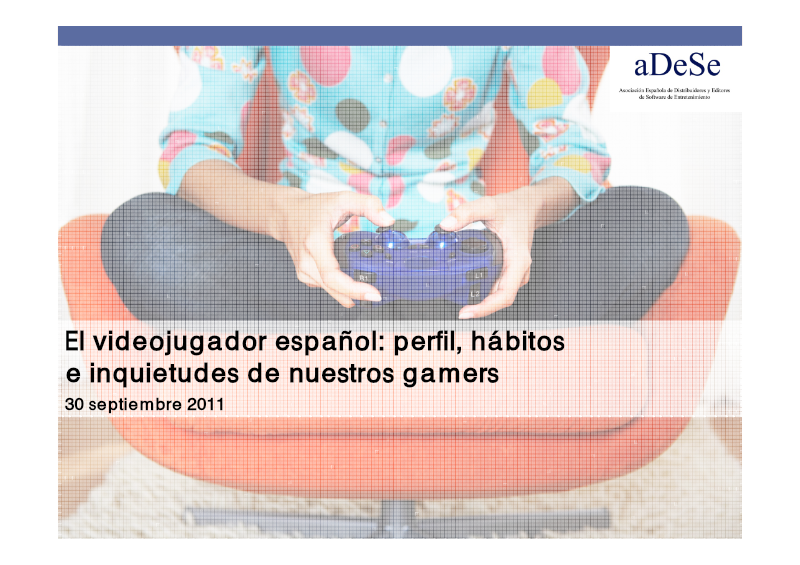
El Videojugador Español: Perfil, Hábitos e Inquietudes de Nuestros Gamers
The study commissioned by the Spanish Association of Distributors and Publishers of Entertainment Software aims to map the profile, habits and concerns of Spanish video‑game players as of 2011, positioning Spain within the broader European market. Spain ranks as the fourth largest European video‑game market, with sales exceeding €1.245 billion in 2010, while the continent records a 25.4 % adult gaming penetration (79.2 million regular players). In Spain, 24 % of adults play regularly, and the most active segment is aged 7‑34, representing 45.3 % of the population.
The typical gamer is 32 years old, with women accounting for 40 % of players over 15 years. Over half are married or cohabiting, and 43 % devote between one and five hours per week to gaming. Lifestyle data show that 70 % of gamers frequently engage in outdoor activities such as walking, café visits or restaurant meals, while 61 % exercise regularly. Health awareness is high: 57 % prioritize nutritious food, and 75 % actively practice environmental stewardship through recycling and energy‑saving habits.
Values analysis reveals a predominance of hedonistic (≈25 %) and authentic (≈19 %) orientations, followed by social‑rational and aspirational profiles (each around 15 %). Expectations for the next decade are strong: 90 % foresee gaming becoming a universal pastime, with 55‑88 % anticipating virtual‑reality immersion, multisensory experiences and a shift toward educational, medical and professional applications. The research draws on GfK Emer Ad Hoc surveys conducted across Europe in 2009‑2010, combining sales figures, penetration rates and attitudinal questionnaires to deliver a comprehensive portrait of Spanish gamers.
- Spain is the fourth-largest video game market in Europe, generating over €1.245 billion in sales during 2010.
- Gaming penetration among Spanish adults stands at 24%, with the 7–34 age demographic representing 45.3% of the population.
- The typical Spanish gamer is 32 years old, with women comprising 40% of the player base aged 15 and older.
- Gaming habits are moderate, as 43% of players dedicate between one and five hours per week to the activity.
- Spanish gamers lead active, health-conscious lifestyles, with 61% exercising regularly and 70% frequently engaging in outdoor activities.
+1
AEVISept 2011

Report27 pages
Observatorio de Piratería y Hábitos de Consumo de Contenidos Digitales: España
The study quantifies the scale of digital‑content piracy in Spain during the first half of 2011 and demonstrates that illicit consumption far exceeds legitimate market activity. Pirated material was valued at €5.23 billion, representing roughly 77 % of the legal turnover of €1.54 billion and approaching four times the revenue generated by lawful sales. The incidence of piracy varies markedly across sectors: music reaches a 98.2 % piracy rate amounting to €2.75 billion, films register 73.9 % (€1.40 billion), and video games show 61.7 % of their market value being pirated, with books trailing behind the other categories.
The analysis draws on a statistically representative online panel of 3,000 Spanish adults aged 16‑55, balanced by gender (49 % men, 51 % women) and regional distribution. The sample achieves a ±1.8 % margin of error at the 95 % confidence level, with weighting and bias‑correction procedures applied through iterative proportional fitting and adjustments for demographic, capture‑probability, and source‑selection effects. Recruitment employed a multi‑partner random‑digit‑dialing telephone approach, and participants were incentivised to ensure high engagement, providing a robust foundation for assessing consumption and piracy behaviours.
Survey instruments captured device penetration, the split between peer‑to‑peer and direct‑download mechanisms, and detailed recall of download and streaming volumes for music, film, video‑games and books on a quarterly or bi‑weekly basis. Findings reveal pervasive use of both P2P networks and direct‑download sites, underscoring the breadth of illegal access across multiple device types. The high piracy ratios, especially in music and film, suggest that traditional revenue models are being undermined, prompting a need for revised industry strategies, stronger enforcement, and alternative distribution frameworks to align consumer habits with sustainable market growth.
- In the first half of 2011, digital piracy in Spain reached a total value of €5.23 billion, which is nearly four times the €1.54 billion generated by legitimate market sales.
- Music piracy is the most severe sector, with a 98.2% piracy rate accounting for €2.75 billion in lost potential revenue.
- Film piracy accounts for 73.9% of the market, representing a value of €1.40 billion in illicit consumption.
- Video games show a 61.7% piracy rate, indicating that more than half of the sector's potential market value is lost to illegal activity.
- Illicit consumption across all digital sectors is driven by the pervasive use of both peer-to-peer networks and direct-download websites.
IDC EspañaJan 2011
Report19 pages
Essential Facts: About the Canadian Computer and Video Game Industry
The 2011 overview of Canada’s entertainment software sector presents a comprehensive portrait of an industry that employs roughly 16,000 people across nearly 350 firms and generates an estimated $1.7 billion in direct economic impact. Growth has accelerated, with an 11 % increase in size over the previous two years and a projected 17 % expansion in the next two‑year horizon, underscoring the sector’s rising significance within the national economy.
Industry composition is diverse: 59 % of employment resides in large firms (over 150 staff), while small and medium enterprises account for the remainder, averaging 16 employees each. Traditional console development remains dominant, absorbing 68 % of the workforce, though resources for social (2 %), casual (2 %) and mobile (7 %) gaming are expanding rapidly. Development costs vary by platform, with traditional console projects averaging C$10.1 million and mobile titles around C$0.17 million, reflecting differing risk and time‑to‑market profiles.
Provincial analysis highlights Quebec as the primary hub, hosting 86 companies, 8,236 employees and $733 million in spending, and achieving a 13 % annual growth rate. Ontario follows with 96 firms, 2,600 staff and $238 million in revenue, posting 20 % historical growth and 21 % expected expansion. British Columbia, with 83 companies and 3,882 employees, records flat recent growth but anticipates a 10 % rebound, while Saskatchewan is excluded due to lack of survey responses.
Consumer insights from a 2,579‑adult, 398‑teen and 547‑child NPD sample reveal that
- The Canadian video game industry employs approximately 16,000 people across 350 firms, generating $1.7 billion in direct economic impact as of 2011.
- The sector experienced 11% growth over the previous two years and is projected to expand by an additional 17% in the next two-year horizon.
- Quebec serves as the primary industry hub with 8,236 employees and $733 million in spending, while Ontario shows the highest growth potential with a projected 21% expansion.
- Traditional console development dominates the industry, employing 68% of the workforce and requiring an average project investment of C$10.1 million.
- While console gaming remains the primary focus, resources are shifting toward emerging sectors, with mobile gaming currently accounting for 7% of the workforce.
ESAC – Entertainment Software Association of CanadaJan 2011

Report19 pages
Faits Essentiels 2011 sur le Secteur Canadien des Jeux Vidéo et Informatiques
The study evaluates the Canadian entertainment‑software industry in 2011, outlining its structure, economic contribution, and consumer profile to illustrate why the sector ranks third worldwide in revenue and first in jobs per capita. Quantitative data show roughly 16 000 workers employed by about 350 firms, generating an estimated direct impact of C$1.7 billion and delivering an 11 % growth rate over the previous two years, with a projected 17 % increase in the next two. Traditional console development still dominates, employing 68 % of the workforce, while mobile, social and casual games together account for just under 12 % of resources, reflecting a rapid diversification of platforms.
Regional analysis reveals Quebec as the sector’s hub, housing 8 236 employees, 70 % of large firms and C$733 million in spend, and posting a 13 % annual growth rate. Ontario follows with 2 600 employees, 96 firms and a higher growth trajectory (20 % historic, 21 % forecast) driven by numerous micro‑ and small‑size companies. British Columbia’s 3 882 employees and C$393 million in spend show modest growth, while Saskatchewan is omitted due to lack of survey responses. Company‑size distribution indicates that 59 % of employees work for large enterprises (151+ staff), with the remainder spread across medium, small and micro firms.
Consumer insights, derived from an NPD Group survey of 2 579 adults, 398 teens and 547 children (margin of error ± 1.6 %), indicate that 48 % of Canadians identify as gamers, with a median age of 33 and a gender split of 62 % male to 38 % female. Thirty percent play daily,
- Canada’s video game industry generated C$1.7 billion in direct economic impact in 2011, ranking third globally in revenue and first in jobs per capita.
- The sector employed approximately 16,000 workers across 350 firms, with an 11% growth rate over the previous two years and a projected 17% increase for the following two.
- Quebec serves as the industry hub with 8,236 employees and C$733 million in spending, while Ontario exhibits the fastest growth trajectory at 20–21%.
- Large enterprises (151+ staff) dominate the labor market, accounting for 59% of total industry employment.
- Console development remains the primary focus, employing 68% of the workforce, while mobile, social, and casual platforms represent 12% of resources.
+1
ESAC – Entertainment Software Association of CanadaJan 2011
Report69 pages
Informe de Resultados: Cómo se proyecta el videojuego del futuro
The study, conducted in May 2010, projects the evolution of video‑games through the 2020‑25 horizon, arguing that immersive virtual‑reality experiences will become the dominant technological driver of the sector. By analysing current player demographics, consumption habits and emerging distribution channels, the research maps how the industry will restructure its business models while preserving the fundamental motivations and genre preferences that have long defined gaming.
Present‑day online play is still largely the domain of “hardcore” gamers, yet a significant share of moderately hardcore users—53 %—report connection latency as a primary pain point. This dissatisfaction is expected to accelerate the shift toward higher‑bandwidth, low‑latency networks that can support the projected surge in immersive content. The forecast anticipates that roughly 68 % of all game sales will be conducted through virtual stores or server‑based platforms, eliminating the need for physical distribution.
Future revenue streams are projected to diversify across several complementary models: periodic free expansions, low‑cost add‑ons priced around three euros, flat‑rate monthly subscriptions that may be tied to specific devices, micro‑transactions, and ad‑supported versions. Despite these commercial innovations, core genres, narrative settings and player motivations are predicted to remain largely stable, with the home environment continuing to serve as the principal venue for play, albeit increasingly complemented by mobile and cloud‑based access points.
Overall, the analysis underscores a transition toward fully digital acquisition and consumption, driven by advances in immersive technology and network infrastructure, while the cultural and experiential foundations of gaming persist across the coming decade.
- Approximately 68% of all game sales are projected to transition to virtual stores or server-based platforms, effectively phasing out physical distribution.
- Immersive virtual reality is identified as the primary technological driver for the industry through the 2020-25 period.
- Network latency is a critical barrier for 53% of moderately hardcore gamers, necessitating a shift toward high-bandwidth, low-latency infrastructure to support immersive content.
- Future revenue models will diversify into a mix of periodic free expansions, low-cost add-ons, monthly subscriptions, micro-transactions, and ad-supported versions.
- Despite technological shifts, core gaming genres, narrative settings, and player motivations are expected to remain stable over the coming decade.
AEVIMay 2010
Report35 pages
Estudio aDeSe 2009: Usos y Hábitos de los Videojugadores Españoles
The November 2009 aDeSe study set out to map the usage patterns and habits of video‑game players across Spain, providing a statistically robust portrait of the market for stakeholders seeking to understand consumer behavior. A nationally representative sample of 4,254 residents aged fifteen and older was surveyed, delivering results with a ±1.5 % margin of error at the 95 % confidence level. The research encompassed all Spanish households, capturing data on technology ownership, demographic characteristics, and geographic distribution of gamers.
Findings reveal that personal computers remain the dominant platform, with 58 % of households reporting PC ownership, while 35 % possess a dedicated video‑gaming console. This indicates a strong convergence between general computing and interactive entertainment within Spanish homes. The demographic profile shows that the majority of active gamers reside in municipalities ranging from ten thousand to fifty thousand inhabitants, a segment that accounts for 26 % of the gaming population, underscoring the importance of medium‑sized towns as key hubs of gaming activity.
Overall, the study highlights a mature gaming ecosystem in Spain, characterized by widespread access to PC hardware and a substantial, though smaller, console base. The concentration of players in mid‑size municipalities suggests that market strategies should consider regional nuances, while the high penetration of computing devices points to opportunities for cross‑platform content and services.
- Personal computers are the primary gaming platform in Spain, with 58% of households reporting ownership compared to 35% for dedicated consoles.
- The 2009 study surveyed a nationally representative sample of 4,254 residents aged fifteen and older, achieving a ±1.5% margin of error at a 95% confidence level.
- Medium-sized municipalities with populations between 10,000 and 50,000 inhabitants represent the largest segment of the gaming population, accounting for 26% of total players.
- The high penetration of PC hardware in Spanish homes indicates a mature market with significant potential for cross-platform content and services.
- The concentration of gamers in mid-sized towns suggests that market strategies for the Spanish interactive entertainment sector should account for regional demographic distribution.
AEVINov 2009
Report31 pages
Hábitos e Iniciación a los Videojuegos en Mayores de 35 Años: Diciembre de 2008
I’m ready to synthesize the material, but I need the remaining section summaries to produce a complete, accurate overview. Could you please provide the rest of the section-by-section information?
- The report, published in December 2008, focuses on video game habits and initiation among individuals over 35 years old.
- Among those aged 35-44, 43.4% play video games on weekends, 27.8% daily, and 28.8% did not specify.
- For individuals aged 65 and older, 68.4% play video games on weekends, 7.9% daily, and 23.7% did not specify.
- Entertainment/distraction is the primary appeal of video games for 50% of 35-44 year olds, 40% of 45-54 year olds, 30% of 55-64 year olds, and 20% of those 65 and older.
- A significant portion of older gamers are new to video games: 76.3% of those 65+ started less than 3 years ago, and 41.5% of 55-64 year olds started less than 3 years ago.
+1
AEVIDec 2008