Report31 pages
2020 Global Games Market Report
The 2020 Global Games Market Report provides a comprehensive analysis of the video game industry during a landmark year defined by the COVID-19 pandemic and the transition to next-generation consoles. The central thesis posits that gaming has evolved beyond simple entertainment to become a primary social network and a precursor to the "metaverse," with interactive virtual spaces increasingly replacing traditional social media for younger generations.
Key findings indicate that the global games market was projected to generate $159.3 billion in 2020, representing a 9.3% year-on-year increase. Mobile gaming remained the largest segment, accounting for $77.2 billion (48% of the market), driven by low barriers to entry and the rise of hypercasual titles. Console and PC segments followed with $45.2 billion and $36.9 billion respectively. Geographically, the Asia-Pacific region dominated the landscape, generating $78.4 billion—nearly half of all global revenues—while the Middle East and Africa emerged as the fastest-growing region. By the end of 2020, the global player base was expected to reach 2.7 billion, with forecasts suggesting the market would surpass $200 billion and 3 billion players by 2023.
The scope of the analysis covers 30 key markets representing over 90% of global revenues, with data segmented by region (Asia-Pacific, North America, Europe, Latin America, and Middle East/Africa) and platform. Methodology relies on a top-down predictive model integrating macroeconomic data, financial reports from over 100 public companies, and primary consumer research involving 62,500 respondents.
The report concludes that while lockdown measures provided a short-term surge in engagement and revenue, the industry faces long-term shifts toward platform-agnostic cloud gaming and subscription models. Additionally, it highlights the successful globalization of Chinese gaming firms, which pivoted to international markets following domestic regulatory freezes, now leading the industry in mobile development and cross-border investment.
- The global games market generated $159.3 billion in 2020, a 9.3% year-on-year increase, with projections to exceed $200 billion by 2023.
- Mobile gaming is the industry's dominant segment, accounting for $77.2 billion or 48% of total global revenue.
- The Asia-Pacific region is the primary market hub, generating $78.4 billion, while the Middle East and Africa represent the fastest-growing geographic regions.
- The global player base reached 2.7 billion in 2020 and is forecast to surpass 3 billion players by 2023.
- Console and PC gaming segments generated $45.2 billion and $36.9 billion respectively during the 2020 fiscal year.
+1
NewzooJan 2020

Report8 pages
Tower Defense Games: Deconstructing the Superstars (2020 Industry Snapshot)
The tower defense sub-genre represents a high-performing segment within the casual arcade category, characterized by strong monetization potential and deep player engagement. Analysis of global mobile gaming data from 2020 reveals that tower defense titles significantly outperform related genres like platformers and idlers in key financial metrics. Specifically, the sub-genre boasts an Average Revenue Per Paying User (ARPPU) of $83 and an Average Revenue Per Daily Active User (ARPDAU) of $1.66. These figures are supported by a robust daily conversion rate of 3.83%, which is more than double that of board games.
Geographic performance varies across different engagement and monetization KPIs. Italy leads in Day 7 retention at 39%, while France records the highest average daily playtime at 210 minutes. However, China emerges as the most effective market for monetization, achieving a conversion rate of 8.7%, nearly double that of the United States. These statistics are derived from a massive dataset encompassing over 134,000 integrated games and 900 million unique monthly players, providing a granular view of the competitive landscape.
The success of the genre is attributed to its accessible core mechanics combined with high replayability. Developers leverage meta-features such as daily challenges, PvP options, and RPG elements to drive long-term retention. By introducing new characters or obstacles, studios can shift the game meta without the resource-heavy requirement of designing entirely new maps. Notable titles launched in 2020, such as Kingdom Wars Defense and Rush Royale, exemplify these trends by blending traditional defense mechanics with innovative strategy and merging elements to maintain high user ratings and market relevance.
- Tower defense games demonstrate high monetization efficiency with an ARPPU of $83, an ARPDAU of $1.66, and a daily conversion rate of 3.83%.
- China is the most lucrative market for the genre, achieving an 8.7% conversion rate, which is nearly double that of the United States.
- Regional engagement metrics vary significantly, with Italy leading in Day 7 retention at 39% and France recording the highest average daily playtime at 210 minutes.
- Developers maintain long-term retention and market relevance by integrating meta-features such as PvP, RPG elements, and daily challenges into traditional defense mechanics.
- Studios can efficiently shift game metas and maintain high user ratings by introducing new characters or obstacles rather than developing entirely new maps.
+1
GameAnalyticsJan 2020
Report28 pages
Global Video Game Deals Report 2020
The 2020 fiscal year marked a historic period of consolidation and capital infusion for the global video game industry, largely catalyzed by the COVID-19 pandemic and the resulting surge in at-home entertainment. Total deal value reached $33.6 billion across 664 transactions, encompassing mergers and acquisitions, private investments, and public offerings. The United States and China emerged as the primary geographical drivers, collectively representing 63% of the total deal value. The market demonstrated significant resilience, recovering from a stagnant first quarter to reach record-breaking activity levels in the second half of the year.
M&A activity was a primary pillar of this growth, totaling $12.6 billion across 219 deals. This sector was dominated by public strategic acquirers such as Tencent, Embracer Group, Stillfront, and Zynga, who accounted for 60% of the total M&A value. Private investment also reached new heights, with $5.9 billion raised through venture capital and corporate rounds, specifically targeting multiplatform developers and mobile studios. Public markets followed a similar trajectory; after a quiet start to the year, public offerings surpassed $15.1 billion, supported by high-profile IPOs from companies like Unity Software and Kakao Games, as well as significant fixed-income activity as firms moved to refinance debt at lower interest rates.
The analysis segments the industry into gaming, platform technology, and esports. While gaming remained the most active sector, platform and tech saw substantial late-stage investments in companies like Roblox and Epic Games. Looking forward, the industry is expected to see continued consolidation led by Nordic and Chinese firms, increased competition between traditional venture capital and large strategic investors, and a robust pipeline of IPO candidates. This data was compiled by tracking closed transactions across public media and financial databases, excluding pure gambling and betting entities to focus on the core video game ecosystem.
- The global video game industry reached a record $33.6 billion in total deal value across 664 transactions in 2020, driven by pandemic-induced demand for at-home entertainment.
- Public offerings were the largest financial contributor at $15.1 billion, bolstered by high-profile IPOs from Unity Software and Kakao Games alongside corporate debt refinancing.
- Mergers and acquisitions totaled $12.6 billion across 219 deals, with Tencent, Embracer Group, Stillfront, and Zynga accounting for 60% of that value.
- The United States and China served as the primary market drivers, collectively representing 63% of the total global deal value.
- Private investment reached $5.9 billion, with venture capital and corporate funding rounds specifically targeting mobile studios and multiplatform developers.
+1
InvestGameJan 2020
Report58 pages
Gaming Industry Report: Serbia 2020
The 2020 assessment of Serbia’s video‑game sector presents a rapidly expanding ecosystem that has moved beyond a modest, paper‑based association to become a central hub for nearly one hundred companies. In a single year the industry surpassed €100 million in revenue, a 20 percent increase over the previous period, while supporting 120 development teams and roughly 2 100 employees, about one‑third of whom are women. The market delivered 41 new mobile titles, with most studios concentrated in Belgrade and financing split between angel investors and state‑funded programmes, which together account for 45 percent of capital. A clear majority of firms intend to grow their staff in 2021, despite citing regulatory red‑tape, limited legal incentives and insufficient console support as persistent obstacles.
The sector is dominated by small‑to‑mid‑size studios, typically employing five to twenty‑five people, that provide full‑cycle development, consulting and backend‑as‑a‑service solutions. Companies such as Elbet and Tummy Games have already achieved notable market traction, with Elbet’s products operating on more than 130 operators across 30 countries. The pandemic forced a swift transition to remote work, exposing resource constraints and talent‑recruitment challenges, yet overall productivity remained stable and the community’s outlook stayed positive.
Industry networking was sustained through a dedicated Discord community of over a thousand members and forty channels, while the Serbian Games Association launched talent‑development initiatives including a “Shift 2 Games” job‑role series and a mentorship pilot for fifteen participants. Parallel to these efforts, game‑related education expanded dramatically: the Master 4.0 Hub in Gaming at the University of Kragujevac and a new master’s programme at the University of Arts in Belgrade will together serve more than 1 500 students, supported by over thirty professors and a dozen new degree and certificate programmes across ten institutions. Backed by partners such as Epic Games, Crater Training Center and Nordeus, this coordinated educational push is poised to supply a robust pipeline of world‑class talent for Serbia’s indie and mid‑size studios.
- Serbia’s video-game industry reached over €100 million in revenue in 2020, marking a 20 percent year-over-year growth across 120 development teams.
- The sector employs approximately 2,100 people, with women accounting for one-third of the workforce and a majority of firms planning to increase staff in 2021.
- Educational infrastructure expanded significantly with new programs at the University of Kragujevac and the University of Arts in Belgrade, supported by partners like Epic Games and Nordeus to serve over 1,500 students.
- The ecosystem is composed of nearly 100 companies, primarily small-to-mid-size studios of 5 to 25 employees, with 45 percent of capital sourced from angel investors and state-funded programs.
- Market output in 2020 included 41 new mobile titles, with companies like Elbet achieving international scale by operating on more than 130 platforms across 30 countries.
+1
SGAJan 2020
Report14 pages
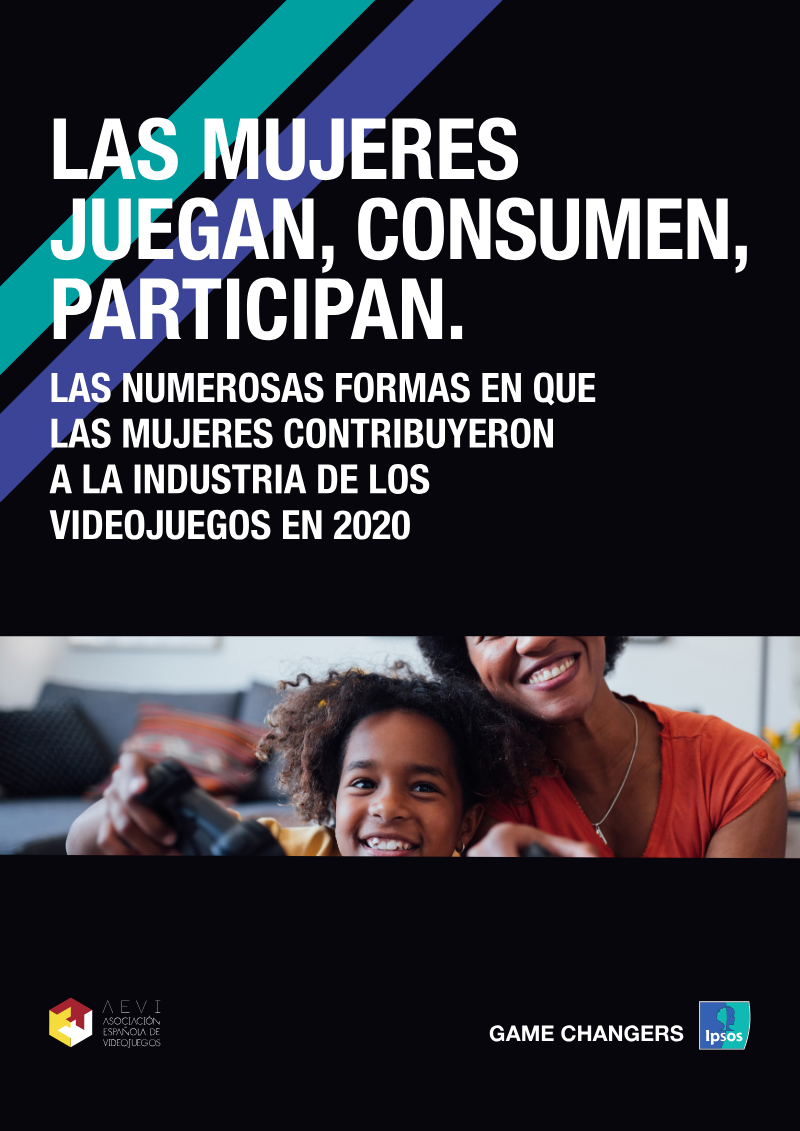
Las Mujeres Juegan, Consumen, Participan: Contribución a la Industria de Videojuegos en 2020
The analysis highlights how women have become a decisive force in the European video‑game market in 2020, both as players and as consumers. By the end of the year 118 million people aged 6‑64 were active gamers across Spain, France, Germany, Italy and the United Kingdom, with women accounting for 47 % of that base—up from 45 % in 2019. During the second‑quarter lockdown a record 60 million women played, and their average weekly playtime rose to 8.8 hours, with console sessions increasing by roughly one hour compared with the previous year. Mobile gaming proved especially important, as smartphone and tablet usage among women grew 3 % between Q1 2019 and Q4 2020.
Financially, women generated 38 % of total video‑game spending in the five markets, translating into approximately €6.8 billion of the €17.8 billion industry revenue—a 31 % year‑on‑year increase. Their purchases were split evenly between console titles and mobile apps, each contributing about €3 billion. The sector’s overall revenue rose by €3.2 billion in 2020, underscoring the economic impact of the expanding female audience.
Work
- Women accounted for 47% of the 118 million active gamers across Spain, France, Germany, Italy, and the UK in 2020, up from 45% in 2019.
- Female gamers generated €6.8 billion in spending in 2020, representing 38% of total industry revenue and a 31% year-on-year increase.
- During the 2020 Q2 lockdown, 60 million women played video games, with average weekly playtime rising to 8.8 hours and console sessions increasing by approximately one hour.
- Spending by women was split evenly between console titles and mobile apps, with each category contributing approximately €3 billion to the total.
- Smartphone and tablet usage among female gamers grew by 3% between Q1 2019 and Q4 2020, highlighting the rising importance of mobile platforms.
+1
AEVIJan 2020
Report35 pages
Los Esports en España: Situación Actual y Posición de la Industria
The analysis presents a comprehensive overview of Spain’s esports ecosystem, emphasizing its rapid expansion, market significance, and emerging challenges. Between 2016 and 2019 the sector more than doubled, rising from €14.5 million to €35 million in revenue, which now represents roughly four percent of global esports income. Employment grew to about 600 individuals, including 250 professional players, while advertising expenditure reached €22.5 million in 2019. Viewership figures place Spain twelfth worldwide, with 2.9 million regular spectators—over half of whom are older than 25—and a female audience share of 36 percent, the highest in Europe. Social engagement is strong, generating over 1.5 million positive mentions on Twitter.
Spain has consolidated its position as a European esports hub, attracting high‑level domestic talent, significant foreign participation, and flagship tournaments such as the League of Legends Championship, CS:GO, and Rocket League World Championships. Sponsorship is dominated by the three major telecom operators—Movistar, Orange and Vodafone—providing financial stability and visibility. The sector benefits from the involvement of leading publishers, platforms, and organizers like LVP, ESL and DreamHack.
Despite these advances, the industry faces structural obstacles, notably the need for improved broadband and 5G infrastructure and the absence of dedicated esports legislation, which contrasts with neighboring France. Regulatory uncertainty and the commercial nature of esports, coupled with complex intellectual‑property arrangements of game publishers, are identified as key factors that could influence future growth and investment.
- Spain's esports revenue more than doubled between 2016 and 2019, growing from €14.5 million to €35 million and capturing approximately four percent of the global market.
- The industry supports 600 jobs, including 250 professional players, and generated €22.5 million in advertising expenditure as of 2019.
- Spain ranks twelfth globally in viewership with 2.9 million regular spectators, featuring the highest female audience share in Europe at 36 percent and a demographic where over half of viewers are older than 25.
- Major telecom operators Movistar, Orange, and Vodafone provide the primary financial foundation for the sector, which hosts flagship events like the League of Legends, CS:GO, and Rocket League World Championships.
- Growth is currently hindered by a lack of dedicated esports legislation and the need for improved 5G and broadband infrastructure.
AEVIJan 2020

Report11 pages
Catálogo de Servicios – Desarrolladores: España
The catalogue presents AEVI’s strategy to strengthen Spain’s video‑game development sector through a suite of collaborative services and targeted initiatives. Central to the effort is the celebration of the second anniversary of the association’s development area, which underscores a commitment to expand support for local studios, from established references to emerging independents.
Since the start of 2020, six new development studios have joined AEVI, bringing the total roster to more than thirty members, including Artax Games, Binary Box Studios, Blackmouth Games and others. Financial assistance is offered through a €10,000 grant programme, while an affordable annual membership fee of €150 eases entry for smaller firms. AEVI also operates a mentor network, a job‑matching platform, and a €10,000 aid scheme, and has conducted outreach across 15,000 km, meeting over 300 developers in cities such as Madrid, Barcelona, Bilbao and Seville.
Key partnerships extend legal, technological and commercial expertise to members. Bird & Bird provides free initial legal consultations on intellectual‑property, labour and tax matters; Tutelio supplies blockchain‑based IP protection services; B2Boost grants access to weekly market‑intelligence reports covering PSN, Xbox Live, Steam and Nintendo e‑shop sales; Sorastream enables cost‑free integration of games into its cloud‑gaming platform with revenue‑share terms for AEVI affiliates. Additional collaborations with Enumbers, Screenglitch, Make Good Art Agency and Gamingates deliver accounting tools, marketing support, digital‑strategy advice and visibility in professional networks.
Collectively, these measures aim to create a sustainable ecosystem for Spanish developers, fostering talent, facilitating market entry and enhancing the international profile of locally produced games.
- AEVI has expanded its development division to over 30 member studios since 2020, including firms like Artax Games, Binary Box Studios, and Blackmouth Games.
- The association provides direct financial support through a €10,000 grant programme and maintains a low barrier to entry for small firms with an annual membership fee of €150.
- Members receive specialized professional services, including free initial legal consultations from Bird & Bird and blockchain-based IP protection via Tutelio.
- Market intelligence is provided through B2Boost, which supplies weekly sales data from major platforms including PSN, Xbox Live, Steam, and the Nintendo e-shop.
- AEVI facilitates commercial growth and distribution through cloud-gaming integration via Sorastream and marketing support from partners like Make Good Art Agency and Gamingates.
+1
AEVIJan 2020
Report43 pages
Games Industry 2019/20
Germany stands as Europe’s largest video‑game market and the world’s fifth‑largest, a position reinforced by a robust developer community, flagship events and a policy framework that actively subsidises production. Federal funding of €50 million per year, allocated as non‑repayable grants covering a quarter to half of project costs, is complemented by regional programmes and a business climate that benefits from a sizable domestic audience and a highly skilled workforce.
The market generated a record €4.4 billion in 2018, expanding 9 percent year‑on‑year, while the sector’s organisational base grew to roughly 524 game‑related firms that year. These include 368 development studios, 38 pure publishers and a further 118 hybrid entities, employing about 11 000 staff directly in development and nearly 28 000 when ancillary roles are counted. More than 50 higher‑education institutions now deliver dedicated curricula in game design, computer science, art and virtual reality, concentrating talent pipelines in Berlin and Hamburg.
Mid‑size studios such as Deep Silver, Kolibri Games and Mimimi have produced internationally recognised titles, and the annual gamescom exhibition in Cologne underscores the industry’s global reach. In 2023 the event attracted 31 300 trade professionals, delivered over 500 000 concurrent viewers for its Opening Night Live broadcast and amassed more than 100 million video hits, prompting the launch of a gamescom Asia edition in Singapore to capture growth in the Asia‑Pacific region.
A dense network of over 200 development and publishing firms and more than 150 specialist service providers—spanning localisation, cloud infrastructure, legal counsel, marketing and middleware—covers virtually every German city. This comprehensive, SME‑driven ecosystem, supported by mature ancillary services, positions Germany for sustained expansion and reinforces its role as a central hub for both domestic creation and international distribution of video‑games.
- Germany is the largest video-game market in Europe and the fifth-largest globally, generating a record €4.4 billion in 2018 with a 9 percent year-on-year growth rate.
- The German government supports the industry with €50 million in annual non-repayable grants, which cover 25 to 50 percent of project costs for developers.
- The sector comprises approximately 524 game-related firms, including 368 development studios, employing 11,000 staff directly and nearly 28,000 when including ancillary roles.
- The industry is supported by a robust talent pipeline from over 50 higher-education institutions, with development hubs concentrated primarily in Berlin and Hamburg.
- The annual gamescom exhibition in Cologne is a major international industry driver, attracting 31,300 trade professionals and over 100 million video hits in 2023.
+1
game – Verband der deutschen Games-Branche e. V.Jan 2020

Report45 pages
Czech Video Game PC, Console and Mobile Game Developers in Czech Republic 2020
The study maps the structure and dynamics of the Czech video‑game industry as of 2020, highlighting its rapid export‑driven expansion and the strategic challenges it faces in talent development and public support. The sector comprises roughly 110 domestic development studios, of which only a small fraction are foreign branches, employing about 1,750 specialists. Turnover rose from CZK 2.26 billion in 2017 to over CZK 5 billion in 2020, equivalent to more than €190 million, reflecting an average annual growth rate of 29 % over the previous five years and an export share near 95 % to markets such as the United States, Germany and the United Kingdom. Revenue in 2019 already surpassed €169 million, outpacing the national film industry by a factor of three, and the market is projected to exceed €190 million in 2020.
The analysis of the publishing and distribution landscape shows a shift away from traditional full‑development financing toward a model where publishers act mainly as marketing and launch partners, while online platforms now dominate the transaction chain, reducing costs and marginalising physical distributors, of which only ten remain active in the country. Consumer data reveal an average gamer age of 33, a gender split of one‑third women, and annual spending of roughly CZK 4 billion, with a strong preference for story‑driven titles.
Human‑capital constraints emerge as a critical bottleneck: the industry confronts intense competition for skilled staff, a fragmented education pipeline, and limited visibility of creative industries within public policy. Unlike neighboring Poland and Germany, which allocate substantial public funds to game‑industry support, the Czech Republic offers virtually no dedicated subsidies for research, development or innovation, despite the sector’s outsized contribution to national exports. The findings suggest that sustained growth will depend on coordinated investment in education, clearer industry‑government linkages, and targeted public financing to bolster the sector’s competitive edge.
- The Czech video game industry experienced rapid growth between 2017 and 2020, with annual turnover rising from CZK 2.26 billion to over CZK 5 billion, representing a 29% average annual growth rate.
- The sector is highly export-oriented, with approximately 95% of revenue generated from international markets, primarily the United States, Germany, and the United Kingdom.
- As of 2020, the industry comprised roughly 110 domestic studios employing 1,750 specialists, with revenue already tripling that of the national film industry by 2019.
- The publishing landscape has shifted away from traditional full-development financing toward a model where publishers primarily handle marketing and launch, while online platforms have marginalized physical distribution.
- Human capital remains a critical bottleneck due to a fragmented education pipeline and intense competition for skilled talent, compounded by a lack of dedicated public subsidies for research and development compared to neighboring countries.
+2
GDACZ – Czech Game Developers AssociationJan 2020
Report16 pages
Rapport Annuel 2020 de l’ALD
Canada’s video‑game sector continued to function as a high‑growth engine in 2020, supporting roughly 48 000 full‑time‑equivalent positions, of which 27 700 are direct industry jobs, and generating about C$4.5 billion in GDP. The number of development studios expanded by 16 percent to approximately 700, and sales increased despite the disruptions of the COVID‑19 pandemic. A remote‑work guide and a targeted outreach campaign helped maintain employment levels, while an economic‑impact study of 185 respondents confirmed a favourable policy and investment climate for the industry.
Leadership within the sector is exemplified by senior figures such as Tania, a veteran with more than 15 years of experience and a champion of diversity through the EA Women’s Employee Resource Group, and Éric Martel, director of AI and machine‑learning at Eidos‑Montréal, who oversees research for flagship franchises. Their profiles underscore the growing technical sophistication and inclusive culture emerging across Canadian studios.
Strategic initiatives in 2020 focused on talent development and cultural recognition. Partnerships with the Conseil des technologies de l’information et des communications launched the Integrated Work‑Based Learning program to place students in industry roles, while the inaugural Canadian Game Awards moved to a digital format. Support for the Canadian Screen Awards introduced three new video‑game categories, signalling the medium’s expanding cultural relevance despite modest submission volumes. Financially, the association reported a solid position, reinforcing its capacity to sustain growth‑oriented programs and diversity‑focused pipelines throughout the Canadian gaming ecosystem.
- Canada’s video game sector generated approximately C$4.5 billion in GDP and supported 48,000 full-time-equivalent positions in 2020.
- The number of development studios in Canada grew by 16 percent in 2020, reaching a total of approximately 700 studios.
- The industry maintained employment levels throughout the COVID-19 pandemic by implementing remote-work guides and targeted outreach campaigns.
- Strategic talent development was bolstered by a partnership with the Conseil des technologies de l’information et des communications to launch an Integrated Work-Based Learning program for students.
- The Canadian Screen Awards increased the cultural recognition of the sector by introducing three new video-game categories.
+1
ESAC – Entertainment Software Association of CanadaJan 2020

Report33 pages
The Past, Present and Future of Games: Global and Local Opportunities
The global gaming industry is undergoing a generational transformation, evolving from a niche hobby into a pervasive cultural and economic force. This transition is characterized by a shift from traditional PC and console play toward a diversified ecosystem defined by mobile accessibility, free-to-play models, and the convergence of playing, watching, and social interaction. By 2022, the industry reached a state of "lifetime gamers," with a projected trajectory toward cross-market disruption by 2027.
Market data highlights the massive scale of this sector, with approximately 2.7 billion gamers globally and 1.3 billion spenders. The COVID-19 pandemic significantly accelerated this growth, leading to a $16 billion upward adjustment in 2020 revenue forecasts. Mobile gaming has emerged as the dominant segment, accounting for 49% of global consumer revenues. Furthermore, the rise of cloud gaming is expected to generate $4.8 billion in revenue by 2023, supported by major infrastructure plays from companies like Microsoft, NVIDIA, and Tencent.
Consumer behavior is also shifting, as evidenced by Newzoo’s segmentation which identifies diverse personas ranging from "Hardware Collectors" to "Backseat Viewers." Notably, 29% of enthusiasts do not rank playing as their primary interest, focusing instead on viewing or hardware. This engagement extends into new value chains, including in-game e-commerce—where players purchase physical goods directly through apps—and the integration of gaming with traditional media and travel industries.
The competitive landscape is defined by technological innovation and strategic content plays. While Sony emphasizes exclusive titles for its hardware, Microsoft focuses on subscription-based services. Simultaneously, the rise of esports and live-streaming has created new opportunities for celebrity engagement and music integration. As mobile esports viewership sees exponential growth on platforms like YouTube, the industry continues to blur the lines between casual and core gaming experiences, driven by global studios and empowered creator communities.
- The global gaming market has reached a scale of 2.7 billion gamers, with 1.3 billion active spenders driving the industry's evolution into a major economic force.
- Mobile gaming is the industry's dominant segment, currently accounting for 49% of global consumer revenues.
- Cloud gaming is a significant growth area, projected to generate $4.8 billion in revenue by 2023 through infrastructure investments from Microsoft, NVIDIA, and Tencent.
- Engagement is shifting beyond active play, as 29% of gaming enthusiasts identify viewing or hardware collection as their primary interest rather than gameplay.
- The COVID-19 pandemic acted as a major catalyst for the sector, necessitating a $16 billion upward adjustment to 2020 revenue forecasts.
+1
NewzooJan 2020

Report20 pages
Europe's Video Game Industry: Key Facts 2020
The European video games industry experienced steady growth in 2019, reaching a total market turnover of €21.6 billion. This represents a 3% year-on-year increase and a 55% rise since 2014 across key markets. Revenue is increasingly driven by digital ecosystems, with online and app-based income accounting for 76% of the market, while physical sales represent 24%. Within the online segment, 66% of revenue is generated through in-game extras and downloadable content. Console gaming remains the leading hardware category by revenue at 43%, closely followed by mobile and tablets at 40%.
Demographic data indicates that 51% of the European population aged 6 to 64 plays video games, with an average player age of 31. While engagement is highest among younger cohorts, 31% of those aged 45 to 64 are active players. Gender representation is nearly balanced, as women make up 45% of the player base and over half of all mobile gamers. On average, European players spend 8.6 hours per week gaming, significantly less than the time spent on social media or television.
The industry maintains a strong focus on responsible gameplay through the PEGI age rating system, which is active in over 35 countries. Approximately 67% of parents are aware of these labels, and 85% have established agreements with their children regarding in-game spending. Beyond consumer protection, the sector is expanding its educational footprint. Initiatives like the Games in Schools project, conducted with European Schoolnet, have trained over 4,000 teachers across 73 countries to integrate commercial games into pedagogical frameworks.
Data for these findings was primarily extrapolated from the 2019 GameTrack and Newzoo reports, utilizing surveys and sales tracking across major European territories including France, Germany, Italy, Spain, and the United Kingdom. The scope covers the 2019 calendar year while acknowledging the emerging impact of the COVID-19 pandemic on 2020 industry trends.
- The European video game market reached €21.6 billion in 2019, marking a 3% year-on-year increase and a 55% total growth since 2014.
- Digital ecosystems dominate the market, accounting for 76% of total revenue, with 66% of that online income derived specifically from in-game extras and downloadable content.
- Hardware revenue is split primarily between consoles at 43% and mobile/tablet devices at 40%.
- The European player base is 51% of the population aged 6 to 64, with an average age of 31 and a gender split of 55% male and 45% female.
- Engagement remains consistent across age groups, with 31% of individuals aged 45 to 64 identifying as active gamers.
Interactive Software Federation of EuropeJan 2020

Report35 pages
Impact of Cloud Gaming and Other Trends in the Indie Ecosystem: Spain
The analysis evaluates how cloud‑gaming and emerging distribution models are reshaping the Spanish indie game ecosystem, arguing that while the broader gaming audience is expanding across new platforms and financing structures, cloud‑gaming remains experimental and will not achieve mass‑market penetration for several years due to bandwidth constraints and uneven consumer readiness. Console users, especially those who are price‑sensitive and less tied to a single PC ecosystem, are identified as the most promising segment for indie titles delivered via cloud, with subscription‑or‑free‑to‑play (GaaS) approaches offering the strongest revenue potential.
Current platform data show PlayStation Now operating in 19 high‑speed‑Internet markets and reaching more than 79 million PS4 owners—approximately 0.6 % of the console base—yet its relatively high subscription fee and overlap with PS Plus dilute its attractiveness. Google Stadia leverages extensive data‑center and AI resources, providing a free tier alongside a €9.99‑per‑month option, illustrating divergent pricing strategies within the nascent market.
Strategic recommendations for indie studios emphasize hybrid monetisation that combines subscriptions with direct sales, targeting latency‑tolerant mid‑core audiences, including a growing female demographic. Development pipelines should prioritise engines with broad cross‑platform support, notably Unreal for versatility and Unity for seamless Stadia integration, while adopting low‑cost, high‑quality marketing to compensate for the reduced role of traditional publishers. Cloud‑gaming’s principal advantage lies in creating a more level playing field, granting indie developers visibility and access to users lacking high‑end hardware, thereby expanding market reach in Spain and comparable European territories over the coming three to five years.
- Cloud gaming is currently an experimental niche that will not reach mass-market penetration for three to five years due to bandwidth limitations and consumer readiness.
- Indie studios should adopt hybrid monetization models that combine direct sales with subscription or free-to-play (GaaS) approaches to maximize revenue potential.
- The most viable target audience for cloud-based indie titles consists of price-sensitive console users and latency-tolerant mid-core players, including the growing female demographic.
- PlayStation Now currently reaches approximately 0.6% of the 79 million PS4 console base, with its growth hindered by high subscription fees and service overlap.
- Development pipelines should prioritize cross-platform engines, specifically Unity for its seamless Stadia integration and Unreal for overall versatility.
+1
AEVIOct 2019
Report34 pages
Global Market Trends: Mobile Gaming Benchmarks (H1 2019)
The global mobile gaming landscape in the first half of 2019 reflects a significant pivot in monetization strategies, characterized by a 15-20% year-over-year decline in in-app purchase revenue metrics such as ARPPU and ARPDAU. This downturn suggests a broader industry transition toward ad-based revenue models, particularly within the hyper-casual segment. Despite this shift, mid-core genres like Role Playing and Strategy remain the primary drivers of financial conversion, maintaining ARPPU levels as high as $25 and conversion rates nearly four times higher than other categories. Geographically, China has emerged as a formidable market, with eCPM rates reaching $3.90, effectively rivaling the United States in advertising value.
Performance benchmarks for the period indicate that sustainable success requires a Day 1 retention rate of at least 35% and an average session length of seven minutes. However, top-tier publishers now employ much more aggressive filtering processes to ensure profitability. Leading firms often discard 95% of projects that fail to meet a 50% Day 1 retention threshold. While "Classic" genres like Trivia and Word games demonstrate the highest long-term stickiness, the most successful developers utilize real-time data integration and advanced player segmentation to optimize game lifecycles.
The integration of custom APIs and remote configuration tools has become essential for modern game management, allowing developers to adjust in-game variables without code updates. By monitoring 1.2 billion monthly active users across diverse global markets, the industry has established that high-performing titles must maintain a Day 28 retention of at least 4% to remain viable. Ultimately, the data underscores a dual-track market where mid-core titles dominate direct spending while hyper-casual games rely on extreme retention standards to fuel ad-based growth.
- Mid-core genres like Strategy and Role Playing remain the primary revenue drivers, maintaining ARPPU levels of $25 and conversion rates four times higher than other categories.
- In-app purchase revenue metrics, including ARPPU and ARPDAU, declined by 15-20% year-over-year in H1 2019, signaling an industry-wide pivot toward ad-based monetization.
- Top-tier publishers now apply rigorous performance filtering, discarding 95% of projects that fail to achieve a 50% Day 1 retention rate.
- Sustainable game viability requires a minimum Day 1 retention of 35%, an average session length of seven minutes, and a Day 28 retention rate of at least 4%.
- China has become a top-tier advertising market, with eCPM rates reaching $3.90 and effectively rivaling the United States in ad value.
+2
GameAnalyticsJun 2019

Report16 pages
Gaming Spotlight 2018 Review
The 2018 Gaming Spotlight Review analyzes the global gaming landscape, focusing on the shifting dynamics between mobile, PC, and console platforms. The report establishes that mobile gaming has solidified its dominance, with consumer spending in 2018 exceeding the combined totals of home consoles, PC/Mac, and handheld consoles by nearly 20%. This represents a significant shift from 2016, when mobile spending trailed these combined categories by 14%. The analysis covers global markets with specific emphasis on North America, Asia-Pacific, and Western Europe, utilizing consumer spend data from app stores and retail tracking.
A primary finding is the maturation of mobile gaming into a platform for sophisticated, hardcore experiences. While games accounted for only 35% of total app downloads, they generated 75% of total consumer spend on the iOS App Store and Google Play. The market is increasingly bifurcated between hyper-casual titles that monetize through advertising and hardcore-leaning multiplayer games. In 2018, three of the top five grossing mobile games featured real-time multiplayer elements, such as Battle Royale and MOBA mechanics, reflecting a trend where mobile experiences now rival traditional console and PC gameplay.
Geographically, the Asia-Pacific region remained the leader, accounting for over 55% of global mobile game spending despite a nine-month freeze on new game approvals in China. In North America, the Nintendo Switch drove strong home console performance, while the handheld market faced contraction as franchises like Pokémon migrated from the Nintendo 3DS to more modern platforms. Methodologically, the report compares 2018 data against historical benchmarks from 2014–2017 and incorporates a 2018 survey of U.S. gamers, which revealed a 3.5% increase in hardcore-leaning players compared to 2015. The conclusion highlights that publishers with PC or console backgrounds are increasingly dominant in mobile monetization, holding seven of the top ten spots for consumer spend.
- Mobile gaming solidified its market dominance in 2018, with consumer spending exceeding the combined totals of PC, home consoles, and handheld consoles by nearly 20%.
- Mobile games accounted for 75% of total consumer spend on the iOS App Store and Google Play, despite representing only 35% of total app downloads.
- The Asia-Pacific region accounted for over 55% of global mobile game spending in 2018, maintaining its lead despite a nine-month freeze on new game approvals in China.
- The mobile market is increasingly driven by hardcore-leaning multiplayer experiences, with three of the top five grossing mobile games in 2018 featuring real-time Battle Royale or MOBA mechanics.
- Publishers with traditional PC or console backgrounds have become dominant in the mobile sector, occupying seven of the top ten spots for consumer spending.
+1
data.aiMar 2019

Report48 pages
Swedish Game Developer Index 2019
Published by the Swedish Games Industry Illustration, cover: Pontus Ullbors Text & analysis: Johanna Nylander The Swedish Games Industry is a collaboration between trade organizations ANGI and Spelplan-ASGD. ANGI represents publishers and distributors and Spelplan-ASGD represents Dataspelsbranschen Swedish Games Industry Magnus Ladulåsgatan 3, SE-116 35 Stockholm Contact: [email protected] KEY FIGURES 2018 2017 2016 2015 ...
- The Swedish games industry experienced significant growth in 2018, with a 33% increase in value to EUR 1.87 billion, marking its tenth consecutive profitable year with total profits exceeding EUR 335 million.
- The industry is expanding, with 41 new companies and over 600 new employees added in Sweden in 2018, an increase of 12% in new companies.
- The corporate landscape has shifted, with seven companies now having revenues over EUR 100 million; Embracer Group, after acquiring Koch Media, is the largest Swedish games company, surpassing previous dominators Mojang and King.
- Swedish game companies contribute significantly to the economy, with the 25 largest companies paying EUR 114 million in tax on profits and the 15 largest contributing over EUR 100 million in wage taxes.
- Swedish game developers are expanding globally, with 31 Swedish-owned studios employing 2,604 people outside Sweden in 2018, and notable acquisitions and investments by Swedish companies in international firms.
+1
Swedish Games IndustryJan 2019
Report136 pages
Finnish Game Industry Report 2018
Fingersoft • Ηill Climb Racing 2 Futureplay • Battlelands Royale Next Games • Τhe Walking Dead: Our World Rovio Εntertainment • Angry Birds 2 Small Giant Games • Εmpires & Puzzles Supercell • Brawl Stars, Clash Royale, Clash of Clans and Ηay Day Remedy Εntertainment • Control Rival Games • Τhief of Τhieves: Season One Superplus Games • Ηills of Steel Nitro Games • Ηeroes of Warland Κukouri Mobile Εntertainment • Pixel Worlds Publisher Neogames Finland ry (2019) 2.
- The Finnish game industry has a strong history of significant international investments and acquisitions, including Softbank acquiring 51% of Supercell (2012-2014) and Tencent acquiring 80% of Supercell (2016), alongside numerous game studio acquisitions.
- Helsinki is a global leader in mobile game development, hosting over 80 companies, 1,600 employees (28% non-Finnish), and generating a 2018 turnover of 1.7 billion EUR, with 98.4% from exports.
- Finnish developers are rapidly adopting Nintendo (Switch) as a target platform, with its popularity growing from 4% in 2016 to 20% in 2018; chat games also emerged as a new focus (5% in 2018).
- Multiplatform development is common, with Android (75%), iOS (71%), and PC/PC online (50%) being the most popular platforms in 2018, while Windows mobile and Facebook are no longer targeted.
- Finnish game developers are actively exploring new market disruptions like blockchain, cross-platform games, cloud gaming, subscription models, HTML5 (including chat games), and XR technologies, demonstrating a strong ability to adapt.
+1
Neogames Finland ryJan 2019
Report45 pages
Slovak Game Industry 2019
It’s said to be a small world, and the digital games world is smaller still. Yet nevertheless, without the right partner and guidance it’s easy to get disorientated. When we started the annual monitoring of Slovakia’s game development industry, we had a clearly defined vision and goal. And the results of the first Game Developer Census comprehensive report confirmed that we were on the right track.
- The Slovak game development industry is growing, with increasing numbers of studios, profits, project quality, and employed professionals.
- Self-funding is the primary source of funding for Slovak game companies (81%), followed by public funding (35%) and investors (22%).
- 42% of Slovak game studios self-publish their games, while 42% use a publisher (11% foreign, 8% Slovak) and 16% are publisher holders.
- Programmers (10%), Game Designers (10%), and Producers (13%) are among the least represented positions occupied by women, while Graphic Artists (29%) and Marketing/Sales (19%) are more common.
- Two vocational art schools in Košice and Trenčín offer specialized programs in digital painting, animation, and digital application design, including game environment and character design.
+1
Slovak Game Developers AssociationJan 2019

Whitepaper78 pages
Libro Blanco del Desarrollo Español de Videojuegos 2019
DESARROLLO ESPAÑOL<sub>DE</sub> PROMOVIDO POR: CON EL APOYO DE: CON LA COLABORACIÓN DE: FONDO EUROPEO DE DESARROLLO REGIONAL eGoGames mCR codice software GGCoM UNA MANERA DE HACER EUROPA INTRODUCCIÓN .......................................................................................................................................
- The Spanish video game industry is young, with 80% of companies less than 10 years old, and 61% of companies generating less than 200,000 euros annually. Only 3% of companies exceed 10 million euros per year, but they contribute 67% of the total annual revenue.
- In 2019, Spain's video game industry recovered from a growth stagnation in 2017-2018, now boasting over 520 established companies and 250 projects in development. However, a hundred inactive companies introduce uncertainty about future growth.
- Catalonia leads in the number of video game studios (28%), followed by Madrid (24.7%), and Andalusia (16%), which surpassed Valencia (12.2%) in 2019.
- 42% of Spanish video game companies had not published any games in 2018, and 31% had published only one, often due to long development cycles and a focus on self-financed, single-IP projects.
- Public aid for Spanish video game studios in 2018 primarily came from autonomous communities (47%), with 10% from the Ministry of Culture and Sport's Innovation in Cultural Industries program.
+1
DEV - Desarrollo Español de VideojuegosJan 2019

Report47 pages
Czech Video Game Industry: PC, Console and Mobile Game Developers in Czech Republic 2019
PC, CONSOLE AND MOBILE GAME DEVELOPERS IN CZECH REPUBLIC 2019 DEVELOPERS IN CZECH REPUBLIC 2019 This Study was prepared by the Institute for Digital Economy (www.digitalniekonomika.cz) in cooperation with the Czech Game Developers Association (www.gda.cz) with the support of Creative Europe – MEDIA (www.kreativnievropa.cz).
- The Czech video game industry, despite lacking government support, is a significant part of the digital economy, with Czech companies comprising roughly 10% of all game companies in Central and Eastern Europe and generating twice the revenue of the Czech film industry.
- In 2018, 31 games were created in the Czech Republic, contributing to a total of 136 games released by Czech studios between 2015 and 2018; PC and console game development (67%) dominates, though over half of studios also focus on mobile platforms (61%).
- The industry faces a major obstacle in the lack of skilled developers, with almost 1,500 individuals working in game development in 2018 (83% male), and over 60% of Czech game development companies experiencing labor shortages.
- The Czech game industry is characterized by many small and micro firms (54 micro businesses, 16 small businesses), with only one large business (over 250 employees) and five medium-sized businesses (50-249 employees), influenced by labor and financing shortages.
- The Czech educational system offers very few specialized study programs for game development (only three identified), contributing to the shortage of qualified professionals.
+3
Institute for Digital EconomyJan 2019