
Whitepaper16 pages
Beyond the App Store: A Guide to Direct Linkouts and Out-of-App Monetization
The mobile gaming industry is undergoing a structural shift as regulatory changes and legal precedents in the United States, Europe, Asia, and Latin America dismantle long-standing app store monopolies. This transition allows publishers to bypass traditional platform commissions of 15% to 30% by steering users toward direct, out-of-app payment channels. The primary thesis is that recovered margins should not be viewed merely as profit, but as a strategic reinvestment budget to enhance player value, improve live operations, and drive long-term audience growth.
Successful implementation requires a disciplined approach to user segmentation, value proposition, and interface design. Rather than inviting all players to use external payment methods, publishers should target high-propensity users—such as frequent spenders or those at higher game levels—to minimize friction for casual players. Because out-of-app flows inherently introduce more steps than native in-app purchases, publishers must provide a tangible incentive, such as bonus currency, exclusive items, or lower effective pricing, to ensure the external path remains attractive.
Operationalizing this strategy requires robust infrastructure to manage global payment routing, tax compliance, fraud protection, and reconciliation. Attempting to build these capabilities in-house often results in excessive overhead that negates the margin benefits. Data from large-scale deployments indicates that well-executed linkout programs can drive significant incremental growth, with some publishers seeing a 17% increase in webstore revenue and a 78% rise in first-time purchase rates. Ultimately, the transition to out-of-app monetization represents a move toward a more sustainable, publisher-controlled economic model that prioritizes lifetime value over single-transaction margins.
- Global regulatory shifts are dismantling app store monopolies, enabling publishers to bypass 15% to 30% platform commissions by utilizing direct, out-of-app payment channels.
- Well-executed webstore programs have demonstrated a 17% increase in total revenue and a 78% rise in first-time purchase rates for mobile game publishers.
- Publishers should treat recovered margins as strategic reinvestment capital for live operations and audience growth rather than immediate profit.
- To maintain conversion rates, publishers must offer tangible incentives such as bonus currency, exclusive items, or lower pricing to offset the increased friction of external payment flows.
- Targeting high-propensity users, such as frequent spenders or high-level players, is more effective than broad-based rollouts that risk alienating casual users.
+2
CodaJan 2026

Report39 pages
Gaming Deep Dive: Ad Monetization 2026
Mobile gaming has structurally reorganized to treat advertising as a foundational revenue model, generating $12 billion annually across 19 global markets. As of 2026, ad-supported titles account for 84% of all game downloads, underscoring the ubiquity of this monetization strategy. The landscape is characterized by significant market consolidation, with AppLovin and AdMob controlling 65% of total ad revenue. Within this ecosystem, the puzzle genre remains the primary driver of financial performance, capturing over half of all ad earnings.
The competitive environment has evolved to include a substantial presence from non-gaming sectors, as social platforms and e-commerce entities now account for 31% to 49% of ad impressions across major genres. While advertising provides a reliable revenue floor, data confirms that pure ad-only models are increasingly insufficient for maximizing profitability. Instead, top-tier publishers are shifting toward hybrid strategies that integrate in-app purchases with ad monetization. This approach allows developers to capture value from non-spending users while simultaneously protecting the experience of high-value segments.
Success in the current market requires navigating stark geographic disparities and the rise of emerging platforms like Roblox. Hybridcasual titles have emerged as a critical growth segment, leveraging deep engagement and precise audience segmentation to outperform traditional models. Ultimately, the industry is moving toward a sophisticated equilibrium where advertising serves as a strategic tool for user retention and monetization, rather than a standalone revenue stream. Publishers that fail to adopt these nuanced, hybrid monetization frameworks risk losing ground in an increasingly consolidated and competitive global landscape.
- Ad-supported titles now represent 84% of all mobile game downloads, establishing advertising as a foundational revenue model generating $12 billion annually across 19 global markets.
- The ad monetization market is highly consolidated, with AppLovin and AdMob controlling 65% of total industry ad revenue.
- Pure ad-only monetization models are increasingly insufficient, forcing top-tier publishers to shift toward hybrid strategies that integrate in-app purchases to maximize profitability.
- The puzzle genre is the primary financial driver of the sector, accounting for more than 50% of all ad earnings.
- Non-gaming sectors, specifically social platforms and e-commerce entities, now account for 31% to 49% of ad impressions across major game genres.
+2
Sensor TowerJan 2026

Report57 pages
How to Build an Effective Offer System in Your Game
A well‑designed in‑game offer system is presented as the most potent driver of lifetime value and average revenue per paying user. By integrating a limited set of synergistic offer types—login bonuses, triggered prompts, endless streams, “1 + X” bundles, battle‑passes, stamp‑cards, and curated bundles—and optimizing their frequency, timing, pricing, segmentation, and economic balance, developers can achieve conversion rates as high as ninety‑six percent on login offers and lift repeat‑purchase value by roughly twenty percent through endless offers.
Conversion is shown to be a function of repeated exposure rather than a single impression; players typically require about seven viewings before taking action. The most effective moments to surface offers are at login, during “out‑of‑currency” events, after level failures, or in high‑momentum gameplay phases. A dynamic, tiered pricing ladder that escalates after each purchase and regresses after periods of inactivity—exemplified by a seven‑tier structure ranging from under one dollar to ninety‑nine dollars—enables precise alignment with player spend propensity while avoiding both under‑monetization of high‑potential users and alienation of low‑spenders.
Segmentation must extend beyond basic recency and frequency metrics to incorporate geographic tier, acquisition source quality, and player progression. Lower‑tier regions demand adjusted price ladders and reduced offer frequency, whereas high‑quality acquisition channels justify more complex bundles. Early‑game players respond best to inexpensive, simple offers, while mid‑ and late‑game users can be presented with higher‑value packages. Anchoring the entire shop around a stable, low‑priced entry pack establishes a reference point that shapes perceived value across all offers.
Collectively, these principles apply to mobile and casual games operating globally, reflecting current industry practices and data from recent case studies. Implementing the outlined framework promises measurable improvements in monetization efficiency, player satisfaction, and overall revenue performance.
- A tiered pricing ladder ranging from under $1 to $99, which escalates after purchases and regresses during inactivity, allows for precise alignment with individual player spend propensity.
- Conversion is driven by repeated exposure, with players typically requiring seven viewings of an offer before completing a purchase.
- Strategic implementation of a limited set of offer types can drive conversion rates as high as 96% on login offers and increase repeat-purchase value by approximately 20% through endless offers.
- Effective offer surfacing relies on high-intent moments, specifically at login, during out-of-currency events, after level failures, or during high-momentum gameplay.
- Player segmentation must incorporate geographic tier, acquisition source quality, and progression stage to adjust price ladders and offer frequency for different user profiles.
+2
Sensor TowerJan 2026

Report38 pages
The Power of Play: Exploring the Growing Gaming Market
The Indian gaming market is projected to reach ₹8.6 billion by 2027, expanding at a 28 % CAGR from FY20‑23, while the global market is expected to hit $340 billion. A recent 28 % GST on total deposits—up from an 18 % tax on gross gaming revenue—has pressured real‑money gaming (RMG) firms to diversify geographically, slowed revenue growth, and triggered layoffs. These developments have spurred calls for tax reforms that align with international standards. Despite the fiscal headwinds, segments such as esports, indie studios, and mobile casual games continue to grow, with blockchain, AR/VR, and generative AI identified as high‑growth opportunities.
Indian online gaming firms are responding to the GST amendment and broader market dynamics by absorbing or passing on tax costs, consolidating through acquisitions, and diversifying into new genres such as hyper‑casual games and esports. RMG now accounts for approximately 82 % of India’s gaming revenue, yet monetization remains weak relative to download volumes; only 10 % of global gaming funding reaches Indian startups. These strategic shifts aim to improve unit economics and capture higher‑spending segments.
Investment activity underscores the sector’s resilience. Casual mobile games remain the most attractive category, with recent Indian titles raising between $1 M and $8.5 M in seed to Series A rounds, while blockchain‑based mobile titles have attracted a combined $396 M. The next three to four years are expected to be driven by AR/VR integration, generative AI, competitive multiplayer mobile titles, and blockchain‑enabled gameplay. Major venture funds—including Accel, Sequoia, and Lightspeed—are actively backing the full value chain, reflecting strong institutional confidence in the industry’s expansion.
- The Indian gaming market is projected to reach ₹8.6 billion by 2027, growing at a 28% CAGR, while the global market is expected to hit $340 billion.
- A shift to a 28% GST on total deposits has pressured real-money gaming (RMG) firms, leading to layoffs, revenue slowdowns, and a strategic push toward geographic and genre diversification.
- RMG currently dominates the Indian market, accounting for approximately 82% of total gaming revenue, though monetization remains low relative to total download volumes.
- Blockchain-based mobile titles have secured $396 million in funding, while casual mobile games continue to attract seed to Series A rounds between $1 million and $8.5 million.
- Institutional confidence remains high, with major venture funds including Accel, Sequoia, and Lightspeed actively investing across the gaming value chain.
+2
Basic Roots ConsultingDec 2025

Report18 pages
Leveling Up for the New Reality: The Gaming Report
The report examines the global gaming market’s evolution from 2017 to 2028, highlighting a post‑pandemic correction that has shifted growth expectations from double‑digit rates to modest expansion. Global revenue by type rose 1 % CAGR (2017–2023), with mobile, PC, and console segments contributing $1.2 trillion in 2023; cloud/VR sales remain niche but are projected to grow at 5 % CAGR (2023–2028). Emerging platforms such as cloud AR/VR and user‑generated content show market sizes of $939 million (2024) to $1.75 billion (2028), yet infrastructure constraints limit mass adoption.
Development economics reveal a widening gap: AAA development budgets increased 360 % (2012–2023 average) while sales and marketing costs rose 220 %, yet the number of AAA titles released fell by 73 %. Mobile publishers mirror this trend, with development costs up 54–92 % and releases declining. Console revenues are projected to outpace AAA budgets, with a 5 % CAGR in development spending versus 8 % in console revenue growth (2017–2028). Survey data indicate that most publishers expect to maintain or modestly increase budgets, with only 5–10 % planning reductions.
Monetization shifts are pronounced in consoles: subscription services and premium digital sales will dominate, while mobile revenue increasingly relies on in‑app advertising (up to 31 % of mobile share). Consumer willingness to accept ads varies by platform, with over half of core PC/console gamers open to advertising in premium titles. Geographic analysis shows Chinese players exhibit the highest willingness to pay, and emerging‑economy gamers spend more time playing than their developed‑economy counterparts. Age segmentation reveals younger cohorts favor action/adventure, whereas older players gravitate toward puzzles and casual games. The report concludes that technological advances, particularly generative AI, may enable cost efficiencies but will likely be leveraged to fund larger, higher‑quality titles rather than reduce overall budgets.
- AAA development budgets surged 360% between 2012 and 2023, while the volume of AAA title releases dropped by 73%, signaling a shift toward fewer, more expensive productions.
- Global gaming revenue grew at a 1% CAGR from 2017 to 2023, reflecting a post-pandemic correction that has moved the industry from double-digit growth to modest expansion.
- Mobile revenue is increasingly driven by in-app advertising, which now accounts for up to 31% of the segment's total share.
- While cloud and VR remain niche, they are projected to grow at a 5% CAGR through 2028, with emerging platforms like cloud AR/VR and user-generated content expected to reach $1.75 billion in market size by 2028.
- Console revenue is projected to grow at an 8% CAGR through 2028, outpacing the 5% CAGR in development spending for the same period.
+2
InvestGameDec 2025
Report26 pages
Predictions for the Digital Economy in 2026
The analysis projects a rapid expansion of the digital economy through 2026, driven primarily by generative AI applications and vertical video formats. Generative‑AI apps are expected to generate more than $10 billion in in‑app purchase revenue by 2026, with downloads projected to reach 4 billion and user engagement exceeding 43 billion hours. The genre will climb into the top five mobile categories across downloads, revenue, and time spent, surpassing established sectors such as shopping and movies. Short‑drama vertical video is forecast to overtake traditional OTT streaming in global downloads, narrowing the revenue gap and capturing 40 % of time spent by 2026.
Digital advertising spending is shifting back toward image‑based creatives, with a 35 % year‑over‑year increase in image ad spend and a projected acceleration of this trend by 2026, especially within social channels where Reels and similar formats dominate. Meanwhile, generative AI traffic to the top 1,000 U.S. websites is projected to rise by more than 130 % YoY, reaching a point where half of these sites receive higher traffic from AI than paid sources by the end of 2026.
Mobile game acquisition costs remain high, and the market is trending toward smaller, ad‑native titles that can monetize efficiently. Steam releases are accelerating, with 2025 already breaking records for new titles, indicating a shift toward faster, lower‑budget development cycles. Overall, the report underscores a digital landscape increasingly shaped by AI‑driven content and streamlined monetization models across mobile, web, and gaming sectors.
- Generative AI applications are projected to reach $10 billion in in-app purchase revenue, 4 billion downloads, and 43 billion hours of user engagement by 2026, becoming a top-five mobile category.
- Short-drama vertical video is forecast to surpass traditional OTT streaming in global downloads and capture 40% of total user time spent by 2026.
- By the end of 2026, half of the top 1,000 U.S. websites are expected to receive more traffic from generative AI than from paid sources, with AI-related traffic rising over 130% year-over-year.
- Digital advertising is shifting back toward image-based creatives, evidenced by a 35% year-over-year increase in image ad spend that is expected to accelerate through 2026.
- The gaming market is trending toward smaller, ad-native mobile titles to combat high acquisition costs, while Steam is seeing record-breaking release volumes driven by faster, lower-budget development cycles.
+3
Sensor TowerDec 2025

Report26 pages
Video Gaming Report 2026: How Platforms Are Colliding and Why This Will Spark the Next Era of Growth
The global video game industry is currently transitioning from a post-pandemic period of stagnation toward a new era of growth defined by the convergence of hardware-agnostic ecosystems and decentralized distribution. The primary thesis posits that the industry is evolving into a collection of independent, platform-agnostic environments where traditional barriers—such as closed app store models—are being dismantled in favor of direct-to-consumer web stores and alternative distribution channels. This shift is designed to improve developer margins and provide greater control over monetization strategies, including tiered pricing and subscription models, to better serve a price-sensitive global player base.
Technological and creative innovation serves as the catalyst for this transformation, with Generative AI accelerating development cycles and the expansion of user-generated content (UGC) fostering deeper intergenerational engagement. Cloud gaming is projected to become a cornerstone of this evolution, with revenues expected to reach $18.3 billion by 2030. These advancements, while promising, necessitate a strategic pivot toward robust content curation and the resolution of complex intellectual property challenges. As games increasingly function as community-driven platforms, stakeholders must prioritize engagement over legacy hardware dependencies to remain competitive.
A significant opportunity for expansion lies in the correction of a persistent monetization imbalance. Although gaming commands 12.5% of total media consumption time, it currently captures only 3% of global advertising spend. By integrating sophisticated advertising models alongside AI-driven development and UGC, the industry is positioned to capture this latent value. Ultimately, the future of the sector depends on the successful navigation of market saturation through strategic windowing and the adoption of flexible, multiplatform ecosystems that prioritize community-led discovery and long-term player retention.
- The industry is shifting toward platform-agnostic ecosystems and direct-to-consumer distribution to bypass traditional app store fees and improve developer margins.
- Gaming currently accounts for 12.5% of global media consumption time but captures only 3% of total advertising spend, representing a significant opportunity for revenue growth.
- Cloud gaming is projected to reach $18.3 billion in revenue by 2030, serving as a critical infrastructure component for the industry's transition.
- Generative AI and user-generated content are being leveraged to accelerate development cycles and drive deeper intergenerational player engagement.
- Future competitiveness depends on moving away from legacy hardware dependencies toward community-driven platforms that prioritize long-term retention.
+1
Boston Consulting GroupDec 2025

Report48 pages
Digital Market Index: Q3 2025
Global mobile app consumer spending reached a record $43.2 billion in the third quarter of 2025, representing an 11.3% year-over-year increase. This growth was primarily fueled by a 20% surge in non-game revenue, particularly from Generative AI tools which generated $1.5 billion during the period. While total global downloads remained stable at 37.6 billion, a clear divergence emerged between sectors; non-game downloads grew by 5.5%, while gaming installs continued a post-pandemic decline. Geographically, the United States maintained its market leadership with $15 billion in revenue, though Brazil emerged as the fastest-growing major market with a 29% revenue increase. India simultaneously reached a two-year high in downloads, surpassing 6.5 billion.
The digital advertising landscape saw significant expansion, with U.S. spend rising 12% to $35.9 billion. Social media remains the dominant channel, capturing 72% of the market, but mobile app advertising is the fastest-growing segment at 42% year-over-year. Within specific industries, the gaming sector entered the top five spending categories for the first time following a 28% increase in investment. Strategic shifts were also evident in the insurance and consumer goods sectors, where companies like Geico and Procter & Gamble executed massive quarterly spending spikes to capitalize on premium fluctuations and seasonal demand.
Retail media has become a critical pillar of the digital economy, dominated heavily by Amazon. Generating over 80 billion impressions, Amazon’s reach surpassed the combined total of the next thirty major retailers. Outside of Amazon's ecosystem, retail media impressions grew 7% year-over-year, though performance was inconsistent across platforms; Target and Best Buy saw double-digit growth while Walmart experienced a decline. Personal care remains the most competitive retail category, driven by high-volume co-branded partnerships between major manufacturers and established retail platforms.
- Global mobile app consumer spending reached a record $43.2 billion in Q3 2025, an 11.3% year-over-year increase driven by a 20% surge in non-game revenue.
- Generative AI tools emerged as a significant revenue driver, contributing $1.5 billion to the mobile app market during the third quarter.
- U.S. digital advertising spend rose 12% to $35.9 billion, with mobile app advertising identified as the fastest-growing segment at 42% year-over-year.
- Gaming sector investment in digital advertising grew by 28%, securing its position as a top-five spending category for the first time.
- Amazon dominates the retail media landscape with over 80 billion impressions, exceeding the combined total of the next thirty major retailers.
+1
Sensor TowerNov 2025

Report20 pages
Games Industry Region Report China
The China Region Report provides a comprehensive analysis of the Chinese games market as of July 2025, positioning it as the most lucrative and influential territory in the global industry. The central thesis asserts that while China presents significant regulatory and cultural hurdles for Western companies, its domestic firms have evolved into global leaders through rapid innovation, sophisticated live operations, and a mobile-first development philosophy.
Key findings indicate that the Chinese market generated approximately $48.7 billion in 2024, representing nearly 30% of global games revenue. Data from AppMagic and Newzoo highlight that while the domestic App Store saw a slight peak in 2021, the broader ecosystem remains robust, supported by over 701 million players. The report identifies a significant shift in industry capabilities, noting that 14 of the top 30 grossing games worldwide in early 2025 were developed or owned by Chinese entities. Furthermore, the success of titles like Black Myth: Wukong signals China’s successful expansion from mobile dominance into the premium triple-A PC and console sectors.
The scope of the analysis covers major industry segments including mobile, PC, and the emerging HTML5 mini-game market on platforms like WeChat, which boasts 500 million monthly active users. It profiles dominant publishers such as Tencent, NetEase, and HoYoverse, detailing their global investment strategies and internal development successes. Methodology relies on market intelligence from AppMagic and Newzoo, supplemented by expert interviews with regional executives.
The report concludes that the regulatory environment has stabilized, offering a more transparent licensing process for international partners. Future growth is expected to be driven by AI integration in development and the continued export of original Chinese intellectual property, further blurring the lines between Eastern and Western gaming markets.
- The Chinese games market generated $48.7 billion in 2024, accounting for approximately 30% of total global industry revenue.
- Chinese entities now dominate the global landscape, owning or developing 14 of the top 30 highest-grossing games worldwide as of early 2025.
- The market supports a massive player base of over 701 million, with a significant shift occurring as domestic firms expand from mobile dominance into premium triple-A PC and console development.
- HTML5 mini-games on platforms like WeChat have emerged as a major segment, currently reaching 500 million monthly active users.
- The regulatory environment for international partners has stabilized, resulting in a more transparent and predictable licensing process.
PocketGamer.bizJul 2025

Report28 pages
The Xsolla Report: State of Play Q2 2025
Mobile gaming has become the dominant engine of the global video‑game market, now accounting for more than half of total industry revenue and projected to exceed $126 billion in 2025, with an overall forecast of $150 billion for the segment. The surge is driven by unprecedented user engagement—4.2 trillion hours of app usage in 2024—and a rapid shift toward direct‑to‑consumer (D2C) commerce following the April 2025 court order in Epic Games v. Apple, which obliges iOS platforms to permit external web‑shops and allows developers to retain up to 95 % of transaction value. Early adopters report revenue recoveries measured in millions and a 60 % increase in user engagement for high‑volume titles.
Regulatory reforms across the EU, United States, Japan, South Korea and China are dismantling traditional app‑store monopolies, mandating alternative storefronts, transparent odds disclosure and the elimination of hidden fees. Despite tighter oversight, the mobile ecosystem remains robust, with the United States generating roughly $52 billion in in‑app‑purchase sales, while emerging markets in Latin America, Southeast Asia and Saudi Arabia expand the geographic footprint. Hybrid monetisation—combining in‑app purchases, advertising and subscriptions—is employed by 72 % of developers and now represents about three‑quarters of mobile revenue; live‑ops‑driven hybrid‑casual titles are delivering a 30 % year‑over
- Mobile gaming is the industry's primary revenue driver, projected to reach $126 billion in 2025 with a total segment forecast of $150 billion.
- Following the April 2025 Epic Games v. Apple court order, developers can now utilize direct-to-consumer web-shops to retain up to 95% of transaction value, with early adopters seeing millions in revenue recovery.
- Hybrid monetization models—combining in-app purchases, advertising, and subscriptions—are used by 72% of developers and account for approximately 75% of total mobile revenue.
- Global mobile user engagement reached 4.2 trillion hours in 2024, while the United States market alone generated $52 billion in in-app purchase sales.
- Regulatory reforms in major markets including the EU, US, Japan, South Korea, and China are mandating alternative storefronts and increased transparency to dismantle traditional app-store monopolies.
+2
XsollaJun 2025

Report37 pages
2025 GDC Trends Report: Connecting the World Through Games
The global game industry in 2025 is defined by a strategic pivot toward practical generative AI implementation and sustainable monetization models in response to market saturation and rising development costs. Approximately one-third of developers now utilize AI tools to streamline prototyping and NPC creation, focusing on "human-in-the-loop" workflows to enhance personalization. However, this technological shift is met with significant friction regarding ethical sourcing, copyright concerns, and the potential displacement of narrative designers. To combat AAA stagnation, studios are increasingly adopting "niche" live service models and "hybrid-casual" mobile strategies, leveraging telemetry for personalized monetization and prioritizing player re-acquisition over expensive new user acquisition.
Financial sustainability has become a primary concern, with 56% of studios now relying on personal funding as the publishing landscape becomes more selective. This has led to a surge in self-publishing and the adoption of HTML5 and WebGPU technologies for more efficient cross-platform distribution. The mobile sector reflects this shift, with narrative-driven advertising propelling the in-game ad market to $100 billion in 2024, officially surpassing in-app purchase revenue. Simultaneously, the industry is embracing social responsibility through the Accessible Games Initiative, which introduces standardized storefront tags to assist the 16% of the global population living with disabilities.
The labor market is undergoing a historic transformation, marked by a 17% layoff rate that has catalyzed the formation of the United Videogame Workers union. Despite these workforce challenges, technical innovation continues across hardware and software, evidenced by the rise of affordable mixed-reality devices and the debut of high-performance handheld platforms like the Snapdragon G3 Gen 3. Creative excellence remains a central pillar of the industry, as demonstrated by the indie title Balatro winning Game of the Year at the 2025 Game Developers Choice Awards, signaling that innovative, community-focused projects can still achieve massive success in a highly competitive global market.
- The mobile in-game advertising market reached $100 billion in 2024, officially surpassing revenue generated from in-app purchases.
- Financial instability has forced 56% of studios to rely on personal funding as the publishing landscape becomes increasingly selective.
- The industry is experiencing a 17% layoff rate, which has served as a primary catalyst for the formation of the United Videogame Workers union.
- Approximately one-third of developers are now integrating generative AI into workflows for prototyping and NPC creation, despite ongoing ethical and copyright concerns.
- Studios are shifting focus from expensive new user acquisition to player re-acquisition, utilizing telemetry to drive personalized monetization in niche live service and hybrid-casual models.
+1
Game Developers ConferenceMay 2025
Report50 pages
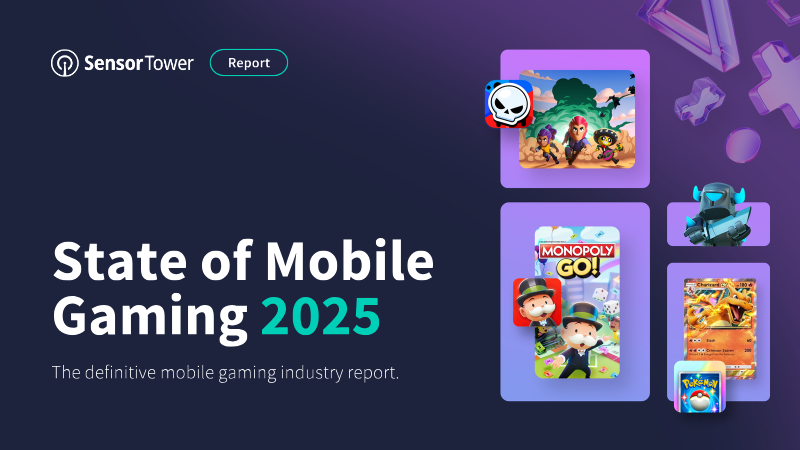
State of Mobile Gaming 2025
The global mobile gaming market entered a period of mature recovery in 2024, characterized by a strategic pivot toward live services and high-value player retention. While total downloads declined by 6.6%, global in-app purchase revenue grew by 4% to reach $82 billion. This growth was primarily driven by North America and the Middle East, offsetting spending declines in Asia. The industry has transitioned into a "live operations" era, where 84% of all revenue is generated by games utilizing continuous updates and seasonal events. This shift is further evidenced by a 50% decrease in new game releases since 2020, as publishers prioritize high-quality core titles over volume.
Genre performance highlights a market dominated by Strategy and RPG titles, which collectively generated over $34 billion in 2024. Action games emerged as the fastest-growing category with a 46% revenue increase, fueled by breakout hits like Last War: Survival. Despite the dominance of established franchises, a record 11 games surpassed $1 billion in annual consumer spend, including MONOPOLY GO!, which secured the top global position. The market is also seeing a demographic shift, particularly in the United States, where the 18-24 age group now represents 18% of the player base, up from 13% in 2022.
Marketing strategies have evolved to combat rising user acquisition costs, with a significant move toward high-intent creative content and short-form video platforms. TikTok experienced a 67% year-over-year growth in social ad share, while mid-core developers nearly doubled their impression share on social networks. To maintain profitability, publishers are increasingly leveraging external web stores, celebrity partnerships, and localized cultural influencers, such as virtual YouTubers in the Japanese market. These trends underscore a broader industry movement toward sophisticated monetization models and IP-driven growth in an increasingly concentrated competitive landscape.
- Global mobile gaming revenue grew 4% to $82 billion in 2024 despite a 6.6% decline in total downloads, signaling a shift toward high-value player retention.
- The industry has entered a 'live operations' era, with 84% of total revenue now generated by games utilizing continuous updates and seasonal events.
- Publishers have reduced new game releases by 50% since 2020, focusing resources on high-quality core titles rather than volume.
- Strategy and RPG titles remain the market leaders with over $34 billion in combined revenue, while Action games emerged as the fastest-growing category with a 46% revenue increase.
- A record 11 games surpassed $1 billion in annual consumer spend in 2024, with MONOPOLY GO! securing the top global position.
+1
Sensor TowerMar 2025

Report17 pages
Rewarded Returns
Rewarded Returns explores the evolution of reward-based user acquisition (UA) from its origins as a controversial incentivized traffic tactic to a sophisticated, data-driven pillar of modern mobile game marketing. The primary thesis is that technological advancements and deeper reward structures have effectively addressed legacy concerns regarding fraud and user quality, positioning rewarded UA as a high-performance alternative to traditional channels in an increasingly challenging privacy-centric landscape.
The findings are based on a late 2024 survey of 502 mobile game developers in the United States and United Kingdom, primarily representing mid-sized companies with 50 to 100 employees. While 64% of respondents characterize the current UA environment as challenging due to privacy rules and high costs, 77% have already integrated reward-based campaigns into their strategies. Among these adopters, 82% report that rewarded campaigns outperform traditional UA, and 95% believe these strategies provide a distinct competitive advantage. Furthermore, 79% of developers observe stronger long-term retention from rewarded users compared to non-rewarded sources.
The study identifies a significant shift in perception, noting that fraud concerns for rewarded UA (47%) are now nearly identical to those for traditional channels (46%). Despite these lingering concerns, 59% of current users plan to expand their rewarded UA budgets in 2025. Among non-adopters, 62% express concern about falling behind competitors, and 43% intend to adopt the strategy in the coming year.
Looking ahead, the scope of the industry is expected to expand, with 90% of experienced developers predicting that reward-based mechanisms will move beyond mobile and web into console gaming. The conclusion emphasizes that as the industry moves toward 2025, real-world rewards—particularly cash and gift cards—are becoming a fundamental discovery and engagement mechanism rather than a mere experimental tactic.
- 82% of developers using reward-based user acquisition report that these campaigns outperform traditional channels, with 79% noting stronger long-term retention from rewarded users.
- 77% of mid-sized mobile game developers in the US and UK have integrated reward-based campaigns into their strategies, with 59% planning to increase these budgets in 2025.
- Fraud concerns for rewarded user acquisition have stabilized, with 47% of developers citing risks compared to 46% for traditional UA channels.
- 95% of developers currently using rewarded strategies believe they provide a distinct competitive advantage in an environment where 64% find standard UA increasingly challenging due to privacy rules and costs.
- 43% of developers not currently using rewarded UA intend to adopt the strategy in 2025, driven by a 62% concern among non-adopters about falling behind competitors.
+1
AlmediaJan 2025
Whitepaper19 pages
Monetization Landscape for Video Games in MENA
The gaming market across the MENA-3 region—comprising Saudi Arabia, the United Arab Emirates, and Egypt—is undergoing a period of rapid expansion, with total revenue projected to reach $2.7 billion by 2028. This growth is fueled by a confluence of high internet penetration, significant government investment, and a young, tech-savvy demographic. While the region presents a lucrative opportunity, it remains highly fragmented, necessitating nuanced monetization strategies that account for stark economic differences, such as the preference for premium and subscription models in wealthy Gulf states versus the dominance of free-to-play structures in Egypt.
A critical barrier to entry in this market is the low penetration of traditional credit cards, which has historically hindered revenue conversion. To address this, developers are increasingly shifting toward Direct-to-Consumer platforms. This strategic pivot allows companies to bypass high app store commissions while integrating essential local digital wallets and alternative payment methods. By adopting these flexible, localized payment infrastructures, developers can effectively reach the region’s significant unbanked and underbanked populations, ensuring broader accessibility and higher conversion rates.
Recent performance data underscores the efficacy of this localized approach, as evidenced by a 12.6% increase in regional sales and a 45% surge in games distributed through D2C ecosystems over the past two years. Long-term success in the MENA region depends on a developer’s ability to navigate these complex payment landscapes while simultaneously prioritizing cultural adaptation. By combining region-specific pricing strategies with multi-platform engagement, stakeholders can better capitalize on the region’s burgeoning digital economy and secure a sustainable foothold in this high-growth market.
- The MENA-3 gaming market (Saudi Arabia, UAE, and Egypt) is projected to reach $2.7 billion in total revenue by 2028.
- Direct-to-Consumer (D2C) distribution has surged by 45% over the past two years, helping developers bypass app store commissions and integrate local payment methods.
- Localized payment strategies, including the integration of digital wallets, have contributed to a 12.6% increase in regional sales.
- Monetization models must be bifurcated by economic region, favoring premium and subscription services in wealthy Gulf states while prioritizing free-to-play structures in Egypt.
- Low traditional credit card penetration remains a primary barrier to entry, necessitating the adoption of alternative payment infrastructures to capture unbanked and underbanked demographics.
+1
Niko PartnersJan 2025

Report26 pages
Video Gaming Report 2025: How Platforms Are Colliding and Why This Will Spark the Next Era of Growth
The global video game industry is currently emerging from a three-year period of stagnation, transitioning toward a future defined by platform convergence and hardware-agnostic ecosystems. The traditional era of console-centric competition is being replaced by a multiplatform landscape where success is increasingly dictated by community engagement, user-generated content, and discoverability. This structural shift is underpinned by the integration of generative AI, the expansion of cloud gaming, and the diversification of distribution channels, which collectively aim to move the industry beyond the limitations of legacy hardware.
Cloud gaming is projected to reach $18.3 billion in revenue by 2030, serving as a primary catalyst for this growth. However, this transition introduces significant challenges, most notably the risk of market saturation caused by an influx of low-quality, AI-generated content. To maintain profitability and relevance, developers are pivoting toward direct-to-consumer monetization strategies, including tiered pricing models, windowing, and the integration of in-game advertising. These tactics are designed to capture value from a increasingly price-conscious global player base while navigating a shifting regulatory environment.
The dominance of incumbent app stores is simultaneously being challenged by the rise of developer-owned webstores and alternative distribution platforms. While these new channels offer the potential for improved margins and deeper player relationships, their long-term viability depends on the industry’s ability to address consumer concerns regarding security and platform convenience. Ultimately, the next era of growth will be defined by the ability of stakeholders to balance technological innovation with the necessity of fostering sustainable creator economies, ensuring that discoverability remains the central pillar of the modern gaming experience.
- Cloud gaming is projected to reach $18.3 billion in revenue by 2030, acting as a primary driver for industry growth as the market moves toward hardware-agnostic ecosystems.
- The industry is shifting from console-centric competition to a multiplatform model where success depends on user-generated content, community engagement, and discoverability.
- Developers are adopting direct-to-consumer monetization strategies—including tiered pricing, windowing, and in-game advertising—to address a price-conscious global player base.
- The rise of developer-owned webstores and alternative distribution platforms is challenging the dominance of incumbent app stores to improve margins and deepen player relationships.
- Market saturation caused by an influx of low-quality, AI-generated content poses a significant risk to profitability and requires a focus on sustainable creator economies.
+3
Boston Consulting GroupJan 2025

Whitepaper11 pages
Gaming's Cheating Crisis: The Impact on Players and Profit
The gaming industry is currently facing a widespread crisis regarding online cheating, which significantly undermines player retention, community trust, and developer revenue. This analysis, based on a survey of 2,013 gamers across the United Kingdom and the United States, reveals that cheating is no longer a fringe issue but a pervasive challenge affecting the majority of the gaming population. The findings underscore a critical need for industry-wide accountability measures to restore fair play and protect the financial health of game studios.
Data indicates that 80% of gamers have encountered cheating in online environments, with over half experiencing it at least monthly. This prevalence has direct consequences for business performance: 42% of players have considered quitting games entirely due to the presence of cheaters, and 55% have either reduced or ceased in-game spending. The impact is particularly acute among high-value players who spend between $11 and $50 monthly, a segment that represents the revenue backbone for many developers.
Despite these challenges, the gaming community remains highly receptive to robust solutions. A significant 83% of respondents expressed a greater likelihood to play games marketed as cheat-free, and 73% are willing to undergo identity verification to ensure a fair environment. Furthermore, there is strong support for systemic accountability, with 79% of gamers advocating for penalties that apply across multiple titles to prevent ban evasion.
The research concludes that while traditional anti-cheat measures are necessary, they are insufficient without mechanisms that enforce persistent, cross-game consequences. By adopting identity-based verification and unified accountability systems, developers have a clear opportunity to mitigate the negative financial impacts of cheating, improve player retention, and foster more sustainable, trustworthy gaming communities.
- Cheating is a pervasive issue, with 80% of gamers encountering it and over 50% experiencing it at least monthly.
- The presence of cheaters directly impacts revenue, as 55% of players have reduced or stopped in-game spending, particularly among high-value spenders.
- Cheating is a significant churn driver, with 42% of players reporting they have considered quitting games entirely due to unfair play.
- There is strong consumer demand for stricter security, with 83% of players more likely to play games marketed as cheat-free and 73% willing to undergo identity verification.
- 79% of gamers support systemic, cross-title penalties to prevent ban evasion and ensure persistent accountability.
+2
PlaySafe IDJan 2025

Report10 pages
Take Rates in China: Will Quality Development Beat Out Traditional Distribution?
The Chinese mobile gaming market is currently undergoing a significant shift in distribution dynamics as developers increasingly challenge the traditional 50% take rates imposed by domestic Android app stores. While global discourse remains focused on the 30% take rate standard contested in the Epic v. Apple litigation, Chinese developers face a more restrictive domestic environment where smartphone manufacturers and major tech firms consolidate power through the Mobile Hardcore Alliance and the Global Developer Service Alliance. These entities justify high fees by providing integrated marketing and distribution services, yet these costs have become a primary point of contention for major studios.
To circumvent these high fees, prominent developers such as miHoYo, Lilith Games, and NetEase are increasingly adopting direct-to-consumer distribution models. By leveraging high-quality intellectual property, substantial marketing budgets, and community-driven platforms like TapTap and Bilibili, these studios can bypass traditional stores entirely. This strategy allows developers to retain significantly higher gross profit margins—often exceeding 95%—compared to the 50% margin typically realized through standard distribution channels. The success of these titles has begun to force concessions, as evidenced by Xiaomi offering reduced take rates to high-profile games like Genshin Impact.
The industry landscape is bifurcated, as smaller developers often remain dependent on traditional stores for the reach and infrastructure necessary to sustain their operations, viewing the 50% fee as an acceptable cost of doing business. However, the rise of direct distribution and community-centric marketing signals a broader trend where quality content and brand loyalty are becoming more influential than traditional store placement. As developers continue to prioritize direct engagement and alternative platforms, the dominance of traditional Android app stores in China faces mounting pressure, potentially reshaping the economic model of the global mobile gaming industry.
- Major Chinese developers like miHoYo, Lilith Games, and NetEase are bypassing traditional Android app stores to achieve gross profit margins exceeding 95%, compared to the 50% margin typical of standard distribution.
- The Chinese mobile gaming market is dominated by a 50% take rate imposed by smartphone manufacturers and tech firms organized under the Mobile Hardcore Alliance and the Global Developer Service Alliance.
- High-profile titles are successfully leveraging direct-to-consumer models and community platforms like TapTap and Bilibili to circumvent traditional distribution fees.
- The shift toward direct distribution has forced some concessions from traditional stores, such as Xiaomi offering reduced take rates for high-profile games like Genshin Impact.
- The market is bifurcated, as smaller developers remain dependent on traditional stores for necessary infrastructure and reach, accepting the 50% fee as a standard cost of business.
+2
NikoJan 2025

Report35 pages
Guide to Growing Chinese Gaming Apps Overseas
Chinese gaming developers are aggressively expanding their global footprint by leveraging sophisticated monetization models and high-volume, AI-driven marketing strategies. The primary objective for these publishers is to balance the high revenue potential of mature markets like the United States, Japan, and South Korea against the rising costs of user acquisition. By prioritizing video advertising, which currently yields the highest Day 7 return on ad spend at 21%, developers are successfully capturing market share in competitive strategy and RPG segments.
Success in these international territories is increasingly predicated on hyper-localization and technological integration. Publishers are utilizing generative AI to streamline the production of localized ad creatives, voice-overs, and performance-tested copy, allowing for rapid iteration and regional customization. Leading titles demonstrate that high-engagement gameplay loops—such as the inclusion of social hangout spaces, customizable home systems, and minigame integrations—are essential for sustaining long-term retention. These efforts are further bolstered by strategic partnerships with local influencers and the implementation of innovative, time-limited gacha mechanics.
To maintain consistent growth, developers are diversifying their engagement tactics through gamified live events, including seasonal collections and interactive board-style challenges. These features, combined with trial character systems, allow publishers to cater to varied player motivations while maintaining a steady revenue stream. By synthesizing competitive intelligence with agile content updates, Chinese gaming apps are effectively navigating the complexities of global expansion, ensuring that both monetization and user interest remain high across diverse geographic regions.
- Video advertising is the most effective monetization channel for Chinese developers in mature markets, currently yielding a 21% Day 7 return on ad spend.
- Generative AI is being deployed at scale to automate the production of localized ad creatives, voice-overs, and performance-tested copy to reduce costs and speed up regional market entry.
- Long-term player retention is increasingly driven by integrating social hangout spaces, customizable home systems, and minigames into core gameplay loops.
- Developers are prioritizing expansion into high-revenue mature markets, specifically the United States, Japan, and South Korea, to offset rising global user acquisition costs.
- Engagement is being sustained through gamified live events, such as seasonal collections and interactive board-style challenges, alongside trial character systems.
+6
EAJan 2025

Report40 pages
The Gaming App Insights Report 2025: Unlocking Growth Opportunities for Mobile Marketers
The mobile gaming industry is entering a period of strategic recalibration, projected to reach $126.1 billion in revenue by 2025. This growth is underpinned by a transition toward hybrid monetization models and the integration of AI-powered personalization to combat persistent retention challenges. While global install volume grew by 4% in 2024, the market exhibits a distinct geographic divide; North American and European markets face stagnation, whereas Latin America and the Middle East and North Africa regions demonstrate robust expansion. Success in this evolving landscape requires developers to move beyond traditional acquisition, favoring diversified channels such as Connected TV and localized, player-centric engagement strategies.
Data from early 2025 indicates that user tracking remains a pivotal operational hurdle, with global App Tracking Transparency opt-in rates hovering at 37.9%. Although arcade games have seen notable improvements in opt-in performance, the United States remains relatively static at 32%, underscoring the necessity for refined messaging strategies to maintain visibility. Concurrently, the industry is grappling with a complex financial environment characterized by rising costs per install and declining average revenue metrics. These headwinds are forcing a shift in marketing tactics, as developers increasingly rely on a broader array of acquisition partners and data-informed creative experimentation to sustain growth.
Ultimately, the path to profitability in 2025 lies in prioritizing long-term player value over short-term acquisition metrics. By leveraging AI-driven optimization and fostering community-building initiatives, developers can mitigate the impact of declining revenue per user. The industry is clearly moving toward a more sophisticated, data-reliant ecosystem where the ability to measure performance across fragmented channels—including mobile and Connected TV—is essential for maintaining a competitive advantage in a maturing global market.
- The mobile gaming market is projected to reach $126.1 billion in revenue by 2025, driven by a shift toward hybrid monetization and AI-powered personalization.
- Global install volume grew by 4% in 2024, but growth is geographically polarized with stagnation in North America and Europe contrasted by expansion in Latin America and the MENA region.
- Global App Tracking Transparency (ATT) opt-in rates remain low at 37.9%, with the United States market stagnant at a 32% opt-in rate.
- Developers face a challenging financial environment defined by rising costs per install and declining average revenue metrics, necessitating a shift toward long-term player value over short-term acquisition.
- To sustain growth, developers must diversify acquisition channels beyond traditional mobile ads, specifically integrating Connected TV and data-informed creative experimentation.
+5
GamingReportJan 2025

Report23 pages
The State of Puzzle Games: An Analysis of the Puzzle Category in Mobile Gaming
The mobile puzzle game market is undergoing a significant structural evolution, characterized by a shift in product models and a notable rise in hybridcasual gaming. This analysis, covering global data from January 2018 through June 2023, examines the performance of various puzzle sub-genres, including swap, blast, chain, and pair mechanics. By leveraging store intelligence and download estimates from the Apple App Store and Google Play, the findings highlight how developers are increasingly integrating meta-features and diversified monetization strategies to sustain revenue in a maturing landscape.
A central finding is the remarkable growth of the hybridcasual product model, which saw a 430% increase in revenue between early 2022 and early 2023. While traditional casual games continue to dominate overall market share through consistent operations and robust meta-features, they have experienced modest declines in both downloads and revenue. Conversely, hybridcasual titles—particularly within the pair sub-genre—have successfully captured user interest by blending accessible gameplay with more sophisticated monetization tactics, such as in-app purchases, which were previously less common in hypercasual-leaning segments.
The data indicates that sub-genres like pair have emerged as high-growth areas, with hybridcasual revenue in this category rising from $7 million in the first quarter of 2022 to $40 million by the first quarter of 2023. Meanwhile, other established sub-genres, such as merge and physics, have seen download declines as their reliance on hypercasual models wanes. Successful top-tier games across all categories now frequently employ a combination of live operations, season passes, and social clans to drive engagement. Ultimately, the puzzle market is moving toward a hybrid approach, where the simplicity of casual mechanics is increasingly supported by the deeper monetization and retention frameworks typically associated with mid-core titles.
- The hybridcasual puzzle model experienced a 430% revenue increase between early 2022 and early 2023, signaling a major shift in market structure.
- Hybridcasual revenue in the 'pair' sub-genre grew from $7 million in Q1 2022 to $40 million in Q1 2023.
- Traditional casual puzzle games are experiencing modest declines in both downloads and revenue despite maintaining overall market share through robust meta-features.
- Established sub-genres like merge and physics are seeing download declines as their reliance on hypercasual models diminishes.
- Top-tier puzzle games are increasingly adopting mid-core retention and monetization strategies, including live operations, season passes, and social clans.
+3
Sensor TowerJan 2025