Zork
Game
Documents about Zork
Whitepaper14 pages
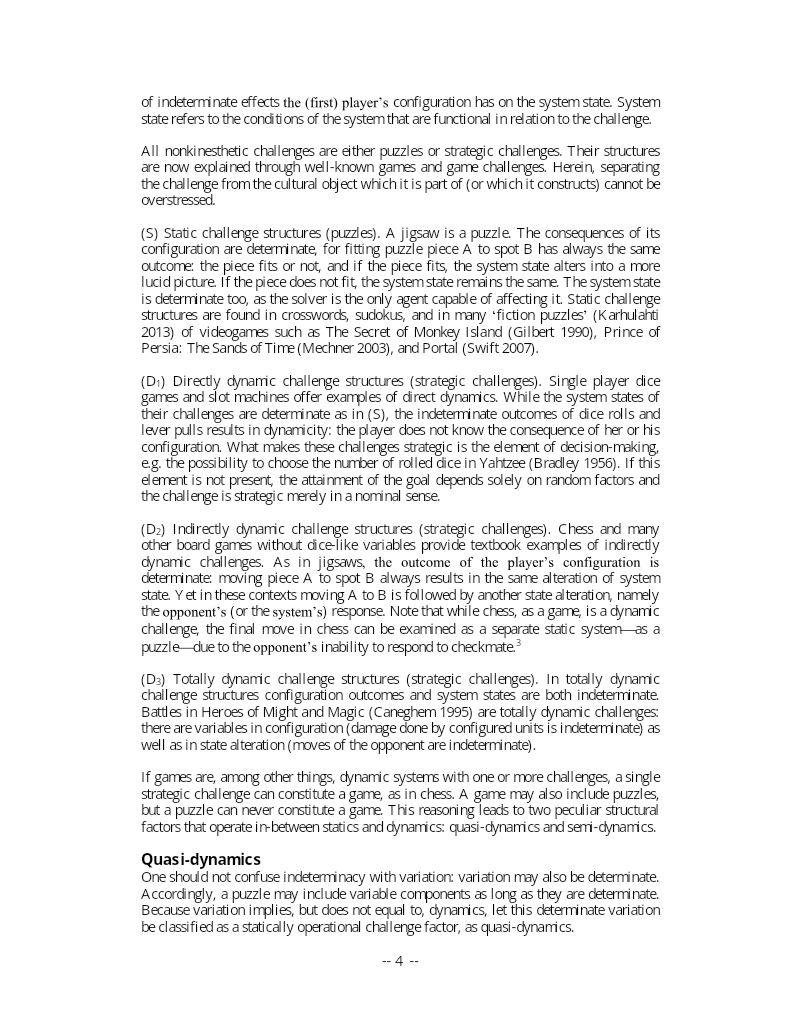
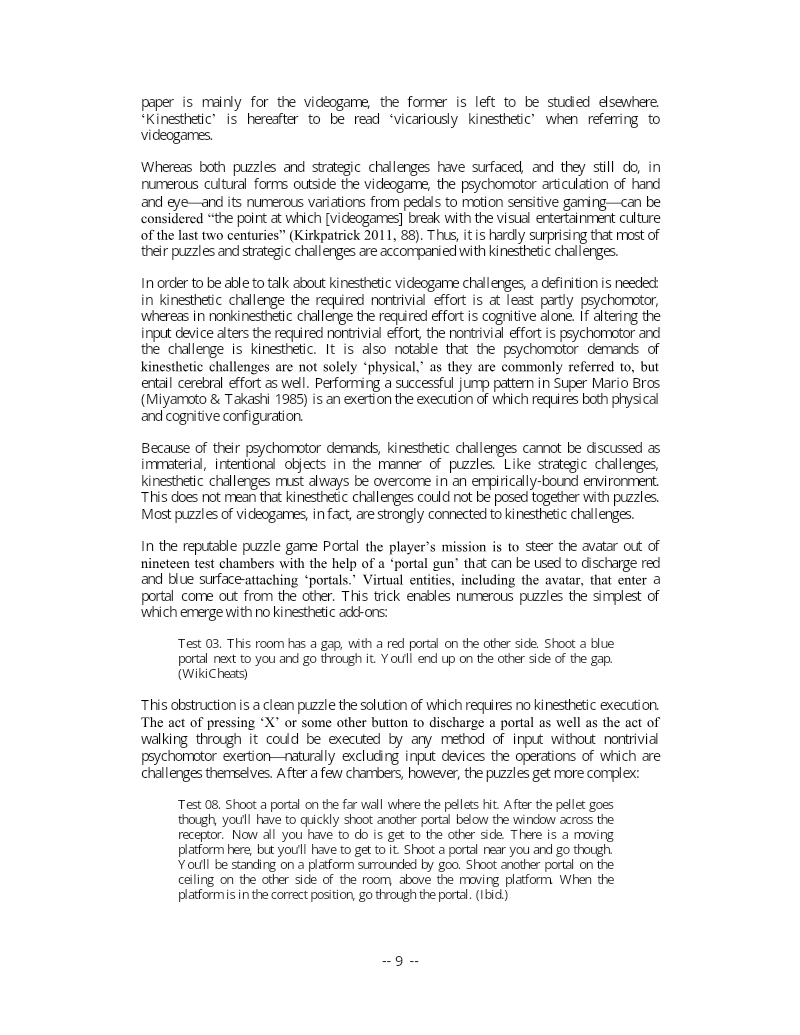
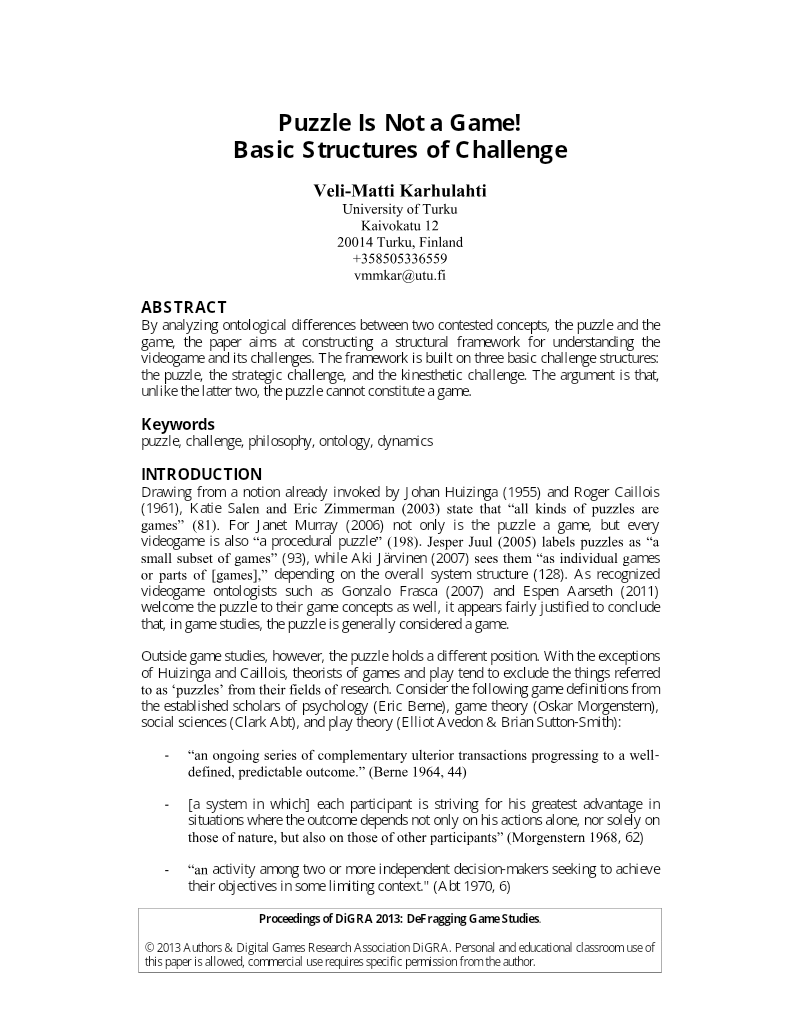
Puzzle Is Not a Game! Basic Structures of Challenge
Karhulahti's paper argues that puzzles, unlike strategic and kinesthetic challenges, cannot constitute games in the full sense, because they lack the dynamic, opponent-driven structure that prominent definitions of play and games treat as essential.
- Karhulahti argues that puzzles, unlike strategic and kinesthetic challenges, cannot constitute games in the full sense because they lack the dynamic, opponent-driven structure that prominent definitions of play treat as essential.
- The paper proposes a tripartite framework of challenge structures: puzzles (static, determinate), strategic challenges (dynamic, indeterminate), and kinesthetic challenges (bound to bodily execution), presented as the basic building blocks of videogame challenge.
- The static/dynamic divide is framed as a structural property of the challenge itself rather than a matter of player perception, directly countering claims made by some critics.
DiGRAJan 2014
Whitepaper8 pages
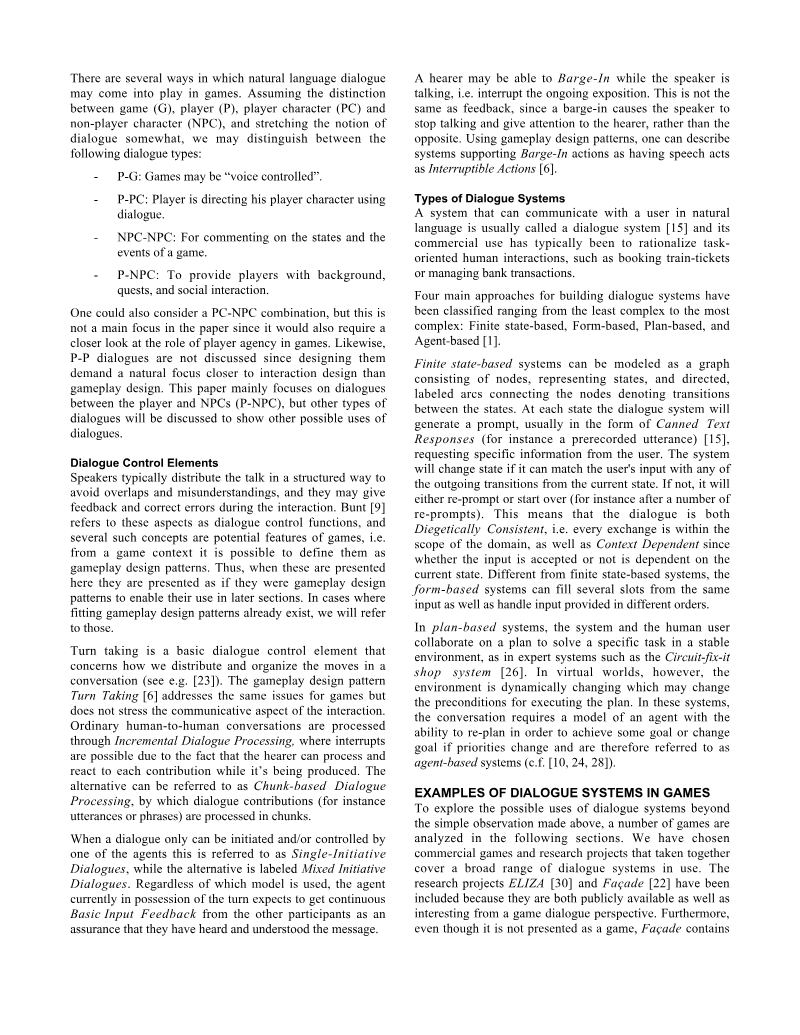
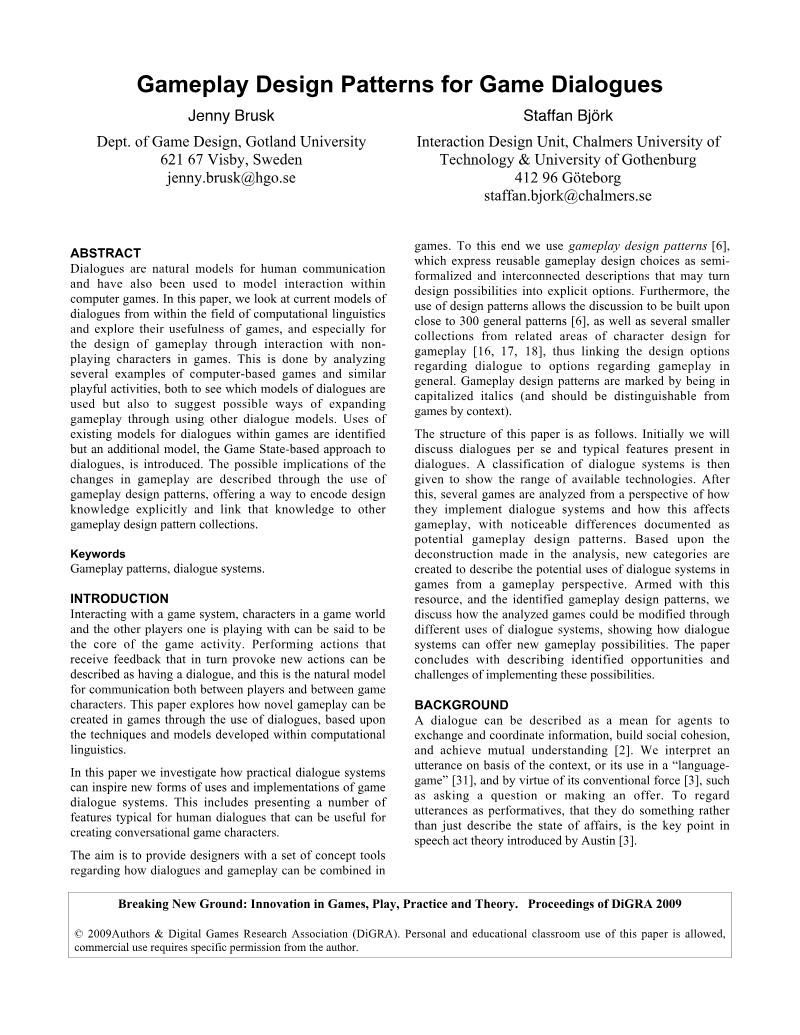
Gameplay Design Patterns for Game Dialogues
Brusk and Björk's "Gameplay Design Patterns for Game Dialogues," presented at DiGRA 2009, argues that dialogue systems drawn from computational linguistics can be translated into explicit, reusable gameplay design patterns.
- Brusk and Björk argue that computational linguistics dialogue systems (finite state, form-based, plan-based, and agent-based) can be translated into explicit, reusable gameplay design patterns for game dialogue.
- Existing linguistic categories fit game dialogue only partially, because game dialogues serve varied purposes, from pure gameplay (ELIZA) to interface (Zork), which motivates a Game State-based approach rather than direct transfer of linguistic models.
- The authors derive named patterns including Canned Text Responses, Illocutionary Interface, Diegetically Consistent Dialogue, and Context-Dependent Dialogue, and propose speculative extensions such as Incremental Input Processing, Gameplay Integrated Conversations, and Colloquial Mastery.
DiGRAJan 2009