Will You Snail?
GameBy Jonas Tyroller
Documents about Will You Snail?
Our New Game "Didn't Meet Expectations"
The development of a new indie title, codenamed Dodo Derby, serves as a case study in the challenges of game design and the importance of adhering to established development philosophies.
- Prioritizing a strong, clear 'fantasy' or core concept at the start of development is essential for the studio's success, as projects lacking this foundation often lead to aimless prototyping and eventual cancellation.
- The studio cancelled 'Dodo Derby' after six months of development because the gameplay-first approach resulted in unintuitive rules and a high skill gap that could not be resolved without over-complicating the design.
- Development teams often fall into the trap of 'echo chamber' testing, where playing exclusively with the same small group masks usability issues and lack of accessibility for broader audiences.

How to Make Anything Fun
Fun functions as a biological reward mechanism, signaling that the brain is effectively building and refining its internal model of the world.
- Fun is a biological prompt for learning, functioning similarly to hunger or thirst, and is best achieved by creating an optimal learning environment.
- The 'Flow' state—the core of fun—requires a balance between challenge and skill, frequent and fast feedback, clear goals, and a high signal-to-noise ratio.
- Game design should prioritize a smooth difficulty curve that keeps players within the 'flow channel,' utilizing emergent and combinatorial complexity to provide layers of depth.
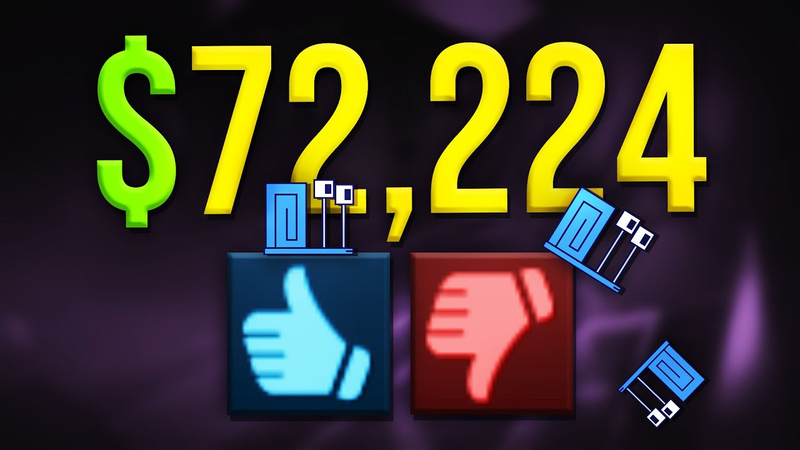
How my Game Launch Went on Steam
The launch of the indie game Will You Snail? on Steam provides a case study in the financial and operational realities of independent game development.
- The game generated $72,000 in gross revenue from 7,500 units in its first week, resulting in approximately $25,000 in net earnings after Steam fees and taxes.
- With total development and marketing costs between $30,000 and $40,000, the project reached near break-even status immediately following the launch window.
- The developer anticipates that future console ports will generate only 30% to 40% of the total revenue volume achieved on the Steam platform.
40 Truths You Must Know Before You Play my Game „Will You Snail?“
Will You Snail is a single-player, precision-based platformer centered on a unique artificial intelligence mechanic.
- Will You Snail is a precision platformer featuring a rule-based AI that predicts player movement to spawn real-time hazards, rather than utilizing machine learning.
- The game features a minimalist three-button control scheme and incorporates diverse gameplay genres, including tower defense, racing, and shooter mechanics.
- Developed in GameMaker Studio 2 over a four-year cycle, the title launched in March 2022 across PC, Nintendo Switch, PlayStation, and Xbox.
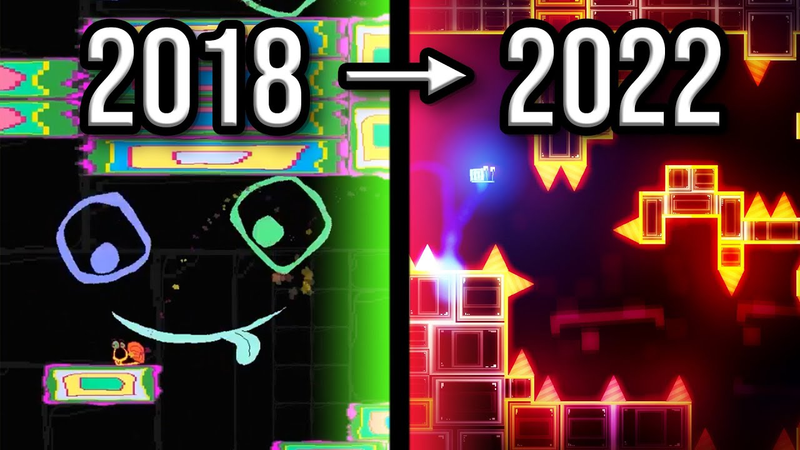
4 Years of Game Development | Making of Will You Snail?
The development of the indie platformer Will You Snail? spans a four-year journey, chronicling the transition of a side project into a fully realized commercial title.
- The development of Will You Snail? spanned four years, evolving from a side project into a multi-platform commercial title released on PC, Nintendo Switch, PlayStation, and Xbox.
- The core gameplay mechanic utilizes an artificial intelligence that predicts player movement to dynamically place obstacles, specifically designed to increase watchability for streamers and content creators.
- Managing the production of over 1,500 voice lines proved to be a significant logistical challenge, with the actual time required for recording and editing far exceeding the initial two-day estimate.

I Won't Stop Streaming Till I Beat my Game on Impossible
The development of the platformer Will You Snail? serves as a case study for the challenges and strategic decisions inherent in modern indie game production.
- Indie developers can balance high-difficulty 'rage' mechanics with broad accessibility by implementing transparent, adaptive difficulty settings rather than relying on machine learning.
- Self-publishing is identified as a primary strategy for maintaining creative control, while utilizing volunteer-based models for localization helps reduce overhead costs for global releases.
- Marketing success for indie titles is best achieved by prioritizing long-term discoverability on platforms like YouTube and leveraging content creators rather than relying on post-launch content updates.

Will You Snail? - DEMO is OUT! (Devlog)
Will You Snail represents a shift in focus for an independent developer transitioning from a confusing, less commercially viable project toward a high-potential, AI-driven platformer.
- Will You Snail is a precision platformer featuring an AI antagonist that predicts player movement to dynamically place obstacles.
- The developer pivoted to full-time independent production on October 1st, choosing to leave formal game design education to focus on this project.
- Development utilizes iterative visual design techniques, including custom scripts for randomized color palettes and Photoshop-based refinement of post-processing effects like bloom and contrast.

Will You Snail? - Q&A (Indie Game Devlog)
The development of the indie platformer Will You Snail centers on a unique core mechanic where an artificial intelligence tracks player movement to generate obstacles in real-time.
- The game features a core mechanic where an AI tracks player movement to generate real-time obstacles, creating a high-intensity, rage-inducing experience.
- The developer is prioritizing viral reach and streamer engagement over immediate monetization, with plans to release the title for free.
- The visual identity has been refined from a chaotic aesthetic to a polished, high-contrast red style to improve watchability and differentiate the game in the rage-platformer genre.
How to Make a Viral Game! - Game Development: VLOG
The primary objective of this analysis is to define the strategic design principles required to achieve viral success in the video game industry.
- Virality is defined by the breadth of public awareness, distinct from popularity, which is measured by the number of active players.
- Design for virality by prioritizing four pillars: memorability, watchability, attention-grabbing aesthetics, and shareability.
- To maximize watchability for streamers and influencers, incorporate unpredictable gameplay elements and pattern breaks that keep audiences engaged.
Making a Snail Compilation! - Live Stream!
The development of the 2D platformer Will You Snail? centers on the creation of a high-difficulty, rage-inducing experience specifically engineered for viral potential and streaming appeal.
- The game utilizes a specific difficulty curve where the first 80 percent of a level is accessible to ensure retention, while the final 20 percent introduces intense hazards to maximize tension.
- The shadow snail AI system predicts player movement to dynamically spawn obstacles like spikes and flying cats, creating a high-difficulty experience tailored for streaming appeal.
- Dynamic difficulty scaling is implemented through an invisible trigger system that increases enemy density based on the player's progress through the level.