Return of the Obra Dinn
4 documents in the library are about Return of the Obra Dinn, from writers such as Game Maker's Toolkit and Game Developers Conference, the newest from 2025. Each has a summary and key insights with the page they come from.

In this 1-bit first-person mystery game, a merchant ship called the Obra Dinn has appeared at a London harbor, years after being declared lost at sea. As an insurance adjuster, the player must examine the ship for clues.
- Released
- Oct 18, 2018
- Developer
- Lucas Pope
- Publisher
- 3909
- Genres
- Puzzle, Adventure, Indie
- Platforms
- PlayStation 4, PC (Microsoft Windows), Mac, Xbox One, Nintendo Switch
- Links
- Official site, Wikipedia
Game data from IGDB.com
Documents about Return of the Obra Dinn

GMTK Digest: January 2025
The January 2025 edition of the Game Maker’s Toolkit Digest serves as a curated industry update, focusing on emerging trends in game design and notable new releases.
- The detective and mystery genre is experiencing a design renaissance characterized by a shift toward player-led investigation and complex information synthesis.
- Recent titles like 'The Roottrees are Dead' demonstrate a growing market appetite for cerebral, non-linear gameplay that necessitates external note-taking.
- Modern mystery games are increasingly utilizing genealogy-based puzzles and analog-style interfaces to deepen narrative immersion.
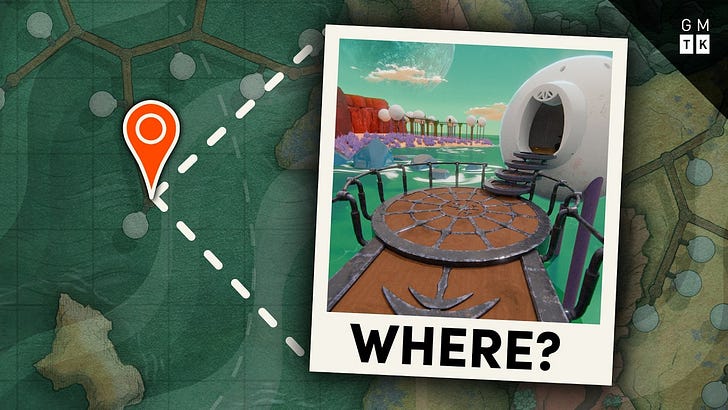
A Detective Demo Inspired by Geoguessr
The indie game Locator serves as a compelling case study in how core mechanics from the web-based geography game Geoguessr can be adapted into a narrative-driven, sci-fi detective experience.
- Empty Exhibit Games’ title Locator adapts Geoguessr-style mechanics into a sci-fi detective experience where players triangulate positions on an alien planet using astronomical and navigational data.
- To eliminate trial-and-error gameplay, the developer requires players to submit three correct location pins simultaneously, a mechanic inspired by the deductive structure of Return of the Obra Dinn.
- The game integrates narrative directly into puzzle-solving by ensuring every piece of text serves the dual purpose of advancing the story and providing essential navigation clues, a design choice influenced by Outer Wilds.

What Makes a Great Detective Game?
The primary objective of this analysis is to define the core mechanics that constitute a successful detective game, moving beyond superficial thematic elements to identify systems that genuinely simulate the investigative process.
- The most critical design element in a detective game is the 'tester' mechanism, which must validate player conclusions without relying on multiple-choice prompts or leading questions that encourage guessing.
- Successful detective games foster intellectual achievement by requiring players to input their own findings rather than selecting from pre-determined options.
- Detective games are categorized into three distinct mechanical styles: deduction-style (e.g., Return of the Obra Dinn, The Case of the Golden Idol), contradiction-style (e.g., Ace Attorney, Lucifer Within Us), and investigation-style (e.g., Shadows of Doubt, Her Story).
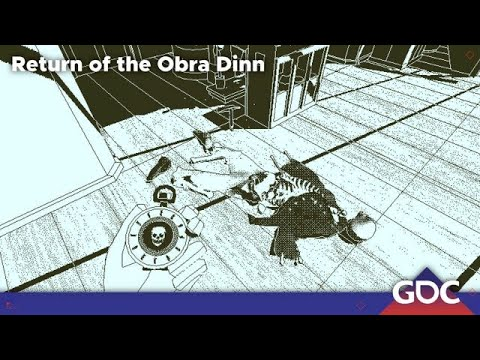
GDC Live Q&A: Lucas Pope and Return of the Obra Dinn
Return of the Obra Dinn represents a deliberate departure from conventional market-driven development, favoring a niche, art-first philosophy that prioritizes mechanical integrity over broad appeal.
- Return of the Obra Dinn was developed over a four-and-a-half-year period as an independent project that prioritized mechanical integrity and a niche, art-first philosophy over broad market appeal.
- The game features a complex logic puzzle requiring the identification of 60 distinct characters, supported by a 1-bit Macintosh-inspired aesthetic.
- The developer utilized custom dithering techniques to manage the high-contrast visual style, using these technical constraints as a catalyst for defining rigid, purposeful gameplay mechanics.