Rayman Legends
3 documents in the library are about Rayman Legends, from writers such as Game Developers Conference and Ubisoft, the newest from 2018. Each has a summary and key insights with the page they come from.

Originally thought as an exclusive title, Rayman Legends used the Wii U Gamepad for some functionalities. After going multiplatform, the Wii U and PlayStation Vita versions of Rayman Legends gave the ability to control Murphy in certain stages through touch controls. This interaction was removed from the other versions.
- Released
- Aug 29, 2013
- Developer
- Ubisoft Montpellier
- Publisher
- Nintendo
- Genres
- Platform, Adventure
- Platforms
- Wii U, PlayStation Vita
- Links
- Official site, Wikipedia
Game data from IGDB.com
Documents about Rayman Legends
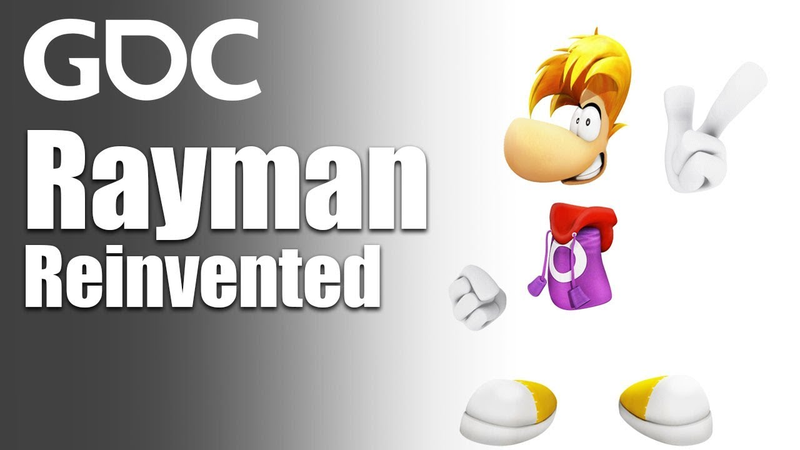
Rayman Reinvented
Ubisoft Montpellier’s revitalization of the Rayman franchise centers on a strategic return to 2D platforming, prioritizing accessibility and iconic character design through the implementation of the proprietary UbiArt Framework.
- Ubisoft developed a proprietary 2D animation engine called UbiArt Framework to allow artists to import their original concept drawings directly into the game, preserving the artistic essence without the need for traditional 3D modeling.
- The UbiArt system utilizes a mesh-based deformation technique where artists place bones on 2D assets, enabling them to animate and deform drawings in real-time to create complex movements from simple 2D elements.
- The animation pipeline is highly efficient, allowing a single animator to produce approximately 250 character animations in just two weeks by reusing and deforming existing assets.
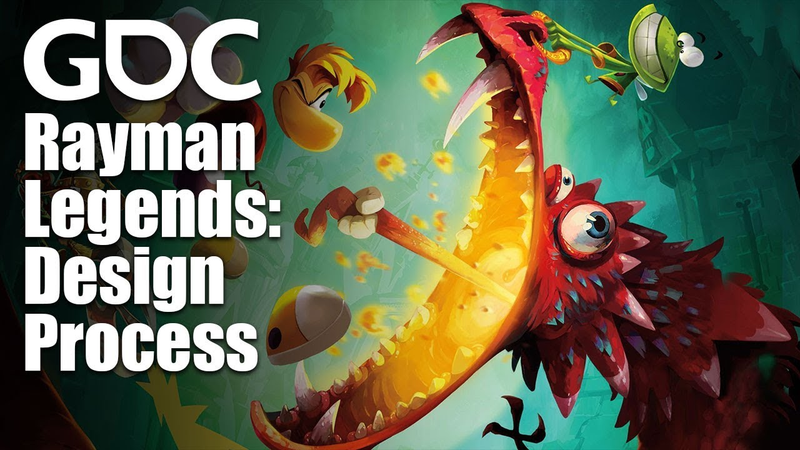
Rayman Legends: The Design Process Within the UbiArt Framework
The development of Rayman Legends centers on the implementation of the UbiArt Framework, an engine architecture designed to democratize the creative process by empowering level designers and artists to prototype independently.
- The UbiArt Framework enables rapid prototyping by allowing designers to combine 'white box' assets, movement tweens, and Lua scripting to prove gameplay concepts in as little as half a day.
- The development philosophy prioritizes frequent failure—up to 40 times a day—to quickly discard ineffective ideas and identify viable mechanics without becoming overly attached to early concepts.
- The engine utilizes a template-and-instance system that enforces core gameplay behaviors while allowing designers to tweak specific parameters, preventing the need for constant programmer intervention.
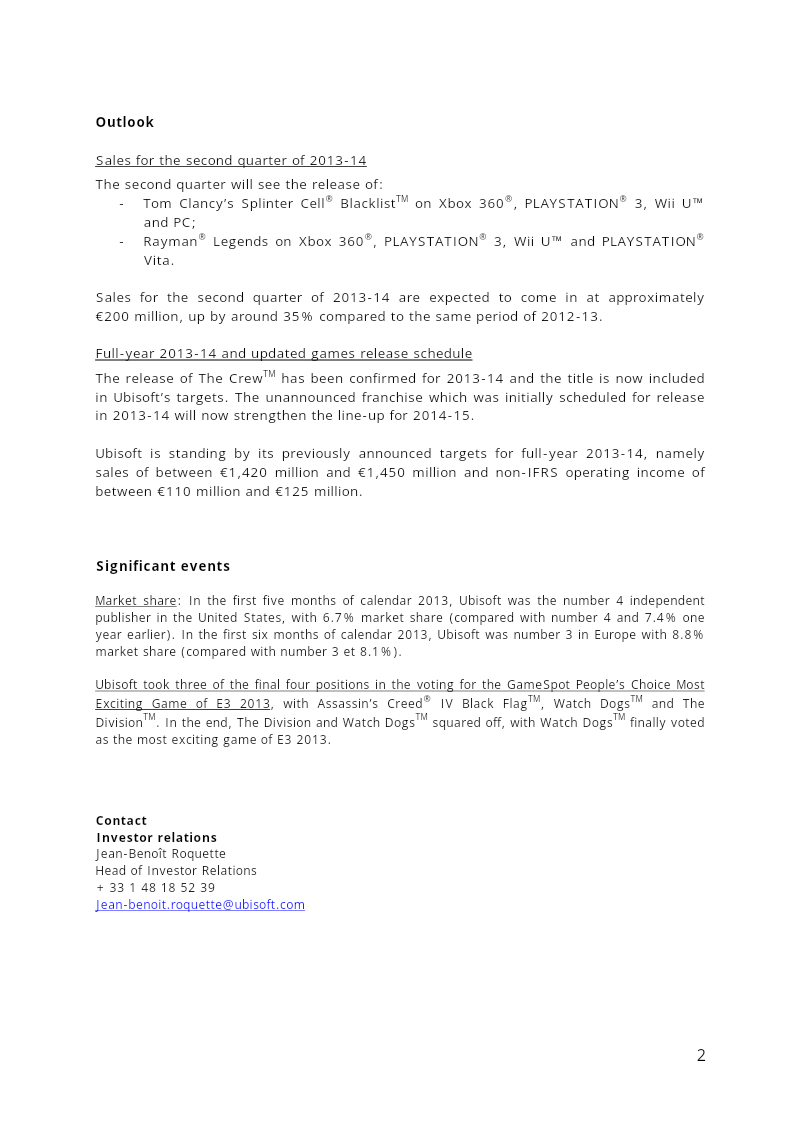

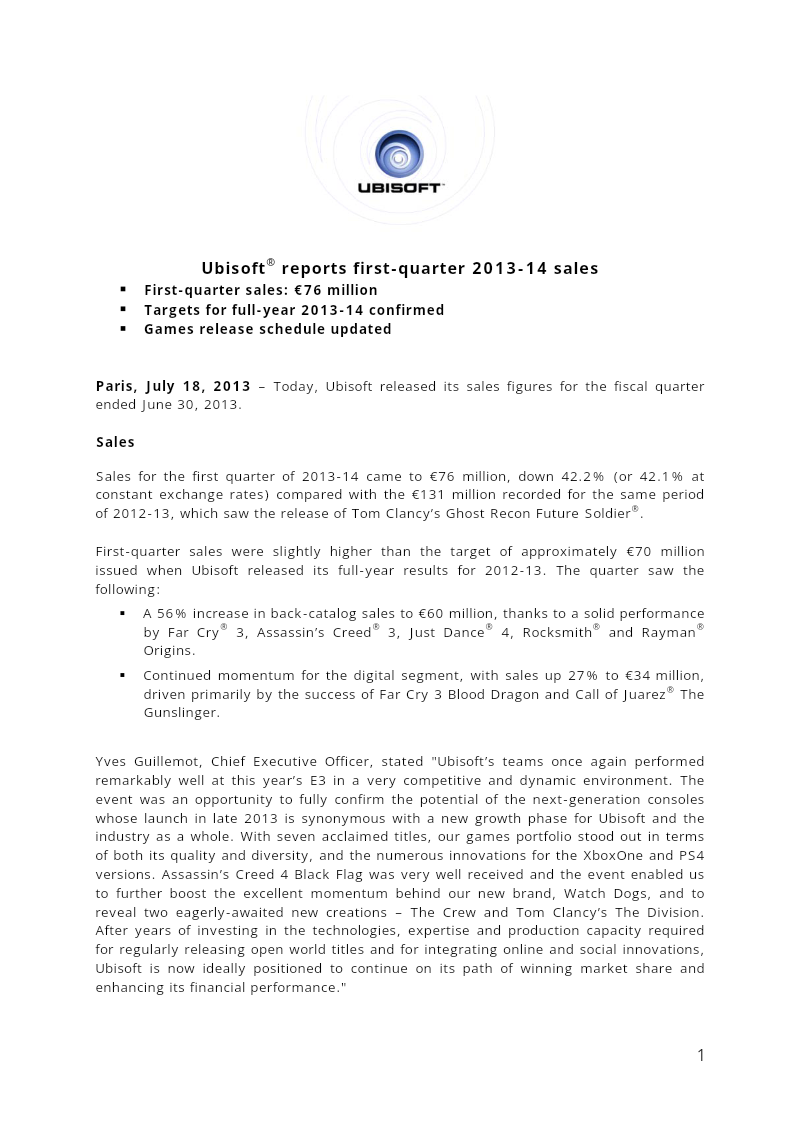
Ubisoft Reports First-Quarter 2013-14 Sales
Ubisoft’s first-quarter sales for the 2013-14 fiscal year totaled €76 million, representing a 42.2% decline compared to the same period in the previous year.
- Ubisoft reported Q1 2013-14 sales of €76 million, a 42.2% year-over-year decline primarily due to the lack of a major title launch compared to the previous year's Ghost Recon Future Soldier.
- Despite the revenue drop, the company exceeded its initial Q1 target of €70 million, supported by a 56% increase in back-catalog sales to €60 million and a 27% rise in digital revenue to €34 million.
- Management reaffirmed full-year 2013-14 guidance, projecting total sales between €1,420 million and €1,450 million and non-IFRS operating income between €110 million and €125 million.