Moss
Game
Documents about Moss
Whitepaper5 pages
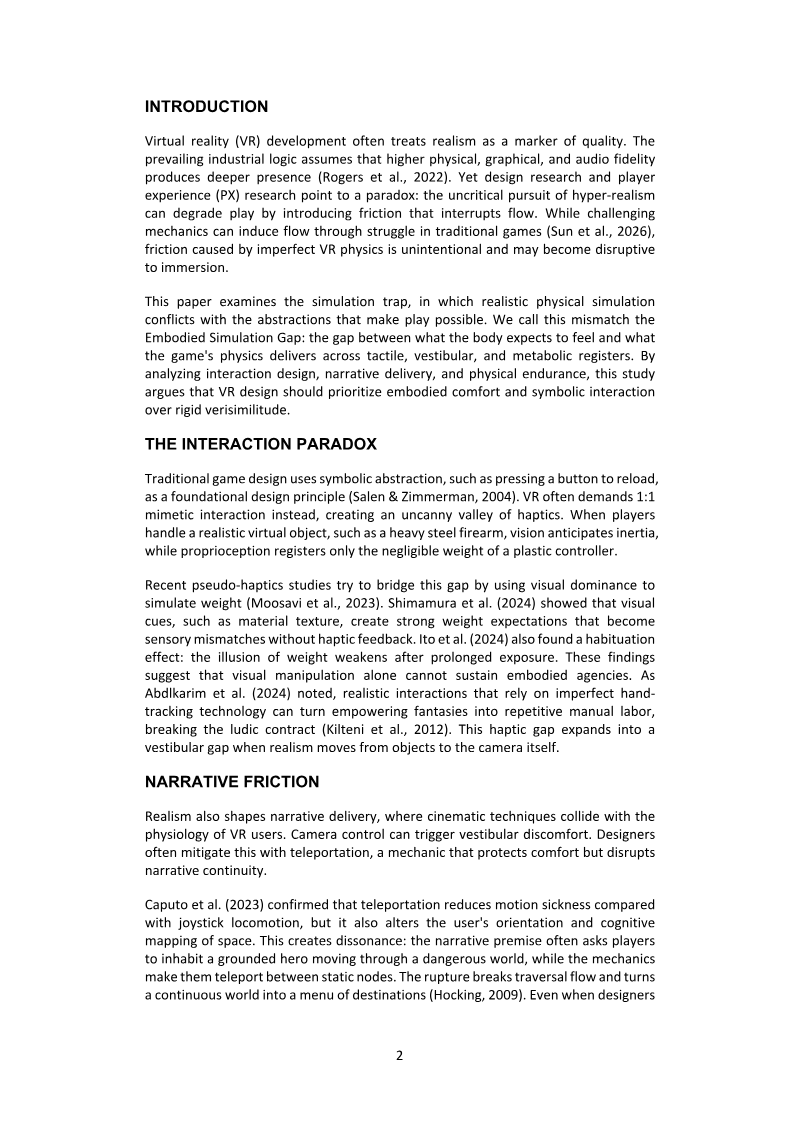
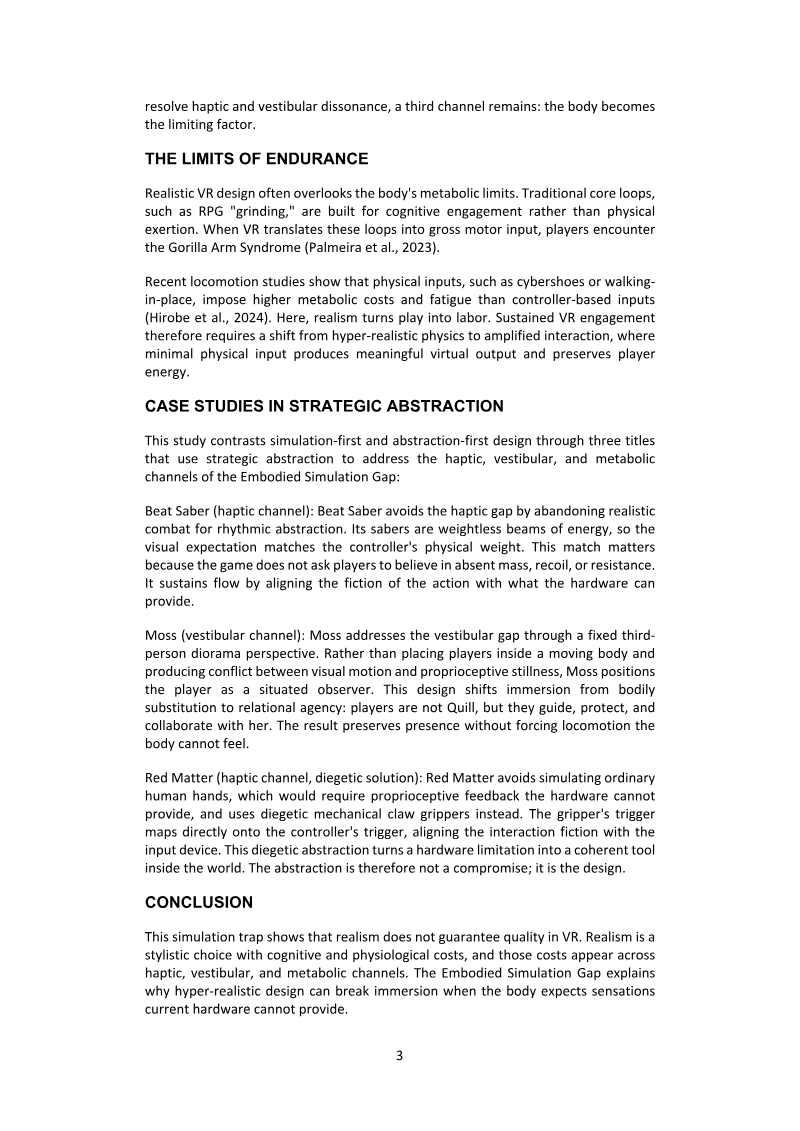
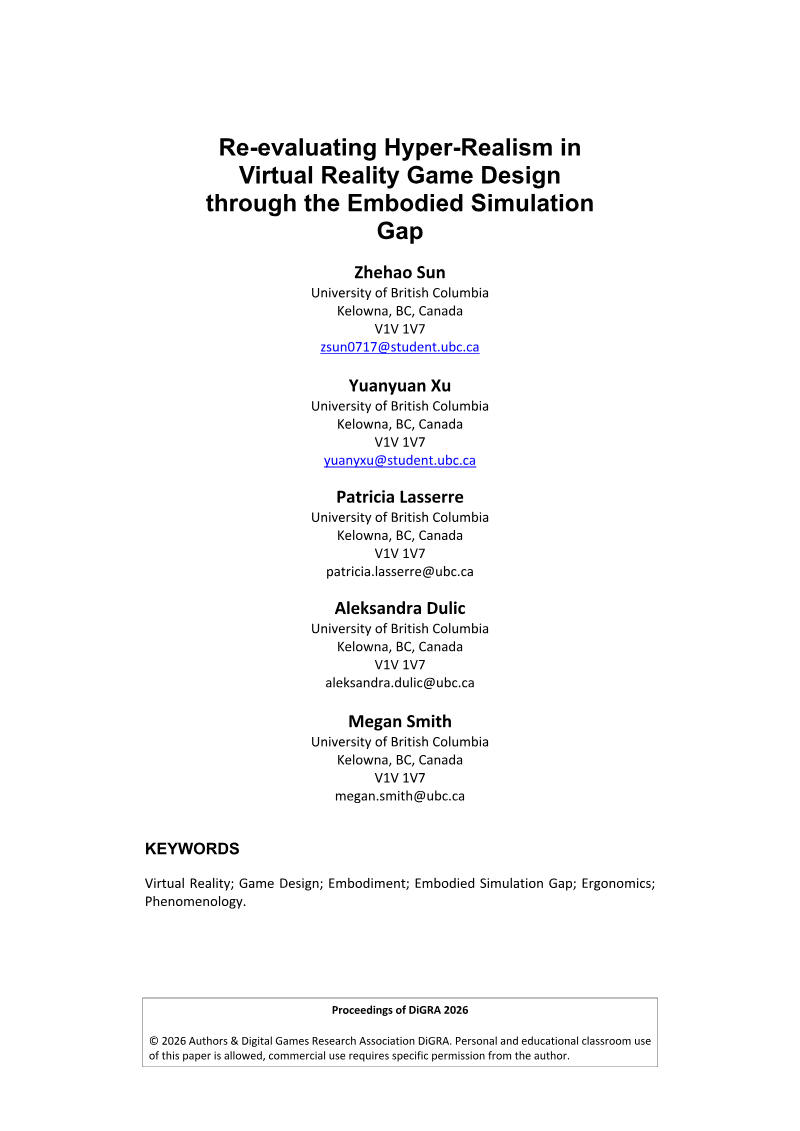
Re-evaluating Hyper-Realism in Virtual Reality Game Design through the Embodied Simulation Gap
This paper argues that the pursuit of hyper-realism in virtual reality game design can undermine the very experience it aims to enhance.
- The paper introduces the "Embodied Simulation Gap," the mismatch between what a player's body expects to feel and what a VR game's physics delivers across tactile, vestibular, and metabolic channels.
- Its central claim is that VR designers should prioritize embodied comfort and symbolic abstraction over strict verisimilitude, treating fidelity as a stylistic choice with cognitive and physiological costs rather than a default marker of quality.
- In the haptic domain, visual cues such as material texture create strong weight expectations that become sensory mismatches without physical feedback, and this illusion weakens with habituation.
DiGRAJun 2026