Islanders
GameBy Coatsink
Documents about Islanders
Game Dev: The Week Before Launch (Devlog)
The final week of development for the indie title Islanders highlights the technical and logistical hurdles inherent in preparing a game for a Steam launch.
- The final week of development for Islanders focused on critical technical stabilization, specifically resolving Linux build compatibility, dynamic batching failures from multiple light sources, and mesh transformation errors.
- The development team utilized Unity’s frame debugger, iterative testing, and community-sourced troubleshooting to address performance bottlenecks before the Steam launch.
- To maintain productivity and morale during the high-stress pre-launch period, the team employed a dual-project workflow, working on a separate platformer project during daily livestreams.
How We Made ISLANDERS - (Indie Game)
The development of the indie game Islanders serves as a case study in the effectiveness of rapid prototyping and iterative design within small, focused teams.
- A three-person team developed Islanders in just four months as part of a bachelor program, proving that small, focused teams can produce polished titles through rapid iteration.
- The development process relied on short-term prototypes lasting only one to two days to test mechanics, allowing the team to discard complex features like real-time resource management and meteors.
- Transitioning from a real-time model to a turn-based system was a pivotal design choice that removed player pressure and prevented late-game economic inflation.
ISLANDERS - Making New Islands (Live)
The development of the strategy game Islanders centers on a sophisticated procedural generation system designed to produce infinite, aesthetically consistent island layouts.
- A three-person development team utilized a modular, step-by-step procedural generation system to create infinite, aesthetically consistent island layouts.
- The system employs specialized generators and heat maps to automate the placement of terrain, resources, and decorative elements while maintaining structural balance.
- Development focused on managing complex Unity engine variables, including mesh filtering, pivot points, and object clipping, to ensure visual coherence.
ISLANDERS - All you need to know. (Devlog)
Islanders is a minimalist, casual strategy game designed to be accessible to a broad audience while offering significant depth for players seeking a challenge.
- Islanders is a minimalist strategy game developed by a three-person team over a four-month period as a university project at HTW Berlin.
- The core gameplay loop centers on procedural island generation and a deck-building mechanic where players strategically place buildings to maximize scores based on proximity bonuses.
- The game features 30 distinct building types, each with unique environmental constraints and range-based scoring requirements.
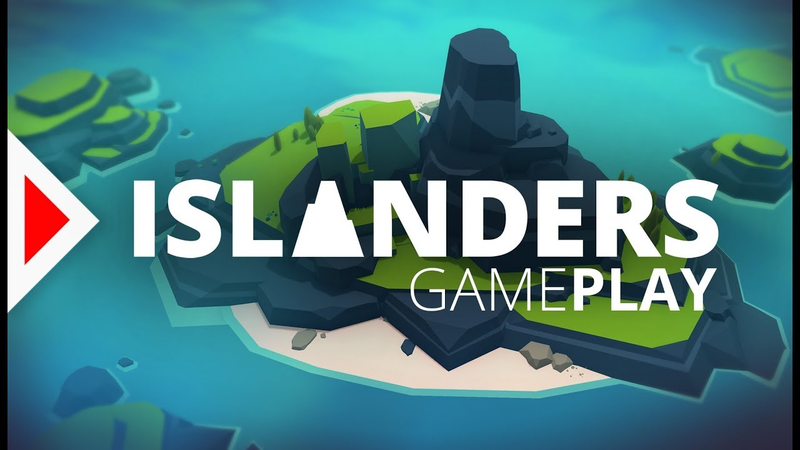
ISLANDERS Gameplay - (Developer Playing)
Islanders functions as a minimalist, procedurally generated strategy game that prioritizes accessible, high-score-driven city building over traditional resource management.
- Islanders is a minimalist, procedurally generated strategy game that replaces traditional resource management with a high-score-driven loop focused on spatial optimization and proximity bonuses.
- The game was developed by a three-person team over a five-month period, evolving from a university assignment into a commercial PC release.
- The technical architecture relies on the Unity engine for development and Blender for 3D asset creation, prioritizing a non-violent, aesthetic-focused gameplay experience.
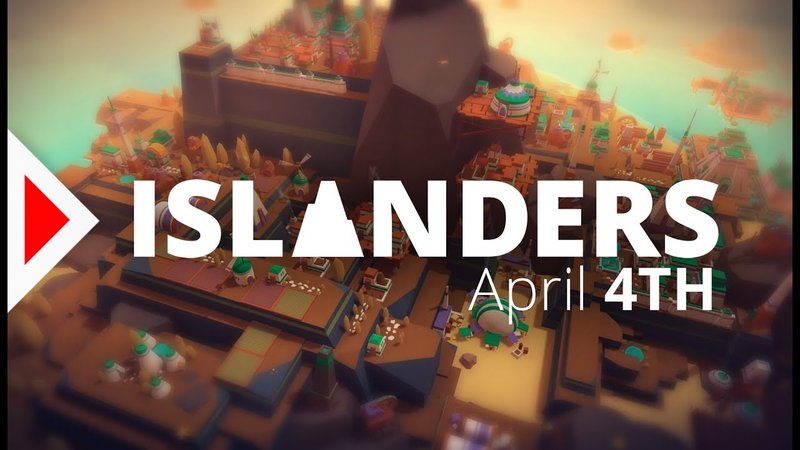
ISLANDERS - Surprise! We made a game.
Islanders is a strategy-based optimization game centered on the construction of aesthetic settlements across procedurally generated islands.
- Islanders is a strategy-based optimization game developed by a three-person team from the HTW Berlin game design program.
- The game is scheduled for a Steam release on April 4 with a target price point between five and ten dollars.
- The core gameplay loop focuses on earning points through the strategic placement of buildings within procedurally generated environments.