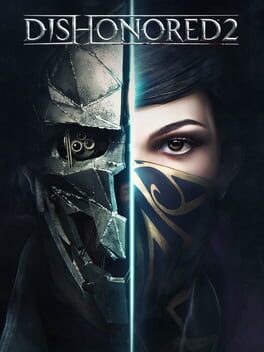
Dishonored 2
GameBy Arkane Studios · Released Nov 2016
Dishonored 2 is a first-person action video game and the sequel to Dishonored. It borrows many of the gameplay elements from the first opus: players define their own play style by blending action, assassination, stealth, mobility and combat.
Connections
Each row is a game or company named alongside Dishonored 2, each column a document, oldest first. A mark means that document names it. Select a row to see those documents.
About the game
- Released
- Nov 2016
- Developer
- Arkane Studios
- Publisher
- Bethesda Softworks
- Genres
- Shooter, Role-playing (RPG), Adventure
- Platforms
- PlayStation 4, PC (Microsoft Windows), Xbox One
Game data from IGDB.com
Documents about Dishonored 2

How Video Games Can Make You a Better Journalist
Caio Sampaio's book "Level Up: How Video Games Can Make You a Better Journalist" argues that journalists facing fierce competition for audience attention in a content-saturated, smartphone-driven media environment can learn powerful storytelling techniques from video game design.
- Video games' participatory and immersive nature makes storytelling easier to absorb than text, since players are part of the story rather than reading passively for hours.
- Augmented reality failed for Esquire's 2009 interactive cover because it was a gimmick that did not make the magazine more informative, whereas USA Today's 2020 AR investment focused on informative content, such as its Kent State Shootings app that projects a map onto any surface to detail the 1970 events.
- Audio storytelling such as radio plays stimulates imagination because listeners project their own memories and personalities onto the scene, creating a more personal and engaging experience.
Taking Back What's Ours: The AI of Dishonored 2
The artificial intelligence architecture of Dishonored 2 centers on a data-driven framework designed to facilitate complex, emergent gameplay while maintaining high performance on console hardware.
- Arkane Studios implemented a 'shuffle bag' system for NPC barks to prevent repetitive dialogue, where action lists are shuffled during initialization and again upon completion to ensure variety.
- The AI team utilized a 'Dynamic Space Management' (DSM) system for spatial reasoning, using influence map layers to store and propagate data like danger ratings across a grid to guide NPC movement and search behaviors.
- To coordinate group combat, the team employed a 'crew' system where individual NPCs post requests to join a group based on shared objectives, allowing for emergent behavior while maintaining individual decision-making.