1 free read left. Create a free account for unlimited reading + AI research.
Create free accountArticle International Journal of Esports
1 free read left. Create a free account for unlimited reading + AI research.
Create free accountArticleInternational Journal of Esports
The authors state that cheating incidents have risen since the policy was implemented. The policy was introduced in 2020 and updated in 2021.
Zwift, the rapidly growing e-cycling platform that reached over three million accounts and 45,000 simultaneous users in 2021, is the subject of a critical examination of its anti-doping policy, introduced in 2020 and updated in 2021. The central argument is that the policy has not curbed cheating; cheating incidents have risen since its implementation. Situating Zwift within the broader histories of esports and competitive cycling, the analysis draws on WADA's anti-doping framework and the concept of a "dopogenic environment" to assess whether the platform's governance structures adequately address the incentives and opportunities for misconduct.
The most substantial findings concern the nature of cheating on the platform. The evidence points less to pharmacological doping than to digital data fabrication. Documented methods include manipulating body weight and height settings, with one illustrative case showing a 75kg rider at 300W completing the Alpe du Zwift nearly five minutes faster than an 82kg rider; switching gender for advantage; "sticky watts" techniques; USB and controller hacks; and trainer calibration manipulation. The authors identify structural inconsistencies in Zwift's rules, including strict liability in its anti-doping policy contrasted with tiered punishments in its cycling rules, and discretionary power to remove substances from the prohibited list, a departure from WADA practice. They argue these gaps undermine both athlete health and fairness.
The authors conclude that there is no evidence of an epidemic of performance-enhancing drug use among Zwift riders, but that numerous documented cases of in-game data fabrication exist, which Zwift could not have anticipated and only partially addresses. Recommendations include creating "Digital Doping Rule Violations," limiting testing to sanctioned events, seeking Court of Arbitration for Sport jurisdiction for Zwift cases, recording power meter and trainer data in parallel so calibration discrepancies surface immediately, and adopting the full WADA code as the UCI and IESF have done. The work is intended as a policy reference to help Zwift become a more proactive governing body on doping, cheating, and e-cycling safety.
International Journal of Esports · 2026
International Journal of Esports · 2026
International Journal of Esports · 2026
International Journal of Esports · 2026
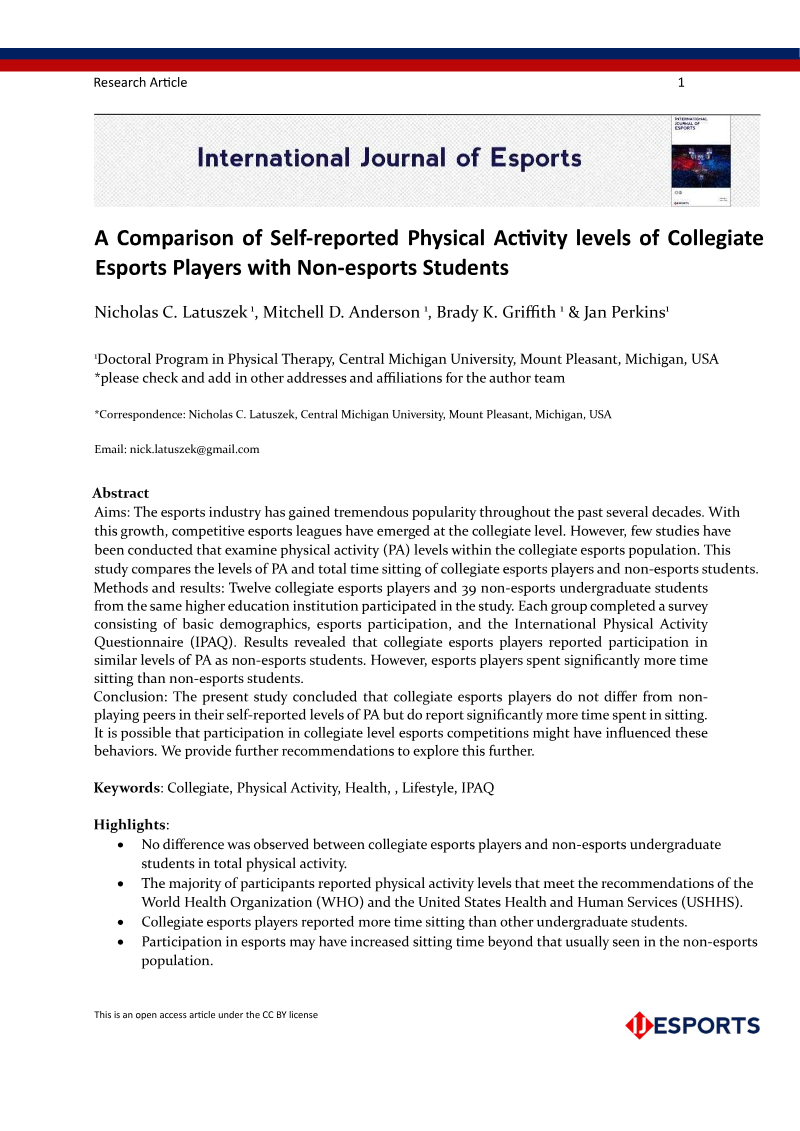
International Journal of Esports · 2026
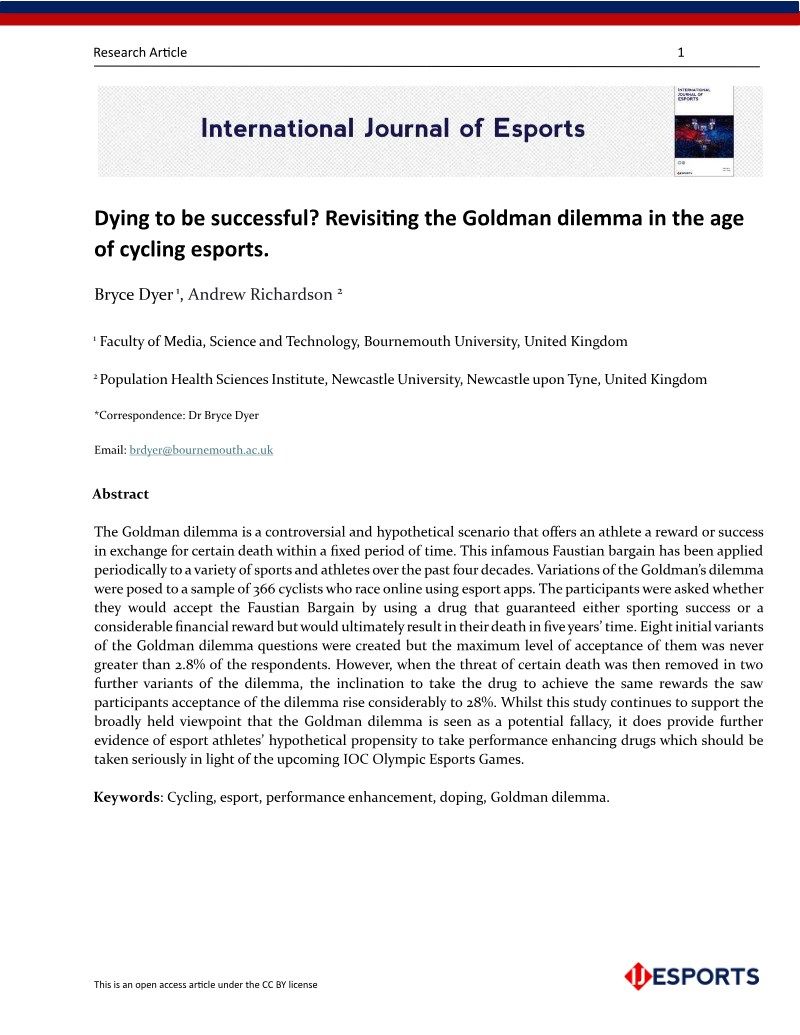
International Journal of Esports · 2026
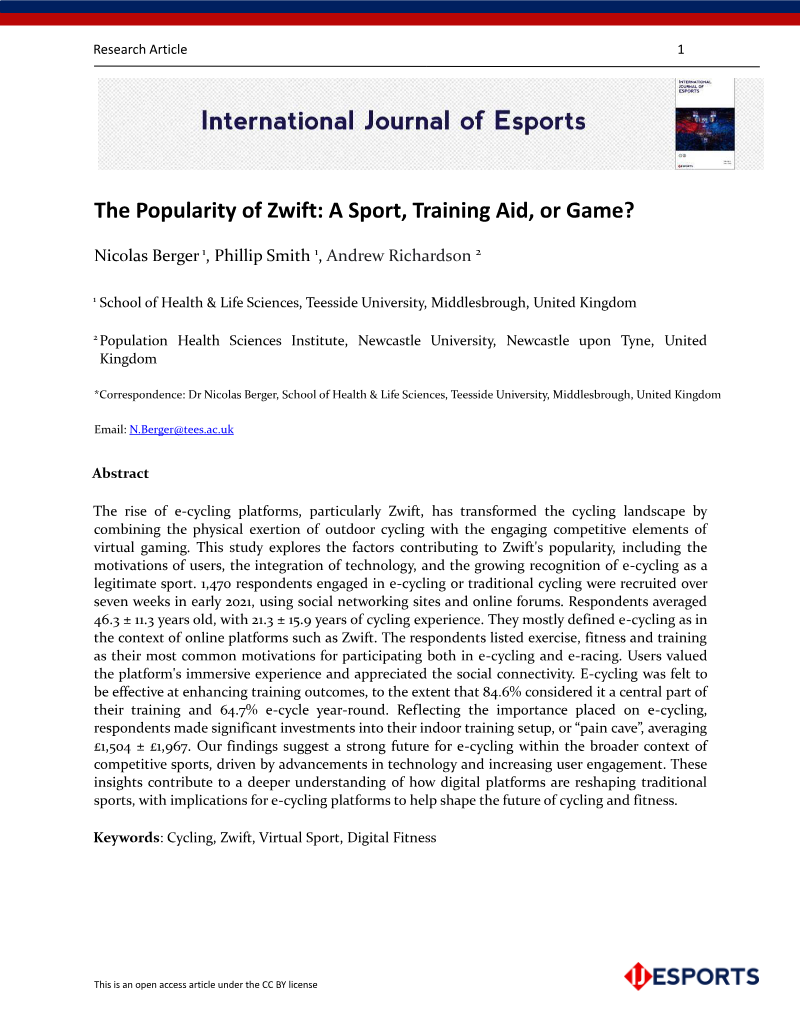
International Journal of Esports · 2025
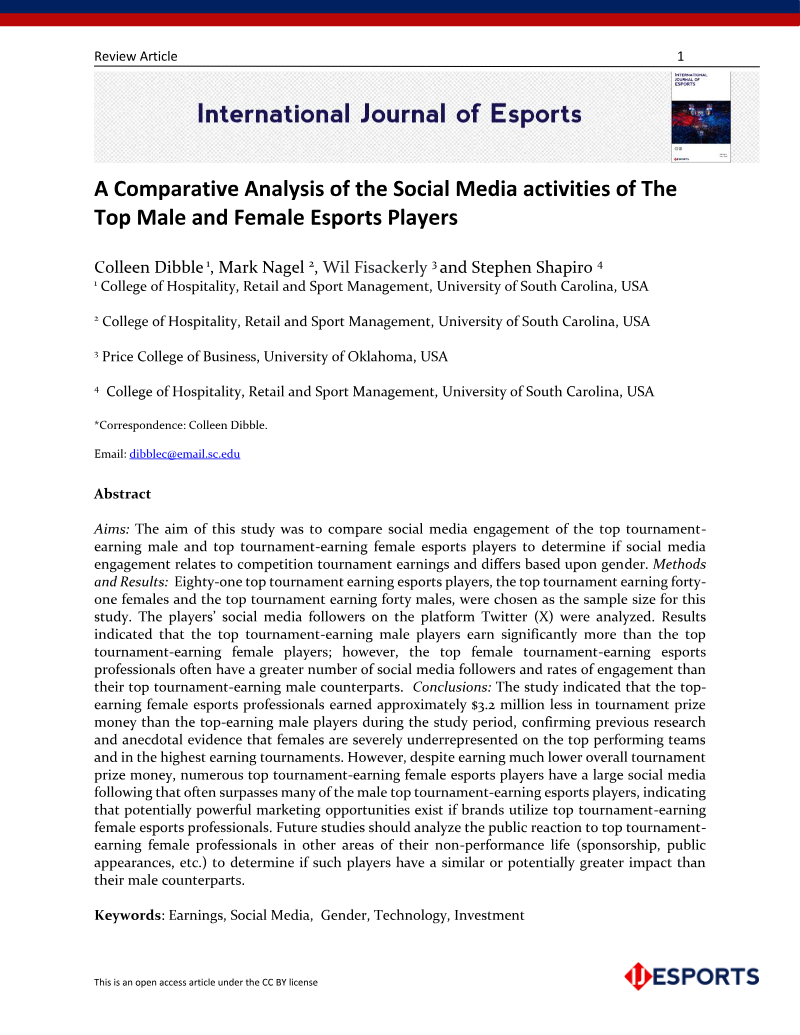
International Journal of Esports · 2025
International Journal of Esports · 2025
International Journal of Esports · 2025
International Journal of Esports · 2025
International Journal of Esports · 2025
DiGRA · 2020