1 free read left. Create a free account for unlimited reading + AI research.
Create free accountArticle Eludamos: Journal for Computer Game Culture
1 free read left. Create a free account for unlimited reading + AI research.
Create free accountArticleEludamos: Journal for Computer Game Culture
The article argues that the conventional die-and-retry structure of player failure was inherited from board games and sports. It frequently undermines narrative coherence.
Core thesis. Failure mechanics are a legacy design shortcut rather than an inherent constraint of the medium.
Jason Tocci's "You Are Dead. Continue?" examines the friction between the rules and fiction of videogames, arguing that the conventional die-and-retry structure of player failure, inherited from board games and sports, frequently undermines narrative coherence. Drawing on Jesper Juul's rules-and-fiction framework, the author contends that rules and story can also complement one another, and that the medium need not treat death as the default cost of play. The central thesis is that failure mechanics are a legacy design shortcut rather than an inherent constraint of the medium, and that games can deliver full narratives while still offering meaningful challenge.
The evidence base combines player surveys, notably a 2005 Bowen Research study, with online forum discussion and comments from developers and critics such as Holkins and Krahulik, Croal, and Molyneux. These sources show that many players prize story-driven games and find that death and retry interrupt narrative progression. The analysis traces the historical relaxation of death penalties, from the limited lives of arcade titles to unlimited continues, regenerating health, and diegetic explanations for rebirth, and it identifies adventure games that remove death altogether.
The most productive alternatives identified are those that let failure advance the story. Branching plots and moral or social consequences, as seen in BioShock, Splinter Cell: Double Agent, and Mass Effect, where a player who kills Wrex loses a combat ally, allow setbacks to reshape the narrative rather than halt it. Indirect penalties in Metal Gear Solid and unavoidable tragic losses in Final Fantasy VII, Shadow of the Colossus, and BioShock offer further models. Jason Rohrer's Passage is presented as a model of a full narrative experience without death. The article concludes that narrative-focused and rules-focused games can legitimately coexist.
 Final Fantasy VIIGame · Square Product Development Division 1 · 1997 · 76 documents
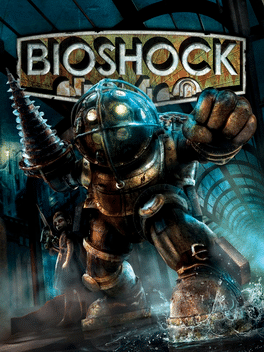 BioShockGame · 2K Boston · 2007 · 73 documents
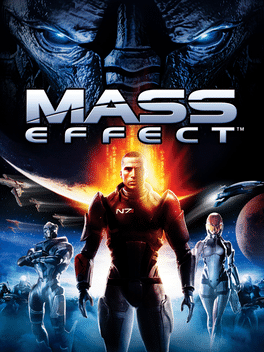 Mass EffectGame · BioWare · 2007 · 61 documents
 Metal GearGame · Konami · 1987 · 50 documents
 Metal Gear SolidGame · Konami Computer Entertainment Japan · 1998 · 44 documents
Each row is a game or company this document names, each column a document, oldest first. A mark means that document names it. Select a row to see those documents.
European Conference on Games Based Learning (ECGBL) · 2026

European Conference on Games Based Learning (ECGBL) · 2026

Eludamos: Journal for Computer Game Culture · 2026
The Game Business · 2026