Key insights
6 slides
Cost Multipliers
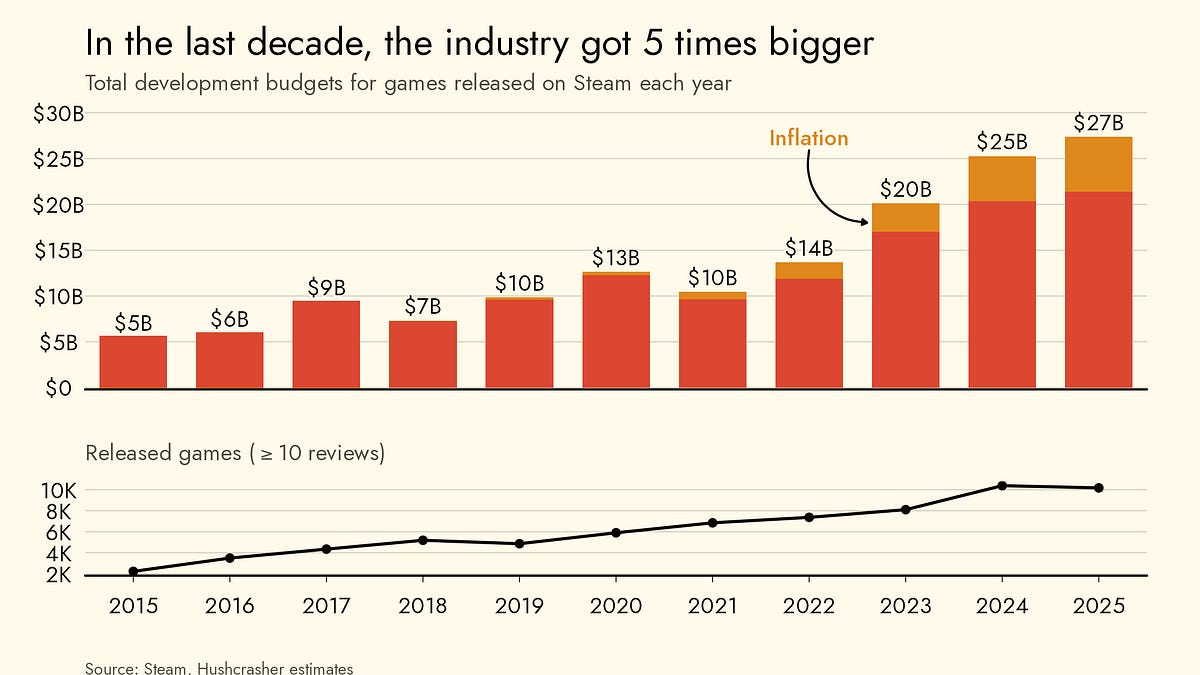
Scope expansion alone accounts for the majority of budget growth.
Inflation-adjusted data shows that increasing the scope of a game effectively doubles its production costs.
It's like building a bigger house; the cost isn't just for the materials, but for the extra rooms and features.
Team Size Matters
Team size is the strongest predictor of budget in game development.
Doubling the headcount on a project typically results in a 70% increase in total production costs.
The Coordination Tax
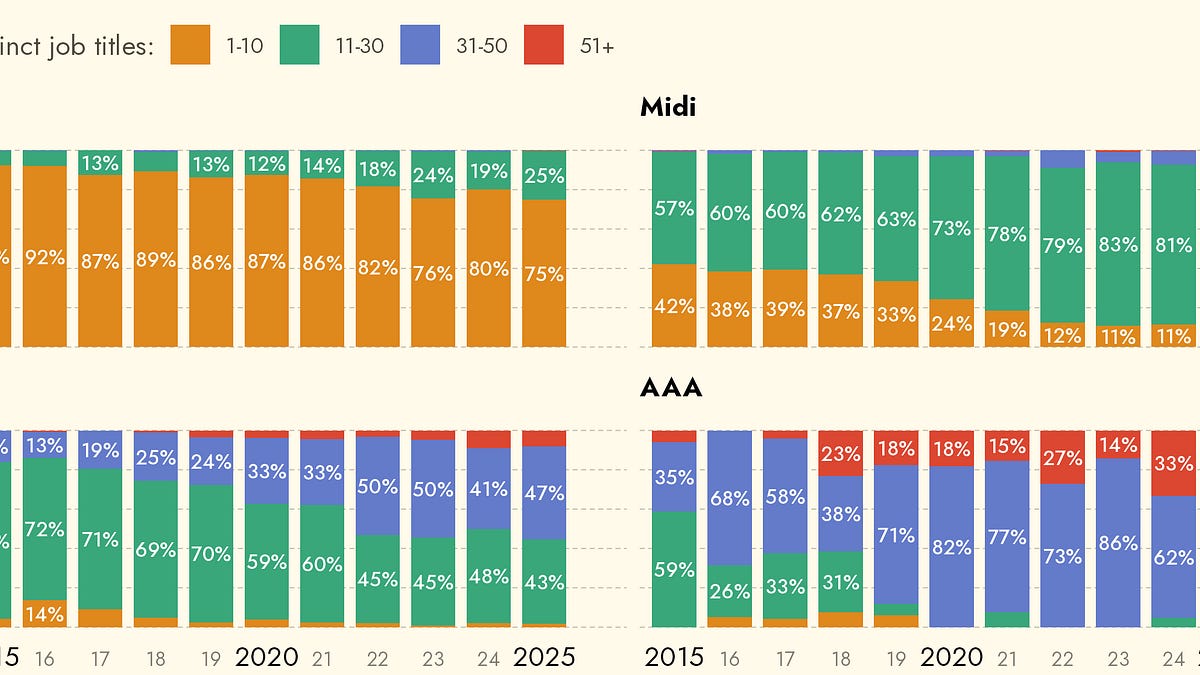
The shift to specialized roles and larger teams has introduced a 'coordination tax'.
In AA and AAA productions, 14% to 17% of staff are now dedicated to management roles.
It's like a large orchestra needing more conductors and section leaders as it grows, adding to the overall cost.
Studio Dynamics
AA and AAA studios have seen management roles double over the last decade.
In contrast, smaller studios are increasingly achieving larger scopes with fewer personnel.
Feature Premiums
Specific design choices carry significant cost premiums in game development.
3D games are 32% more expensive than 2D equivalents. Voiced audio adds approximately 70% to the budget, and multiplayer features add roughly 20%.
Collaboration Costs
Co-development arrangements increase project budgets by approximately 22%.
This increase is due to the inherent costs associated with coordinating across different teams.
1 / 6
Ask AI about this report