Key insights
6 slides
The Challenge
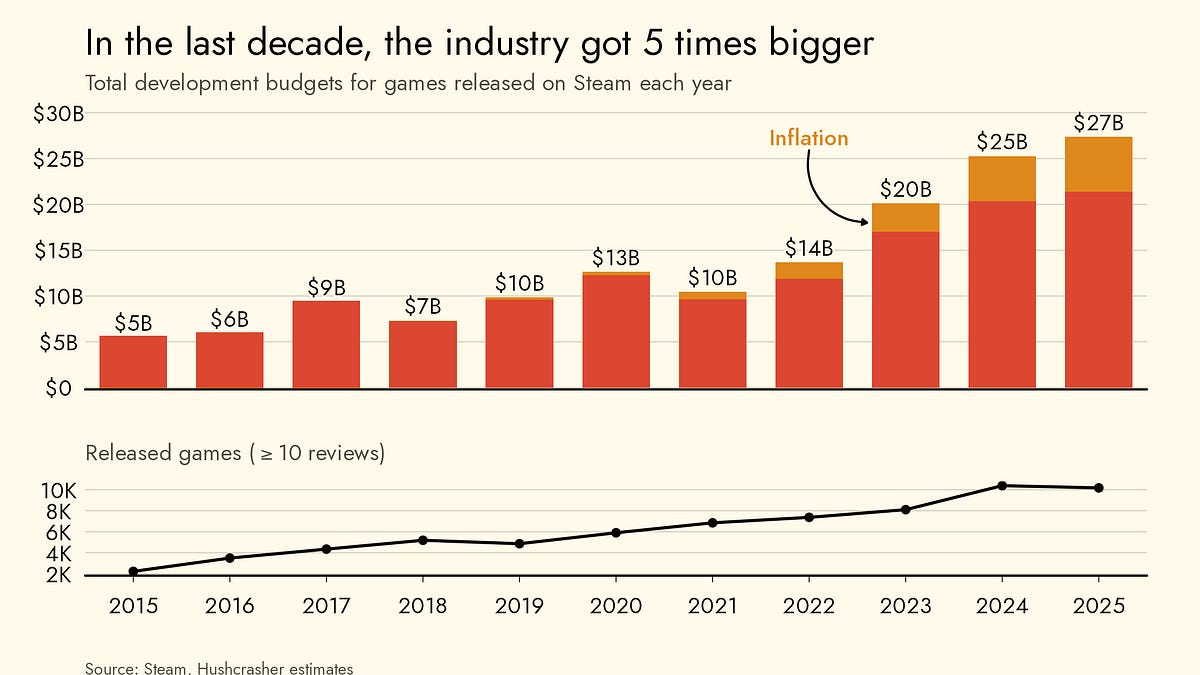
Game development budgets are rarely disclosed publicly.
The video game industry lacks transparency regarding development budgets.
Key Problem. Game development budgets are not publicly transparent.
Scaling Costs
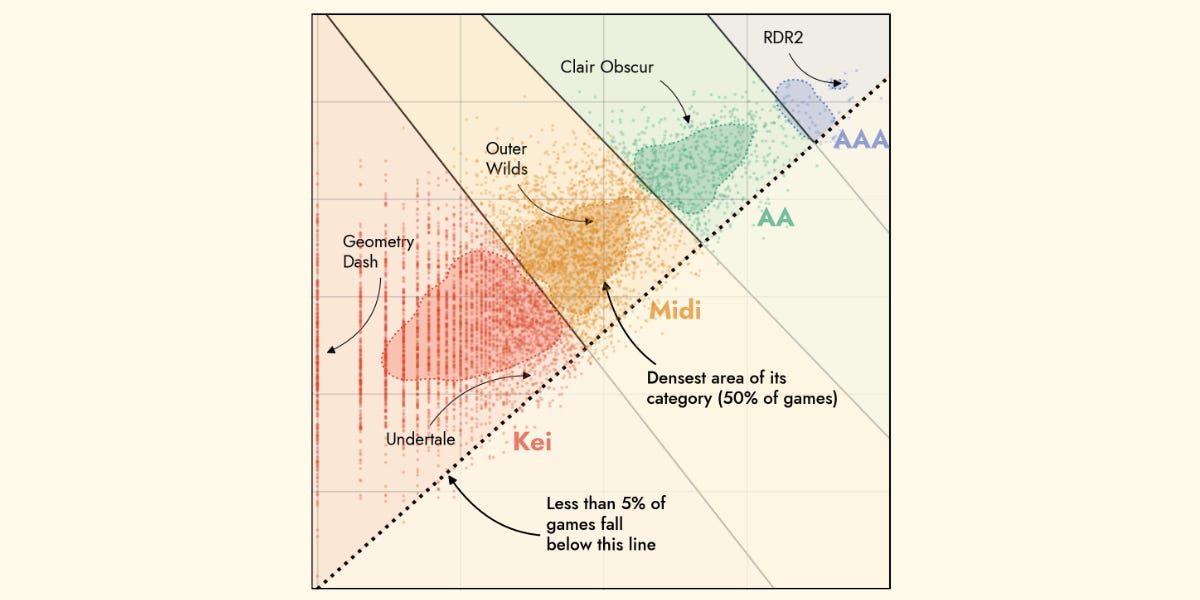
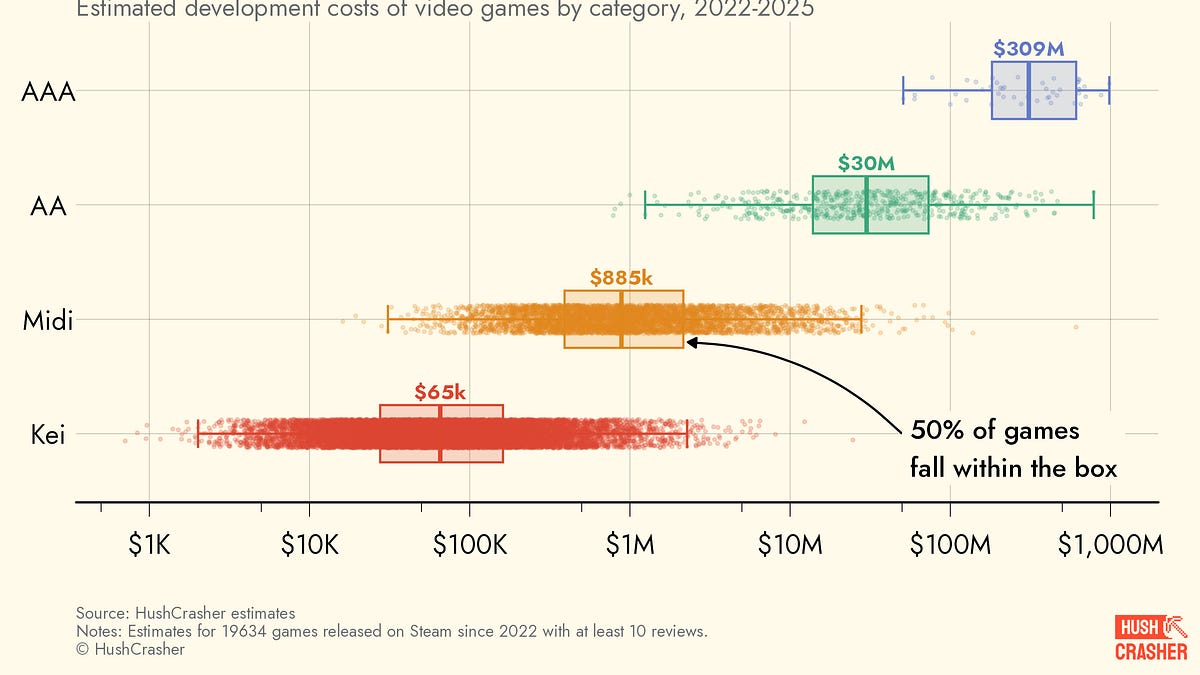
Development costs scale exponentially with project scope.
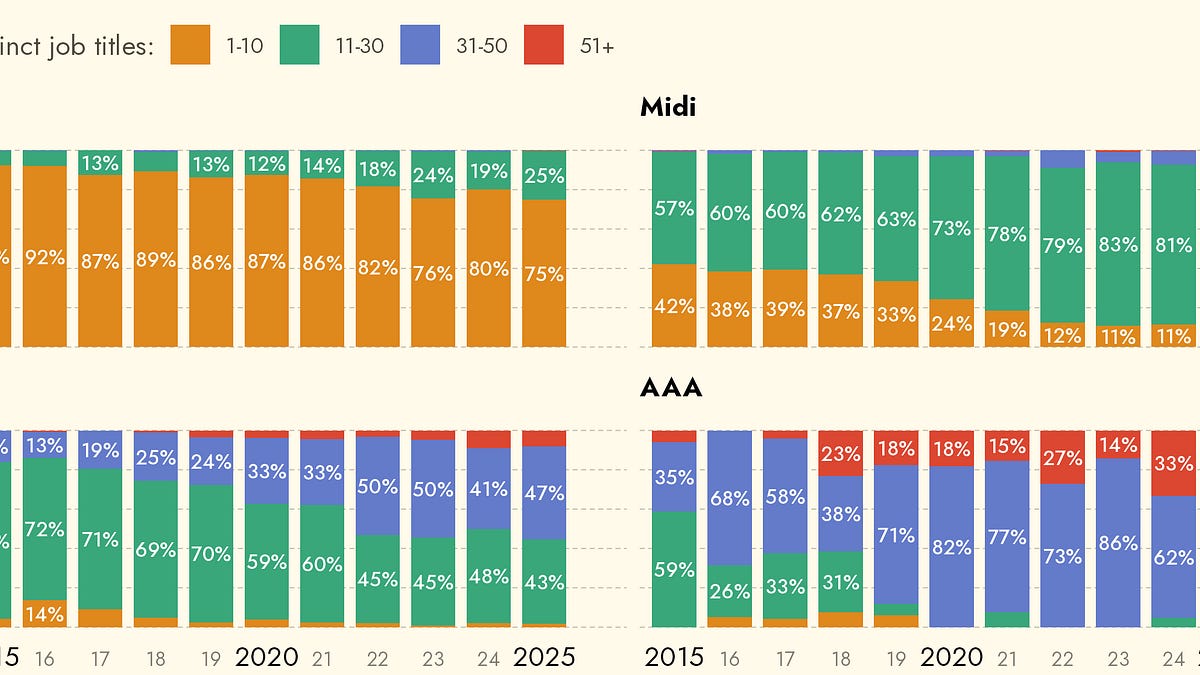
AA games cost 33 times more than 'Midi' games. AAA titles cost 10 times more than AA titles.
Publisher Impact
Partnering with a publisher significantly increases development budgets.
Publisher partnerships typically result in costs three to four times higher than self-funded projects. This may be due to increased operational complexity.
AAA Budgets
AAA development costs have reached extreme levels.
Titles like 'Black Ops Cold War' cost $700 million. These costs rival or exceed the budgets of major Hollywood blockbusters.
Like a blockbuster movie, AAA games now command massive financial investments.
Multiplayer Costs
Multiplayer games account for half of all games with budgets exceeding $10 million.
Multiplayer games represent only 16% of the total market. They indicate a high financial barrier to entry for large-scale titles.
Costly Niche. Multiplayer games represent a significant portion of high-budget titles.
50%
Share of games with budgets >$10M that are multiplayer
- Multiplayer games in total market
- 16%
Engine Landscape
Godot has emerged as a significant challenger to Unity for small-scope games.
This follows the loss of developer trust caused by Unity's 2023 pricing changes. Godot is particularly strong for games under $100k.
Engine Shift. Godot is challenging Unity in the small-scope game market.
1 / 6
Ask AI about this report