Key insights
5 slides
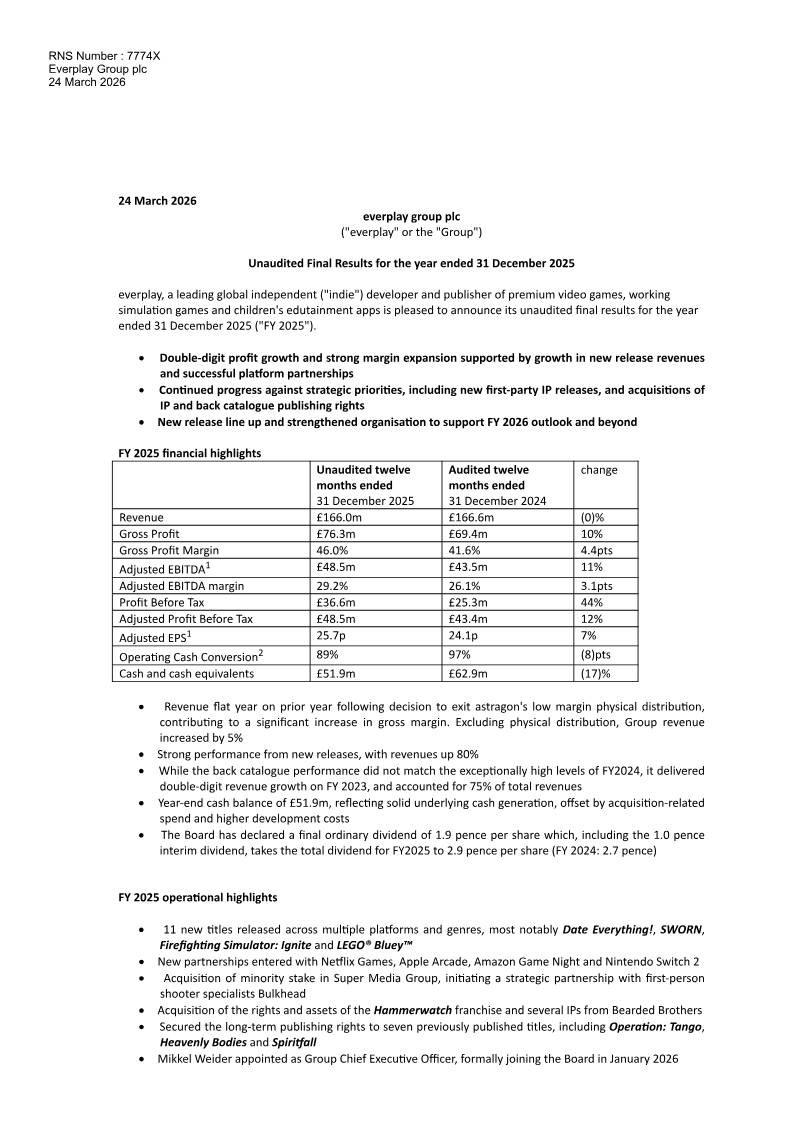
New framework
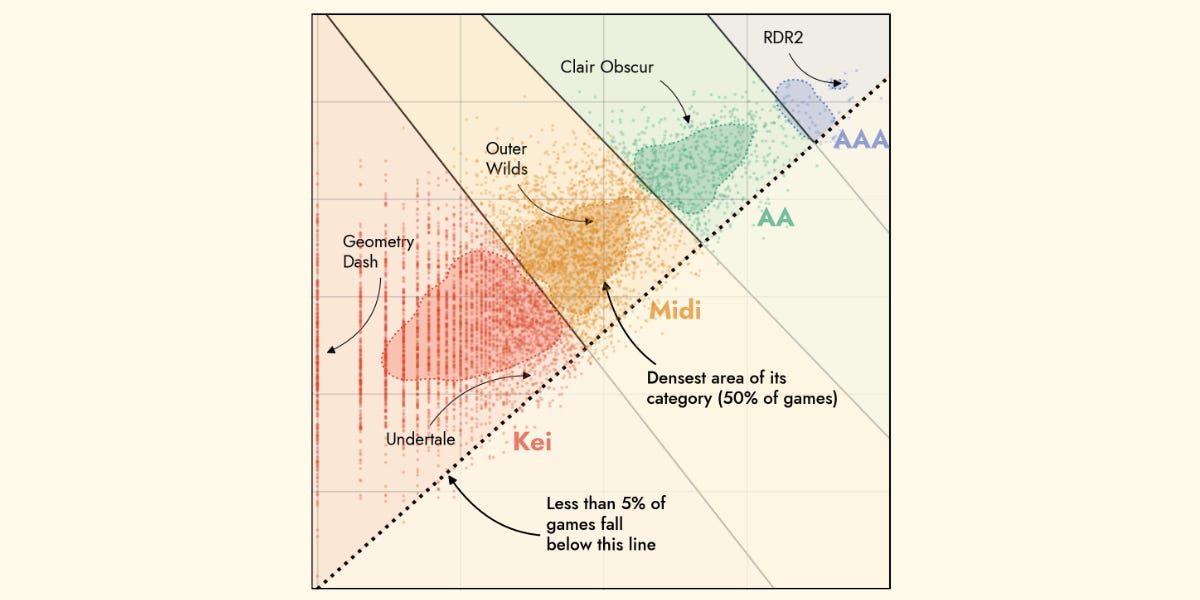
A new classification system uses data science to define game production scope.
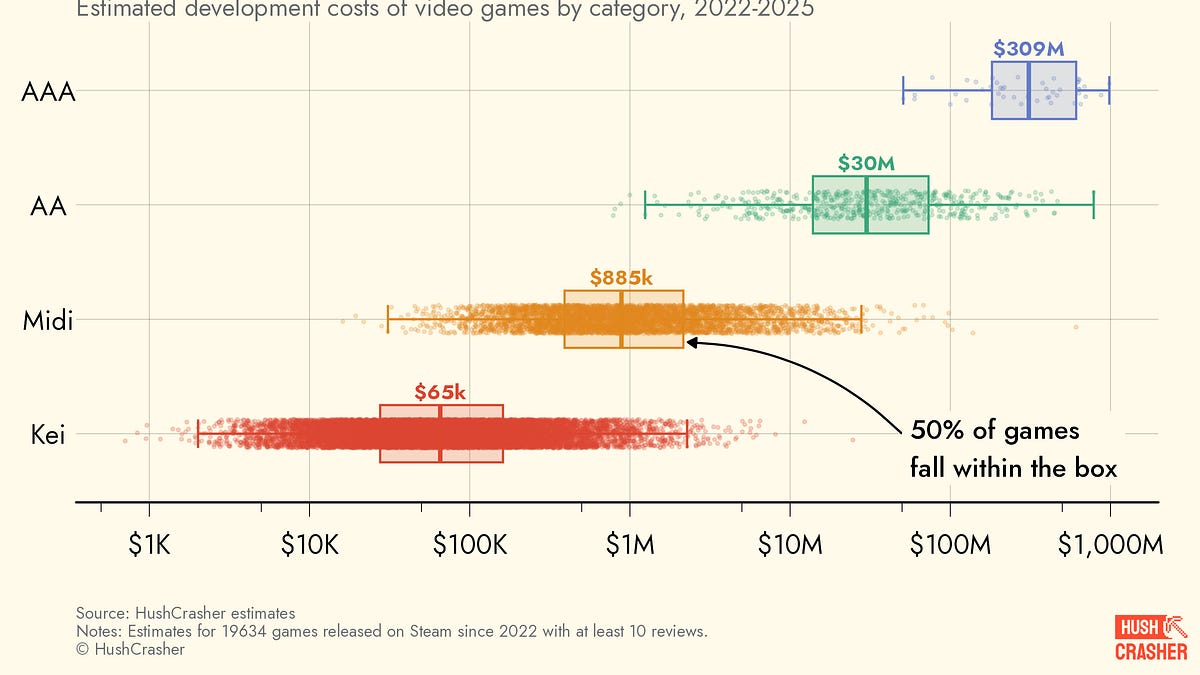
The Hushcrasher Classification System (HCS) addresses the lack of objective standards in the video game industry.
Objective Classification. The HCS provides an objective framework for classifying game production scope.
Key indicators
Credit length and disk size are the main indicators of a game's production scope.
These two metrics are the primary objective indicators identified by the data-driven analysis.
Kei surge
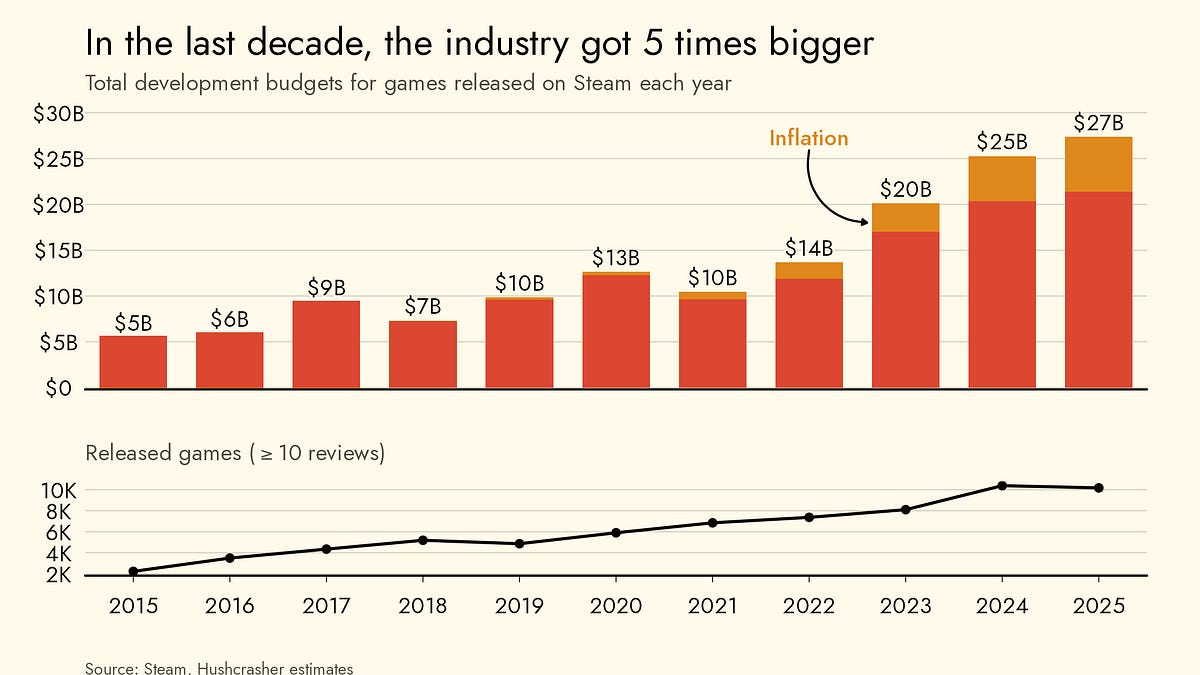
Kei game releases have increased 16-fold, now making up over 70% of new Steam titles.
This massive increase in small-scale, often solo-developed games has occurred over the last decade.
Revenue collapse
Median revenue per game collapsed by 97% between 2012 and 2018.
The competition within the Kei segment is particularly intense.
97%
Collapse in median revenue per game (2012-2018)
- Median revenue per game in 2012
- $80,000
- Median revenue per game in 2018
- $3,000
Creative risk
Production scope dictates creative risk, with smaller games more likely to be experimental.
Larger studios tend to favor 'remake' titles to mitigate financial exposure. Smaller-scope games, however, are significantly more likely to carry an 'experimental' tag.
Scope and Creativity. Production scope influences creative risk, with smaller games often being more experimental.
1 / 5
Ask AI about this report